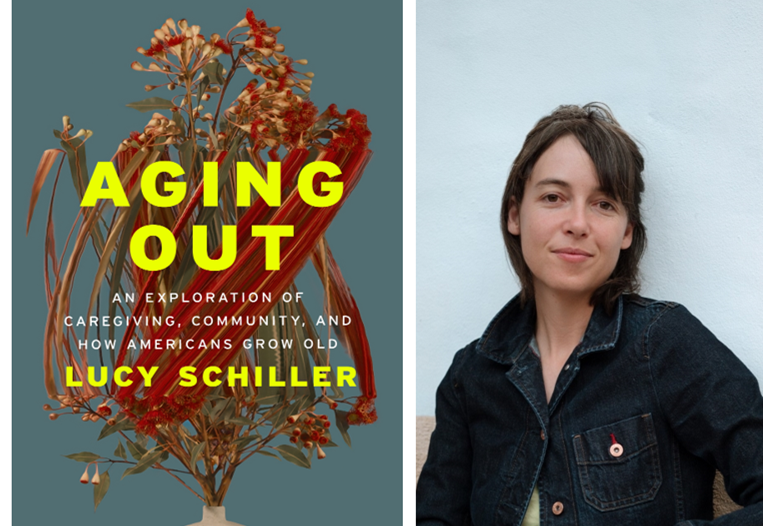
Lucy Schiller’s “Aging Out” was conceived to highlight the problems facing elderly Americans dealing with a health care system that often seems to be working against them. This is a harrowing topic that rarely receives the attention it deserves.
Unfortunately, Schiller, a thirtysomething authoring her first book, opted to insert herself in the book’s spotlight. Her solipsistic presence harshly dilutes her presentation’s effectiveness.
The Writer’s Self-Focus
Schiller begins her book by describing her relocation to Pittsburgh as a “geographical cure” that followed earlier moves to central New York, Germany, and Denver. She acknowledges coming to the city not knowing anyone and with only the vaguest idea of securing work at a local university.
Schiller then admits that her grandmother, Anita, recently died of COVID-19 during the pandemic. Details on her passing are not shared until the fourth chapter, although the author highlights that 75 percent of the virus’s American fatalities were 65 or older. Schiller follows that fact with meandering considerations on what it means to grow old while recalling her unrelated rambling around Pittsburgh.

The book then flashes back to another grandmother named Mary Ann, with whom she briefly lived as a caregiver. But Schiller keeps steering the focus back to herself, at one point claiming her grandmother said that she wanted to die but was holding out until Schiller’s first book was published.
Offbeat Characters
From here, Schiller introduces several people who shape her perceptions of caregiving and the elderly. First up is a Gen Z care worker dubbed Big Wrinkles whom she followed on Twitter. The origin of his unusual nickname is not shared, but Schiller goes into great detail about his career in a caregiver role as a certified nursing assistant. The author travels to New York to meet him at the nursing home where he works, but he disappears after the encounter.
Later on, the reader meets Frank and Kathy, an older couple who attempt to befriend Schiller. The couple invites her out for a Christmas Eve dinner at a downtown restaurant, but she is uncomfortable with them. She resents how they view her as a solitary person in need of care and attention.
Indeed, Schiller goes to extremes to elude the couple, at one point crouching behind a bush to avoid being seen. She rejects the Christmas Eve dinner invitation and states that instead she “bought a dozen oysters and a knife, and slurped them with a briny, spiny sort of solitude the next day.”
Frank and Kathy serve as a prelude to the author’s rumination on how loneliness impacts the elderly. This transitions to her experience at a recruiting session for Papa, a company that sought gig workers dubbed “Pals,” to visit lonely seniors.
Schiller volunteers as a caregiver for an elderly woman named Caroline. The author goes out of her way to highlight what she perceives as intentionally impolite treatment of Caroline, a black woman, by white shoppers at a local store. The no-nonsense Caroline doesn’t share her outrage. As with Big Wrinkles, Caroline abruptly disappears from the book.
Hits and Misses
Schiller is at her best when she pivots to historic research and writing. She produces a vigorous chapter on the rise of AARP from its roots as the National Retired Teachers Association in 1947; she details its odd dichotomy of generating insurance sales revenue profits while holding nonprofit status.
There is also an in-depth study on the Gray Panthers, a political advocacy organization that once held considerable prominence under the leadership of the indefatigable Maggie Kuhn. That group saw its effectiveness wane after Kuhn’s death, with only a few chapters now remaining. This might be the strongest chapter in “Aging Out,” with vigorous writing that brings Kuhn to vibrant life. It is a shame that Schiller didn’t give this subject book-length coverage.
But for the most part, there are too many instances where Schiller strives futilely to be clever.
For instance, consider this sentence from the Gray Panthers chapter: “Maggie Kuhn was born in 1905, the same year as Donald Trump’s father, and the start of the first Russian Revolution, and the invention of novocaine.” Huh? Only Kuhn has relevance to the book’s objective, so why is she citing the other irrelevant factoids?
Elsewhere, there is information overload where it is not required. When describing a Papa recruiting session, Schiller informs the reader that the gathering was held at a strip mall next to a restaurant serving alligator meat while a wild turkey crossed the road in front of an adjacent supermarket. Really, is any of that necessary?
A few times, Schiller expresses her love for the CD of Bruce Springsteen’s “Darkness on the Edge of Town.” Okay, whatever.
Readers who have the patience to tiptoe through such odd writing may find isolated nuggets of information on the topic Schiller is supposedly investigating. But on the whole, the dismal “Aging Out” is not required reading.
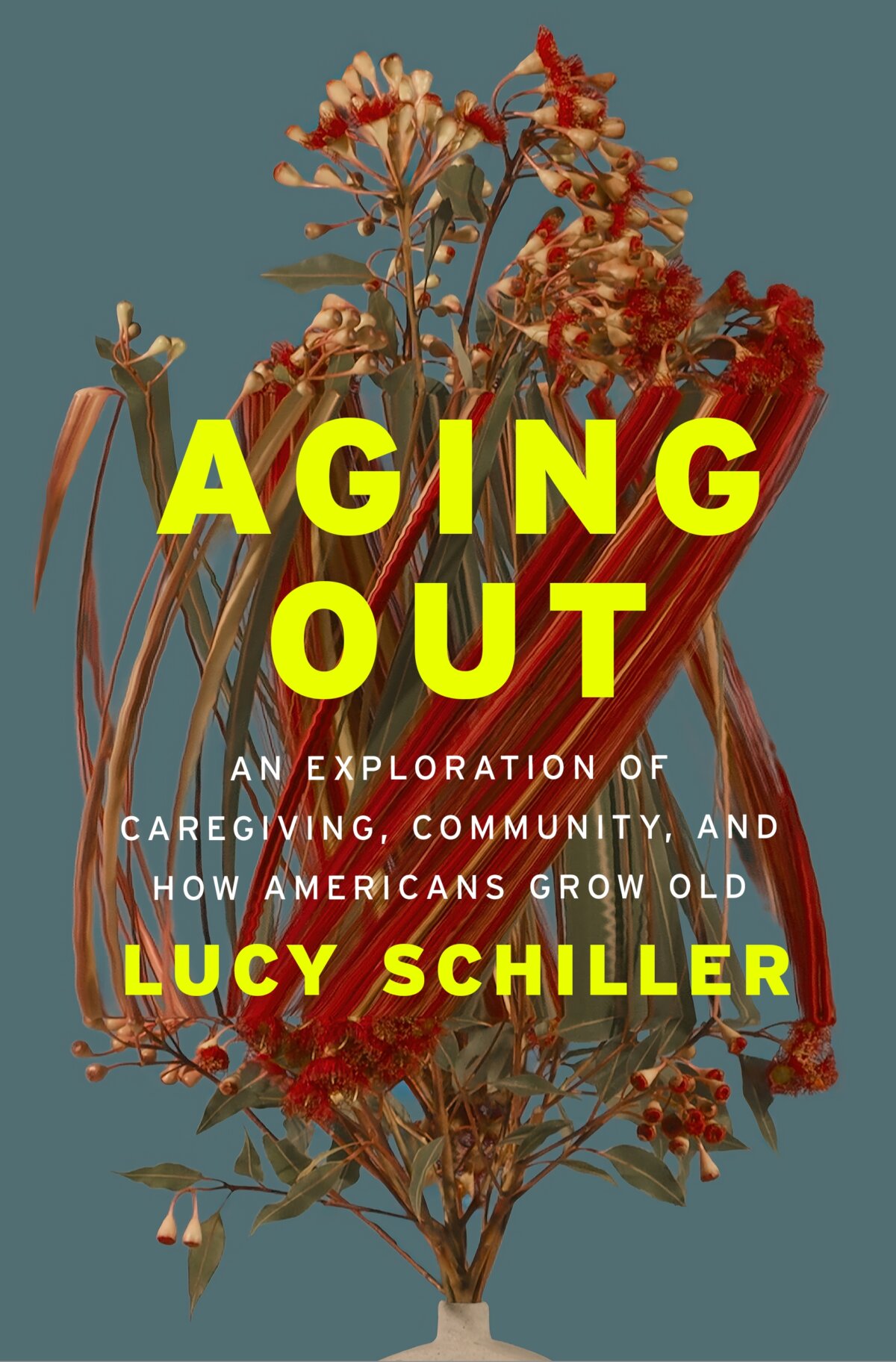
‘Aging Out: An Exploration of Caregiving, Corporations, and How Americans Grow Old’
By Lucy Schiller
Gale: Sept. 9, 2026
Hardcover, 452 pages
What arts and culture topics would you like us to cover? Please email ideas or feedback to features@epochtimes.nyc