



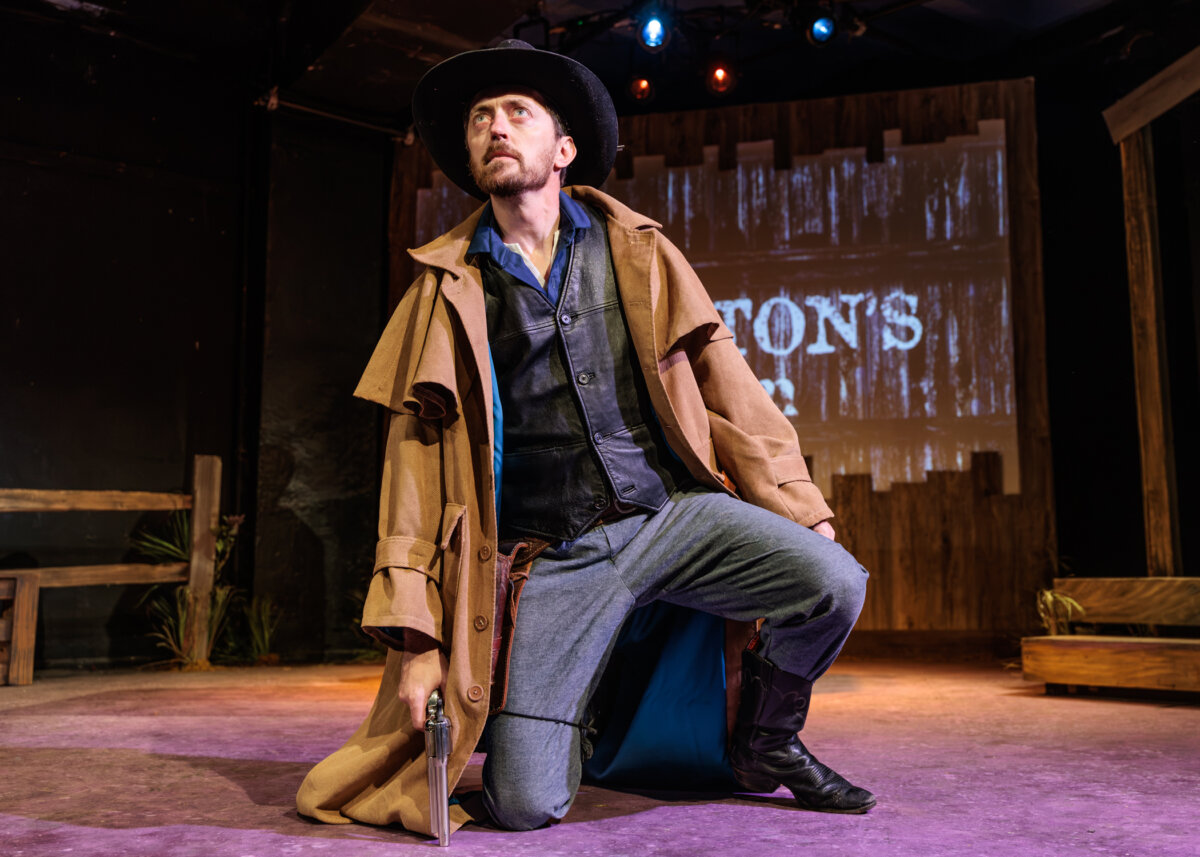
Western motion pictures were originally short, fast-paced, simple. Morality was obvious, with heroes in white hats and villains in black. When “Shane” arrived in 1953, it was a turning point that reshaped Western films. Its director George Stevens elevated the genre into an artistic, complex, and mythic American drama.
Now the City Lit Theater in Chicago has reincarnated “Shane” into an extraordinary and psychologically riveting stage play, and it compares favorably to the film.
In a world-premiere production, Mark Pracht not only adapts the 1949 novel by Jack Schaefer, but he also directs the play. The historical context and moral theme of “Shane” remains the same as in the movie. Set in Wyoming in 1889, “Shane” captures when the Wild West era was ending. The open, lawless plains were being carved up by barbed-wire and organized into farming communities. Men whose only survival skill was gunfighting were becoming obsolete.
The story centers on Shane, a mysterious stranger who shows up at the Starrett homestead. Though he seems to be hiding a dangerous past, he’s offered a job as a farmhand and settles in with Joe, Joe’s wife, Marian, and their son, Bob. When Joe refuses to sell his land to the nearby cattle rancher named Fletcher, it sets up a violent showdown.
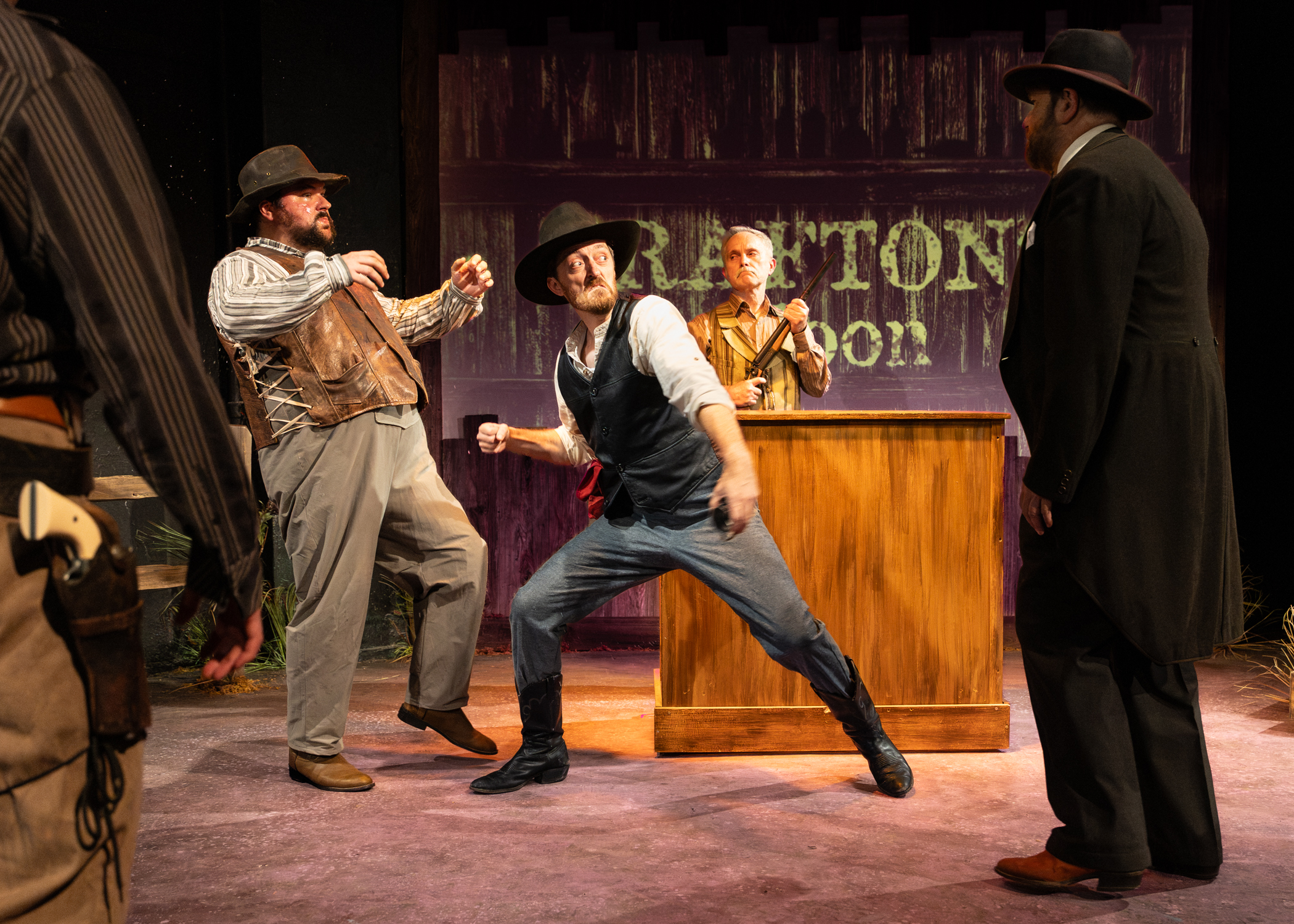 (L–R) Curly (Ross Childs), Shane (Michael B. Woods), Grafton (Chuck Munro), and Fletcher (Sean Harklerode), in “Shane.” (Steven Townshend of Distant Era)
Integrity and courage are Joe Starrett’s core values as he fights to stand his ground, and Shane protects the homesteader from the cattle barons, even though it means sacrificing himself. Its moral theme demonstrates the cost of violence and how it leaves a permanent mark on a person’s soul, which Shane explains when he says “There’s no going back after a gunfight.”
Bringing a Western Panorama to the Stage
The movie had a grand cinematic landscape of the Grand Teton mountain range against a stunning blue sky and a sweeping, lush romantic musical score that’s impossible to duplicate onstage. Indeed, it’s difficult to bring a Western to life in a small theater space. Yet City Lit succeeds on stage in its own terms: with gripping stage combat, video imagery, and evocative sound design.
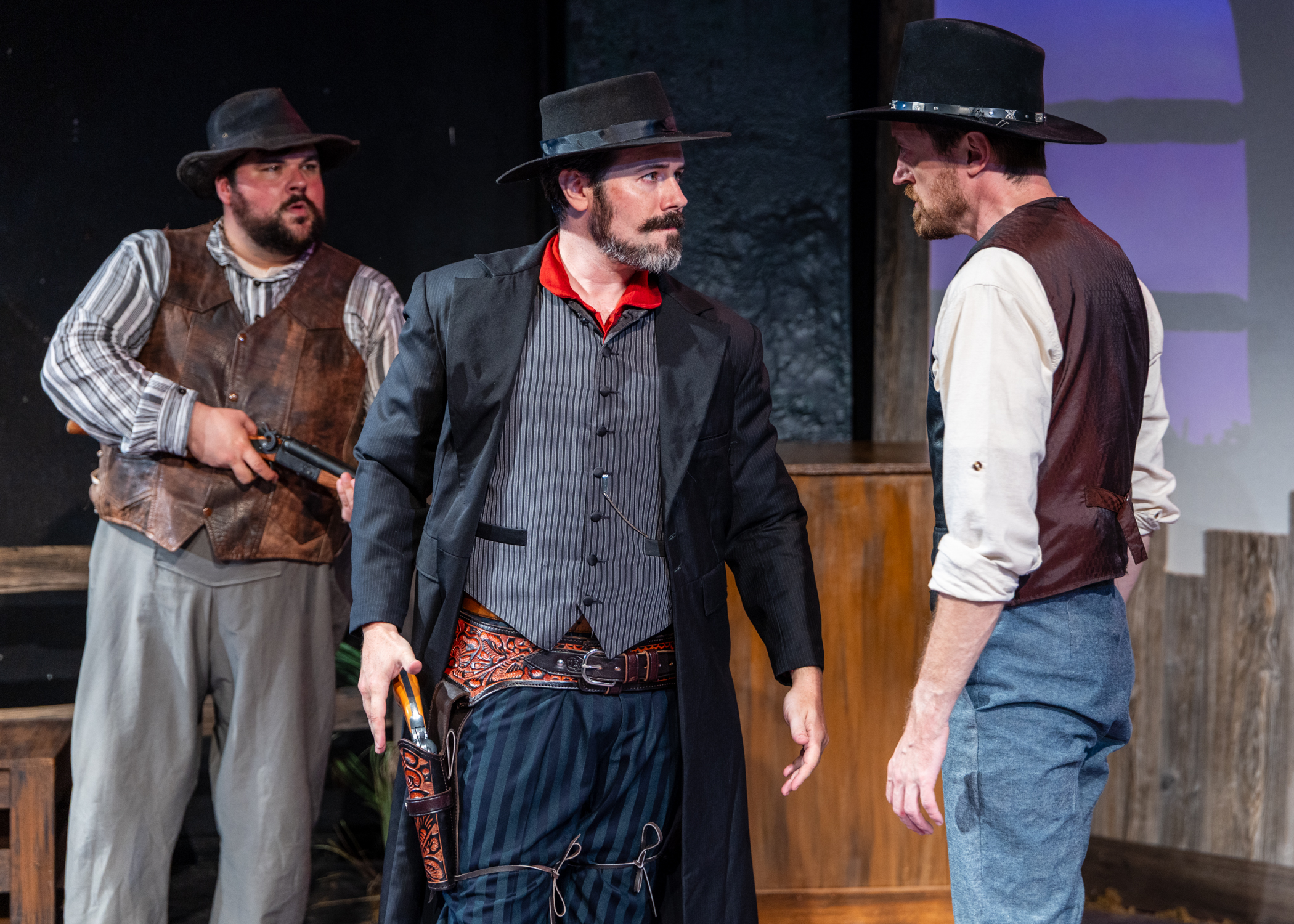 (L–R) Tensions run high among Curly (Ross Childs), Wilson (Jay Donley), and Shane (Michael B. Woods), in “Shane.” (Steven Townshend of Distant Era)
The scenic design by Jeremiah Barr and projection designer G. “Max” Maxin IV come together to create an imaginative backdrop. The set utilizes a wooden shack, a plain front porch, iron farm tools, coils of rope, a wooden fence, and bits of prairie grass. The town saloon is reduced to a small bar, but a rear projection screen displays stylized western images and a dazzling Wyoming sunset. The feel of the West is further conveyed by costume designer Beth Laske Miller’s authentic cowboy garb.
Victor Young’s delicious grand romantic music from the film is replaced by harmonica and guitar music. It’s is emotionally haunting and suggests the vastness of the frontier. Petter Wahlbäck’s sound design adds an audio of poignant strings, the hard sound of axes hitting wood, and the flight of buzzing insects.
Almost the entire movie is shot and structured from the perspective of 9-year old Joey. The play returns to Schaefer’s novel, in which the character is named Bob instead of Joey. The entire drama is framed as a recollection from a grown-up Bob, who is looking back on his childhood. He’s well-played by Bruce Holtman.
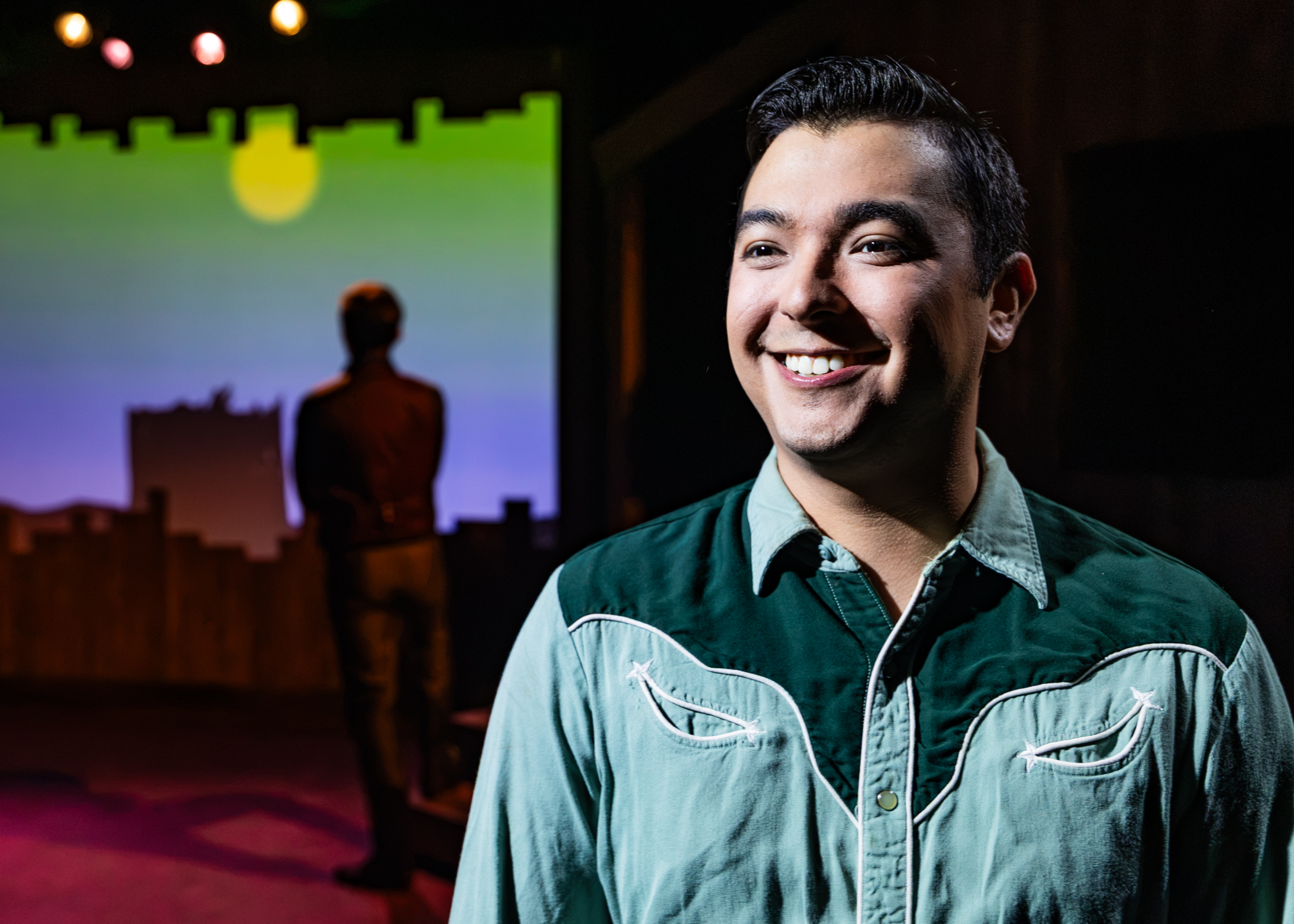 Bob (Bruce Holtman) looks back on his childhood, in “Shane.” (Steven Townshend of Distant Era)
In the movie, Alan Ladd’s Shane is a classic lone-wolf hero trapped by his past. His Shane comes across as mythical figure that has stepped out of a storybook. His portrayal is that of a quiet, well-meaning, but tragic savior.
Michael B. Woods, who plays Shane in the play, doesn’t try to imitate Ladd. His performance is more visceral, gritty, and physically expressive. His Shane is a weary, sad-eyed drifter, trying to escape the pain of his past. He brings an intense, visceral presence to the title character.
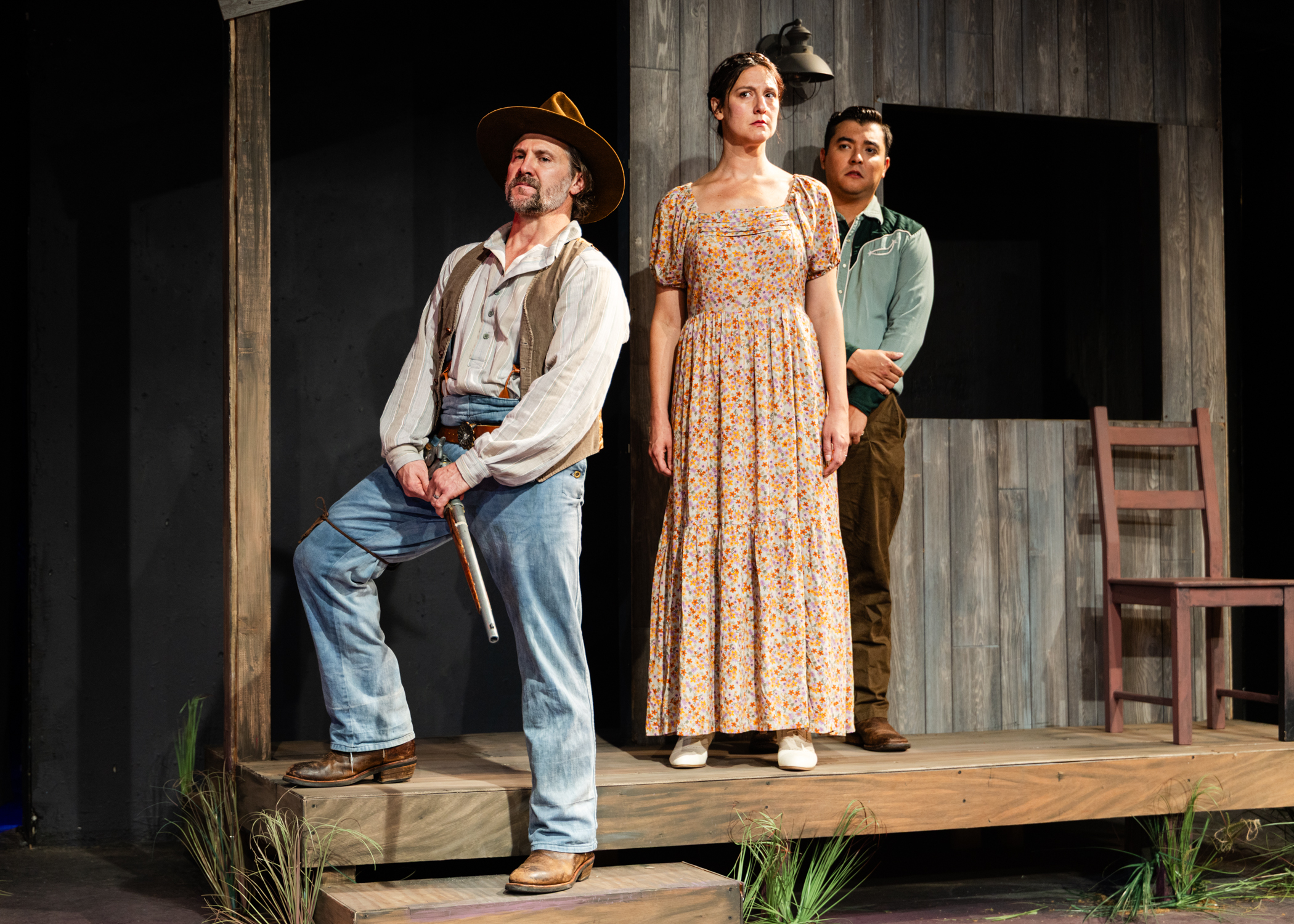 (L–R) The hardworking Starrett family—Joe (Josh Odor), Marian (Whitney Minarik), and Bob (Bruce Holtman)—get more than they bargained for, in “Shane.” (Steven Townshend of Distant Era)
Others in the cast also turn in powerful performances. Josh Odor does a fine job as Joe Starrett and Whitney Minarik is his perfect wife. Sean Harklerode, is compelling as the hard-hearted, single-minded cattle baron, Fletcher, who tries to scare the Starretts off their land. In addition, Jay Donley is menacing as Stark Wilson, the villain who threatens to kill the homesteaders.
If you haven’t seen the movie, you may want to consider watching it before the play. The stunning “Shane” film is one of the best Westerns ever made, and it will make you appreciate the stage version even more.
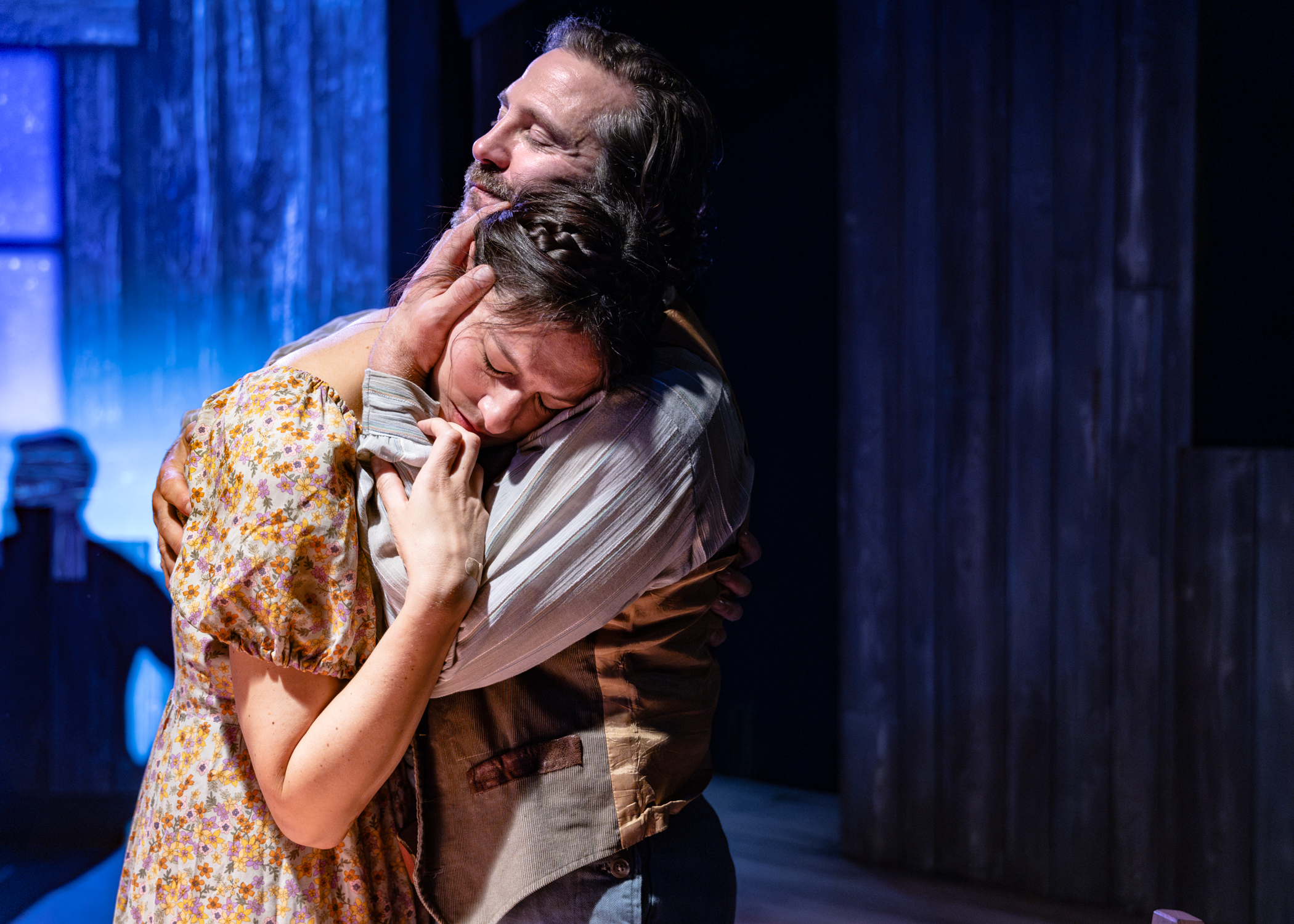 Marian (Whitney Minarik) embraces her husband Joe (Josh Odor) amid the strife, in “Shane.” (Steven Townshend of Distant Era)
‘Shane’
City Lit Theater
Second Floor of the Edgewater Presbyterian Church
1020 W. Bryn Mawr, Chicago
Tickets: 773-293-3682 or CityLit.org
Runs: 1 hour, 35 minutes (one intermission)
Closes: Oct. 4, 2026
What arts and culture topics would you like us to cover? Please email ideas or feedback to features@epochtimes.nyc.
