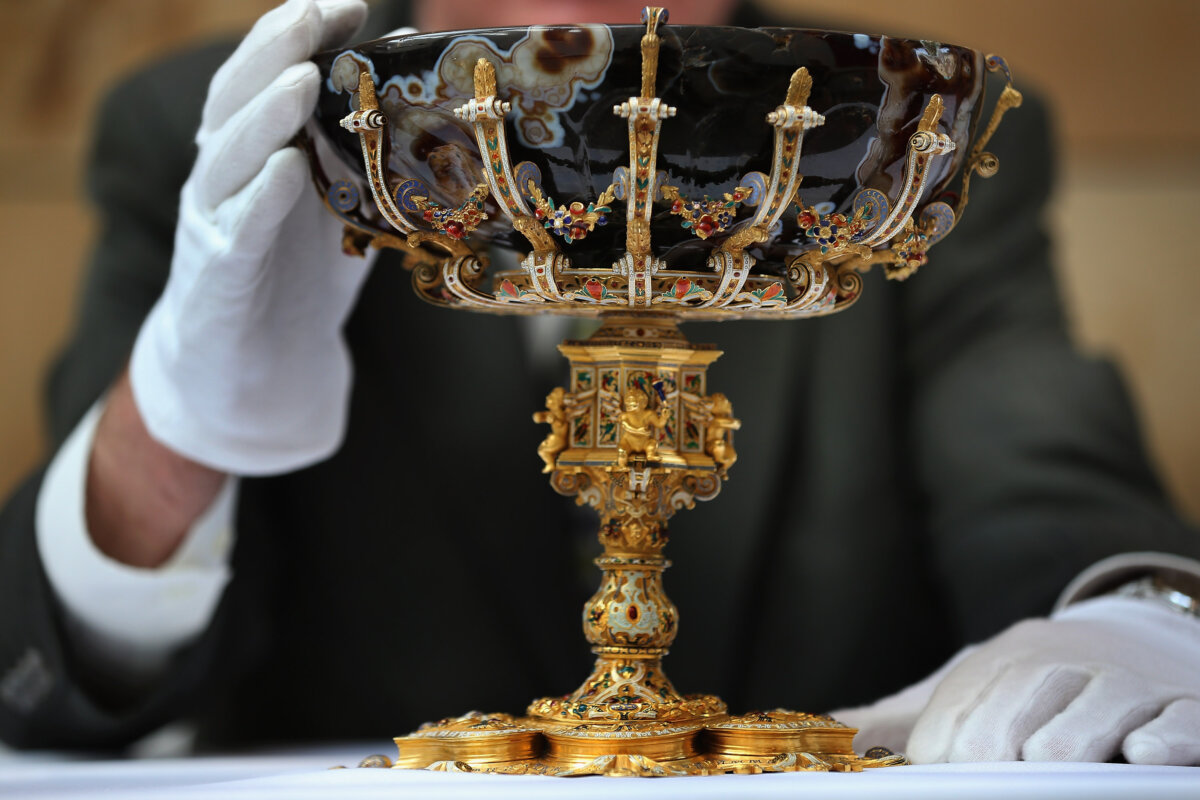
In 2012, Scotland’s National Museums announced that it had made its most valuable acquisition ever. The heralded object was the Hamilton-Rothschild tazza. This tazza, or cup, is a magnificent work of art that marries two separate elements: an exceptionally large Byzantine bowl and a mid-16th-century gold foot. With a valuation of at least 5 million pounds ($7.8 million), the tazza was too expensive to be purchased by the national collections. However, thanks to the Acceptance in Lieu scheme, which offsets death duties in exchange for the donation of art to the nation, this historic treasure from the estate of Major Edmund Leopold de Rothschild was preserved for the public’s access and enjoyment.
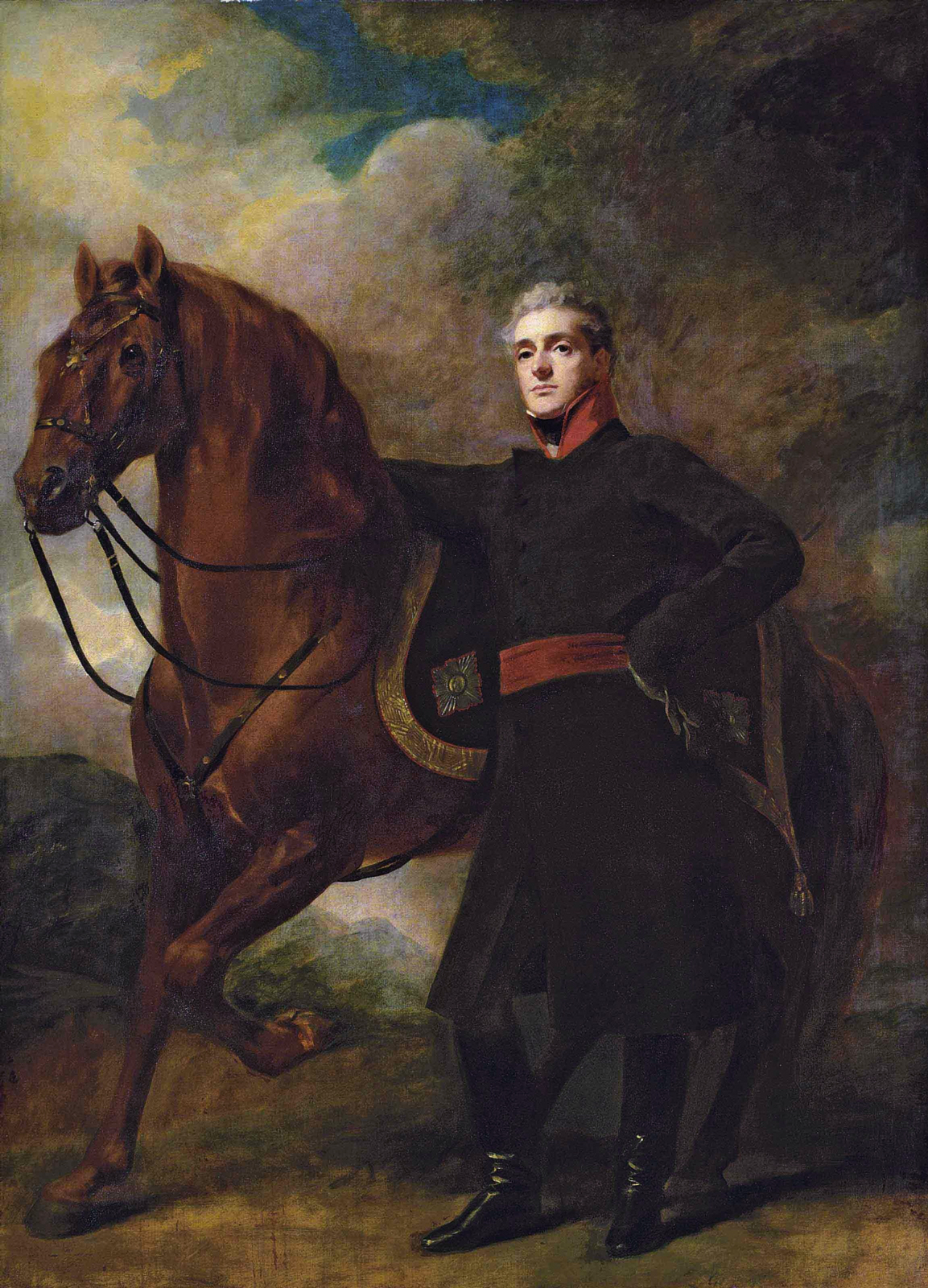
The tazza’s sobriquet of Hamilton comes from Alexander, 10th Duke of Hamilton (1767–1852). While the British ambassador in Russia, the Duke acquired this vessel between 1807 and 1808. The bowl is made of sardonyx, a banded variety of the mineral chalcedony that alternates layers of sard and onyx. Hamilton purchased it in St. Petersburg, Russia, for 9,000 rubles. He believed that it was the holy water font of Emperor Charlemagne. While scholars today have no proof, it is supposed that it was located in Cologne Cathedral at some point and then transferred to St. Petersburg during the Napoleonic Wars.
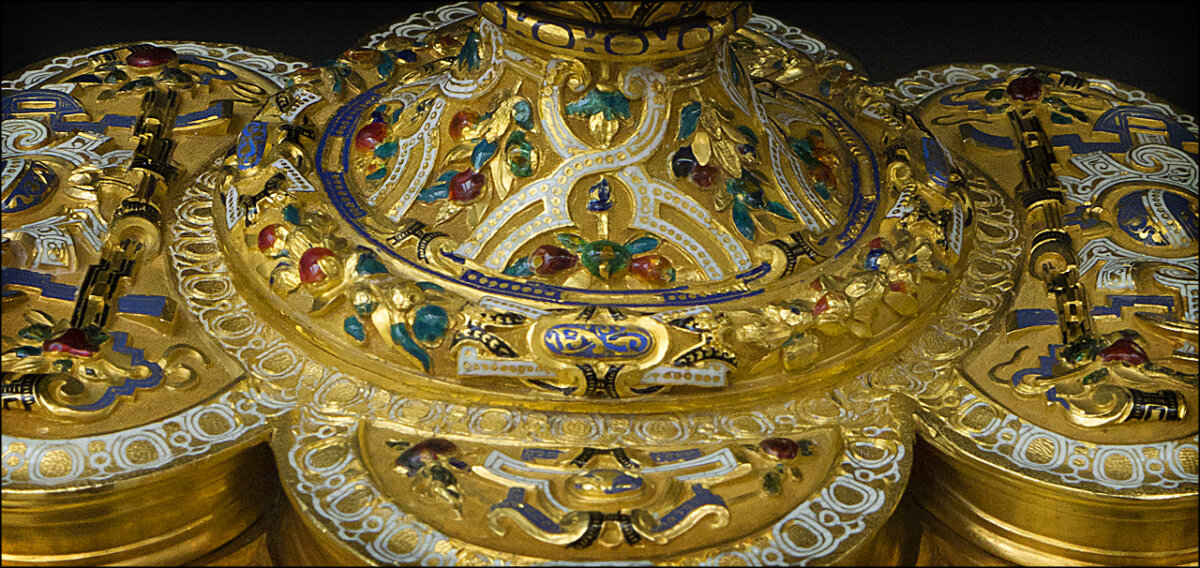
Several years later, in 1812, the Duke acquired a solid gold foot weighing 38 ounces from the British Royal Goldsmiths Rundell, Bridge and Rundell for 241 pounds (over $20,000 today). This stand came from a massive monstrance that King Philip II of Spain had presented in the mid-1500s to the royal Monastery of the Escorial. The foot is enameled with an array of gemlike colors. Its decorative scheme includes cherubs holding instruments of Christ’s Passion.
A Repurposed Masterpiece
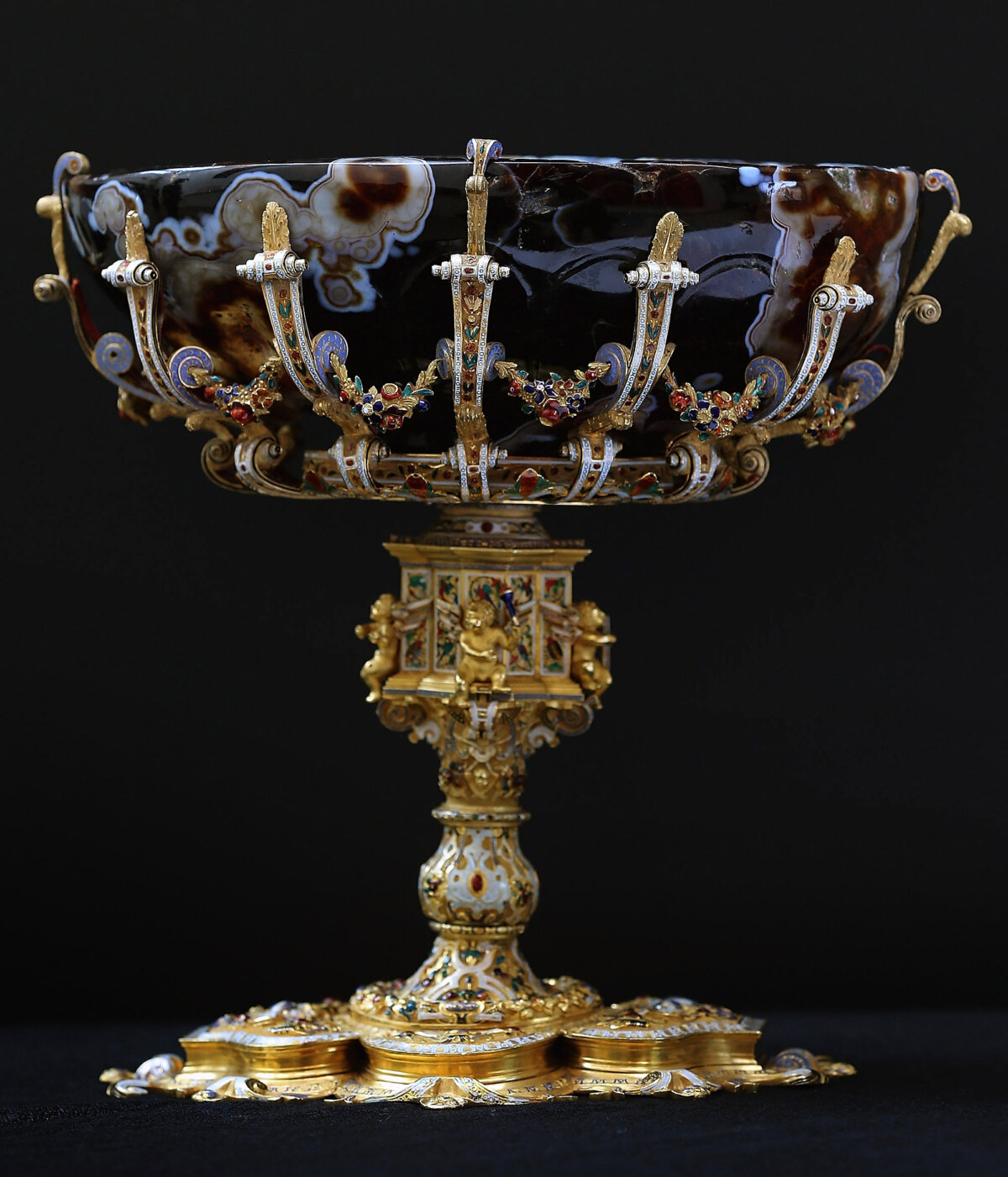
Hamilton united these two historic parts to create the tazza. It was used for the baptisms of his children. The duke saw himself as the premier peer of Scotland and the true successor to the Stuart kings. Thus, this vessel with imperial and royal connections befitted the family’s grand status.
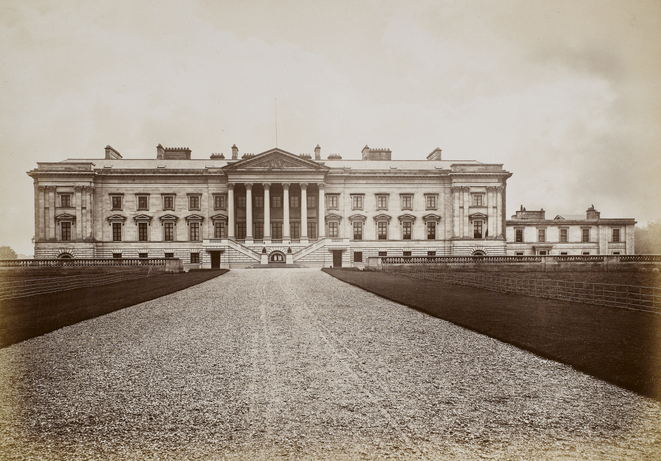
The Duke formed one of the greatest art collections in Europe, and the tazza was among its highlights. Valued in 1852 at 1,500 pounds (over $250,000 today), it was housed in the West Wing of the family’s majestic Hamilton Palace. In its heyday, the building was described by a commentator as being “One of the noblest residences in Europe … and probably containing a greater collection of rare works of art than the abode of any man under the rank of sovereign.” Sadly, this stately home was demolished in the 1920s.
Arts Council England has recently announced that from 2027 to 2028 a touring exhibition in the UK’s four capital cities will celebrate objects acquired by the nation through Acceptance in Lieu and the Cultural Gifts Scheme. The first display is at the National Gallery in London from May 22 to Sept. 5, 2027. Subsequent presentations will be at Amgueddfa Cymru—Museum Wales in Cardiff, National Galleries of Scotland in Edinburgh, and Ulster Museum in Belfast. The exact dates and exhibit pieces for the non-London exhibits are yet to be confirmed, but the National Gallery’s version will include the Hamilton-Rothschild tazza. Fittingly, this exhibit is titled “Collected: Centuries of Art, Saved and Shared.”
What arts and culture topics would you like us to cover? Please email ideas or feedback to features@epochtimes.nyc.