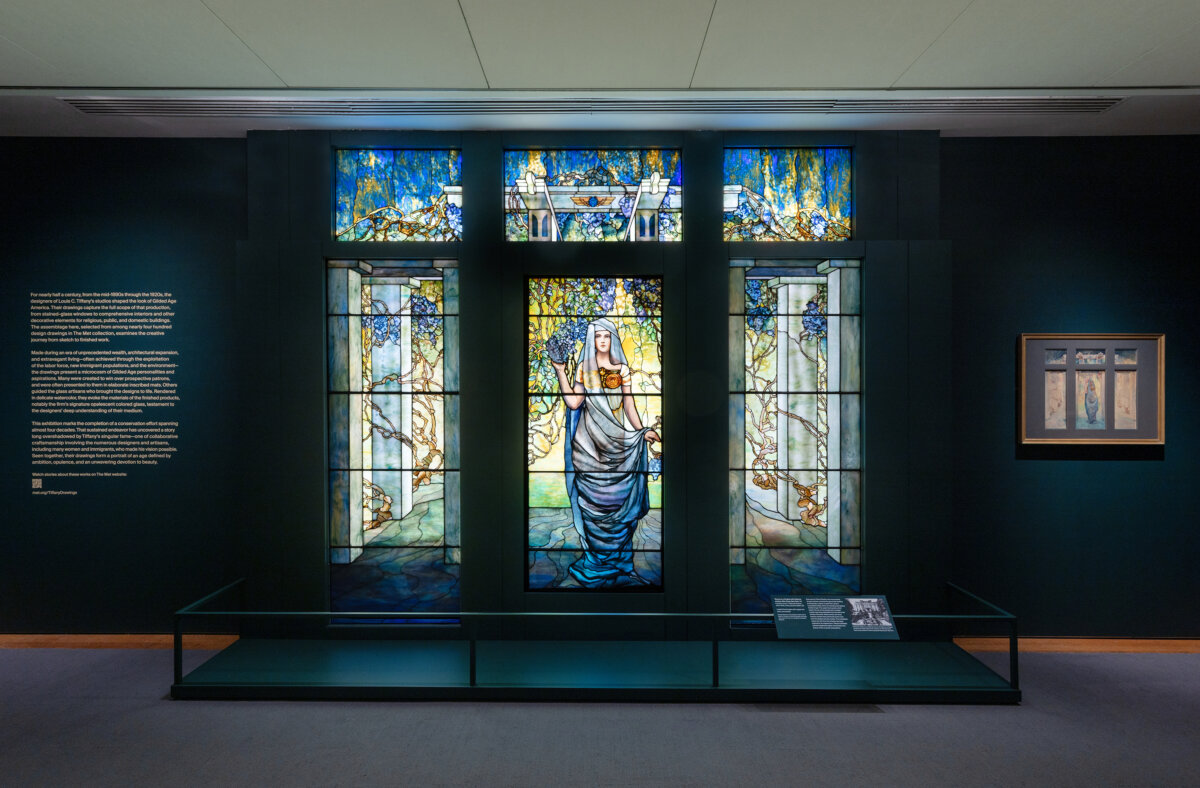
NEW YORK CITY—The art of Louis Comfort Tiffany—including mosaics, stained-glass windows, and, most famously, lamps—is synonymous with innovation, craftsmanship, and aesthetic beauty. In collaboration with numerous talented designers and workers, Tiffany’s studios created astounding artworks during America’s Gilded Age, the post-Civil War era marked by an economic boom in which an unprecedented number of financiers and industrialists made vast fortunes. Many of the era’s most prominent people commissioned Tiffany for individual pieces or even complete interiors.
The Metropolitan Museum of Art’s new exhibit “Designing the Gilded Age: Drawings from the Studios of Louis C. Tiffany,” on view through Feb. 7, 2027, explores the oeuvre of Tiffany’s studios through surviving design drawings. Exquisite watercolors that served as client presentation pieces are displayed alongside working drawings that bear the marks of use.
The nearly 120 drawings on view from the museum’s permanent collection span domestic and international commissions dating from the mid-1880s through the 1920s. Some examples document famous and extant projects or depict ideas that were not selected by clients. Poignantly, others offer a window onto a work that has since been altered, damaged, or demolished.
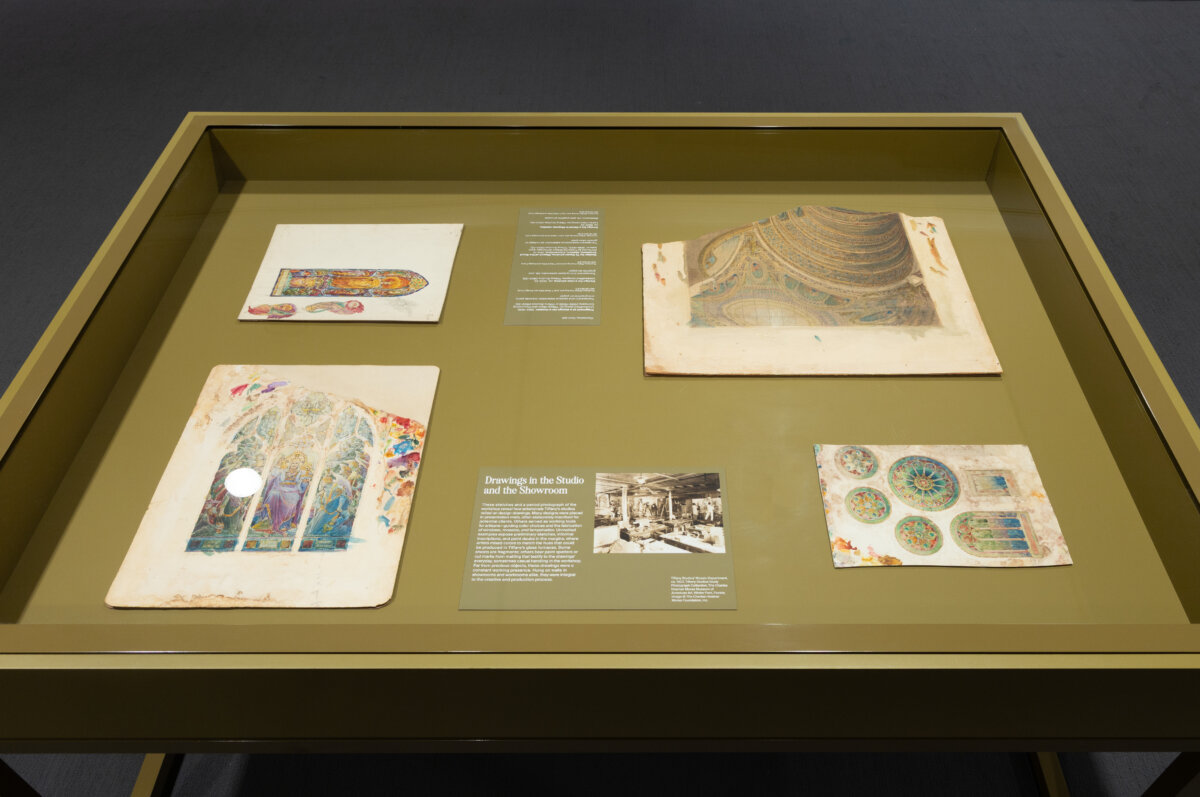
Organized in four parts—The Decoration of Houses, Houses of Worship, Palaces of Commerce and Culture, and Illuminating the Gilded Age—the exhibit is the culmination of a nearly 40-year conservation project. The restored works on paper are once again luminous. In tandem, curators have made exciting discoveries about a number of the projects’ backstories and the designers’ artistic processes and inspirations.
A selection of specific Tiffany objects, including lighting, windows, and enamelwork, are incorporated into the exhibit. It is a thrill to study them alongside their corresponding drawings.
Designs for Domestic Interiors
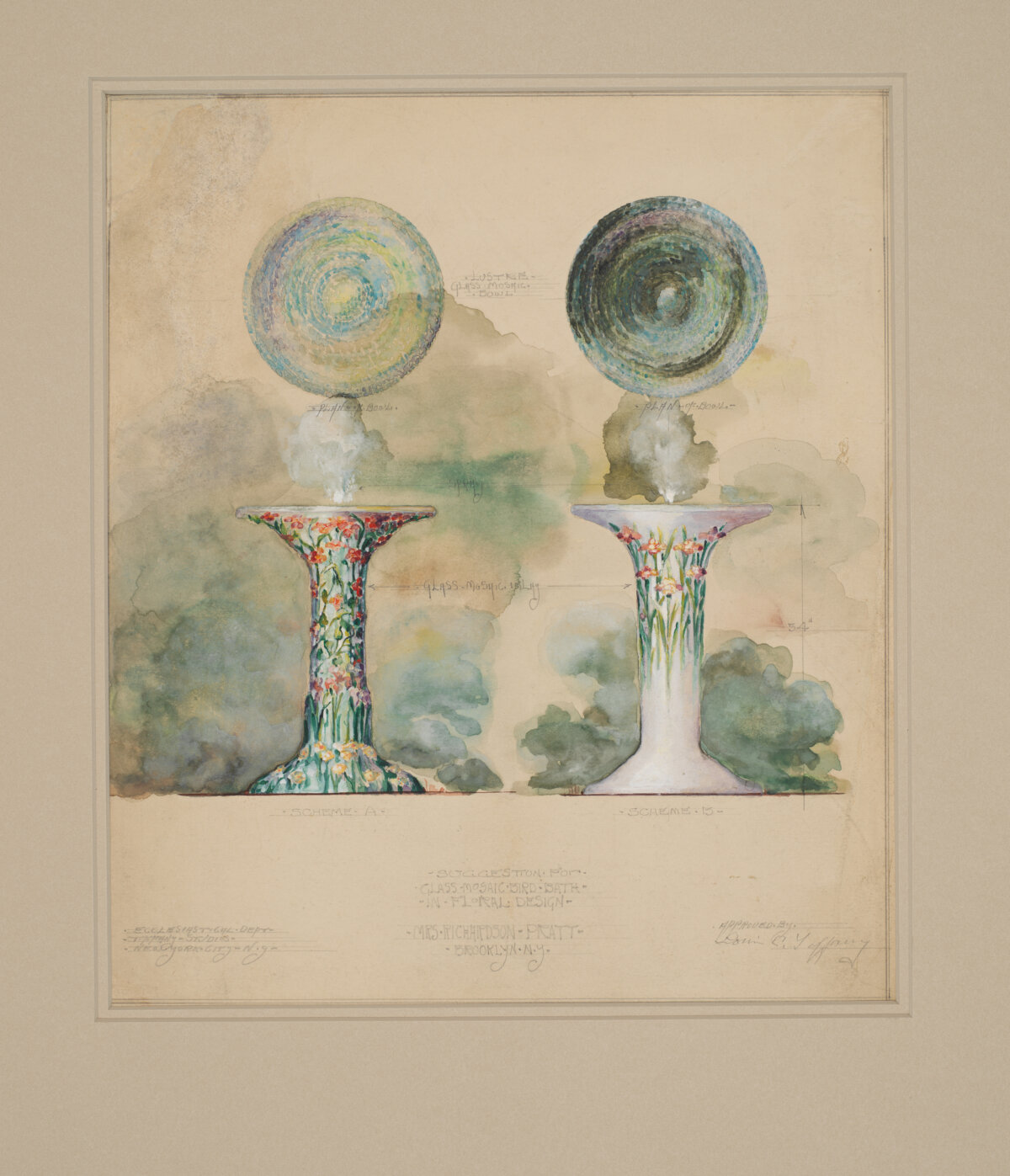
A favorite drawing of exhibit curator Alice Cooney Frelinghuysen is “Suggestion for Glass Mosaic Bird Bath in Floral Design, Mrs. Richardson Pratt, Brooklyn, New York” from circa 1917. This birdbath was commissioned by Laura Cecilia Parsons Pratt as a gift for her mother-in-law for the Pratt Long Island estate. The family’s patriarch Charles Pratt was the founder of Pratt Institute in Brooklyn.
The two Tiffany schemes show pedestals adorned with florals and crowned by iridescent glass mosaic bowls. The Met expounds upon the shimmering bowls: “Delicate gradations of blue, green, and purple ‘luster’ glass lining the bowl’s interior evoke the water within and the shimmering flow from the central fountain.” A running theme throughout Tiffany’s work is a fascination with fountains and water features.
During the Gilded Age, stained glass windows were introduced as a feature in the mansions of the newly prosperous. Agnes F. Northrop, the firm’s longest-serving designer, specialized in windows and was innovative in her incorporation of landscapes, gardens, and flowers.
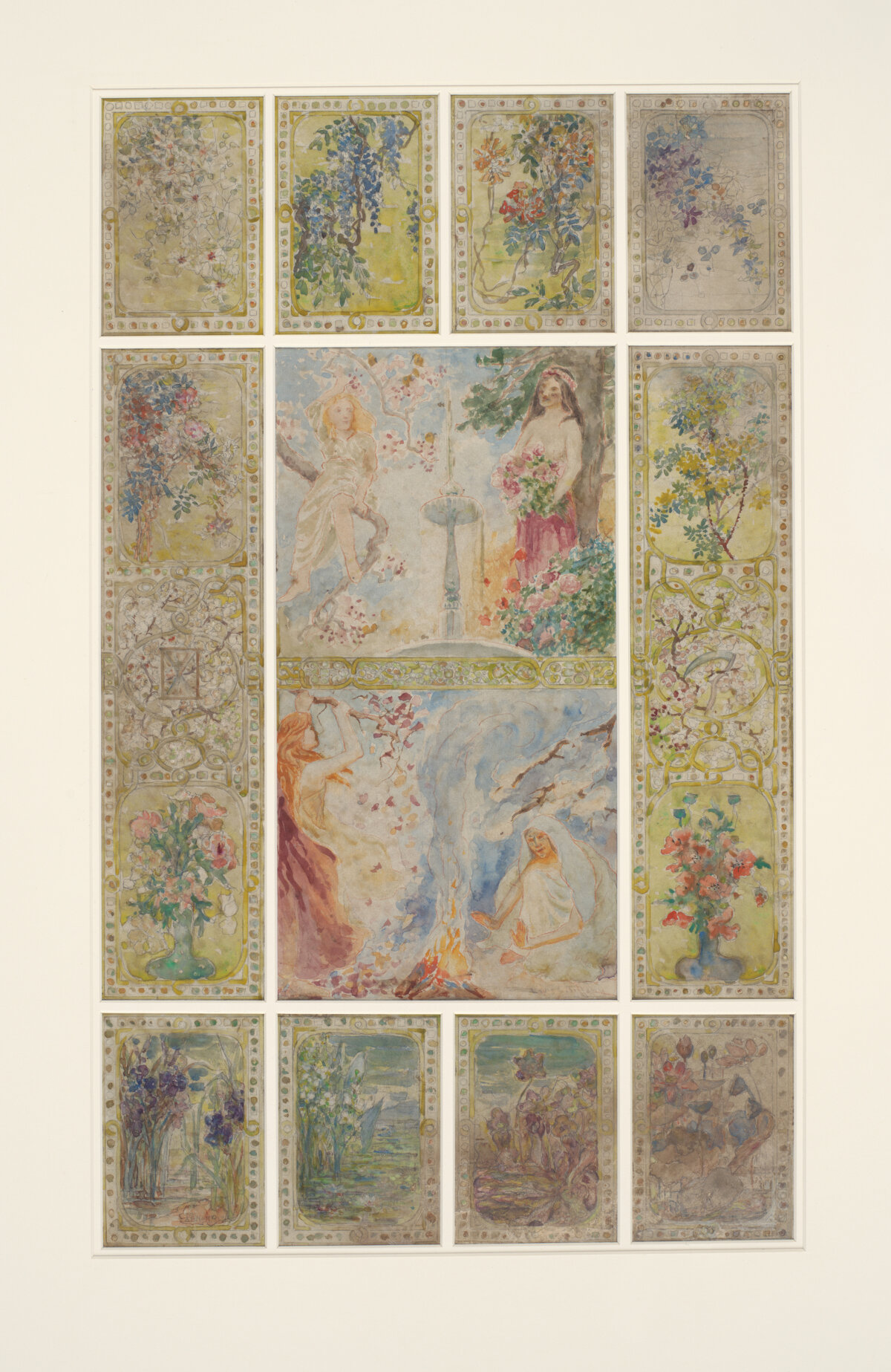
One of the most important drawings in the exhibit is a design she collaborated on with Tiffany. “Design for ‘Four Seasons’ Window, Walter B. Jennings House, Burrwood, Cold Spring Harbor, New York” dates to 1897 and clearly shows the styles of both artists. Northrop and Tiffany signed this drawing as well. Tiffany used red pencil and loose washes in his design portions while Northrop favored graphite underdrawings with precise watercolor.
The central panel of this design, signed by Tiffany, shows allegorical figures representing the four seasons. “Spring with apple blossoms, Summer crowned in roses, Autumn with windswept crimson leaves, and Winter warming herself by a fire beneath snowy pine boughs,” The Met describes in the wall label. Northrop’s 12 floral vignettes, signifying the number of months in a year, make up the border.
This magnificent design was made for a window commissioned by Walter B. Jennings and his wife, Jean Brown Jennings, for their Long Island estate known as Burrwood. Only the central glass panels of the four seasons have survived. Descending in a private collection since 1938, they have been lent for this exhibit and reunited with the museum’s drawing.
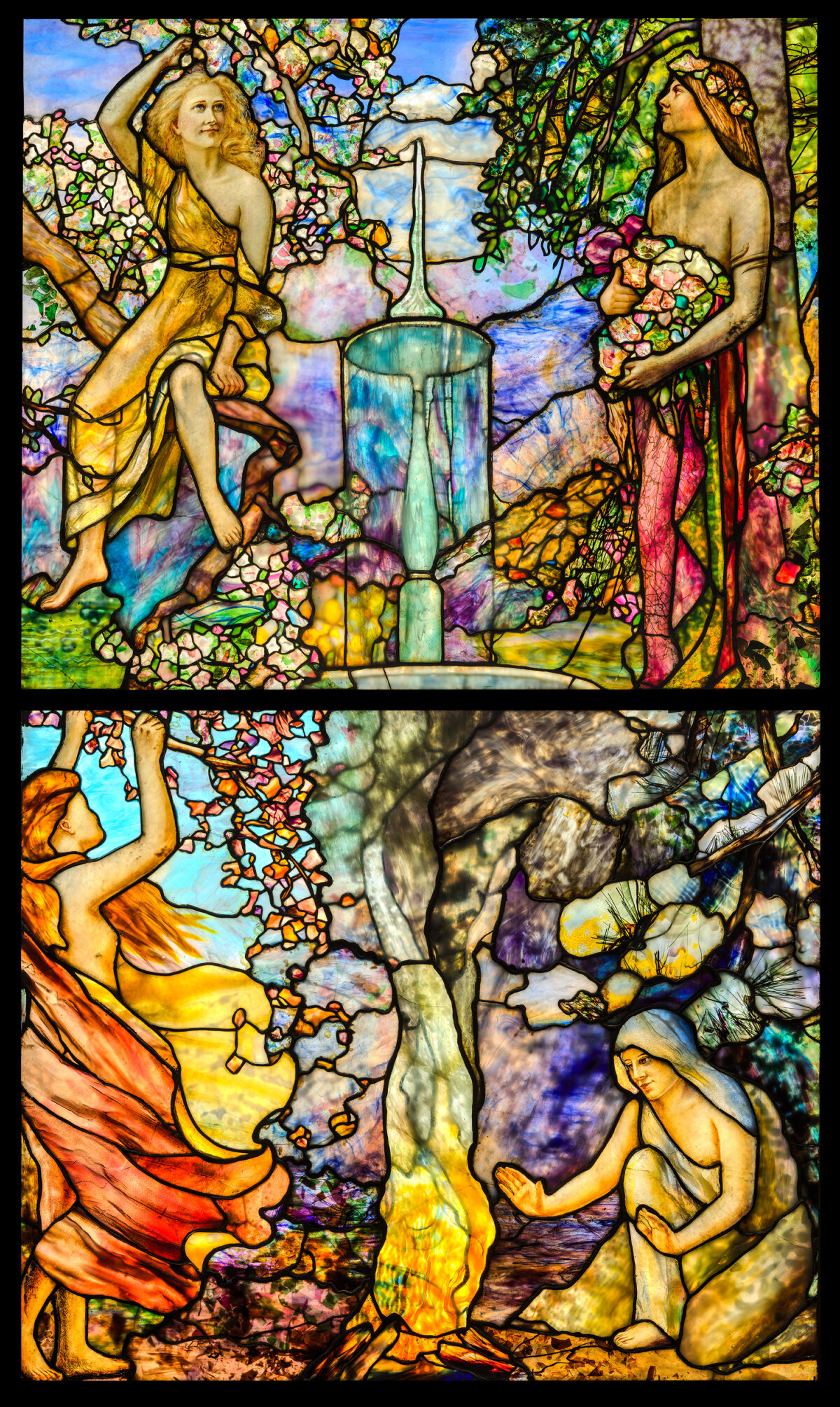
The window is a tour de force. It showcases a great range of colored and textured glass used to create foliage, drapery, and the elements of water and fire. Burrwood’s window was also made with extensive plating, a technique that layers glass on the front and back. The complexity of this window leads curators to believe that Tiffany likely was active in realizing the finished project.
Houses of Worship and Palaces of Commerce
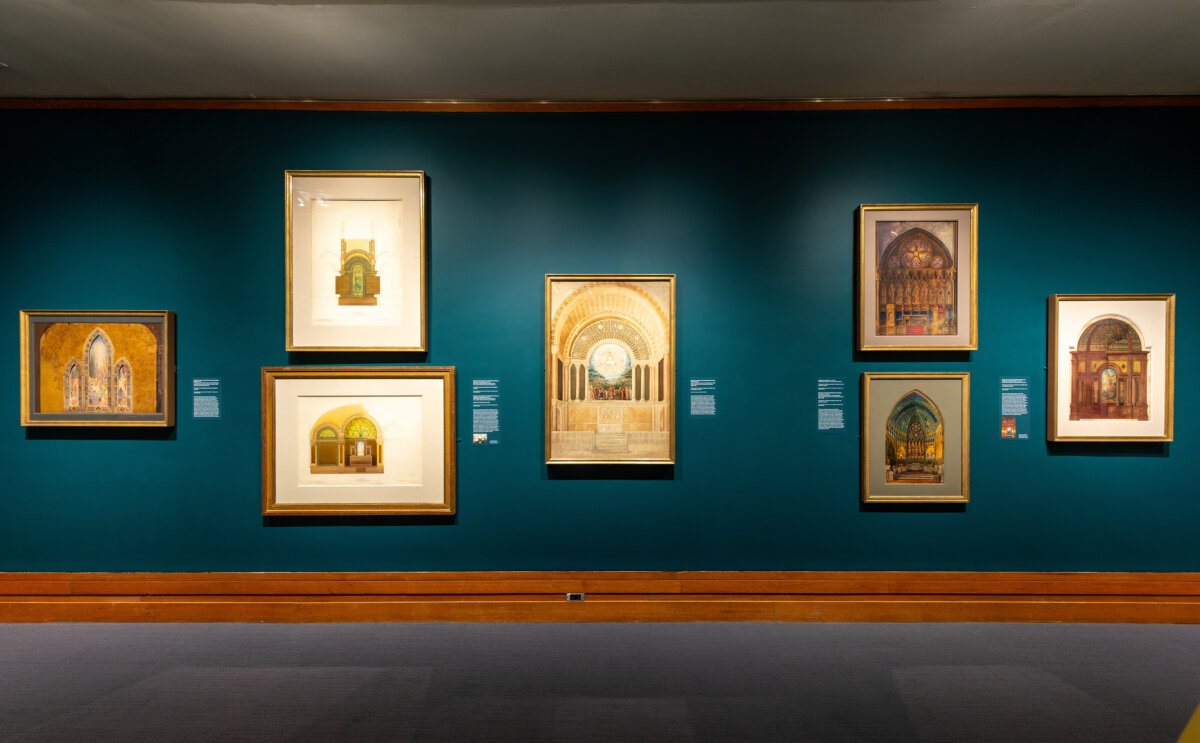
Along with constructing grand mansions to mark their arrival in society, many Gilded Age titans were highly philanthropic. Contributing to the building or renovating of houses of worship was a popular charitable contribution. Indeed, in the year of 1888 alone, more than 4,000 churches were in the process of being built in the United States. The following year, Tiffany established the Ecclesiastical Department to meet demand. It worked primarily on Protestant churches, but Catholic and Jewish congregations also made commissions.
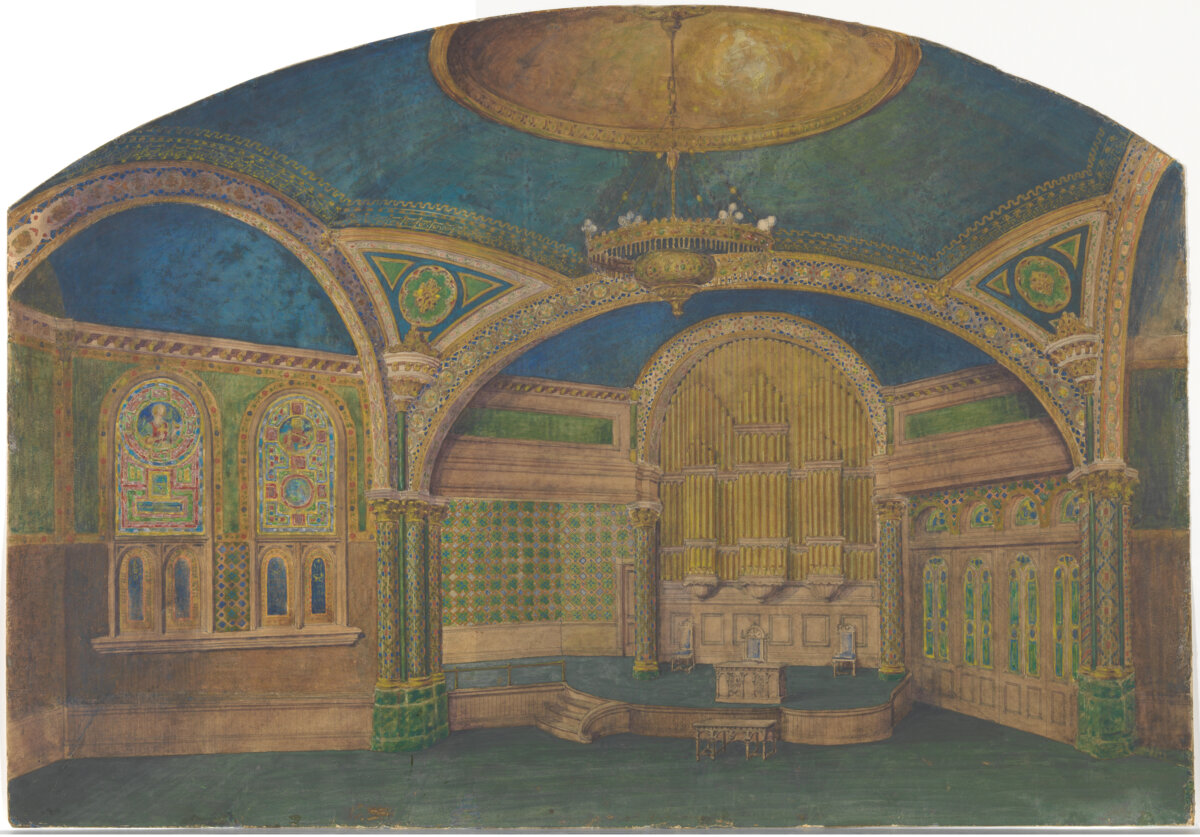
The spectacular 1906 to 1908 “Design for Interior of First Presbyterian Church, Poughkeepsie, New York” is a large, refined rendering in blue, gold, and green for the newly built church in the Hudson Valley. This drawing was likely presented for evaluation as part of a competitive process. Tiffany Studios was selected, but the interior they created is now largely destroyed.
In addition, Tiffany took orders from commercial establishments (such as centers of finance), cultural organizations (including theaters), and educational institutions (among which were museum galleries). Tiffany mosaics were deemed especially suitable for banks, as the medium “evoked a sense of permanence and prosperity,” cites The Met.
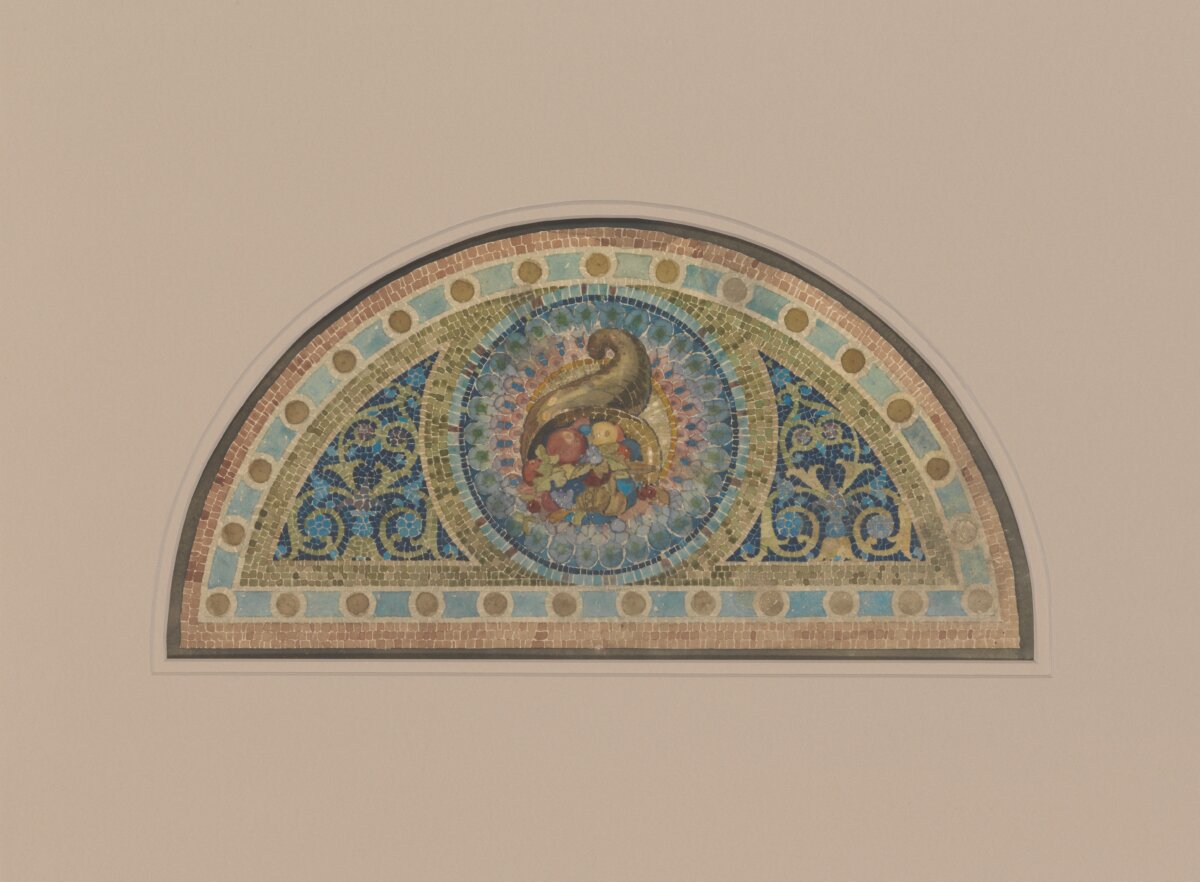
The 1909 drawing “Suggestion for a Mosaic Lunette, Merchants and Mechanics Bank, Scranton, Pennsylvania” has an overflowing cornucopia at its center. This was a symbol of abundance. However, the managers selected a different decorative scheme from Tiffany for the bank’s grand new building.
Illuminating the Gilded Age
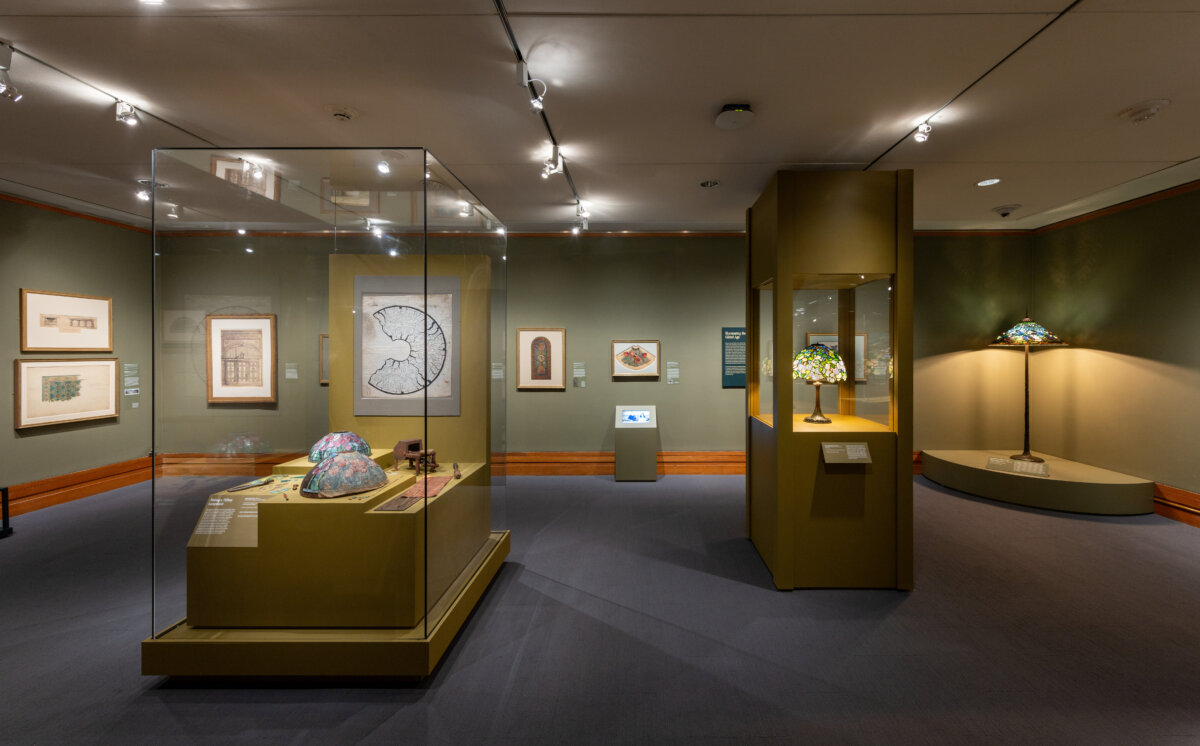
Tiffany’s lamps are among the most recognizable artworks in the world. A range of lighting forms, including chandeliers, lanterns, wall lights, as well as table and floor lamps, were produced between the late 1890s and 1920s. Such objects are decorated with motifs from the natural world and made with carefully colored, textured, and cut glass.
Working drawings, known as cartoons, guided the craftspeople in the assembly of these lighting fixtures. Presentation drawings of one-of-a-kind designs attest to the success of this enterprise.
Clara Driscoll was a leading designer of Tiffany lamps. The exhibit’s “Design for a ‘Poppy’ Lampshade” from circa 1900 is attributed as probably by her. It is a full-scale watercolor cartoon for a 16-inch conical Poppy shade. It depicts one-third of the pattern, which would then repeat two additional times around the finished shade. The poppy was a recurring motif for Tiffany Studios, reflecting a Japanese influence.
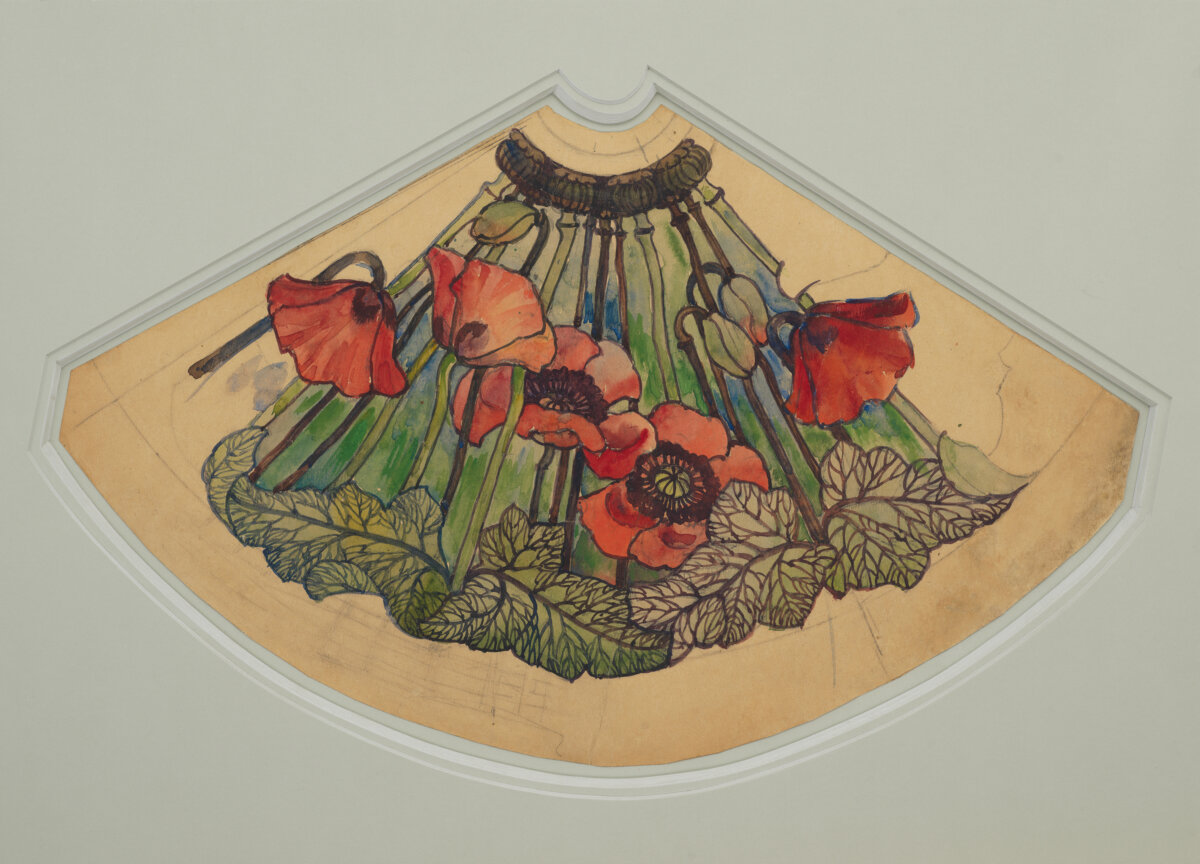
As seen in the exhibit’s drawings, the firm could produce works in an astonishingly diverse range of styles, including Gothic, Renaissance, Chinese, Celtic, Byzantine, Egyptian, and classical.
This remarkable exhibit offers visitors an extraordinary opportunity to see these rare drawings. One gains a greater understanding and appreciation for the sheer number of talented people who contributed to Tiffany’s output, the visionary himself, and the museum’s meticulous conservators and curators who have brought these treasures back to life.
“Designing the Gilded Age: Drawings from the Studios of Louis C. Tiffany” at the Metropolitan Museum of Art in New York City is on view through Feb. 7, 2027. To learn more, visit MetMuseum.org.
What arts and culture topics would you like us to cover? Please email ideas or feedback to features@epochtimes.nyc.