In the spring of 1863, Emperor Napoleon III bought Alexandre Cabanel’s “The Birth of Venus,” and the Paris Salon had its star. Cabanel, then 39, would be elected to the Institut de France before the year was out. Nearby, in the Salon des Refusés, Edouard Manet’s “Le Déjeuner sur l’herbe” was drawing scandalized crowds. No one in Paris that spring would have guessed which of the two painters posterity would remember.
From Montpellier to Paris
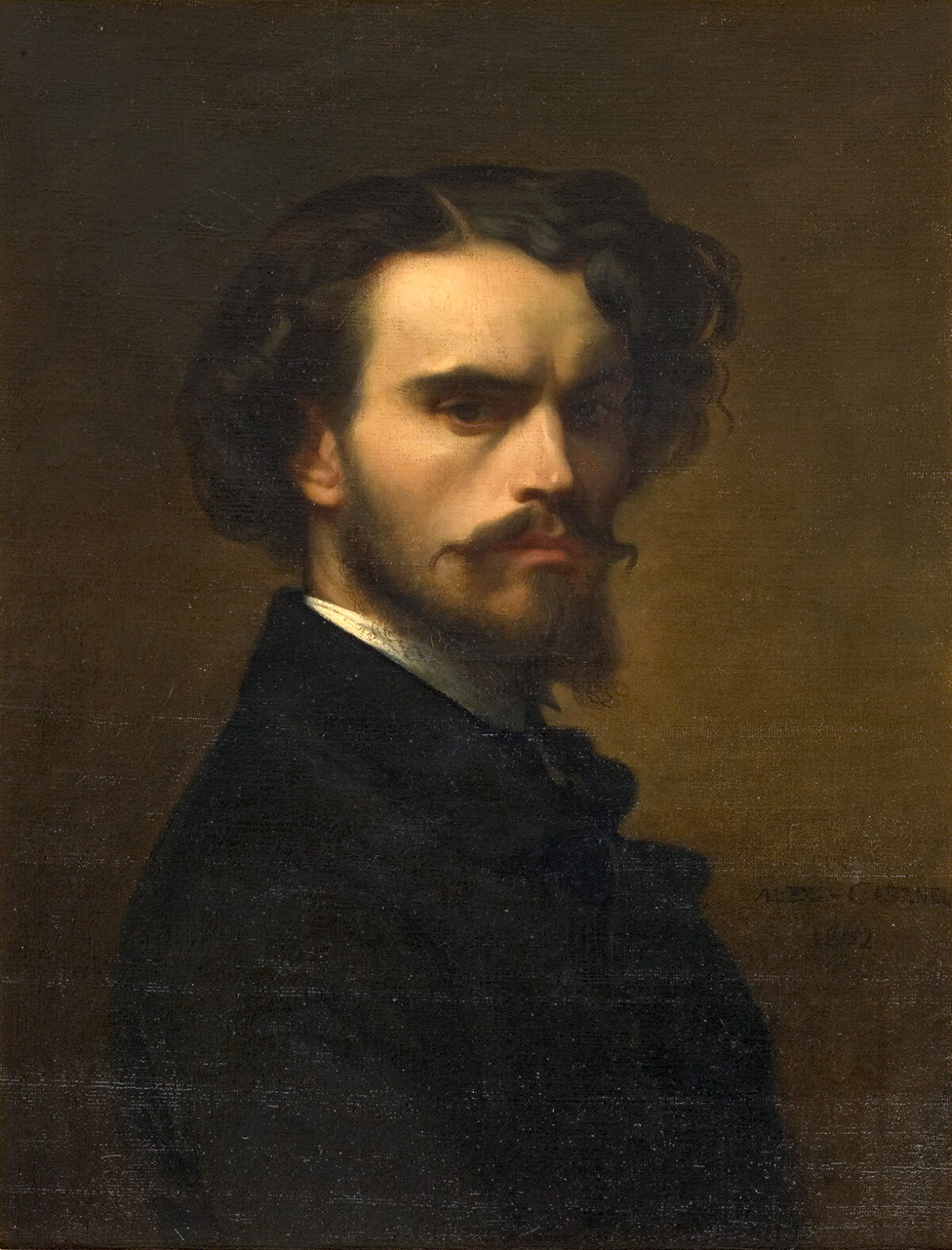
Cabanel had come a long way from Montpellier, where he was born on Sept. 28, 1823 to a carpenter. He began his training at the local School of Fine Arts under Charles Matet, who was also curator of the Musée Fabre. Impressed by his talent, the school awarded him a scholarship to continue his studies in Paris at 17.
At the Ecole des Beaux-Arts, Cabanel studied under François-Edouard Picot, a respected painter of historical and narrative subjects. The rigorous curriculum in drawing, anatomy, composition, and artistic traditions laid the foundation for the academic style that would define much of his career.
He first exhibited at the Paris Salon in 1844, and the following year, at 22, won the prestigious Prix de Rome. Established in 1663 under Louis XIV, the prize funded several years of study at the French Academy in Rome. Cabanel took up residence at the Villa Medici that year and stayed until 1850. There, he studied the Italian masters.
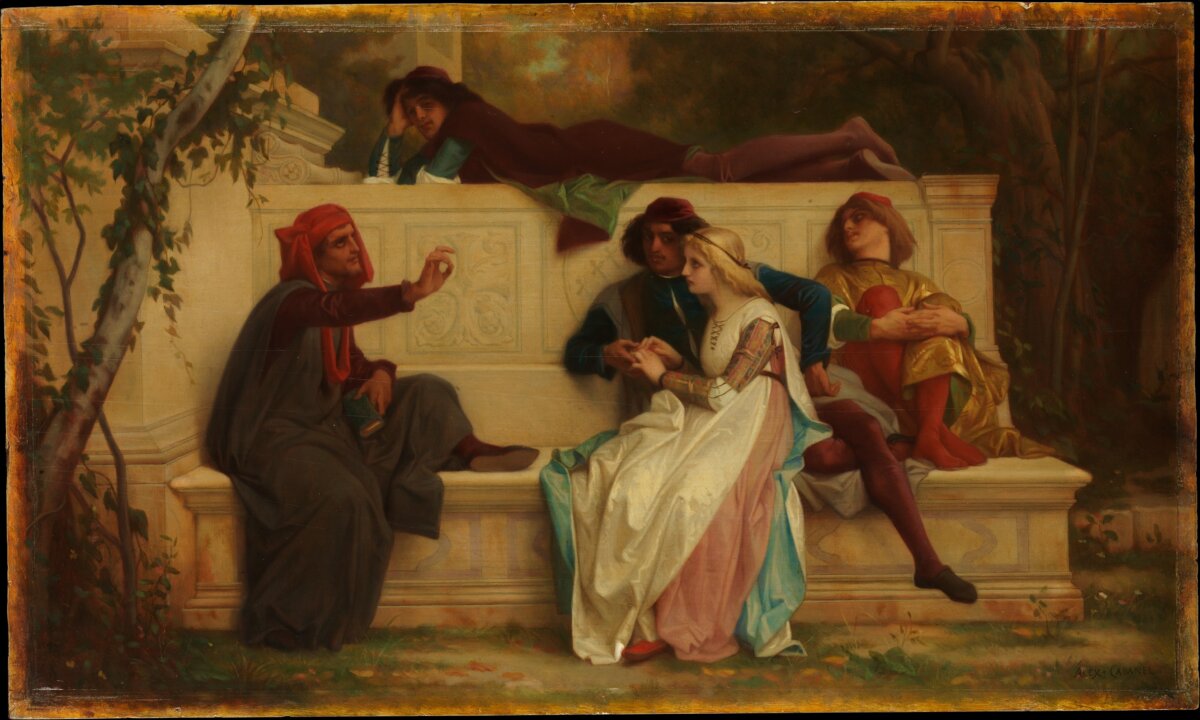
Much of his early work drew on historical, religious, and literary subjects, and “Florentine Poet” shows how fully he could stage a scene from the past. The painting reflects the 19th-century fascination with the Florentine writer and philosopher Dante Alighieri (circa 1265–1321), whose life, exile, and poetry inspired artists and writers from Eugène Delacroix to Dante Gabriel Rossetti, as well as Cabanel himself.
Dressed in dark robes, the man with a red-hooded cap is believed to depict Dante. The poet leans forward on an elaborately carved bench, one hand raised as he recites verses of love. The bench’s scrollwork and classical reliefs anchor the Renaissance setting and show Cabanel’s eye for detail.
Painter to the Emperor
Cabanel’s breakthrough came with “The Birth of Venus,” shown at the 1863 Salon. The emperor’s purchase of the painting for his private collection began a relationship that expanded Cabanel’s role within the artistic establishment of the Second Empire. Napoleon III also bought “Nymph and Satyr,” and both works were displayed in the imperial palaces. Between 1861 and 1868, Cabanel was invited to the séries at Compiègne, gatherings the emperor and Empress Eugénie held for members of their artistic and social circles.
The connection was reflected in Cabanel’s portrait of Napoleon III, exhibited at the 1865 Salon. The painting departed from conventional imperial portraiture by showing the emperor in a simple black evening suit rather than ceremonial dress. The sash of the Légion d’honneur crosses his chest, while his imperial robes, crown, and other emblems of sovereignty are arranged behind him, establishing his rank without dominating the composition.
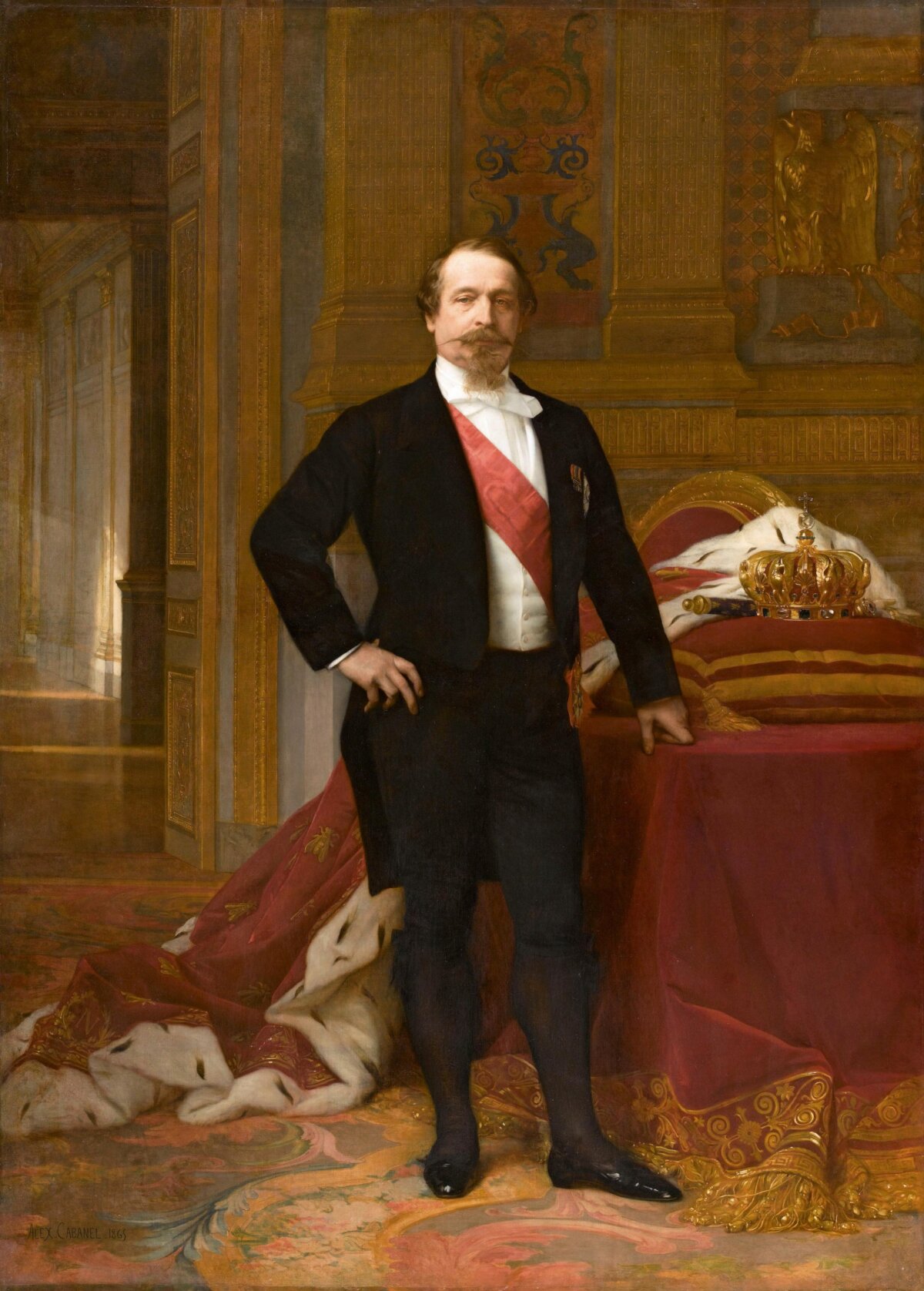
The portrait received the Medal of Honor and drew considerable attention in France and the United States, and it was especially well received at court. In 1866 it was purchased for 20,000 francs and installed in Empress Eugénie’s study at the Tuileries Palace, the principal imperial residence in central Paris. After the fall of the Second Empire in 1870, Eugénie left France for England and settled at Farnborough Hill in Hampshire, southwest of London. The portrait hung in her study there, among the many objects she kept from her years at court.
Portraits of the Gilded Age
During the 1870s and 1880s, Cabanel attracted a growing clientele among wealthy Americans. Collectors including William Astor, William T. Walters, William H. Vanderbilt, and Jay Gould acquired his historical paintings, while other prominent families commissioned portraits. Cabanel never traveled to the United States, so these clients came to Paris to sit for him, a trip that became part of Gilded Age social culture. For families eager to associate themselves with European sophistication, a portrait by the painter of aristocrats and an emperor carried considerable prestige.
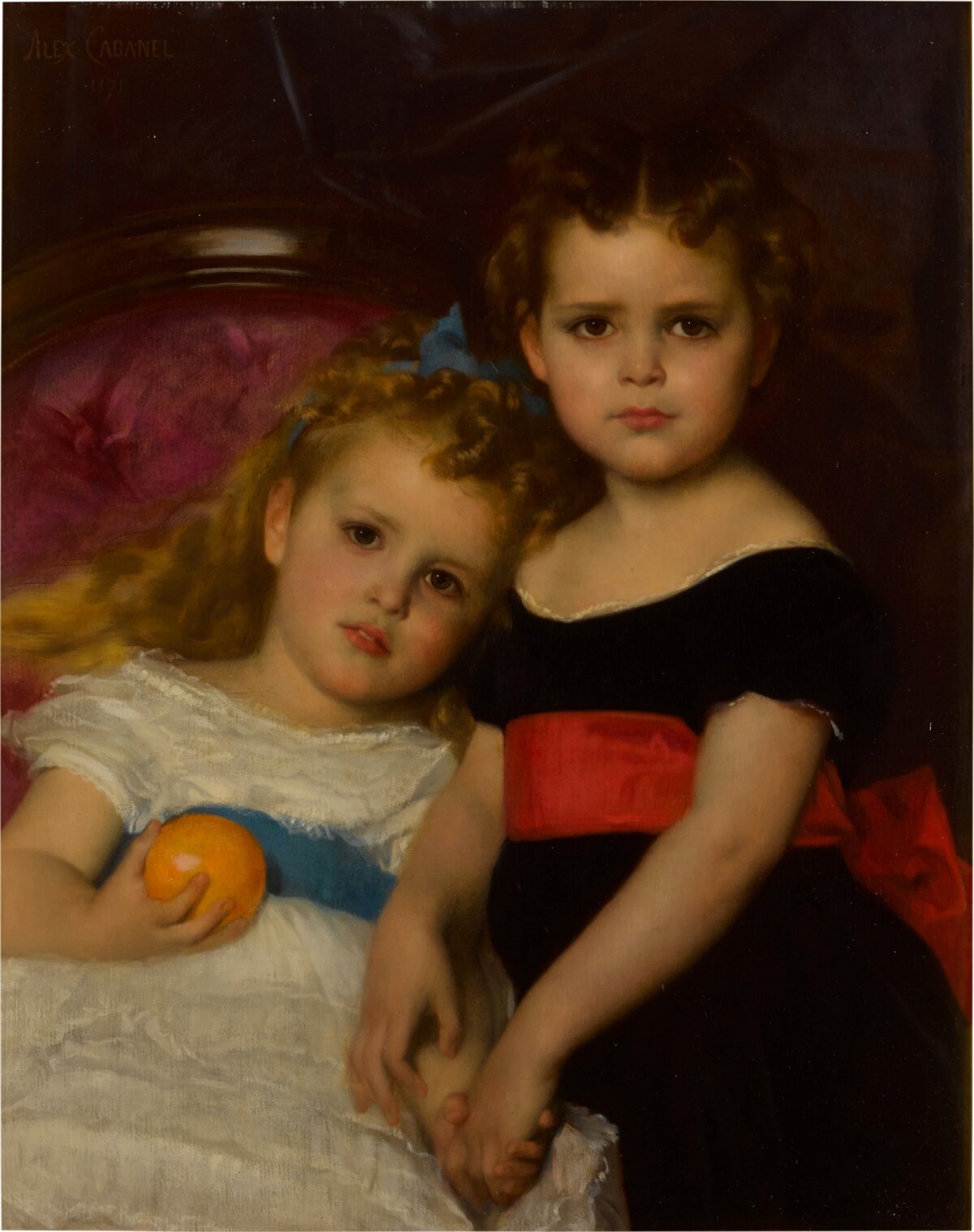
Women were especially important among his portrait clients. He often simplified backgrounds and pared down accessories, letting the sitter command the composition, and he gave particular attention to posture, clothing, expression, and the hands. He also subtly adjusted proportions, sometimes elongating the neck or limbs, to create more graceful lines while preserving a recognizable likeness. Critics frequently praised the elegance of these portraits, though others charged that Cabanel softened or idealized his sitters at the expense of individual character. The criticism points to what the paintings were: not simple records of appearance but carefully constructed representations, conveying status and respectability within the decorum expected of elite society.
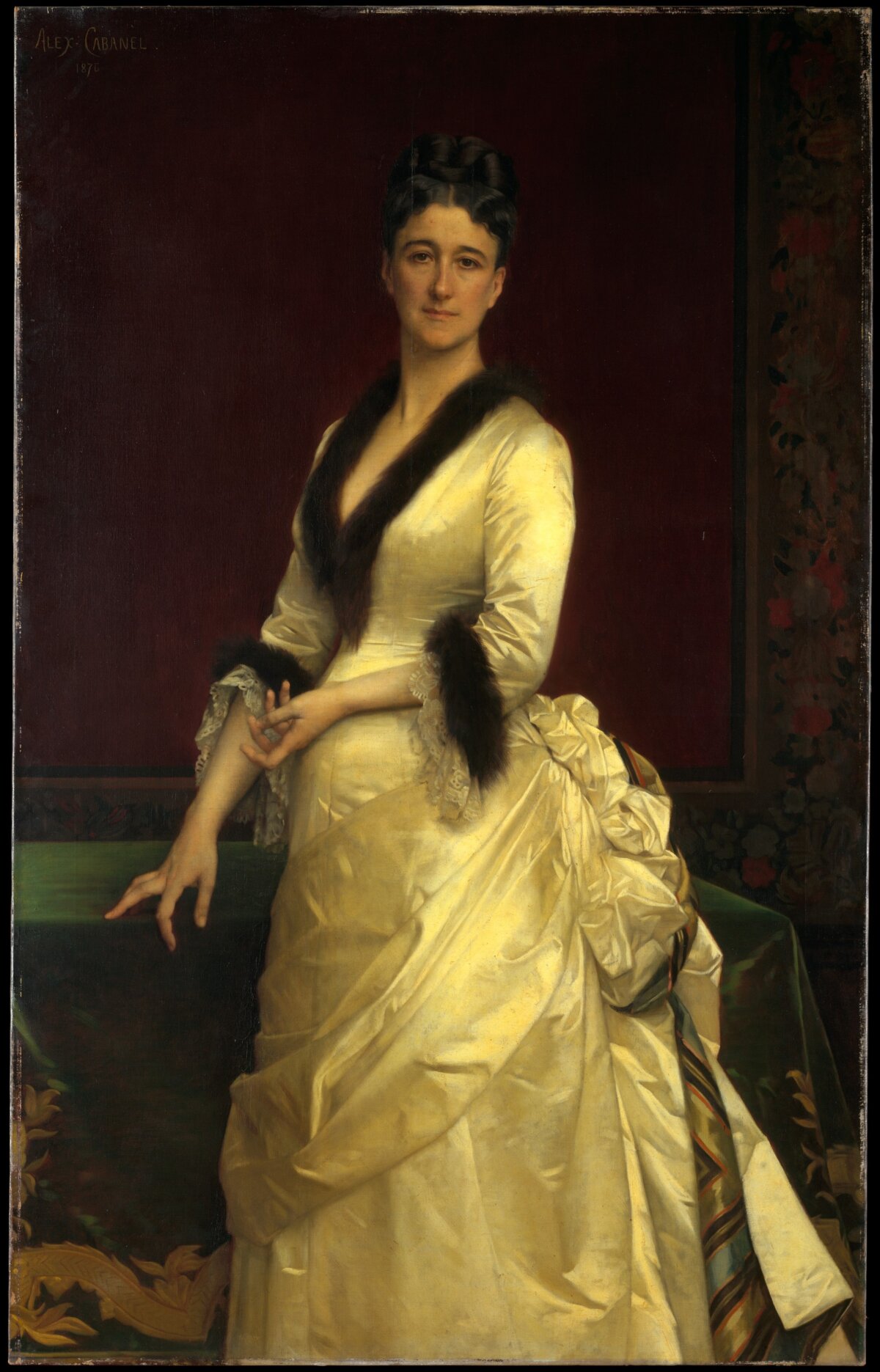
His portrait of Catharine Lorillard Wolfe, a wealthy New York philanthropist and art collector, shows this approach: an elaborate white satin gown trimmed with fur and lace, carefully positioned hands, and a composed posture reinforce an image of confidence and social poise. Wolfe was reportedly the wealthiest unmarried woman in the United States and became the Metropolitan Museum of Art’s benefactor. Encouraged by her cousin John Wolfe, she became a patron of Cabanel and other leading European academic artists. In 1887, she donated the portrait to The Met, along with numerous other artworks and an endowment for future acquisitions.
The Academic Tradition and Its Critics
Cabanel stood at the center of the artistic establishment just as its foundations were being challenged. He received the Legion of Honor in 1855 and joined the 1863 joined the Académie des Beaux-Arts in 1863. In 1864, he joined the faculty of the Ecole des Beaux-Arts, where he taught for the rest of his life. He also served repeatedly on the Salon jury, including 17 times between 1868 and 1888. The Salon favored the academic tradition in which he had been trained, while artists such as Manet and Gustave Courbet pursued approaches that departed from that heritage. The younger generation increasingly preferred contemporary life, direct observation, and less polished painting methods.
Cabanel’s reach went beyond the canvas and into the classroom. His atelier attracted many students, including Jules Bastien-Lepage, Jean-Joseph Benjamin-Constant, Henri Le Sidaner, and Aristide Maillol, whose varied careers show the adaptability of his training. His own work remained rooted in the academic tradition.
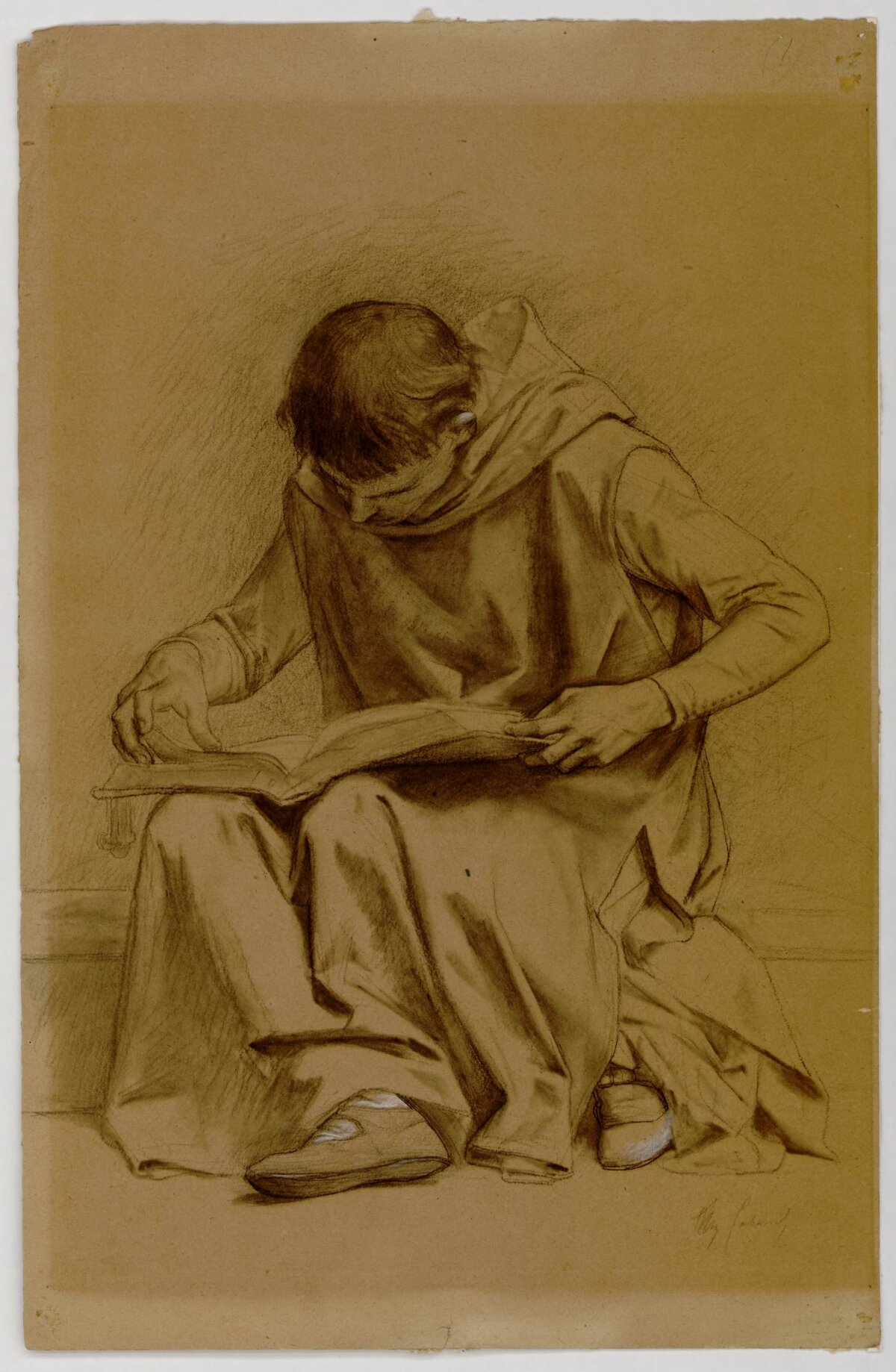
Cabanel continued teaching and exhibiting until the end of his life, earning promotion to Commander of the Legion of Honor in 1884 and election to the Royal Academy of Belgium in 1887. He died in Paris on Jan. 23, 1889, at age 65. His body was returned to Montpellier for burial, and a monument to him was erected there in 1892. His career marks a pivotal moment in French art, when the established order still held sway.
What arts and culture topics would you like us to cover? Please email ideas or feedback to features@epochtimes.nyc.