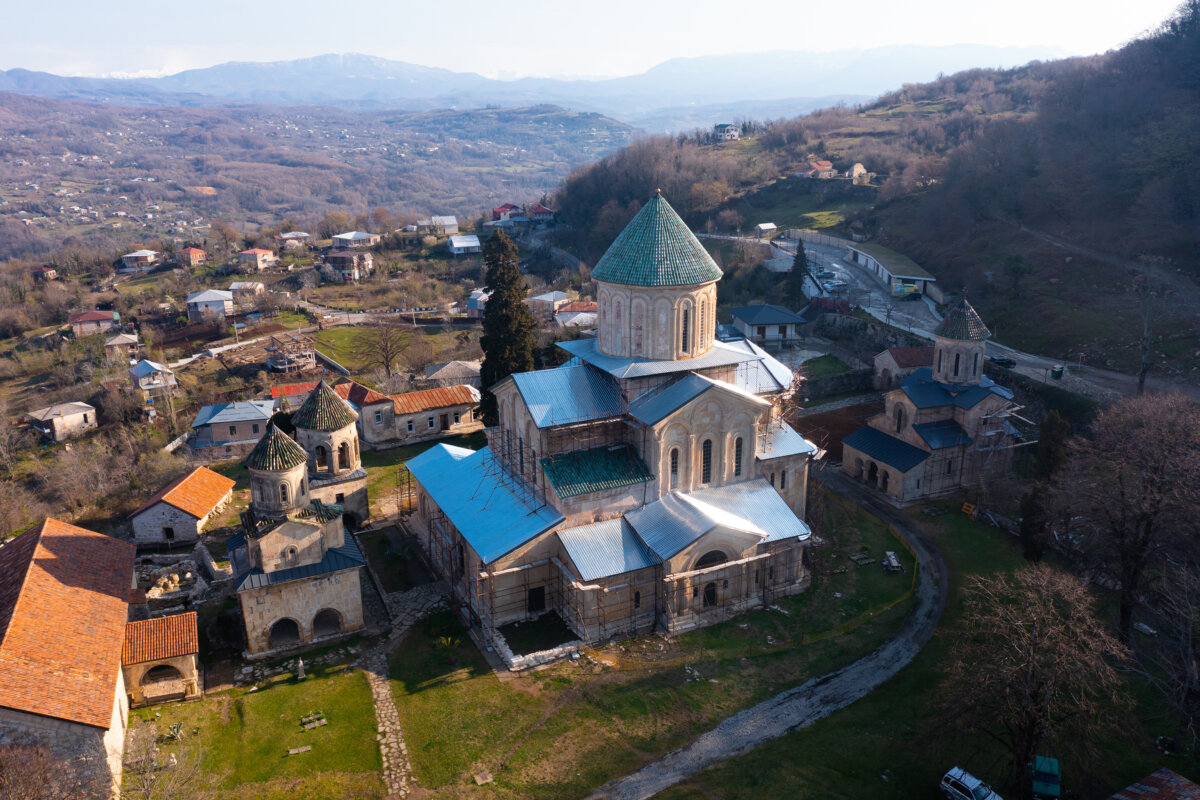
Kutaisi, in western Georgia, is one of the world’s oldest inhabited cities. Northeast of the city, Gelati Monastery occupies a wooded hillside, where it was founded in 1106 during Georgia’s medieval Golden Age. The complex became a major center of religious and intellectual life and remains a treasured example of the country’s architectural and cultural heritage. (BearFotos/Shutterstock)
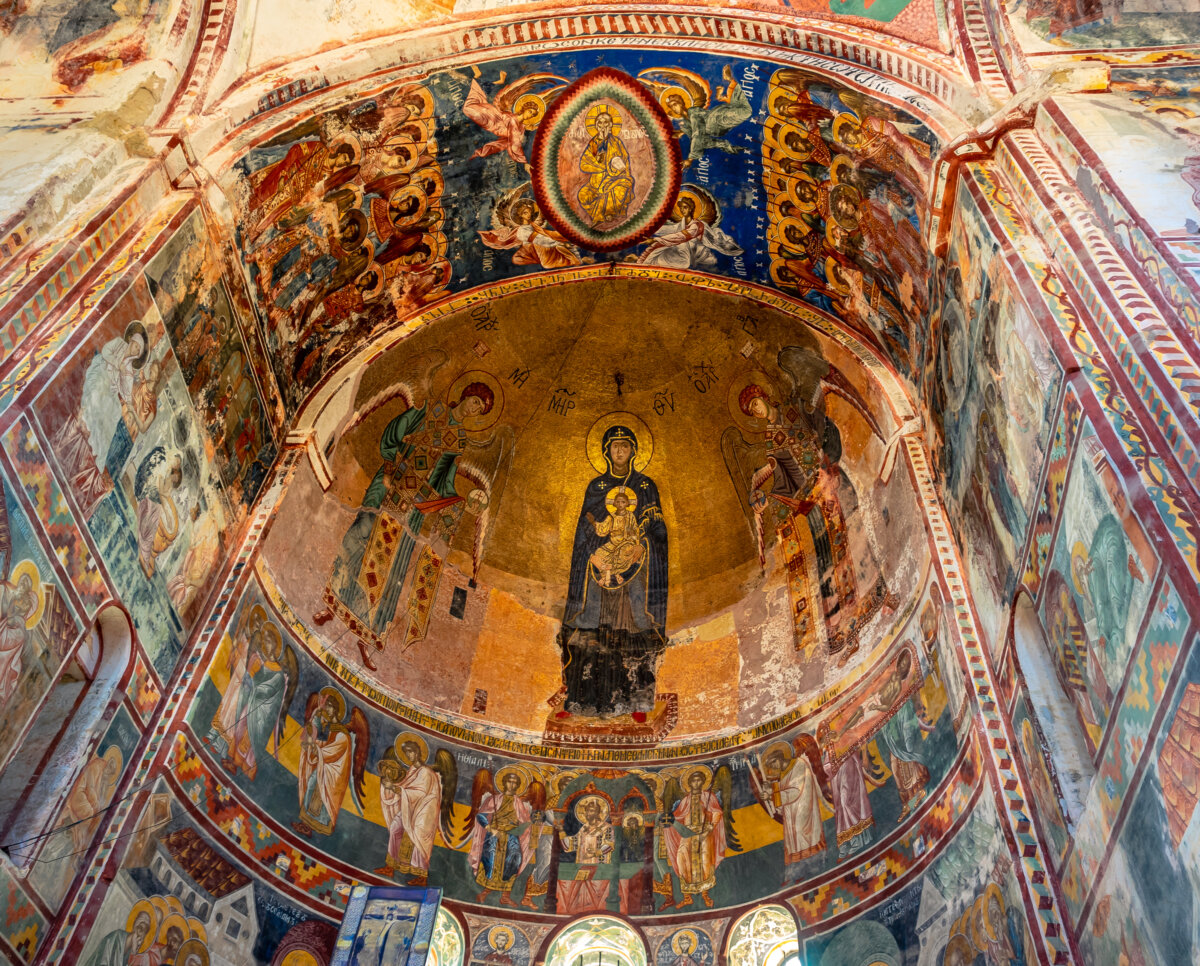
Gelati Monastery’s domes have crowned the Tskaltsitela gorge in western Georgia for more than nine centuries. Founded in 1106 by King David IV, known as “the Builder,” the complex near Kutaisi became a defining monument of Georgia’s Golden Age. Its apse mosaic of the Virgin and Child, made of glass smalti in the Byzantine tradition, is among the finest in the Caucasus. Yet Gelati was far more than a place of worship; David also established an academy there. He made the monastery a royal burial place, choosing to be laid to rest in the gateway so all would walk over his tomb.
Successive rulers continued building the complex for generations, shaped by both royal ambition and Eastern Christian influence. The stone buildings reflect the craftsmanship and architectural conventions of medieval Georgia, with balanced facades and blind arches, decorative arches set into the wall without an opening.
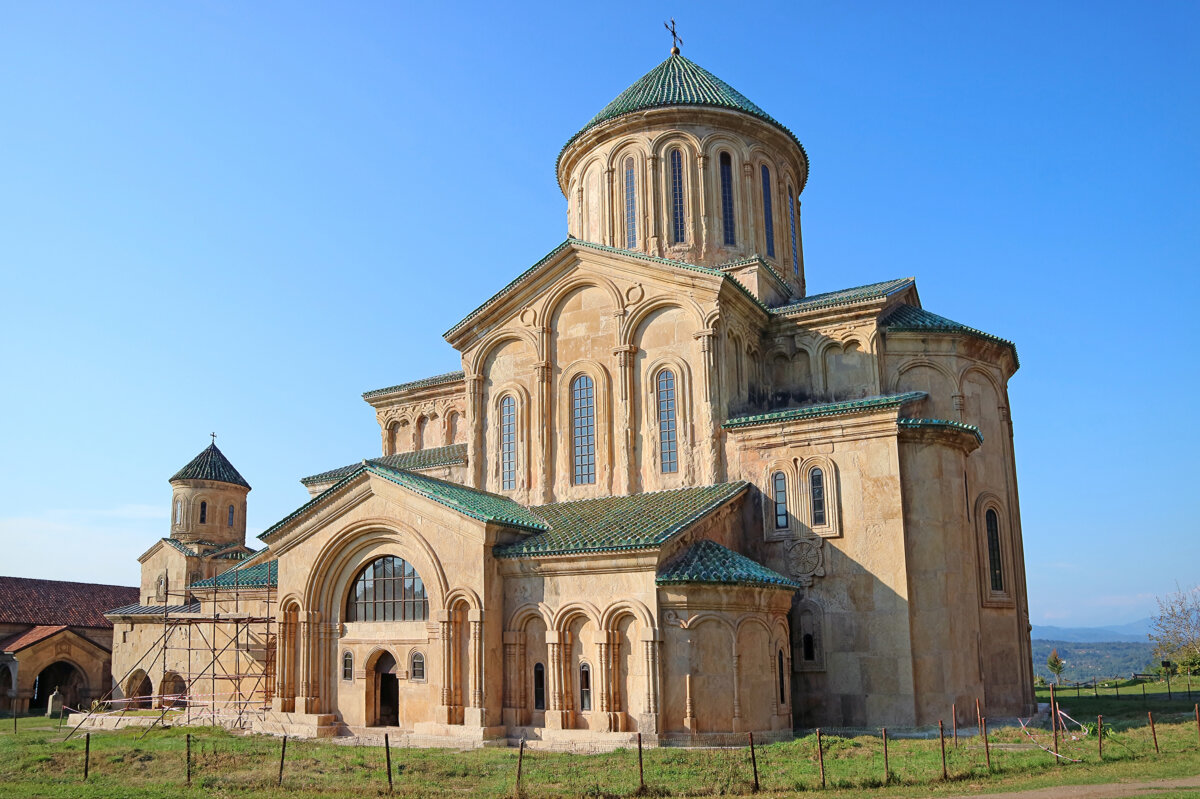
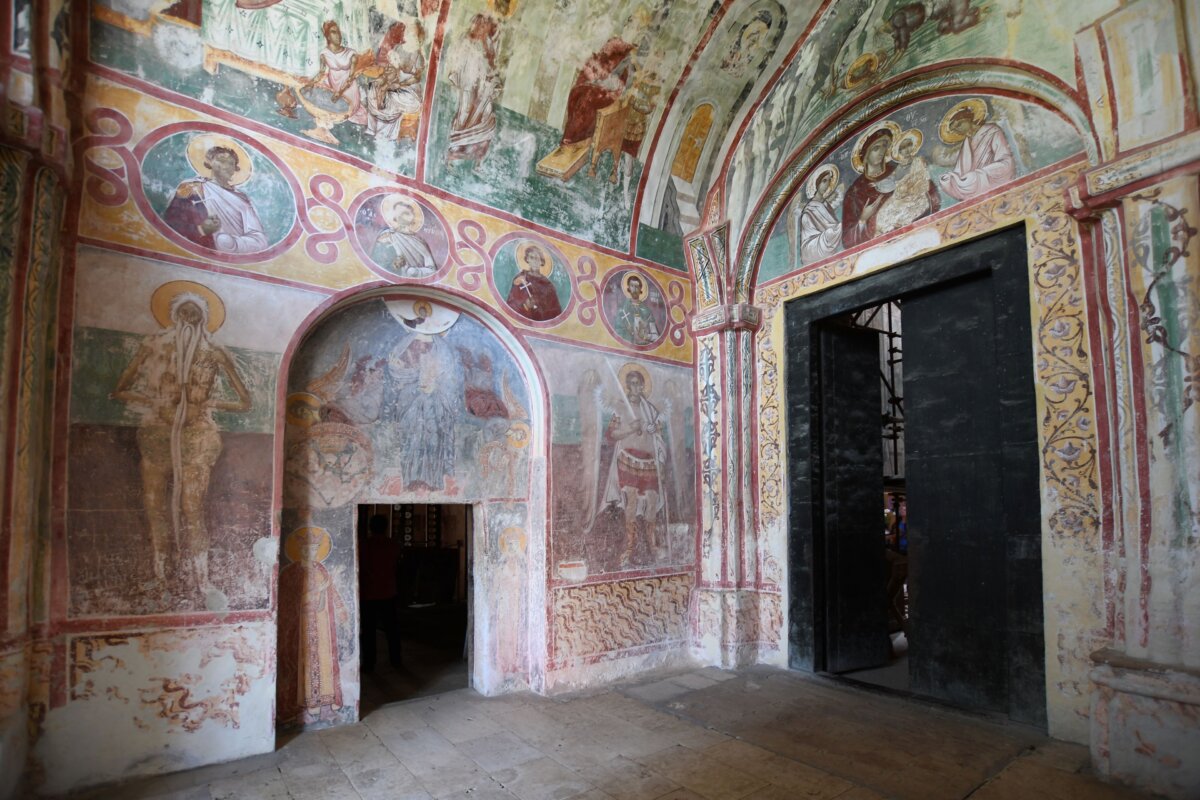
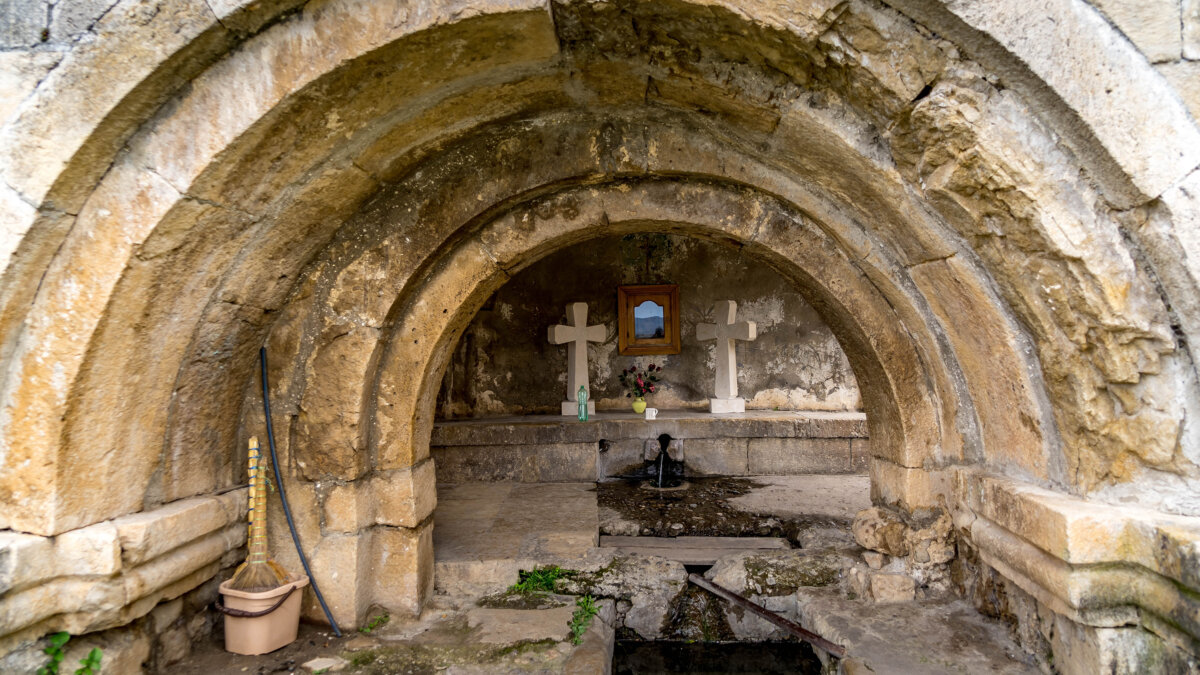
The principal church, dedicated to the Nativity of the Virgin, was completed in 1130 under David’s successor, Demetre I, and follows a cross-in-square plan typical of Eastern Orthodox architecture. Inside, a 12th-century apse mosaic shows the Virgin and Child flanked by two archangels, alongside frescoes from several centuries, including scenes of the seven Ecumenical Councils. The complex also includes the 13th-century Church of St. George, a bell tower with a spring at its base, and the remains of the 12th-century Gelati Academy.
The Academy attracted scholars of philosophy, theology, mathematics, astronomy, music, and rhetoric, among them Johannes Petritzi, known for translating Proclus and for his Neoplatonic work, and Arsen Ikaltoeli, who translated doctrinal and polemical texts. Monastic scribes also copied manuscripts, helping preserve and circulate knowledge.
Gelati is a UNESCO World Heritage Site and still a living monastery, home to an active Orthodox Christian community. Protecting it is an ongoing effort, with conservation work focused on its buildings, paintings, and mosaics. Georgia’s heritage authorities and the Orthodox Church share responsibility for its long-term care, which has recently included roof repairs and the scaffolding that comes with them. Key priorities include reliable funding, careful records of restoration work, and monitoring of the buildings’ structural stability. Even as it undergoes this work, Gelati continues to serve as a place of worship while preserving an important record of Georgia’s medieval architecture, art, and intellectual history.
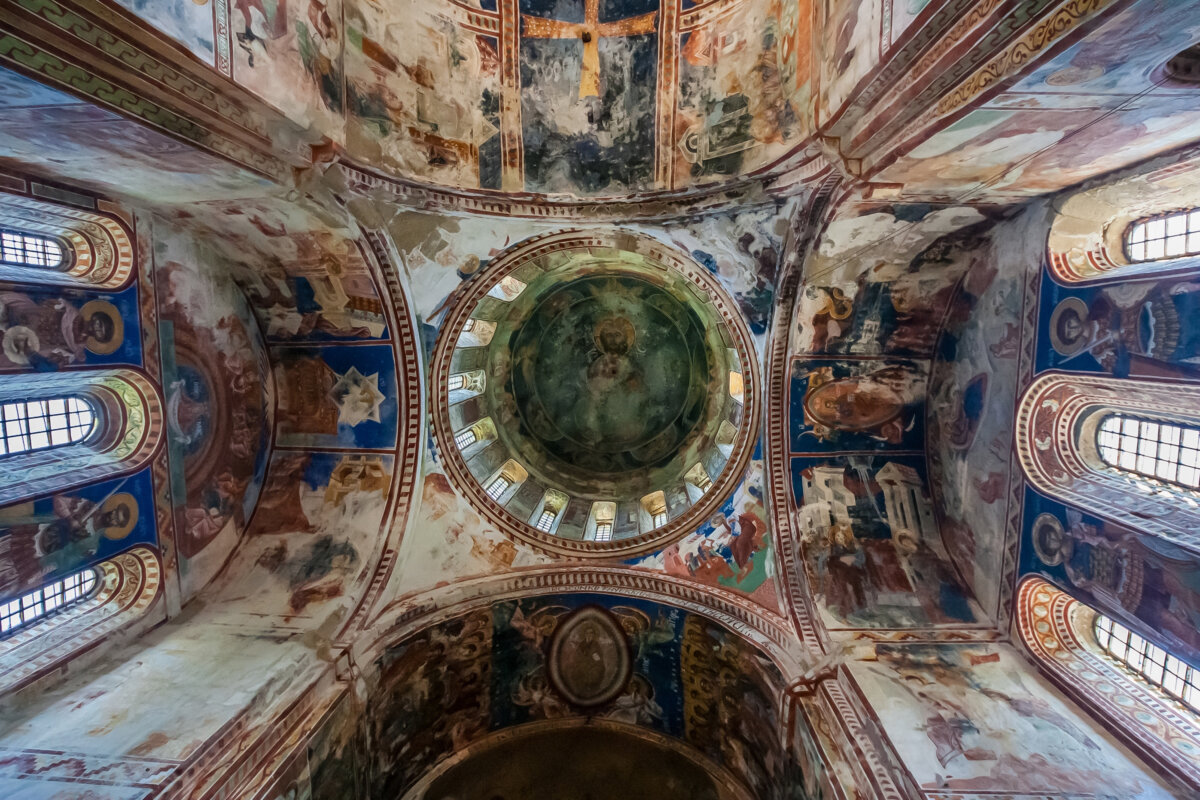
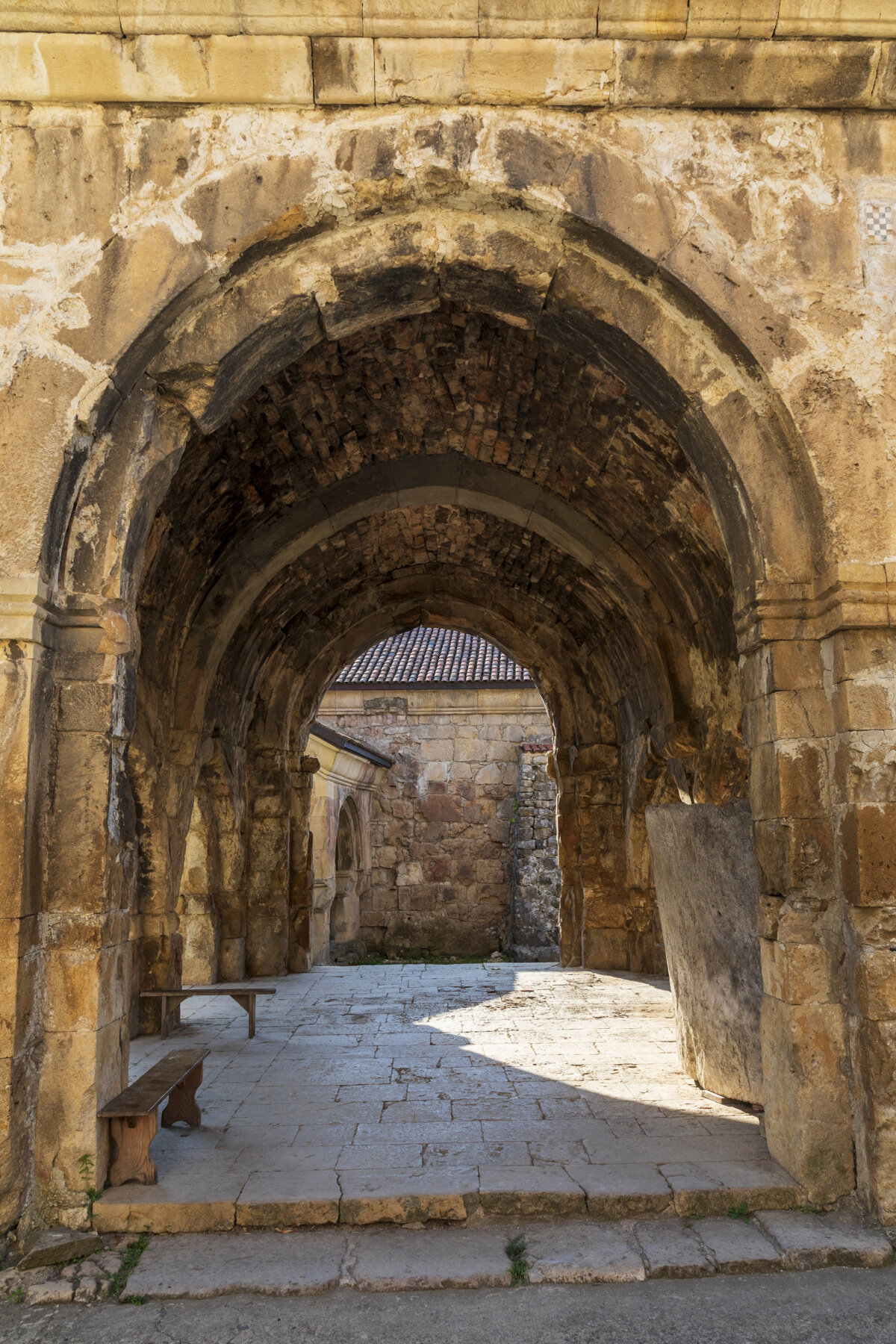
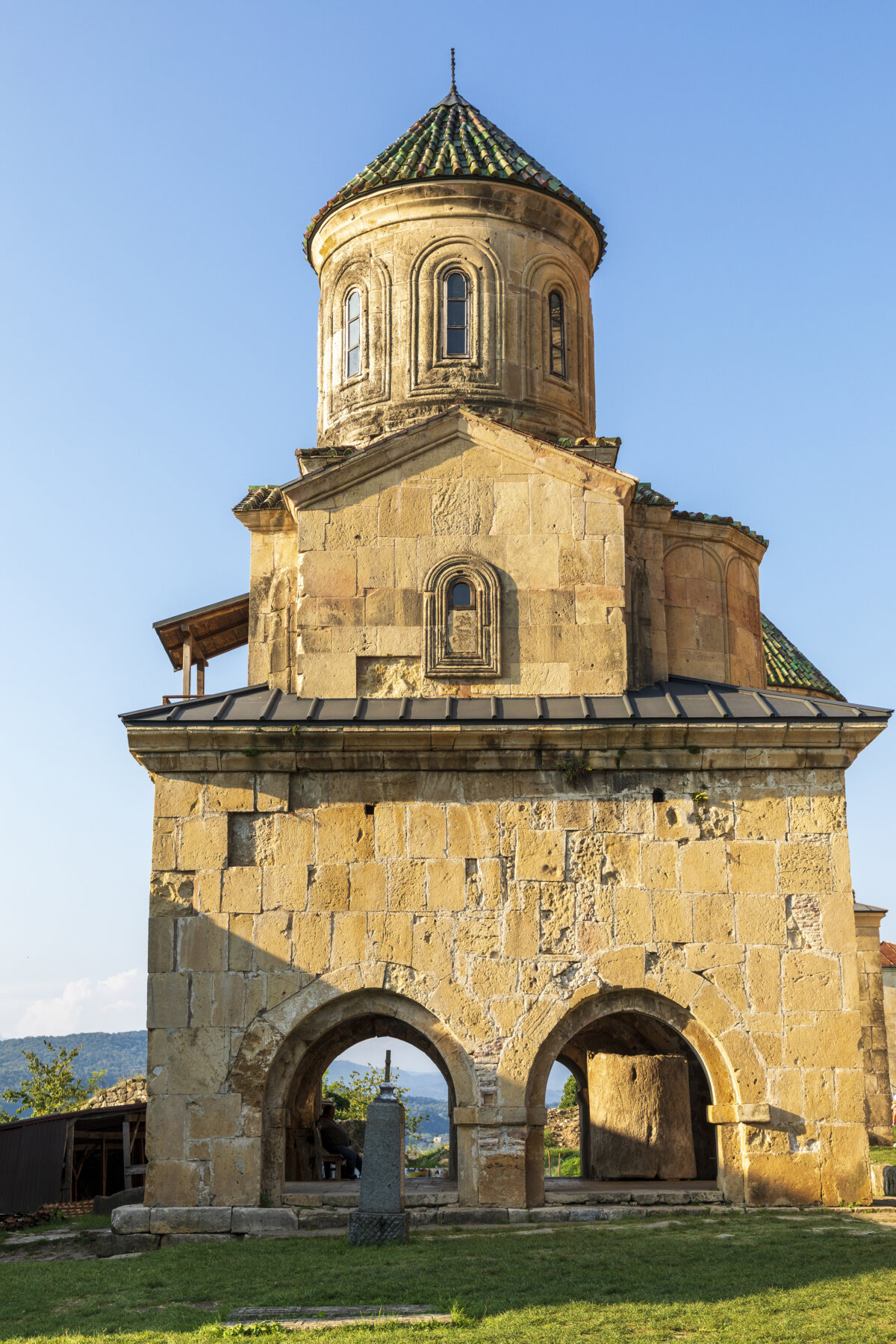
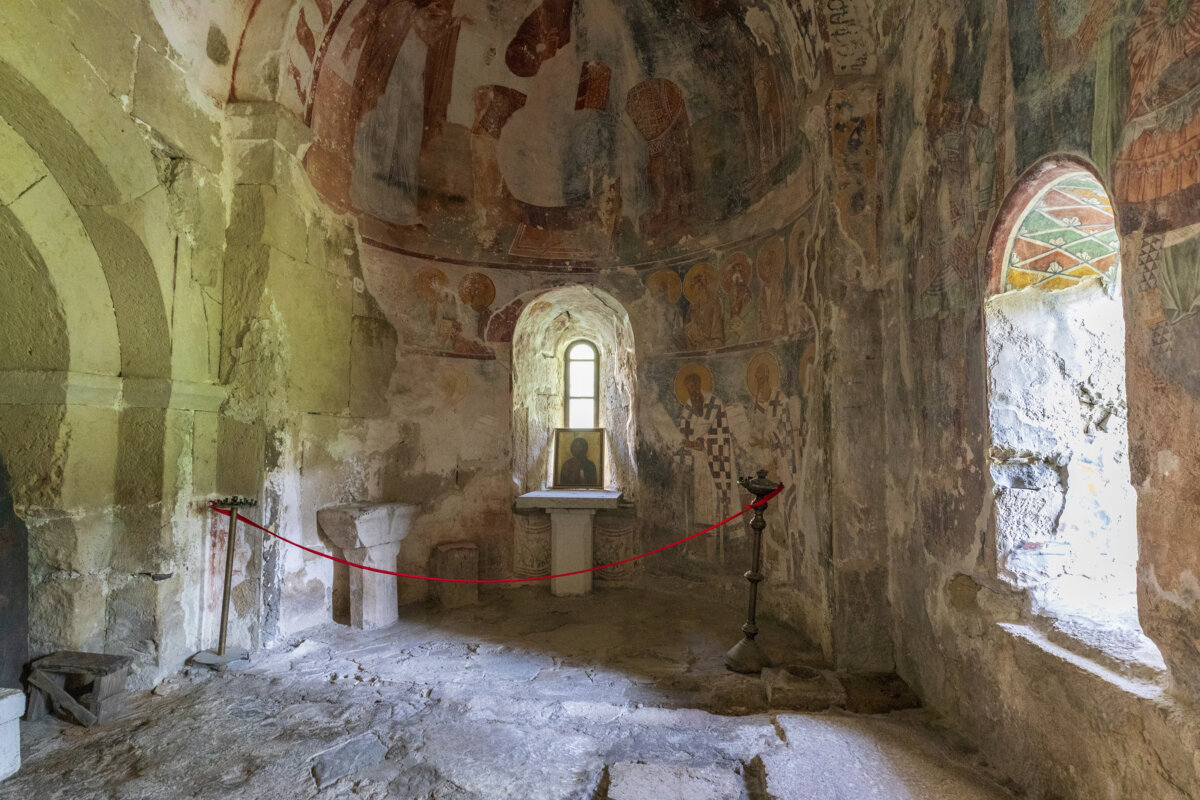
The main church, dedicated to the Nativity of the Virgin, stands at the center of the Gelati Monastery complex. Completed in 1130 under King Demetre I, it follows the cross-in-square design common in Eastern Christian architecture. The stone church is topped by a central dome with 16 elongated windows around its base. (lovelypeace/Shutterstock) Sixteenth-century Orthodox frescoes cover the dome and ceiling of Gelati Monastery in Georgia. Christ Pantocrator appears in a central medallion, with Old Testament prophets lining the drum below. The four Evangelists fill the pendentives, though time has worn the paintings to varying degrees. Surrounding vaults and walls show scenes from the life of the Virgin Mary, the Gospels, and the Divine Liturgy. (Marc Venema/Shutterstock) The 12th-century apse mosaic depicts the Virgin Mary holding the Christ Child, flanked by the archangels Michael and Gabriel against a gold background. Made from small pieces of stone and glass, it is one of the finest surviving examples of medieval Georgian mosaic art. Below the mosaic, wall paintings depict religious figures and scenes associated with Orthodox worship. (Sompol/Shutterstock) In the western Narthex, wall paintings depict saints, biblical figures, and the Seven Ecumenical Councils, held between 325 and 787 to address Christian doctrine and church practice. Dating to the first half of the 12th century, Gelati Monastery’s council cycle is the earliest surviving complete representation of the seven councils in the Eastern Christian world. (Herbert Frank/CC-BY-2.0) A stone passage at Gelati Monastery illustrates the masonry and vaulted construction used in the complex’s medieval buildings. Its arched form creates a sheltered, light-filled transition between the monastery’s architectural spaces. (Emily Marie Wilson/Shutterstock) The 13th-century Church of St. Nicholas stands out for its two-story design. Open arches support the upper level, which is topped by a dome with narrow windows. This unusual arrangement sets it apart from the larger domed churches elsewhere in the Gelati Monastery complex. (Emily Marie Wilson/Shutterstock) A spring emerges beneath stone arches at the base of Gelati Monastery’s bell tower, forming part of the complex’s historic architecture. Built in the 12th century, the water system channeled fresh spring water through ceramic pipes into the tower, where it was distributed throughout the monastery. Designed to supply approximately 57,000 liters daily, it served the complex’s buildings and facilities. (batsac/Shutterstock) Built in the 13th century, St. Nicholas Church features a small side chapel with a domed ceiling and walls covered in surviving frescoes. Although faded, patches of terracotta and blue-green remain vivid, offering a glimpse of the colors and details that once filled the chapel. (Emily Marie Wilson/Shutterstock)
What arts and culture topics would you like us to cover? Please email ideas or feedback to features@epochtimes.nyc.
Sarah Isak-Goode is a writer and art historian rooted in the Pacific Northwest. Her name—pronounced EYE-zik-good and meaning “good laugh”—hints at the warmth she brings to everything she does. Equal parts scholar and storyteller, Sarah brings the past to life through a distinctly human lens, exploring what connects us across the centuries. Away from her desk, she feeds her curiosity through traveling, painting, reading, and hiking with her dog, Thor.