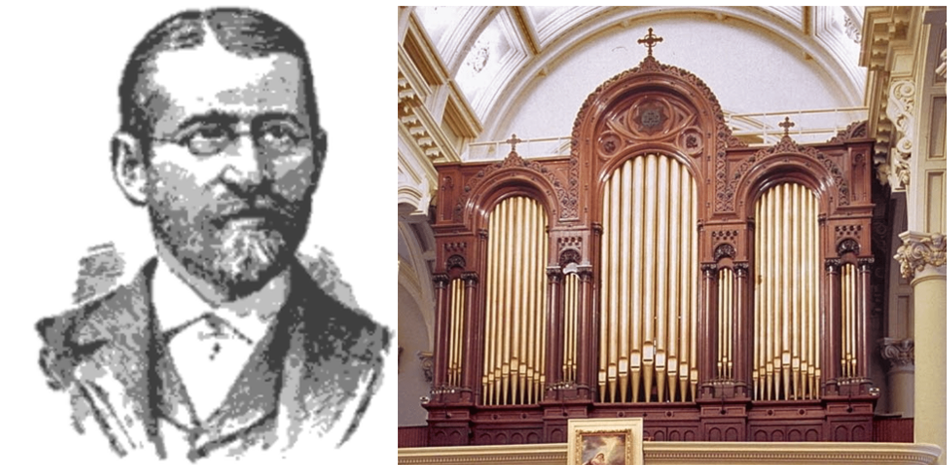
In the late 19th century, there was a renaissance in the appreciation, performance, instruction, and composition of classical music in America. A group of New England composers, called the Boston Six, or Second New England School of Music, spearheaded this movement.
Music historians have identified three other composers from the same time and area who worked in conjunction with the six. Among these honorary members of the Second New England School is the famed organist and composer George Elbridge Whiting (1840–1923).
New England Prodigy
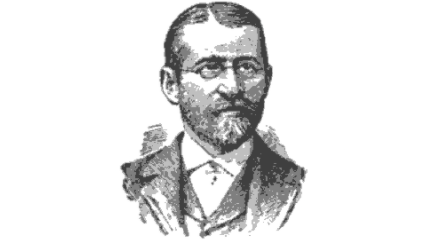
Whiting was born in Holliston, Massachusetts on Sept. 14, 1840, although some sources list his birth year as 1843. He came from a musical family—his mother was a vocalist, and at least two brothers were musicians.
At age 5, George began studying piano with his older brother Amos, an organist at a church in Springfield. He soon switched his studies from piano to organ. By the age of 13, George was proficient enough on the organ to make his public debut in a concert in Worcester.
At 15, Whiting became the organist at the North Congregational Church in Hartford, Connecticut, succeeding fellow Yankee composer and organist Dudley Buck (1839–1909) in the position.
The same year, Whiting founded the Beethoven Society, a musical group dedicated to practicing sacred works as well as compositions of the German master. There’s little record of this group, but an 1866 article in the Yale Courant describing a Beethoven Society performance indicates that it was active for at least 11 years.
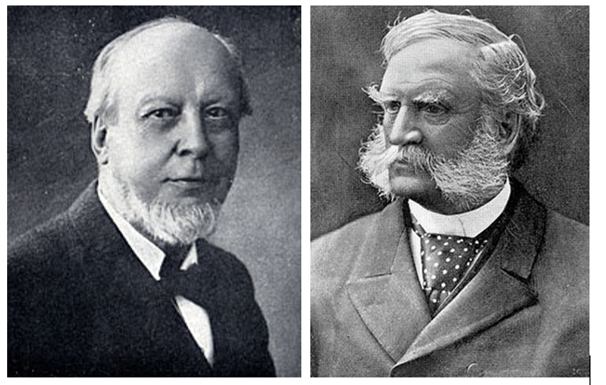
In 1862, Whiting moved to Boston, where he became organist at the Mount Vernon Congregational Church under the pastorship of Dr. Edward Norris Kirk. He later was the church organist at Tremont Temple, a Boston Baptist church. While in Boston, he also gave occasional organ recitals, such as at the Boston Music Hall. Meanwhile, he continued his studies with George W. Morgan in New York City.
International Studies
In 1863, Whiting, now a young adult, followed the path of most serious American musicians at that time; he went to Europe to continue his studies. The usual destination was Germany or perhaps France, but Whiting instead went to England. In Liverpool, he studied with William Thomas Best, one of England’s best organists, for whom he occasionally substituted at church.
After a year of British studies, Whiting returned to the United States, where he became organist and choir director at St. Joseph’s Church in Albany, New York. He held that position for three years before returning to Boston, where he served as music director and organist at King’s Chapel for five years. He also officiated at the Music Hall for a year.
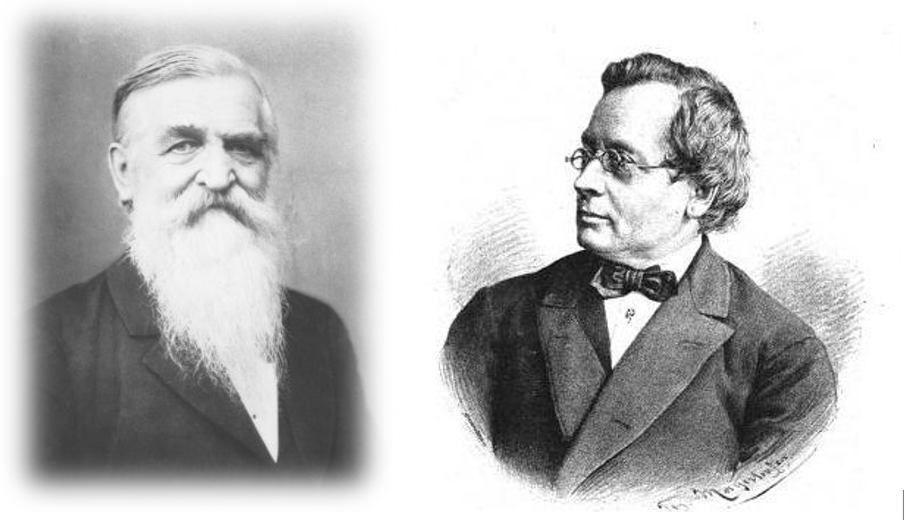
In 1874, he resumed his European studies, this time spending a year in Berlin. Instead of studying organ, he focused on composition. He studied harmony with Carl August Haupt and orchestration with Robert Radecke. He brought this newfound inspiration and knowledge back to the United States as he embarked on his next important role—that of an educator.
New England Conservatory
Upon returning to Boston, Whiting assumed the position of principal organ instructor and rector at the New England Conservatory, then a budding music school. Meanwhile, he was also organist at the Church of the Immaculate Conception in Boston, and conductor of the Foster Club, a local choral group.
In 1879, he left the New England Conservatory to become head of the organ department at the College of Music at Cincinnati, at the invitation of Theodore Thomas, the school’s director.
In 1883, Whiting returned to teaching at the New England Conservatory. His students included George Chadwick, a younger member of the Boston Six who would become an important director of the Conservatory.
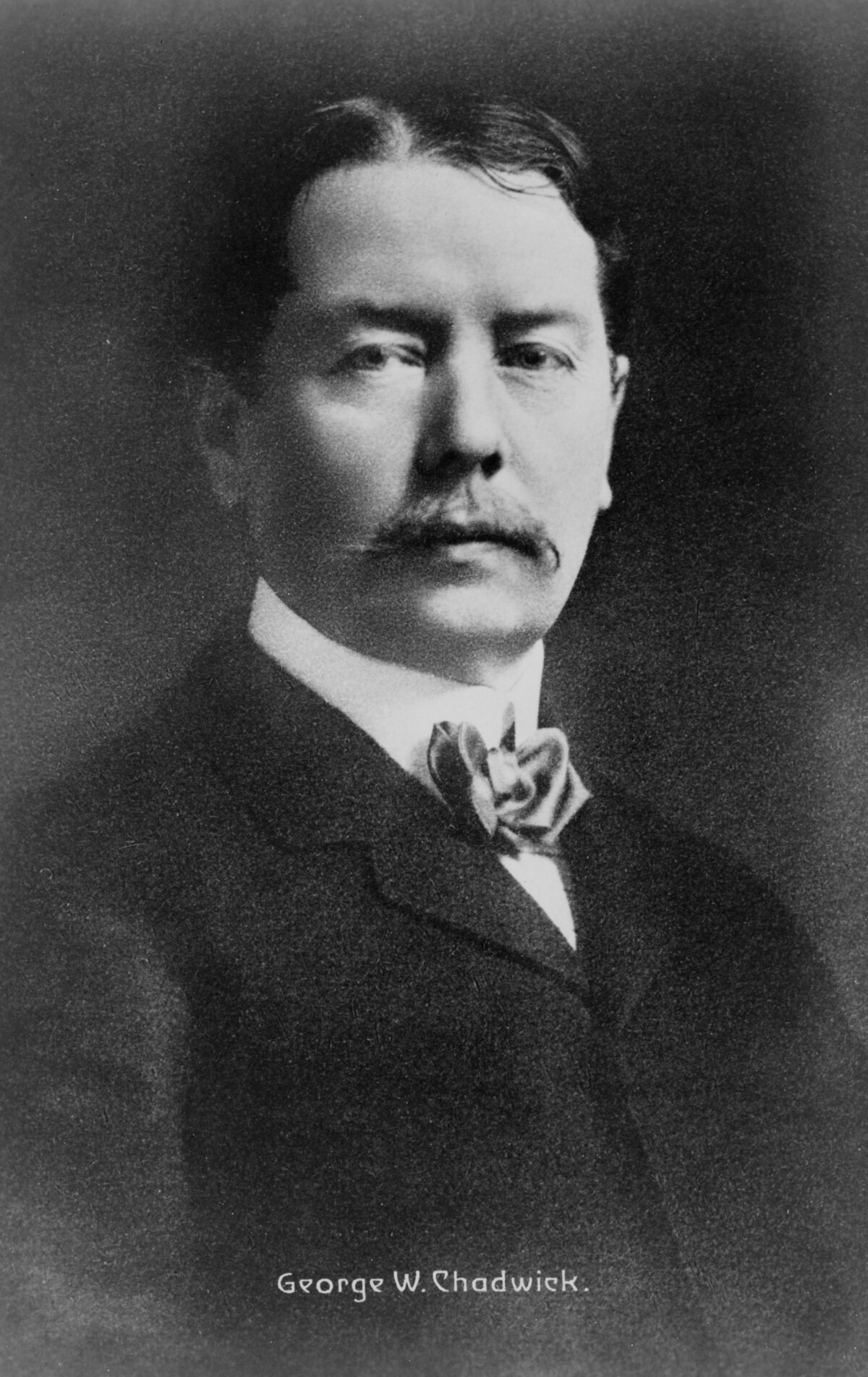
He also resumed his job at the Church of the Immaculate Conception, a position he held for 34 years, during which time he elevated the services’ music and conducted the choir.
An American Composer
Whiting really came into his own as a composer in the 1870s, beginning early in the decade. His prestigious roles as church director and organist gave him the opportunity and outlet to write some excellent sacred music.
He composed five Masses for the Church of the Immaculate Conception in Boston, which were written for voices, orchestra, and organ, as well as a “Te Deum” composed for the opening of the cathedral in 1874. He also wrote multiple cantatas and several sets of vespers.
In the secular setting, Whiting wrote an assortment of works for small and large orchestra, including suites, concert overtures, and anthems. He wrote several art songs for solo voice and piano, and an assortment of piano solos. Naturally, he wrote many hymns. Many of his secular cantatas and choral ballads were written for and first performed by the Foster Club. Perhaps his most unusual work is a single opera, the one-act “Leonora,” written in Italian in 1893.
The only compositions for which Whiting is remembered are his organ works, as that was his main instrument. He also compiled anthologies of organ materials for young singers. He published works on organ technique, including “The Organist” (1870) and “The First Six Months on the Organ” (1870).
Through his work as a composer, educator, and musician, Whiting was an important force in New England’s music scene. It’s high time that his music is rediscovered, recorded, and performed.
What arts and culture topics would you like us to cover? Please email ideas or feedback to features@epochtimes.nyc.