



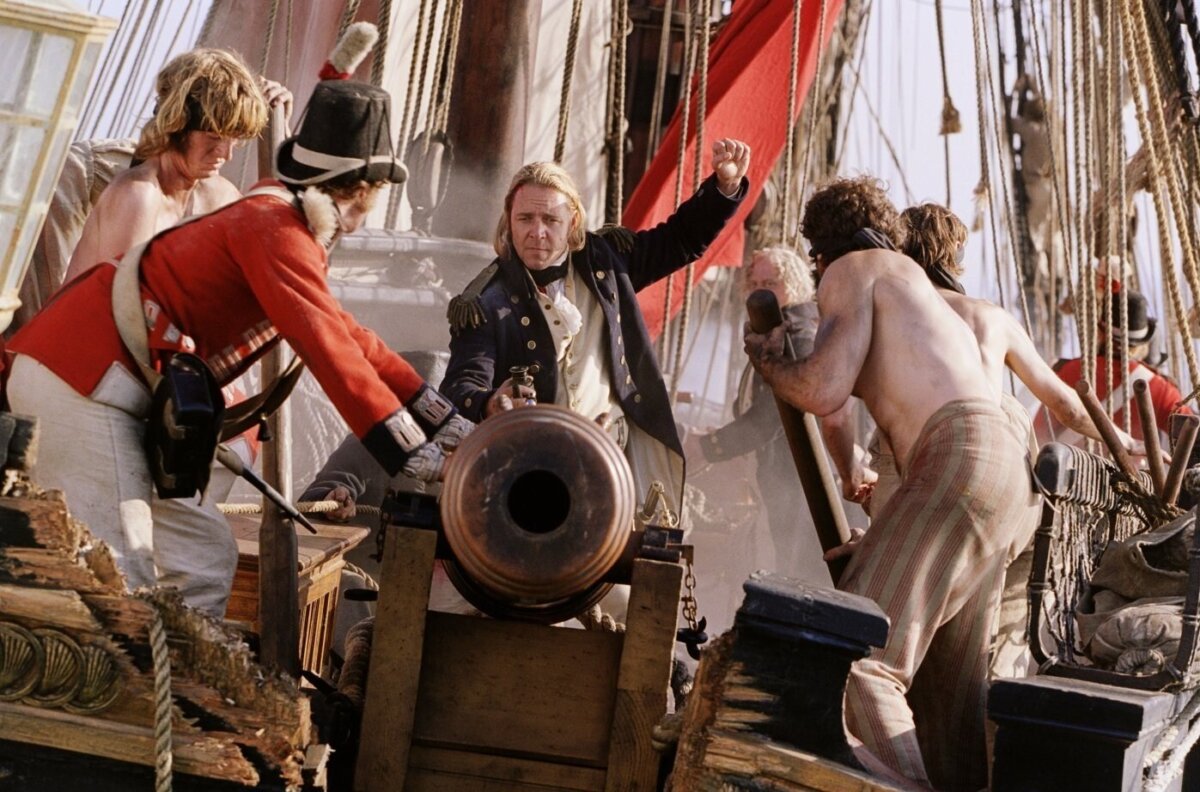
Director Peter Weir’s film “Master and Commander: The Far Side of the World” (2003) opens with text describing its 19th-century setting amid the Napoleonic Wars: “April 1805. Napoleon is master of Europe. Only the British fleet stands before him. Oceans are now battlefields.”
In Weir’s eye, one word floats above all others: master. Weir’s tale may be about mastery of a ship, an ocean, or new lands, but it’s more about mastery of self. Unsurprisingly, his film secured 10 Oscar nominations.
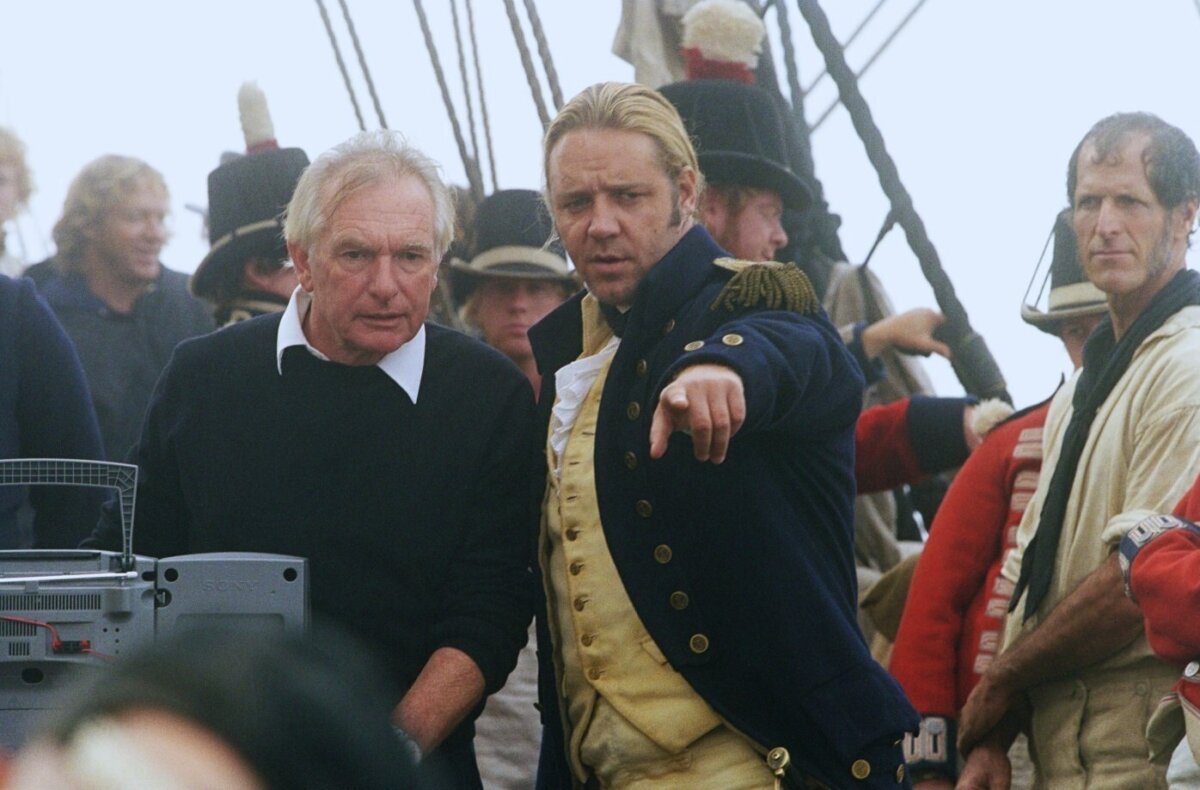
Capt. Jack Aubrey (Russell Crowe) commands the British frigate HMS Surprise; he’s conscious that Britain’s navy is the last frontier against Napoleon’s onslaught. Commissioned to seize or sink the French privateer Acheron, Jack pursues it far into the Pacific Ocean.
The aging 28-gun Surprise is outgunned, outmanned, and outclassed by the newer, nimbler 44-gun Acheron. Still, Jack won’t give in. Through storms and fog curtains, both crews weather a battle of wits between these two rival captains. He isn’t called “Lucky” Jack for nothing, but will his charmed seamanship suffice to see him through?
Nautical Yarn
Weir draws on novelist Patrick O’Brian’s nautical historical yarns about Jack’s high-sea adventures alongside his friend Stephen Maturin (Paul Bettany), the surgeon aboard the Surprise.
Jack doesn’t begrudge his crew their superstitions about lucky charms and bad omens. Instead, he shows them how “luck” favors men who’re stout of heart and sturdy in spirit. In one mid-battle scene, he’s climbing out of a deck hatchway. Smacked by musket shrapnel, he grips his throat. Stunned and in agony, he staggers, as if falling back down into the hold. Then, with a roar, he comes flying up and out to lead the counterattack.
The rival captains represent the two competing sentiments within every aspiring leader. Knowing he’s the underdog, Jack is quietly confident. Knowing he’s no underdog, the French captain is loudly confident; he ambushes Jack’s vessel not once but twice. Jack is forced to ask himself if his supposed bravery becomes bravado the second he has the upper hand.
Both men turn overconfident, just at different times and in different ways. One man exaggerates the strength, speed, and agility of the ship he commands; the other exaggerates his celebrated battle sense.
The Surgeon
Jack and Stephen represent differing dispositions within a single leader, too. Unlike the warrior-like Jack, Stephen’s a peaceable naturalist. Still, Jack finds ways to nurture both natures within himself. He allows one or the other to dominate, based on the situation.
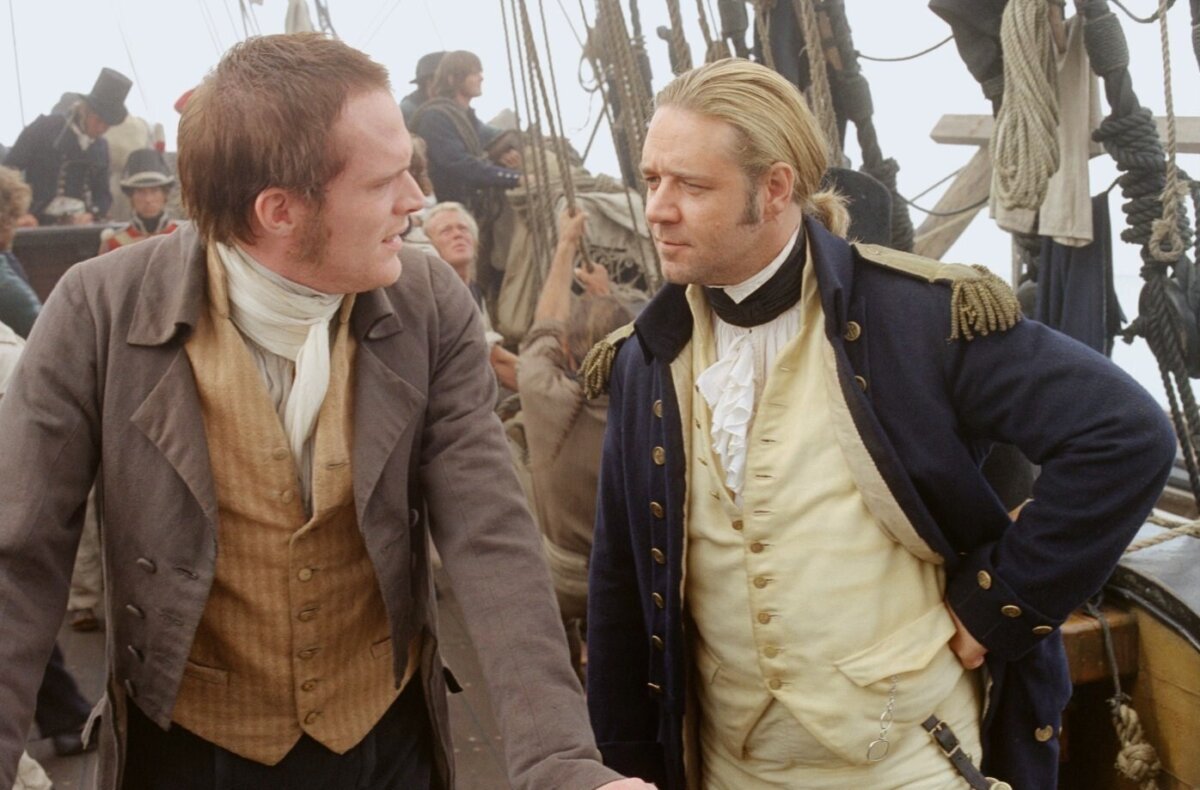
As it happens, they’re bandmates in their leisure time. Stephen plays the cello and Jack the violin; they bring their metaphorically unique pitches, tones, and timbres to each new challenge.
Stephen fancies himself as a protector of lives—of insects, birds, plants, and people—and Jack as a taker of lives, albeit enemy lives. However, Stephen learns that, unless Jack defends England’s freedom, which includes taking some lives, Stephen himself won’t be alive to protect anything.
Weir’s plot twists flesh out these paradoxes. Those aspiring to leadership must know and respect the hierarchy of values; they must also get their men to know and respect it. Stephen learns the hard way that duty comes before friendship.
A Mentor
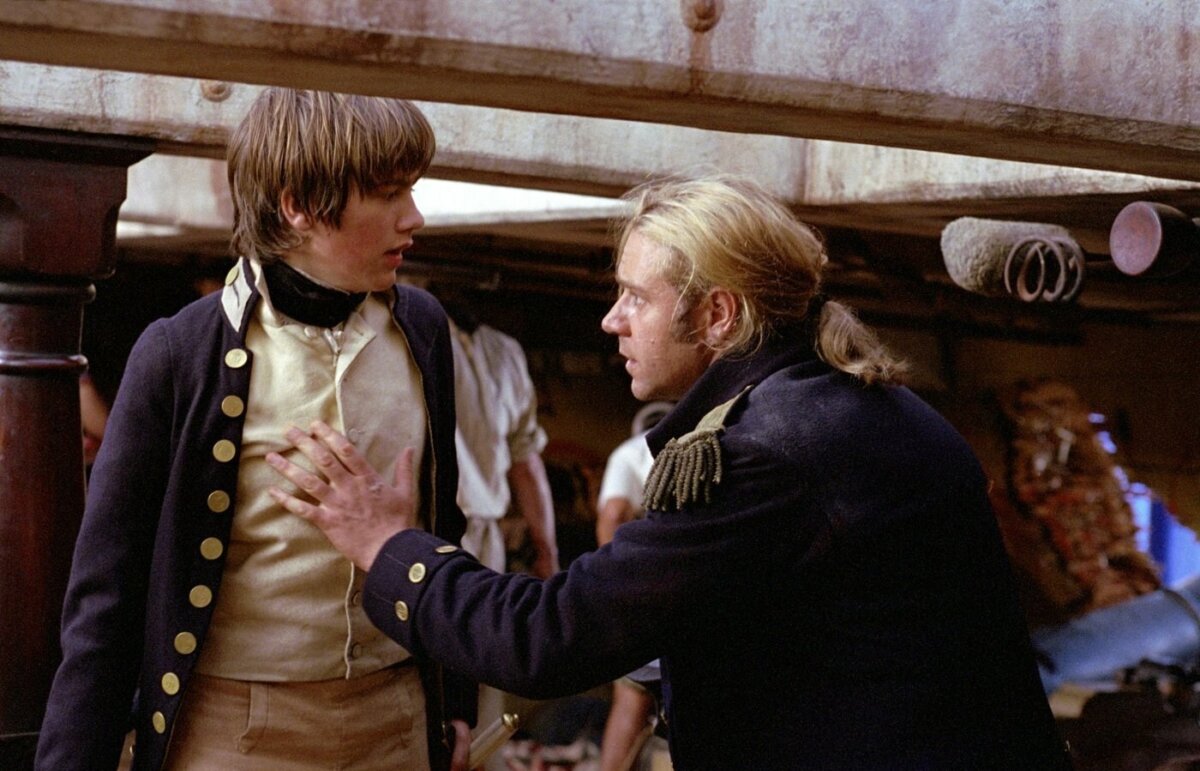
Jack counsels the young, indecisive midshipman Hollom (Lee Ingleby) against vacillating. Hollom doesn’t need to be a tyrant or to make friends with every crewman he commands, or they’ll despise him eventually. Nevertheless, he must nurture strength within so he can earn the crew’s respect. Without respect, he won’t be able to enforce discipline.
Jack mentors a few boys on board as they prepare to become officers and gentlemen. He exults when they exult in their increasingly expansive rights, but only as long as they shoulder their increasingly heavier responsibilities.
To cinematically establish the near-sacredness of this coming-of-age, Weir’s opening scene aboard the Surprise is wordless and almost soundless. It’s dark. The night dies slowly, giving birth to a new day.
One sailor silently stalks the decks with a lantern; it might as well be a candle. Another sailor rises from his bunk, taps his hourglass, then flips it. Someone rings a bell, as if calling the faithful to prayer.
Silhouetted against the sky, sailors who’ve kept the night watch clamber down giant ropes; others take over, clambering up. It’s as if they’re ascending steps to an altar, silently praying that they’ll be true to themselves, for only then can they be true to friends, king, and country.
Check the Internet Movie Database website for plot summary, cast, reviews, and ratings. You can watch “Master and Commander” on Apple TV, Prime Video, and YouTube.
These reflective articles may interest parents, caretakers, or educators of young adults, seeking great movies to watch together or recommend. They’re about films that, when viewed thoughtfully, nudge young people to be better versions of themselves.
What arts and culture topics would you like us to cover? Please email ideas or feedback to features@epochtimes.nyc.
