The Morgan Library & Museum is a veritable treasure trove, housing priceless historical, literary, and musical manuscripts; ancient seals; and old master drawings and prints, among other genres. It owns the largest and finest collection of Rembrandt van Rijn etchings in North America, the bulk of which was assembled by J.P. Morgan himself. It was in this medium that Rembrandt (1606–1669) made some of his most innovative and famous images. Masterworks from the Morgan’s holdings form the basis for “Rembrandt’s Lions: Art and Exile in the Dutch Republic,” on view through Jan. 31, 2027.
Rembrandt’s works represent the zenith of 17th-century Dutch art. He lived during complicated times. Having seceded from Catholic Spanish rule in 1581, the nascent Protestant Dutch Republic was embroiled in the resultant Eighty Years’ War. This conflict did not end officially until 1648, when Spain acknowledged the country’s independence.
During this period, the Dutch established the right to personal religious freedom, and the republic became a haven for a variety of immigrants. The Morgan’s exhibit focuses on Rembrandt’s artistic observations of diverse and familiar communities along with the emerging Dutch identity, its economic power, and growing colonial empire.
A Symbol of the Dutch Republic
A continuous thread throughout the exhibit is Rembrandt’s engagement with the theme of the lion. Though not native to the Netherlands, the animal became a symbol of the Dutch Republic, which was under siege but unified in fierce determination to fight for freedom.
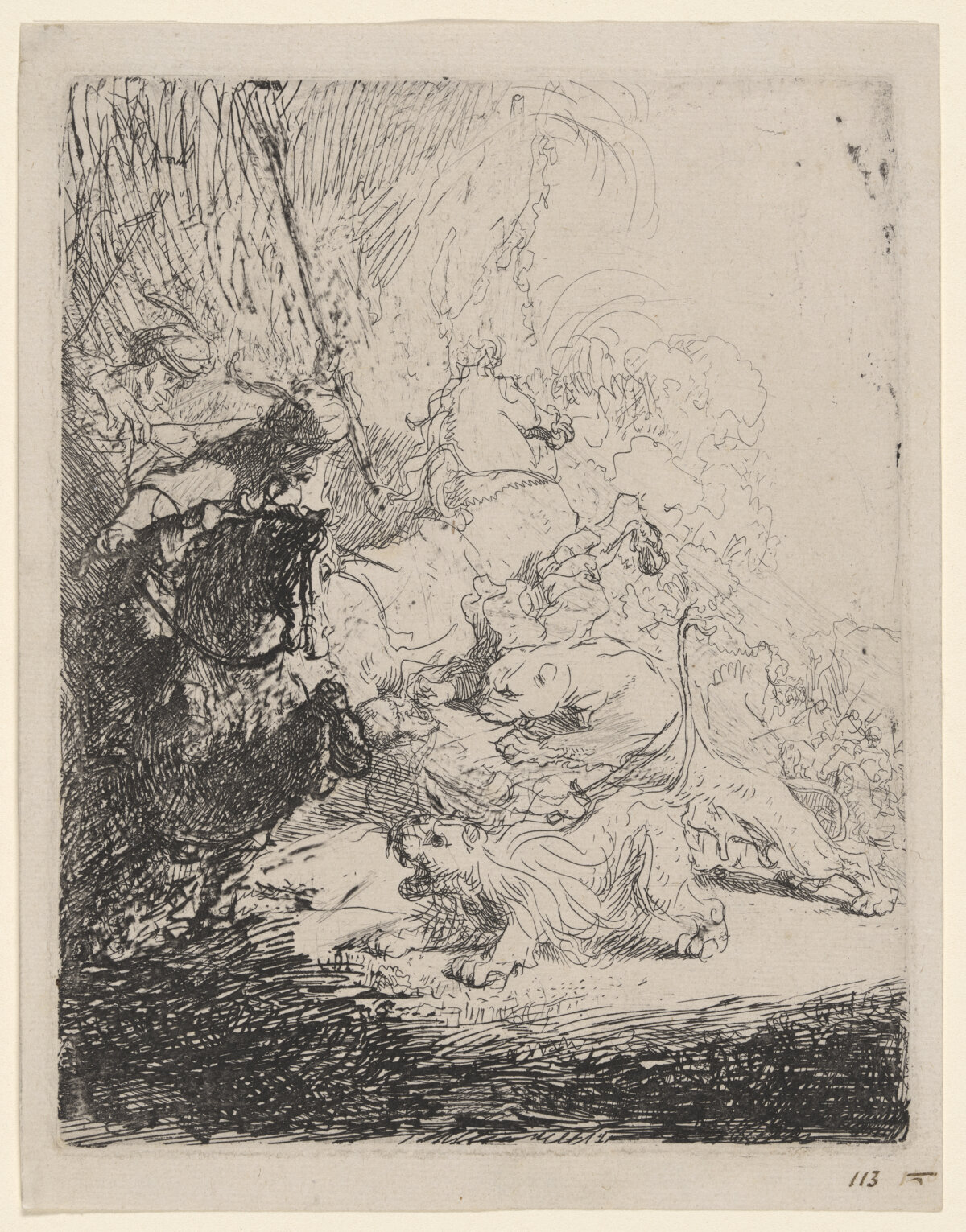
Early Rembrandt lion etchings are displayed at the beginning of the exhibit. While not as advanced artistically as later works, these big cat prints, including the circa 1629 “The Small Lion Hunt (With Two Lions),” provide insight into the artist’s inspirations and the times in which he lived. According to the Morgan, “Rembrandt’s interest in the subject arguably reflects popular art as much as current events.” As Rembrandt never left the Dutch Republic, he turned to compositions by the likes of Peter Paul Rubens to situate his lion scenes in exotic places, though they did not accurately differentiate between Africa and Asia.
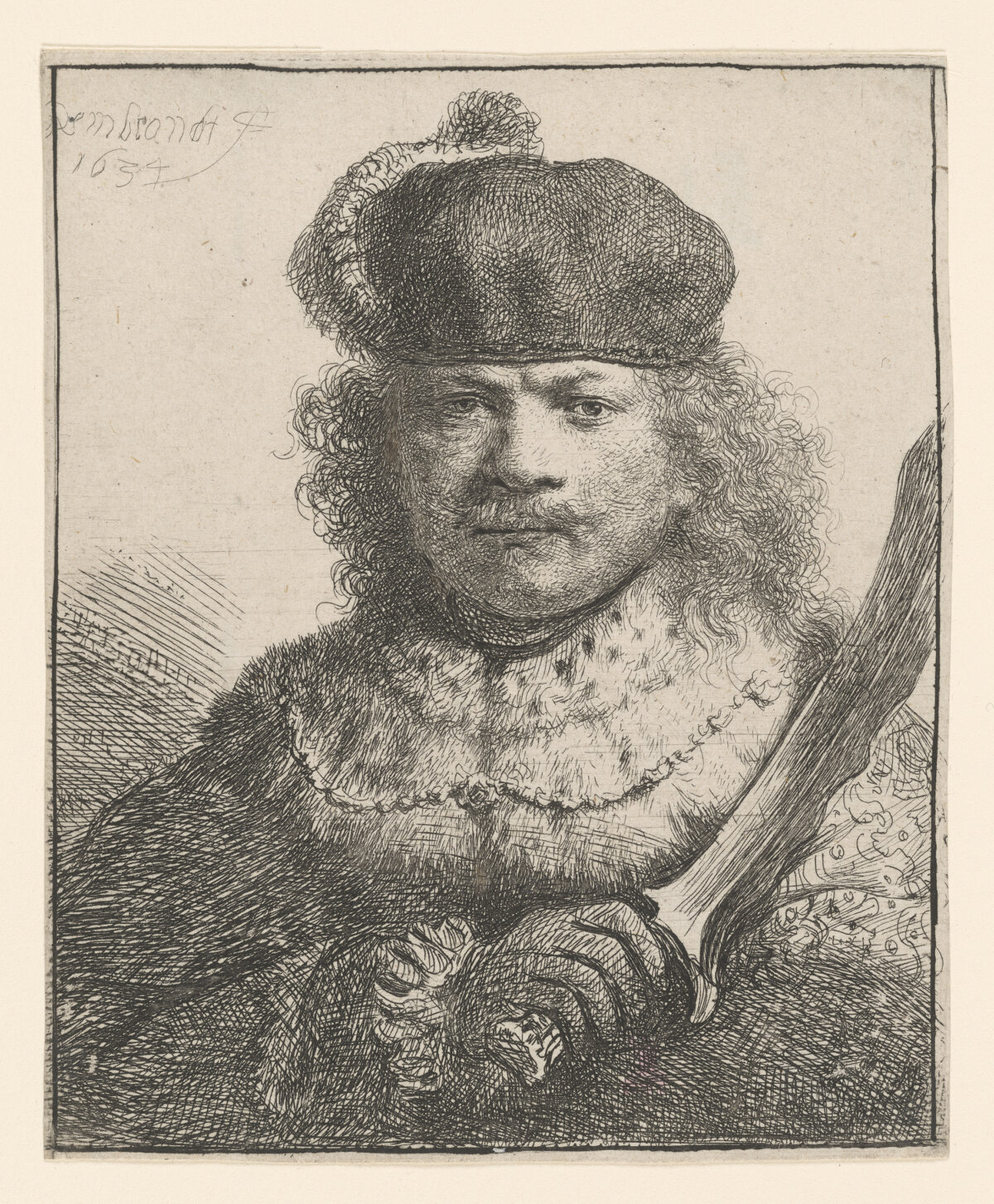
Throughout his oeuvre, Rembrandt returned to and reengaged with earlier ideas, including lions. This feline species recurs with literal depictions and more figurative references. In “Self-Portrait With Raised Sabre” from circa 1634, the 28-year-old artist depicted himself with a distinctive sword. This blade may be a European ceremonial flammard or a Southeast Asian kris. Its form is similar to the weapons in his lion hunt etchings. The Morgan noted that Rembrandt also has a leonine mane of hair. Other portraits in the exhibit include representations of felines as chair finials.
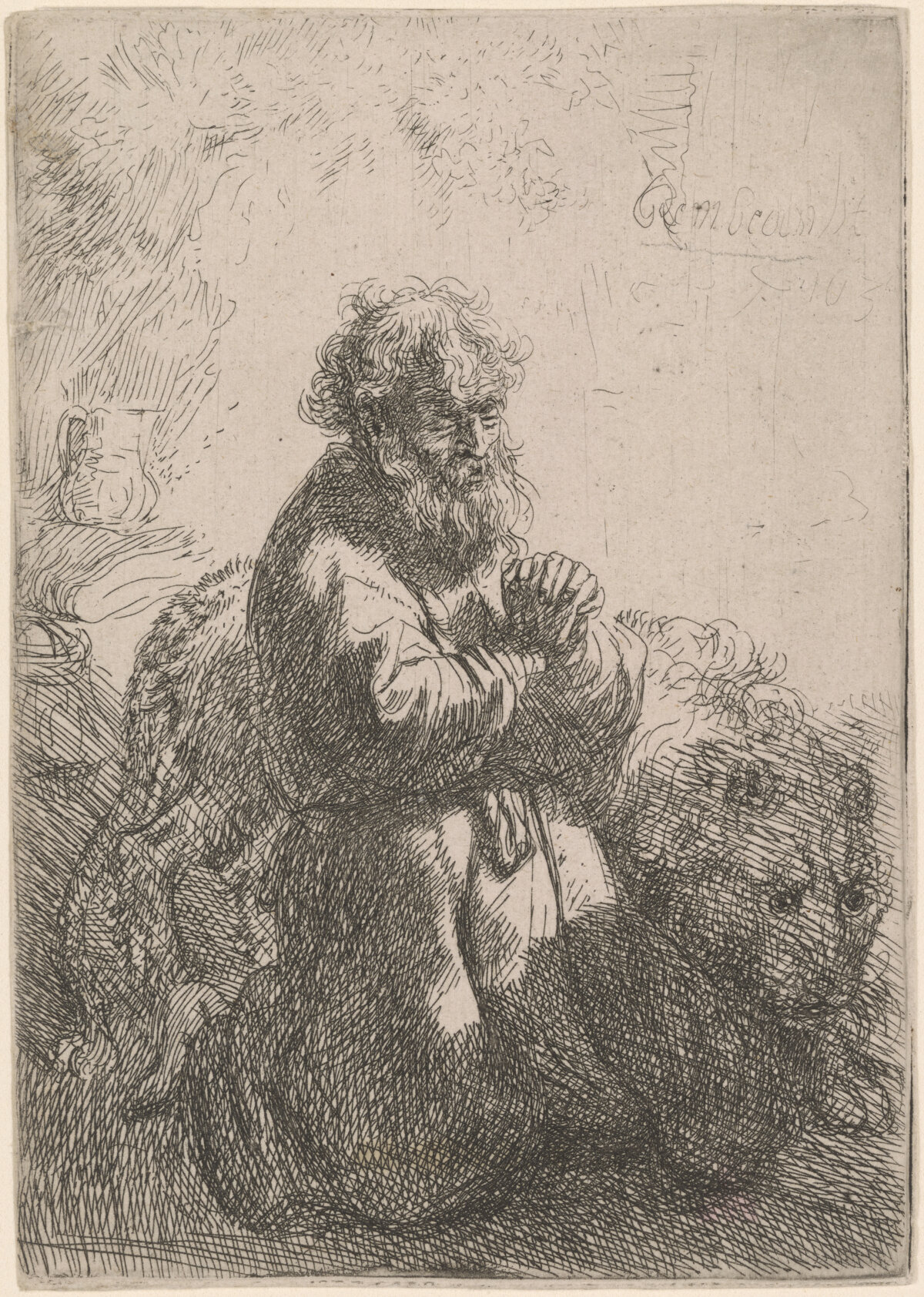
Rembrandt often painted St. Jerome, a Christian theologian who, according to legend, pulled a thorn from a lion’s paw. This afforded Rembrandt prime opportunities to depict lions. He made at least seven etchings in which Jerome features. In the 1635 “St. Jerome Kneeling in Prayer, Looking Down,” the big cat appears to guard the saint while he prays. The exhibit describes how “the pair may represent compassion, loyalty, and acceptance amid the difficulties of exile, a lesson that resonated with the many peoples comprising the republic.”
A fascinating object is displayed alongside this artwork—its original copper etching plate. While Rembrandt made at least 300 etchings, only 80 of the copperplates survive. Rembrandt did not travel abroad, but the copper he used did, because the Dutch Republic did not have copper ore reserves. The material here may have been sourced from Japan, since the Dutch East India Co. had a monopoly on the country’s copper trade.
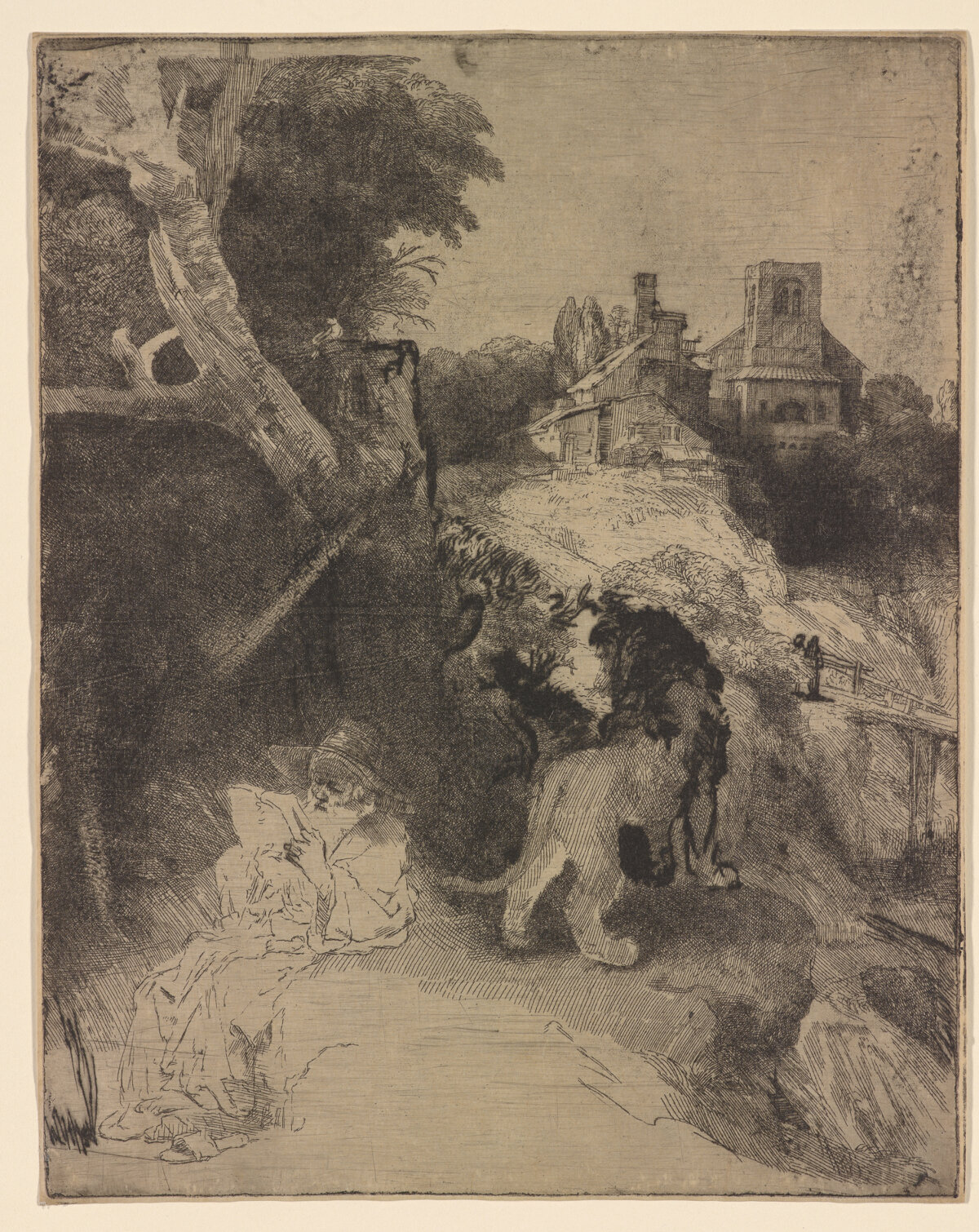
Japan produced paper that Rembrandt used for a number of etchings. The circa 1653 “St. Jerome Reading in an Italian Landscape” is printed on a golden-toned sheet of Japanese paper that complements the imaginary sunbaked Italian landscape setting in which Rembrandt situated the saint and his lion companion. Besides experimenting with Chinese, Japanese, and Indian papers, Rembrandt was innovative in his use of drypoint technique (responsible for the dark, velvety lines). The exhibit provides historical context for this specific work: “Made the year that the republic defeated England off Italy’s coast—a battle to defend global trade routes—Rembrandt’s print may also convey a political message. The confident lion here asserts power and poise, reflecting the republic’s vigilant, worldly outlook.”
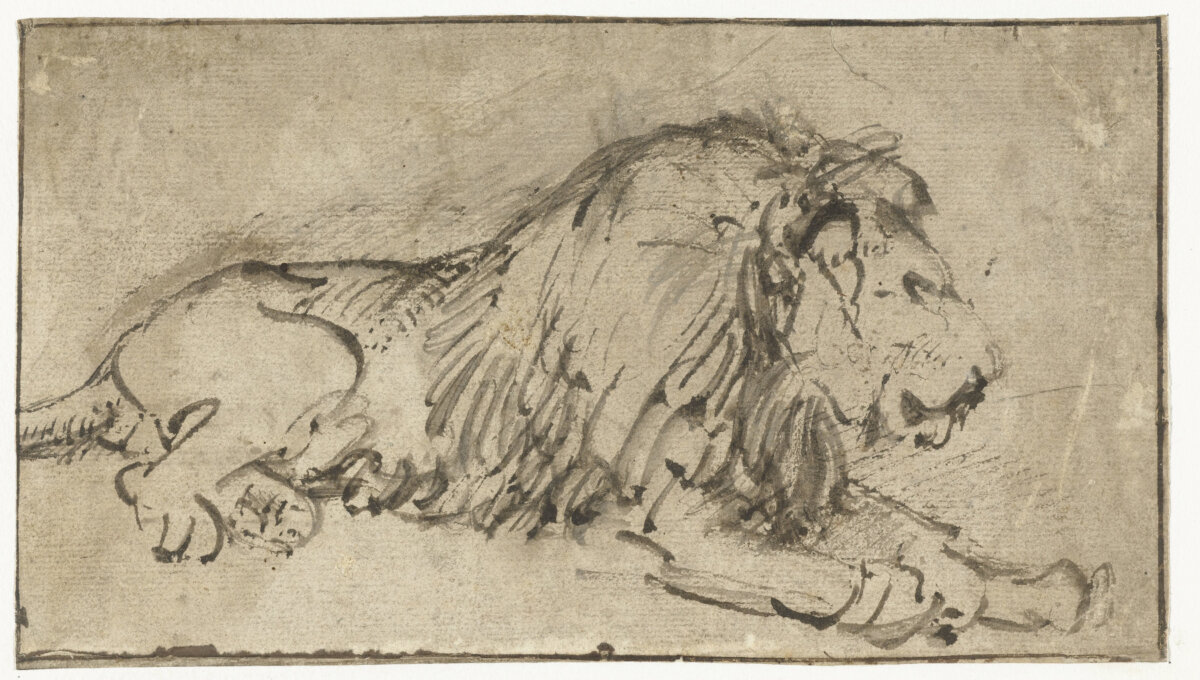
An unprecedented loan to North America has traveled across the Atlantic courtesy of The Rijksmuseum. The Dutch museum has lent the late-career 1660 drawing “Recumbent Lion,” which is considered to be the artist’s quintessential depiction of the big cat. Sketched with a reed pen and watery ink, it may have been done as the artist observed a live lion. This conclusion is supposed from the artist’s quick lines. The figure is also more realistic than earlier portrayals. This specific feline is believed to have been a Barbary lion from North Africa, now extinct. Such lions were often imported by the Dutch East India Co. The artist could have seen such an example at a fair or a menagerie.
Allegories and Windmills
The exhibit examines Rembrandt artworks that depict additional allegories associated with the Dutch Republic’s fight for freedom. Some of these parallels may be new to visitors; the biblical narratives of Moses and Queen Esther resonated with patriotic Dutch citizens and religious exiles. However, the archetypal connection between Holland and the windmill remains clearly identifiable today. In Rembrandt’s era, “windmills, like lions, became symbols of the republic’s strength and pride,” according to the Morgan.
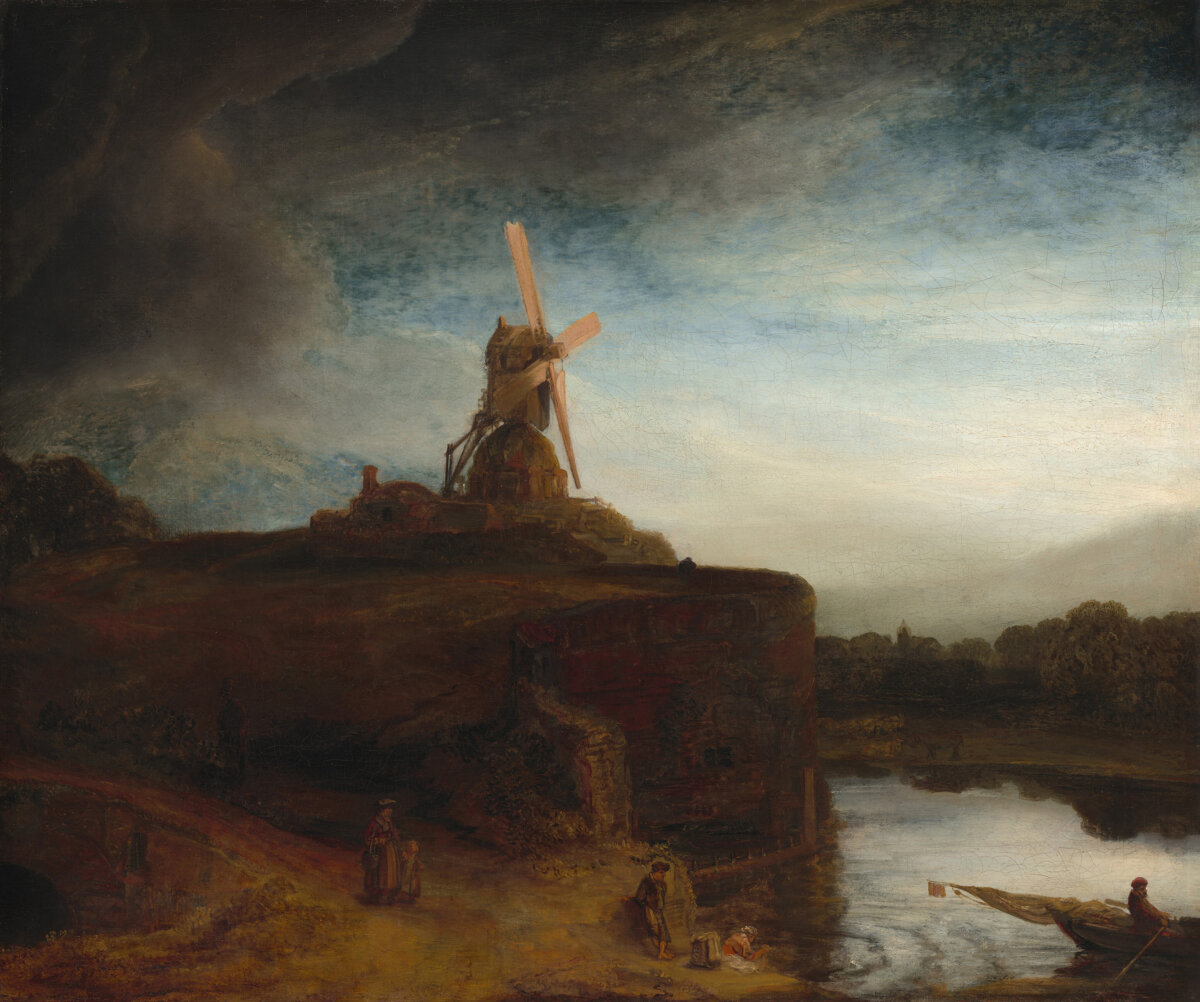
The artist’s famous circa 1645 to 1648 painting “The Mill” was lent by the National Gallery of Art. In the 19th century, this canvas was considered one of Rembrandt’s greatest works. Like the lion protecting St. Jerome, the mill watches over the Dutch Republic and its people. In turn, the Morgan, stewards of an unparalleled Rembrandt collection, have liberated these light-sensitive works for a well-deserved public spotlight.
“Rembrandt’s Lions: Art and Exile in the Dutch Republic” exhibit at the Morgan Library & Museum in New York City is on view through Jan. 31, 2027. To learn more, visit TheMorgan.org.
What arts and culture topics would you like us to cover? Please email ideas or feedback to features@epochtimes.nyc.