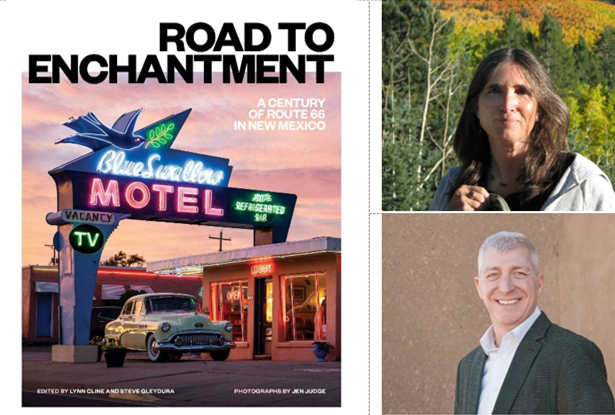
For most people, a highway is simply a connection from Point A to Point B. Add to that a multitude of unpleasant challenges, ranging from faulty road conditions to madcap drivers inflicting ‘Cannonball Run’-worthy mayhem on other motorists. Nevertheless, there’s one highway that holds a much higher degree of public appreciation.
This year marks the centennial of U.S. Route 66. The highway was designed to originate in Chicago and run for 2,448 miles across eight states before concluding in Santa Monica, California. This was the rare highway to gain pop culture status, inspiring Nat King Cole’s 1946 hit song “(Get Your Kicks on) Route 66” and the early 1960s television series “Route 66.”
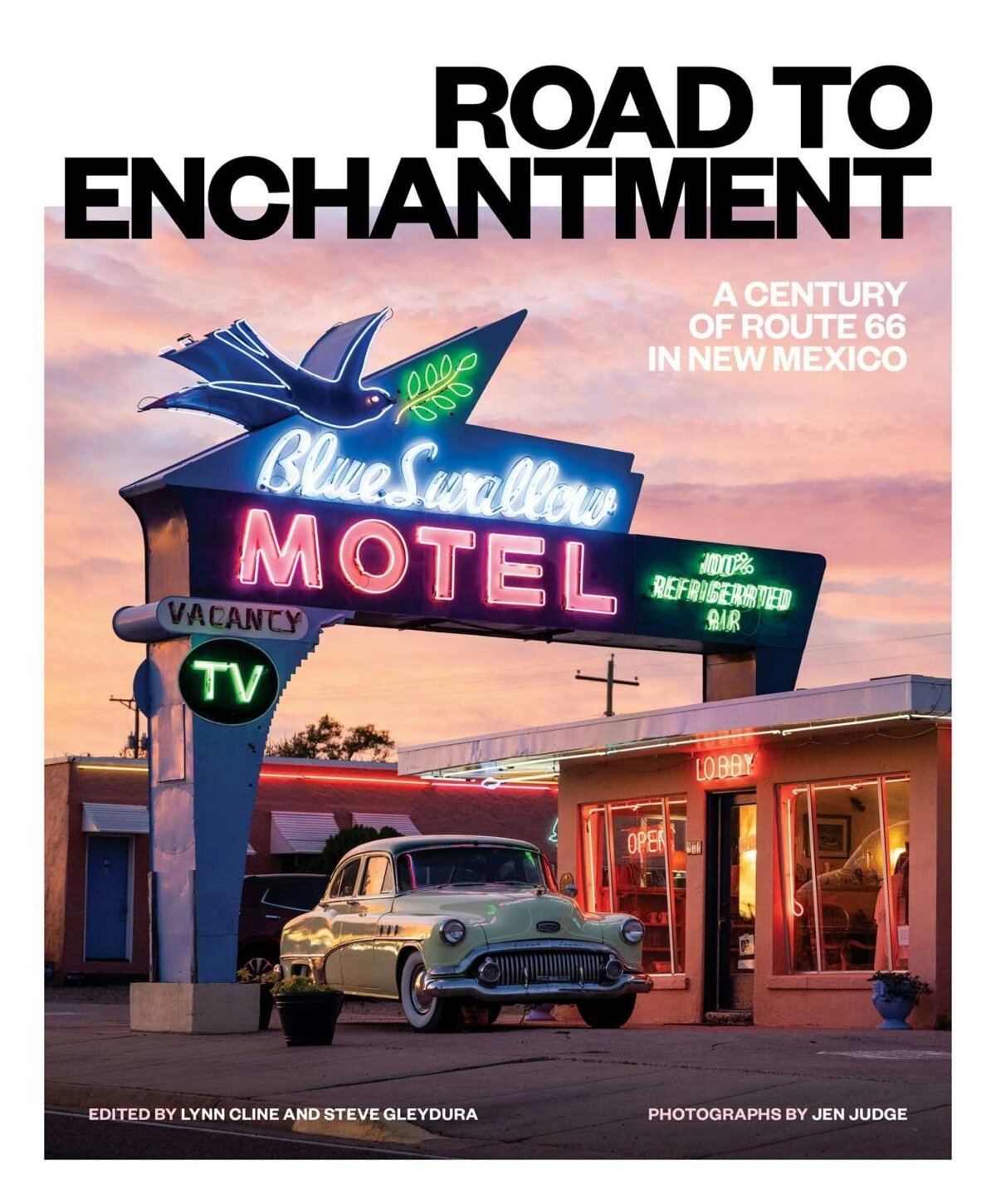
New Mexico was home to the highway’s longest statewide stretch. “Road to Enchantment,” co-edited by Lynn Cline and Steve Gleydura, celebrates Route 66’s impact across New Mexico. The book contains a rich collection of vibrant photographs and a series of invigorating essays highlighting its extraordinary past and continued impact on the state’s commerce and culture.
On the Road
Cline’s introductory essay, “Going Strong,” explains the highway’s origins as a 1926 federal government project. The project combined “a patchwork of mostly unpaved roads,” connecting mostly rural areas into a national highway. During its peak years from the 1930s through the early 1960s, the highway stretched 535 miles across New Mexico.
During the Great Depression, Route 66 accommodated travelers escaping the Dust Bowl with the hope of finding stability and security on the West Coast. John Steinbeck dubbed the highway “The Mother Road” in his 1939 classic “The Grapes of Wrath.” During World War II, the U.S. Army used Route 66 to transport soldiers and supplies across the New Mexico landscape.
The prosperity of the postwar years fueled a new era of automotive travel. That, in turn, created a hospitality industry along the highway, with an explosion of lodging establishments, restaurants, and retail outlets to cater to visitors. It wasn’t unusual for Route 66 hotels to welcome Hollywood stars who were shooting Westerns in New Mexico.
The 1956 creation of the U.S. interstate highway system diverted traffic from the small towns attached to Route 66. The government decommissioned Route 66 in 1985, and much of the highway fell into disrepair.
Today, only 265 miles of New Mexico’s Route 66 is drivable, and Cline acknowledges that much of what remains is “tricky to drive—bumpy and narrow, with no protective shoulders.”
Without a steady stream of motorists who stopped to spend money, some localities that thrived during Route 66’s heyday saw their populations leave after Interstate 40 diverted traffic away. These areas now stand as ghost towns, with crumbling trading posts and rusted signs that serve as tombstones for a once glorious past.
Preserving the Past
However, “Road to Enchantment” isn’t an obituary. Instead, it’s a celebration of Route 66 and the people who’ve preserved its halcyon days’ greatness while creating new memories for today’s visitors.
Eye-popping photography by Jen Judge depicts a New Mexican landscape glowing with bold neon signs affixed to buildings that span multiple eras and design styles. Some roadside attractions harken back to Route 66’s peak years, such as the Roto-Sphere atop a tower in the town of Moriarity that looks like a rainbow-colored cousin of the Sputnik satellite.
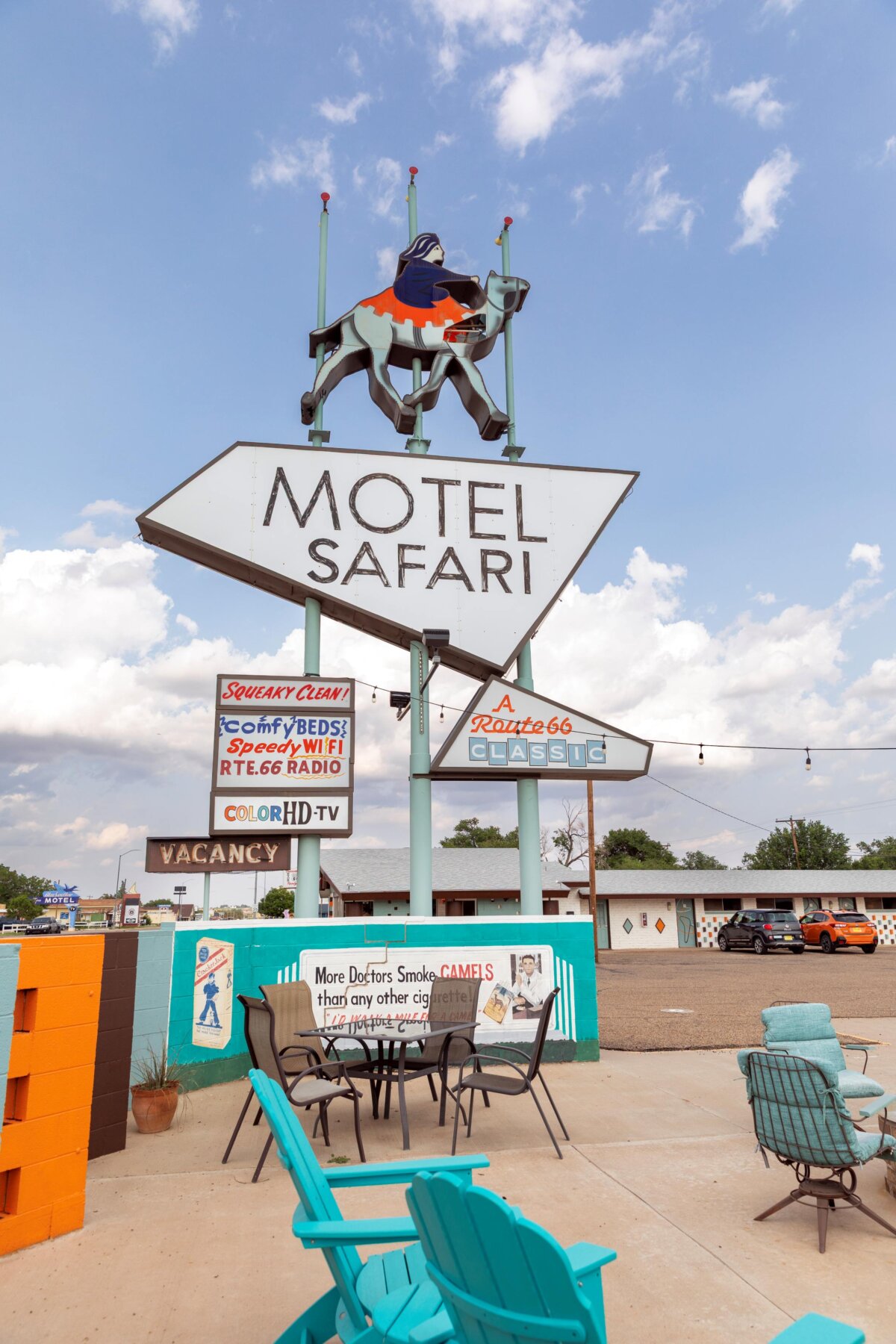
There’s also the Motel Safari in Tucumcari, which welcomes guests with its wildly colorful Google architecture and retro signage promising rooms that are “Squeaky Clean!” with “Comfy Beds.” That motel has its own in-house radio station playing (what else?) oldies and classics. It also openly displays a vintage mini–billboard which insists that most doctors recommend a particular cigarette brand to their patients; obviously, the good old days weren’t so good when it came to truth in advertising.
The book’s photographs offer a colorful mix of jukeboxes, pay phones, vintage signs, and what Lynn Cline applauds as an odyssey that “leads straight into yesteryear, where nostalgia and kitschy Americana thrive.”
Today’s Road Journeys
“Road to Enchantment” also pays tribute to the people who view Route 66 as the highway through today and into tomorrow. The New Mexican cuisine served up in local eateries is presented in gluttony-inducing glory, while contemporary murals show an innovative mix of the region’s multicultural heritage with startling patterns and hues.
Interviews with artists and business owners illustrate that Route 66 continues to inspire and invigorate. Painter James Emory talks of an “untapped territory” for visual artists to display their works. Tucumcari restauranteur Chase Waters calls the highway “The Boulevard” as he keeps customers happy with old-school favorites like chicken-fried steak and New Mexico-style chile relleno.
If “Road to Enchantment” has a flaw, it would be that it’s too little of a good thing. At a compact 96 pages, it leaves the reader hungry for much, much more.
Or maybe that was the goal of the book. After enjoying this wonderful spin across New Mexico’s colorful landscape, readers will certainly be inspired to follow the lyrical advice of the old Nat King Cole song and get their kicks on Route 66.
‘Road to Enchantment: A Century of Route 66 in New Mexico’
Edited by Lynn Cline and Steve Gleydura
New Mexico Magazine: Sept. 1, 2026
Paperback, 96 pages
What arts and culture topics would you like us to cover? Please email ideas or feedback to features@epochtimes.nyc