There are a number of rather odd heroes in the Old Testament. Odd, not because their behavior is necessarily eccentric, although sometimes it certainly is, but because they stand apart from the people to whom they belong. They are outsiders, outriders, solitary figures whose relationship with their own community is frequently problematic.
Abraham, of course, had to be an outsider, since God commanded him to leave his country and kindred in order to found a great nation. Moses, born among the Israelites but raised in Pharaoh’s household, occupied a position between two worlds; yet his identification with his people became so complete that he offered to have his name blotted out of God’s book rather than abandon them (Exodus 32:32).
Other biblical figures are more difficult to place. Jonah runs away from his commission and resents God’s mercy towards Nineveh, while Job suffers almost alone, surrounded by companions whose advice proves worse than useless. At least Job has friends, however inadequate they turn out to be.
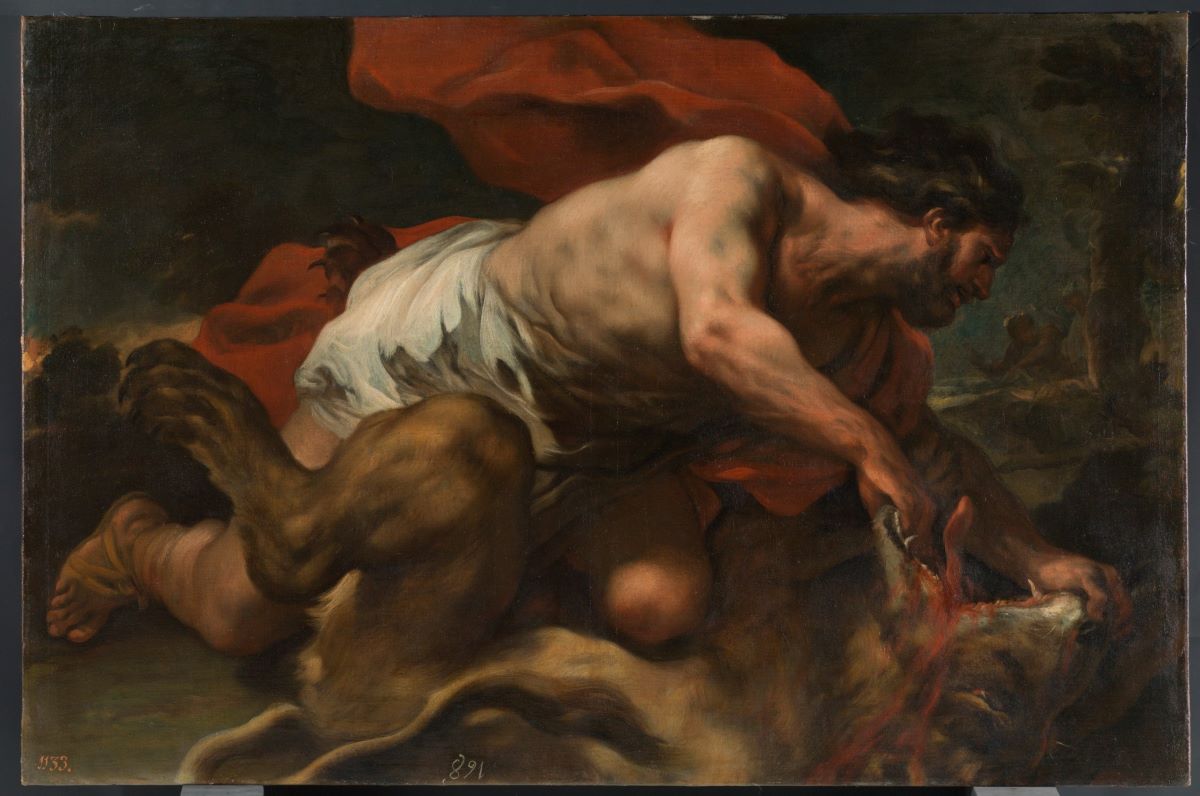
But perhaps the strangest of all these solitary figures is Samson.
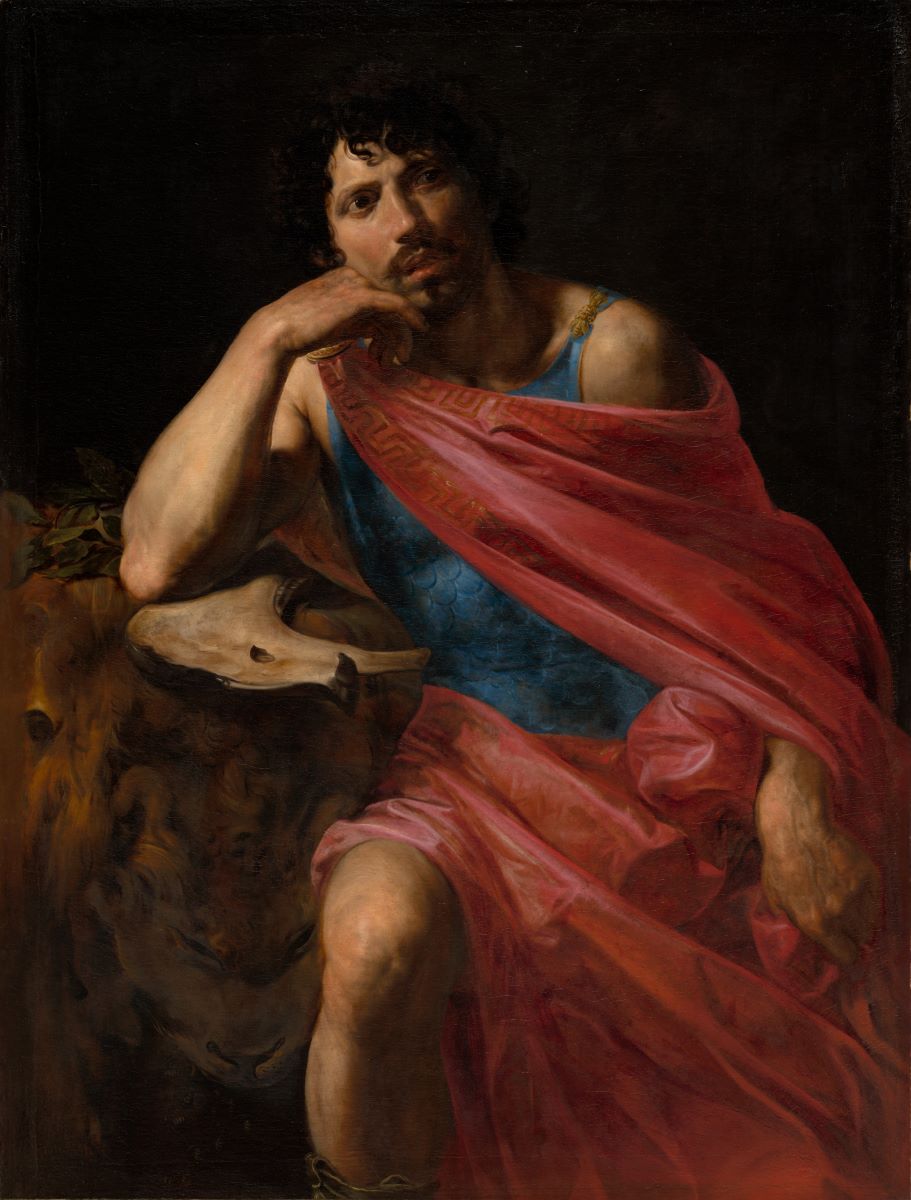
Unlike Joshua, Gideon, or David, Samson commands no army, nor does he assemble the tribes beneath a banner. His extraordinary battles are almost invariably personal encounters, fought single-handedly against Israel’s enemies, the Philistines.
Indeed, at one point, 3,000 men of Judah come to arrest him and hand him over to those very enemies. Imagine that! The man appointed by God to begin delivering Israel from oppression finds himself bound and surrendered by the people he is supposed to save. What sort of deliverer is this and what sort of man?
A Child of Promise
Samson’s story begins, appropriately enough, with an absence: His mother is barren. The Book of Judges does not even give us her name, identifying her simply as the wife of Manoah, a man belonging to the tribe of Dan.
In the biblical world, barrenness was frequently regarded as a source of shame and sorrow; yet, again and again, Scripture turns this apparent emptiness into the prelude to something extraordinary. Sarah bears Isaac when all natural expectation has vanished; infertile Hannah becomes the mother of Samuel; and, later, Elizabeth, the barren wife of Zechariah, gives birth to John the Baptist. The pattern is unmistakable: Where ordinary human possibility ends, divine purpose begins.
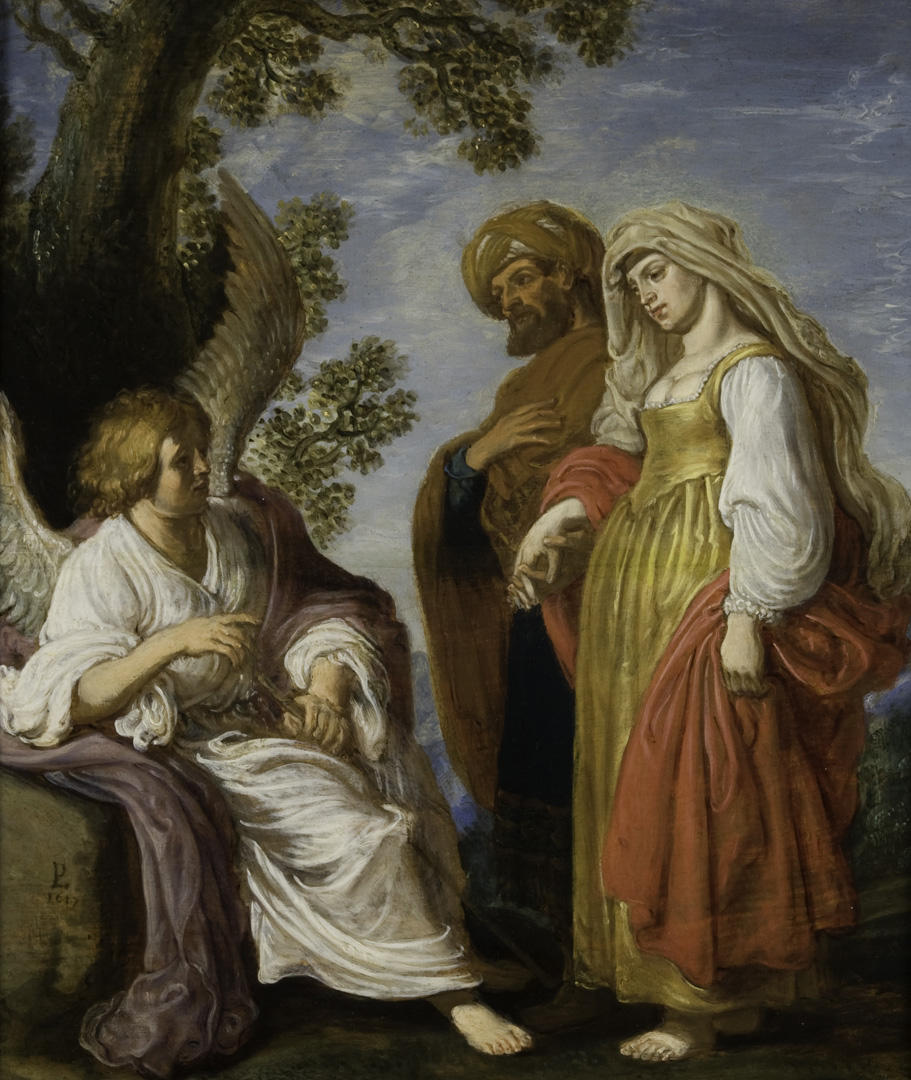
So it is with Samson. An angel of the Lord appears to his mother and announces that she will conceive a son; but this is no ordinary birth announcement, for before the child is even conceived, the conditions of his life are laid down. His mother must abstain from wine and strong drink and avoid anything ceremonially unclean, while the boy’s hair must never be cut, since he is to be a Nazirite, consecrated to God from the womb. And then comes the extraordinary promise:
“He shall begin to deliver Israel out of the hand of the Philistines.” (Judges 13:5)
Notice that word: begin. Samson is not promised the completion of Israel’s liberation, but is appointed to begin it; his vocation, therefore, contains a limitation from the outset. How often do we confuse our calling with the assumption that we must accomplish everything ourselves?
There is another curious feature, however, for Samson has no say in his consecration. Unlike those who voluntarily undertake a Nazirite vow, his destiny has been determined before his birth: He is chosen before he can choose.
This is startling when we consider two famous biblical callings. Moses initially attempts to evade his commission, while the Virgin Mary accepts hers with the extraordinary words: “Behold the handmaid of the Lord; be it unto me according to thy word” (Luke 1:38). Samson, by contrast, is never consulted; and therein, perhaps, lies the beginning of his tragedy, for what happens when a man possesses an extraordinary calling but lacks the character necessary to fulfil it?
The Woman Who Understood
There is something else unusual about Samson’s conception story: The angel first appears not to Manoah, the husband, but to his wife. She receives the revelation and reports it to him. Manoah, understandably perhaps, wants further information and prays that the mysterious visitor will return to instruct them how to raise the promised child. The angel does return, but, again, he appears first to the woman, who runs to fetch her husband.
The narrative gives her an initiative and spiritual perceptiveness that contrast intriguingly with Manoah’s repeated questioning. He wants to know how the child should be brought up and, later, asks the visitor’s name so that he might honor him when the prophecy comes true. But the angel refuses to satisfy his curiosity:
“Why askest thou thus after my name, seeing it is secret?” (Judges 13:18)
The Hebrew word, “pili,” suggests something wonderful, extraordinary or beyond human comprehension. Manoah wants a name; he is confronted instead with mystery.
Later, when the angel ascends in the flame of the sacrifice, Manoah is terrified, believing they must die because they have seen God. His wife, however, reasons more clearly: If God intended to destroy them, why would he have accepted their offering and announced their son’s birth? The woman whom the biblical narrative leaves unnamed is, at this decisive moment, the wiser of the two.
Her husband’s name, Manoah, is associated with “rest,” yet he is anything but restful in the presence of the divine messenger. And, perhaps, this is our first indication that women will play an extraordinarily important role in Samson’s destiny. His mother receives the announcement of his birth; his first Philistine wife becomes entangled in a disastrous conflict; a woman in Gaza features in another dangerous episode; and, finally, Delilah discovers the secret that brings him down.
But it would be a mistake to conclude that Samson is simply the helpless victim of women, since the deeper question is whether he is the victim of his own appetites.
The Man of the Sun
Samson’s very name is suggestive, being generally associated with the Hebrew “shemesh,” meaning “sun” and sometimes understood as “little sun” or “sun-like.” This has encouraged comparisons with ancient solar heroes and myths; the imagery becomes especially intriguing when we consider Samson’s extraordinary strength, his encounter with a lion, and his eventual descent into darkness.
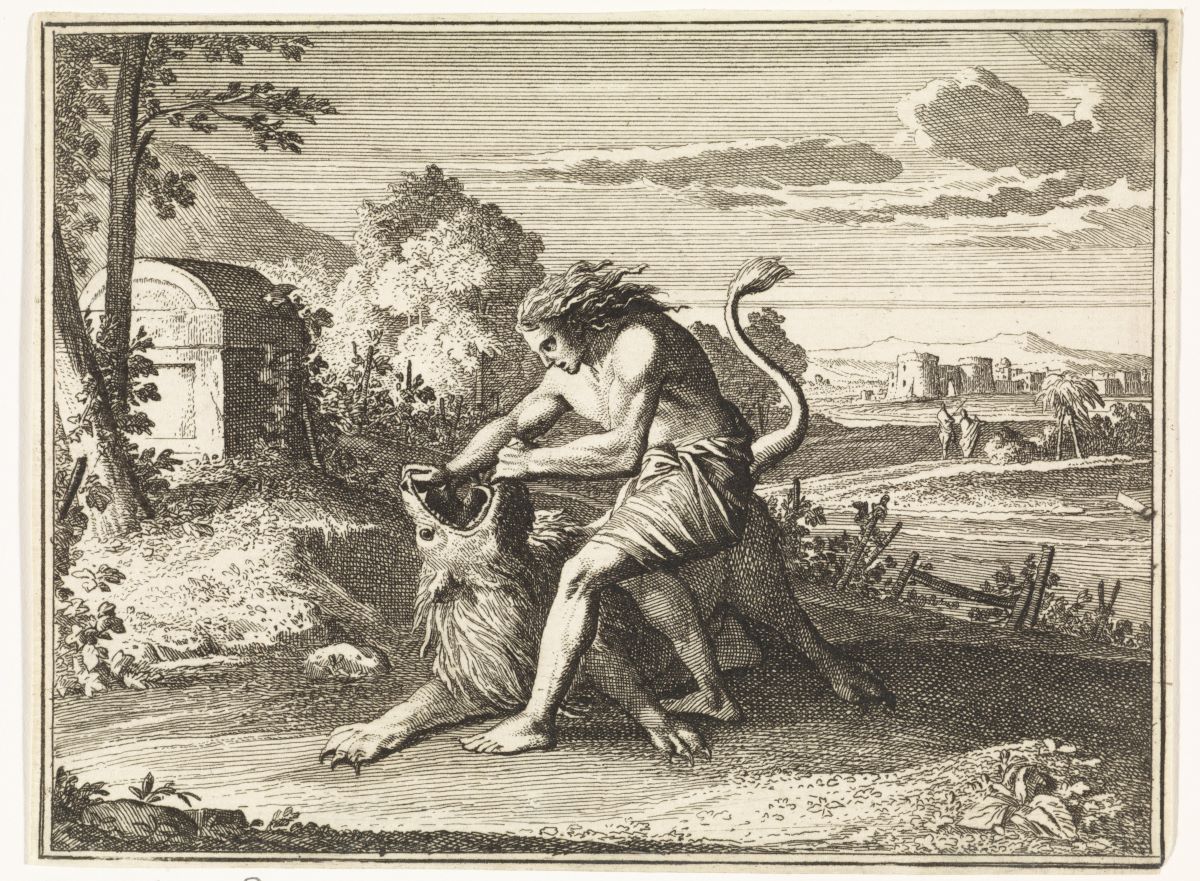
The lion has long been associated with solar symbolism, and, in classical astrology, Leo is ruled by the Sun. Could Samson’s struggle with the lion preserve an echo of an older solar mythology? Possibly, although symbolic resemblance is not proof of historical origin.
What we can say is that the imagery offers a striking literary paradox. Here is a man whose name evokes light, whose strength is almost superhuman, and whose final catastrophe will be the loss of his sight—the extinction of light itself. The man of the sun will become a man of darkness; and yet, perhaps, only in darkness will he finally begin to see.
The Hero on the Border
Samson belongs to the tribe of Dan, whose allotted territory lay in the troubled borderlands near the Philistine cities. It is a fitting birthplace for a man who will spend his life crossing boundaries. The Philistines were not distant enemies but neighbors, rivals, and occupiers, so that Samson’s world is one in which the distinction between one’s own people and the enemy is geographically close and socially complicated.
There is a deeper irony in his tribal inheritance, for when Jacob blesses his sons in Genesis, he declares:
“Dan shall be a serpent by the way, an adder in the path, that biteth the horse heels, so that his rider shall fall backward.” (Genesis 49:17)
Unlike the lion of Judah, the serpent of Dan does not overcome by overwhelming force, but strikes unexpectedly, bringing down something much larger than itself. Is this not an extraordinary anticipation of Samson’s career? Again and again, he attacks the Philistines not as the commander of an army but as an unpredictable individual who overturns the expectations of stronger, more organized enemies. Yet there is a difference between possessing the power to overthrow others and possessing the wisdom to govern oneself; and it is precisely this difference that will define his tragedy.
The Hebrew Herakles?
Readers familiar with Greek mythology may already have recognized a remarkable parallel, for Samson resembles Herakles, or Hercules, the greatest strongman of the Greek heroic tradition. Both possess prodigious strength, confront lions and perform astonishing feats; both are capable of terrifying violence and both are vulnerable to the disorder of their own passions.
Herakles’s 12 Labors remind us that physical greatness does not necessarily imply moral innocence. Samson, similarly, can perform feats that seem to defy nature, but his strength is bound to a particular divine calling. The Spirit of the Lord moves him, his long hair is the visible sign of his consecration, and his vocation is to begin delivering Israel. This makes his eventual moral collapse particularly tragic, for it is one thing to squander a natural talent, but quite another to misuse a gift entrusted to us for a purpose beyond ourselves.
Israeli author David Grossman, in his remarkable “Lion’s Honey: The Myth of Samson,” draws attention to Samson’s extraordinary isolation, since there is nobody in his world who truly resembles him. More remarkably, unlike Herakles or King David, he appears to have no friends; his extraordinary strength has become a form of extraordinary isolation.
Here is a man whose power makes him almost invincible, yet whose uniqueness may make genuine human intimacy almost impossible. The ancient Greeks asked what it meant to be a hero; Samson’s story asks an even more uncomfortable question: What if a man is heroic in everything except the government of his own soul?
The Beginning of Trouble
For a time, the child of promise grows. Judges tells us that the Lord blesses him and that the Spirit begins to move him; but there is no account of his education, no description of the development of his extraordinary physique, and no childhood episode demonstrating his strength. Instead, the narrative moves rapidly towards the event that reveals the central weakness of his character.
Samson goes down to Timnah, where he sees a woman who happens to be a Philistine. Returning to his parents, he announces that they must obtain her for him as his wife; but his parents object, asking whether there is no suitable woman among his own people and whether he must seek a wife among the uncircumcised Philistines. Samson’s reply is devastatingly simple:
“Get her for me; for she pleaseth me well.” (Judges 14:3)
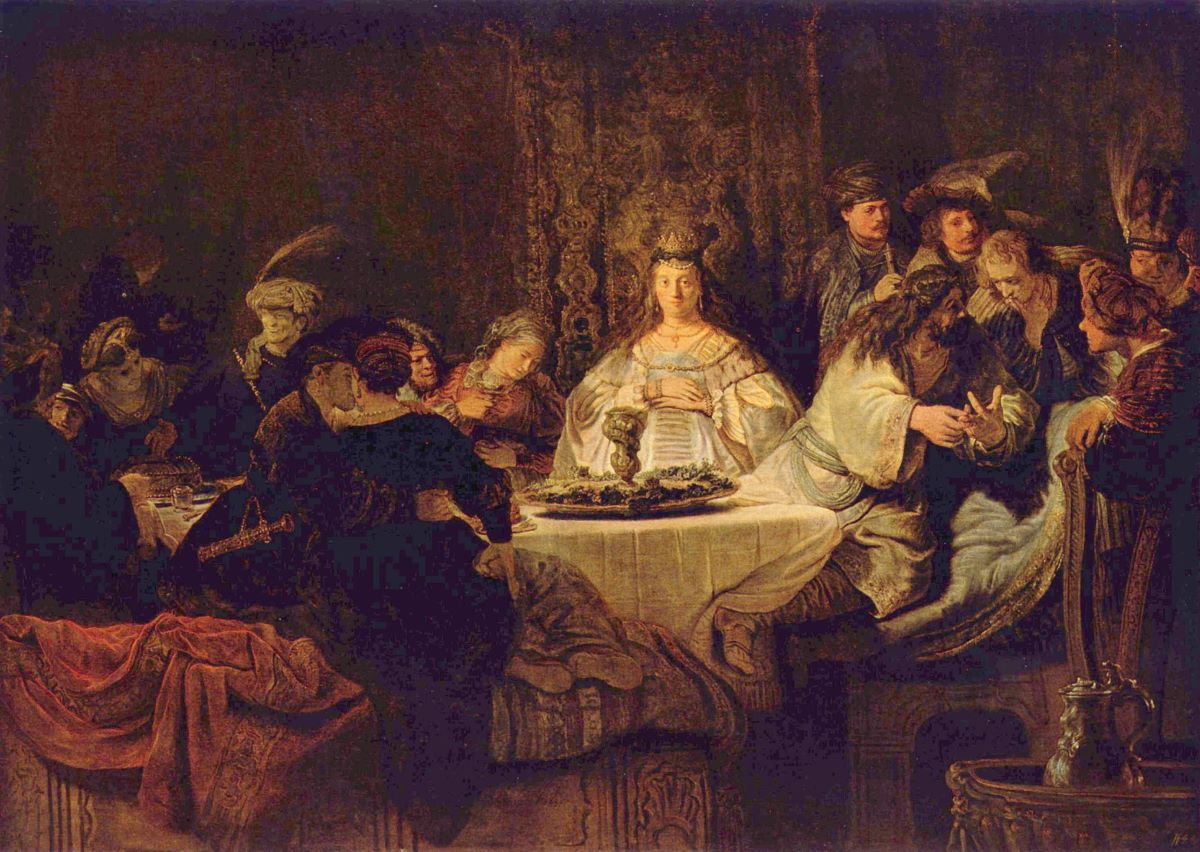
There, in a single sentence, we encounter the fault line running through his entire life: He sees, he desires, and he demands. The narrator adds an important qualification, however, for Samson’s parents do not know that the matter is “of the Lord,” who is seeking “an occasion against the Philistines” (Judges 14:4).
Divine providence is, therefore, at work even through Samson’s questionable choices; but providence does not make his character irrelevant, since the man destined to deliver Israel from its enemies is already revealing an inability to resist the commands of his own appetite.
And soon, on the road to Timnah, he will meet a lion, which he will tear apart with his bare hands. Later, returning to its carcass, he will discover something almost impossible: a swarm of bees and honey within the dead beast. Out of the eater will come something to eat; out of strength will come sweetness. But what, we might ask, will come out of Samson himself?
That is the question to which we must turn to in the next article.
The quotations from the Bible are from the King James Version.
What arts and culture topics would you like us to cover? Please email ideas or feedback to features@epochtimes.nyc.