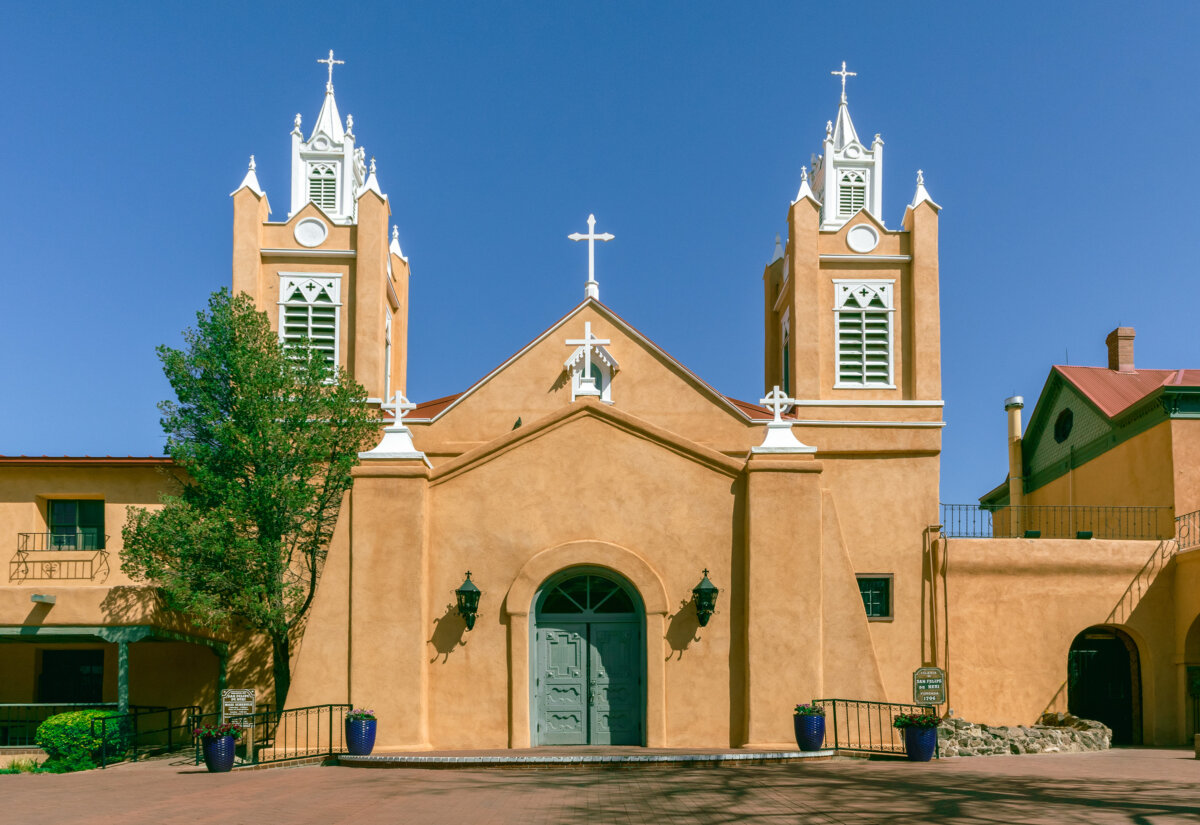
Twin towers flank a steeply pitched roofline at the front approach of San Felipe de Neri, providing a sophisticated European flair to the church’s overall southwestern appearance. White painted crosses, spires, and louvres add refinement to the church’s presence. (Faina Gurevich/Shutterstock)
San Felipe de Neri Church in Albuquerque, New Mexico is not only one of the oldest buildings in the city, but also the only church in continuous use since the 1700s. Completed in 1793, the church’s construction is primarily of adobe bricks. Unlike masonry bricks, adobe bricks are unfired and made of mud mixed with other materials, such as straw, grass, moss, and pebbles. The combination of materials is compacted into molds and allowed to dry naturally.
Despite the rustic nature of adobe construction, San Felipe de Neri’s architecture combines aspects of Spanish colonial style—characterized by thick stucco walls and wrought iron railings and gates—and Gothic Revival details, showcased in spires and towers.
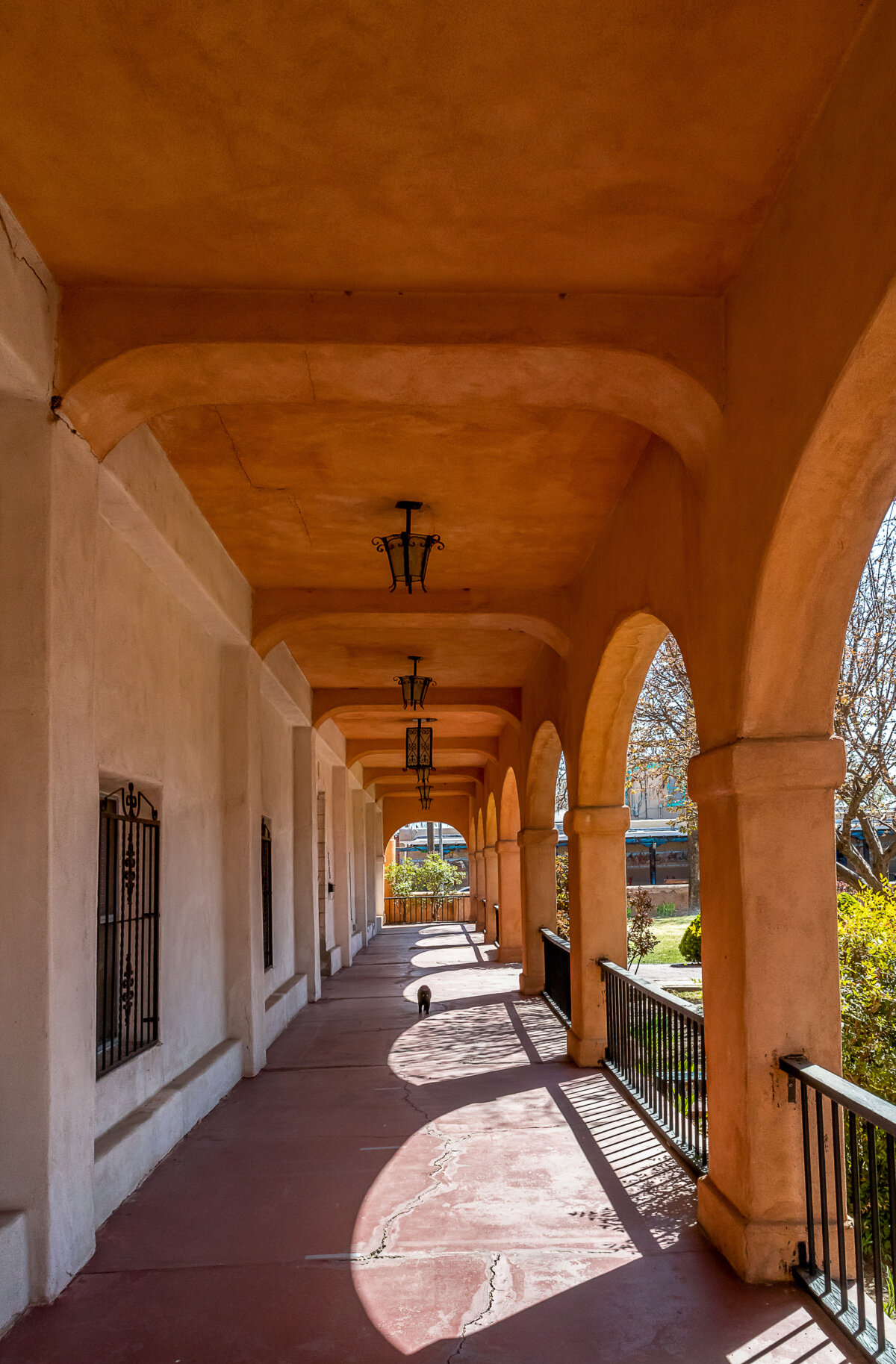
Designed as a cruciform, which means shaped like a cross, San Felipe de Neri’s layout also includes an arcade around the inner courtyard and a decorated front-door gable with a widow’s walk.
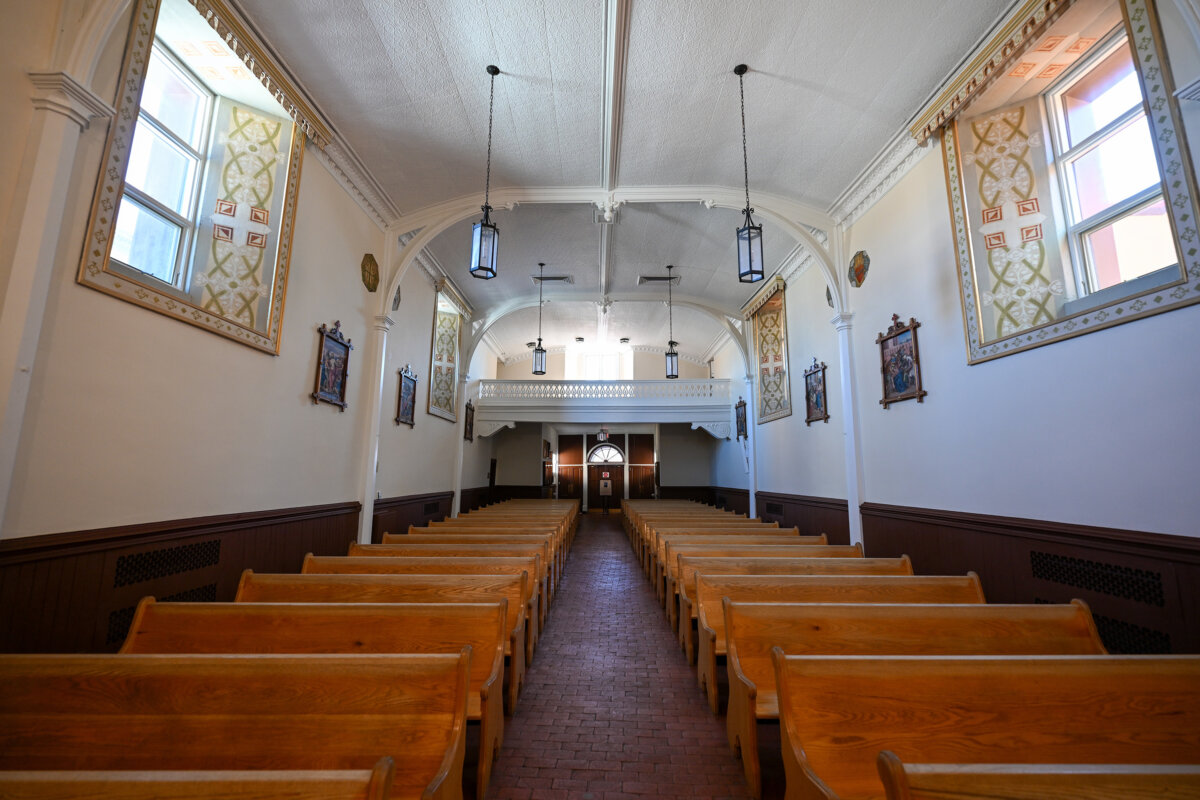
In its 233-year existence, San Felipe de Neri Church has changed very little. Only restoration work has taken place to preserve the structure, and the nave’s tin ceiling and brick floor were added in the early 1900s.
While San Felipe de Neri is an active church, it is also open to the public because of its distinct architecture and history.
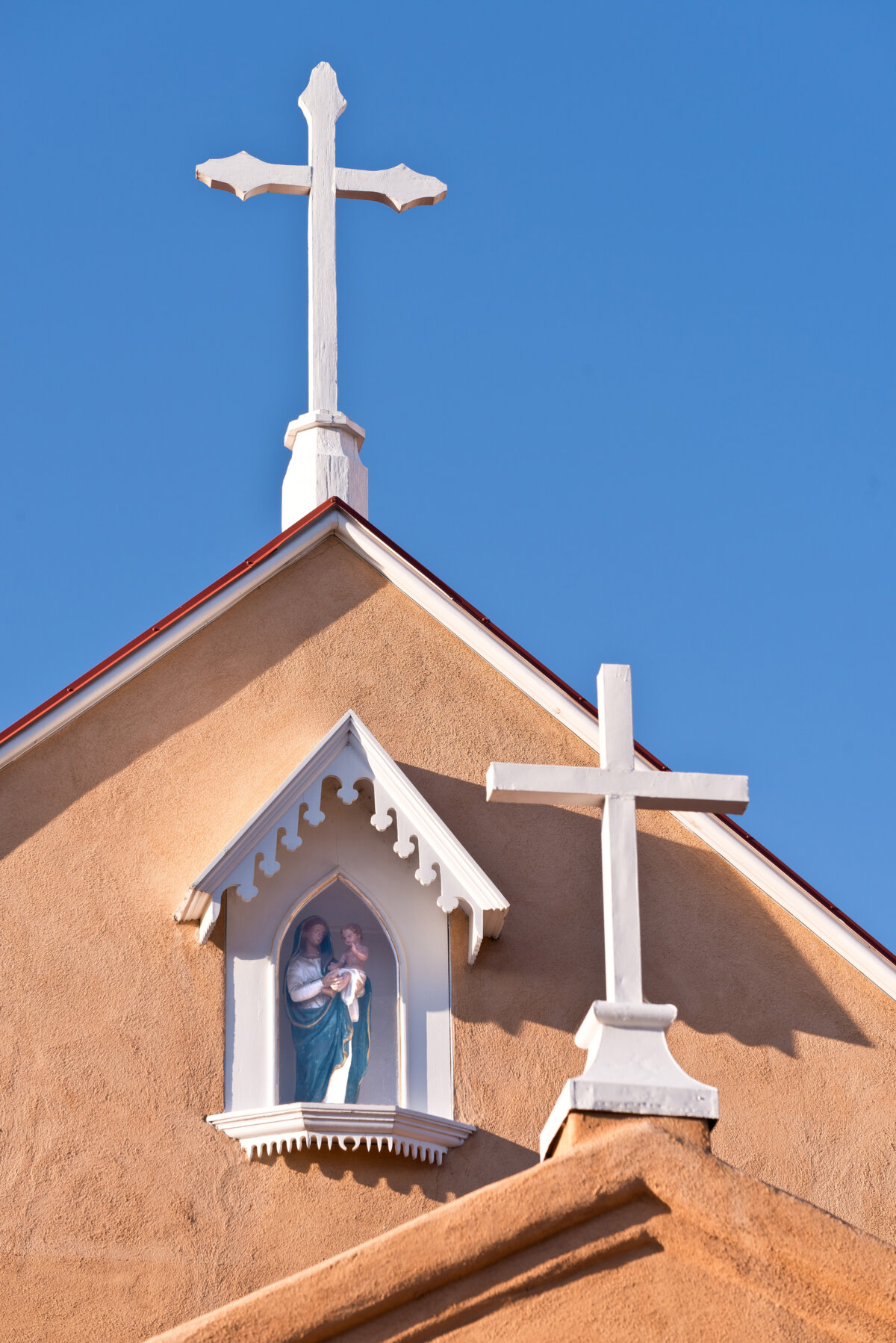
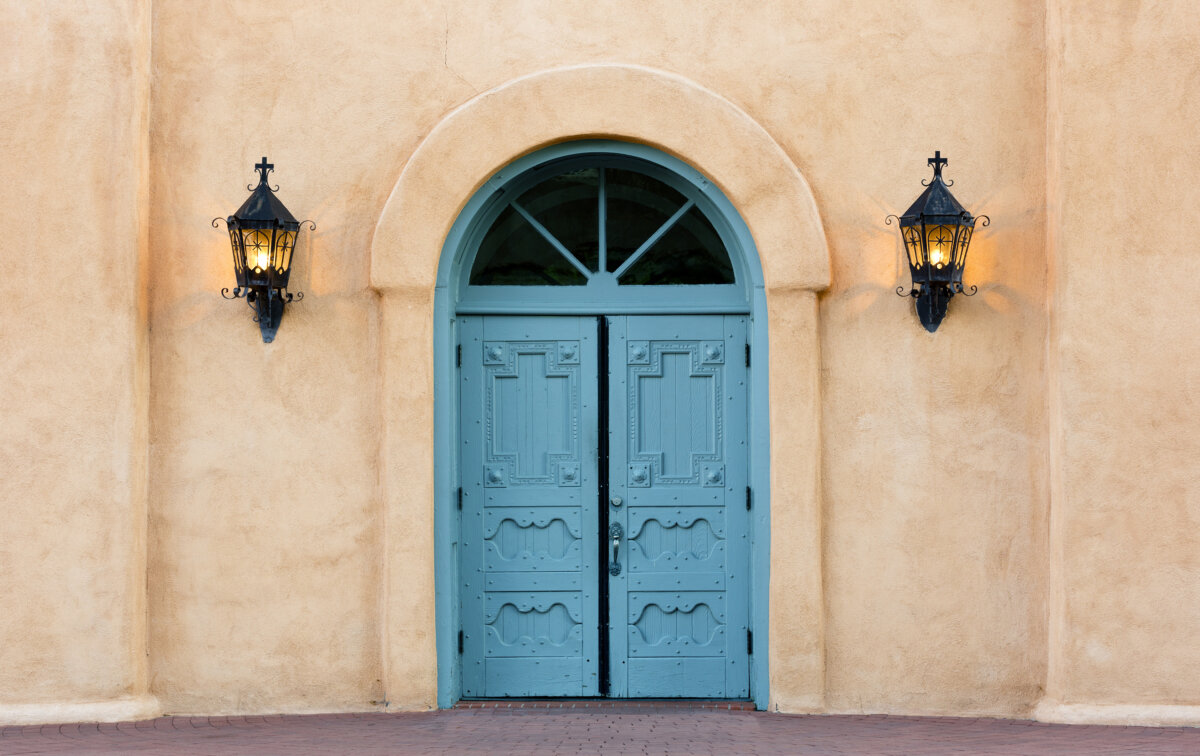
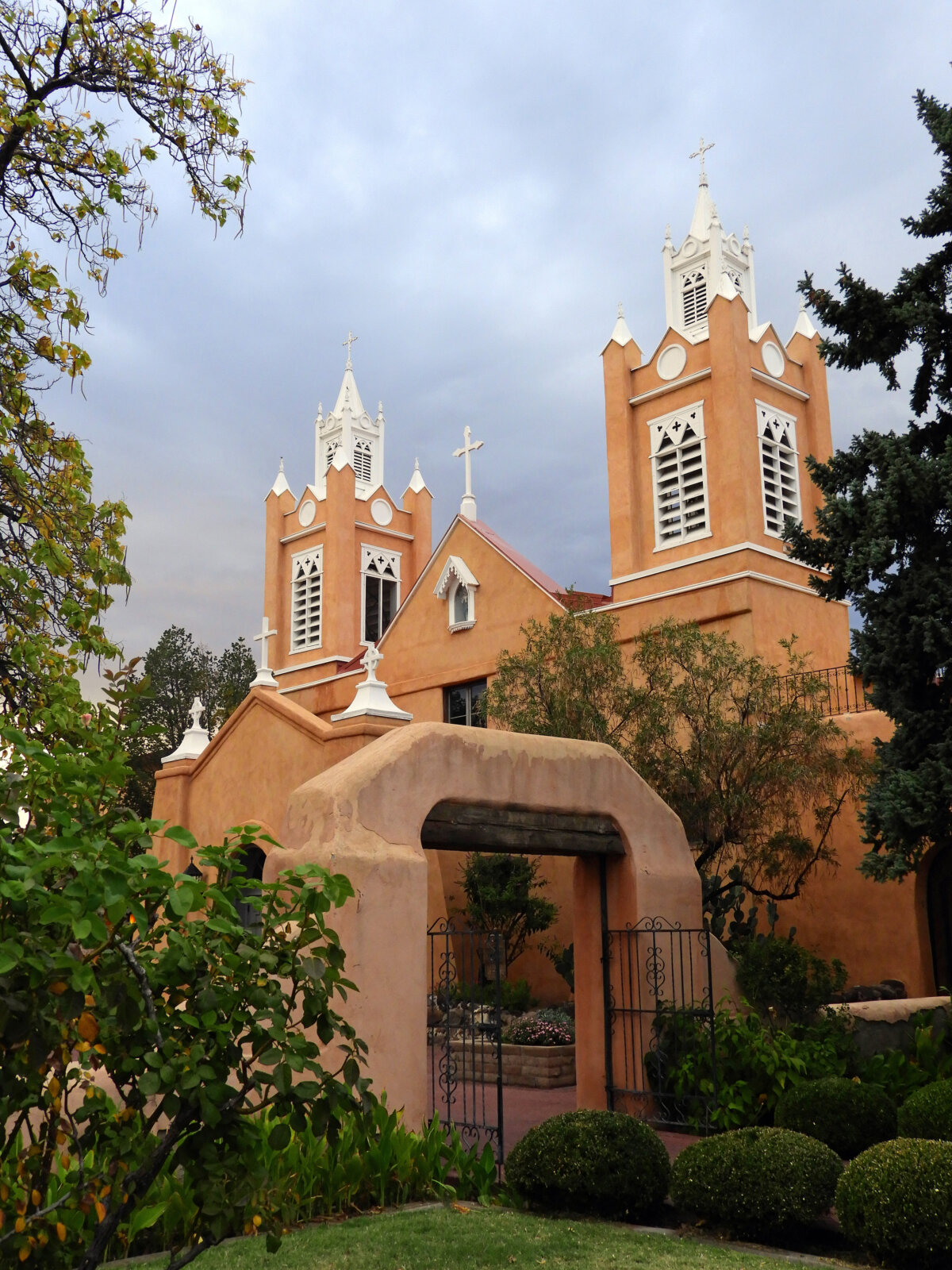
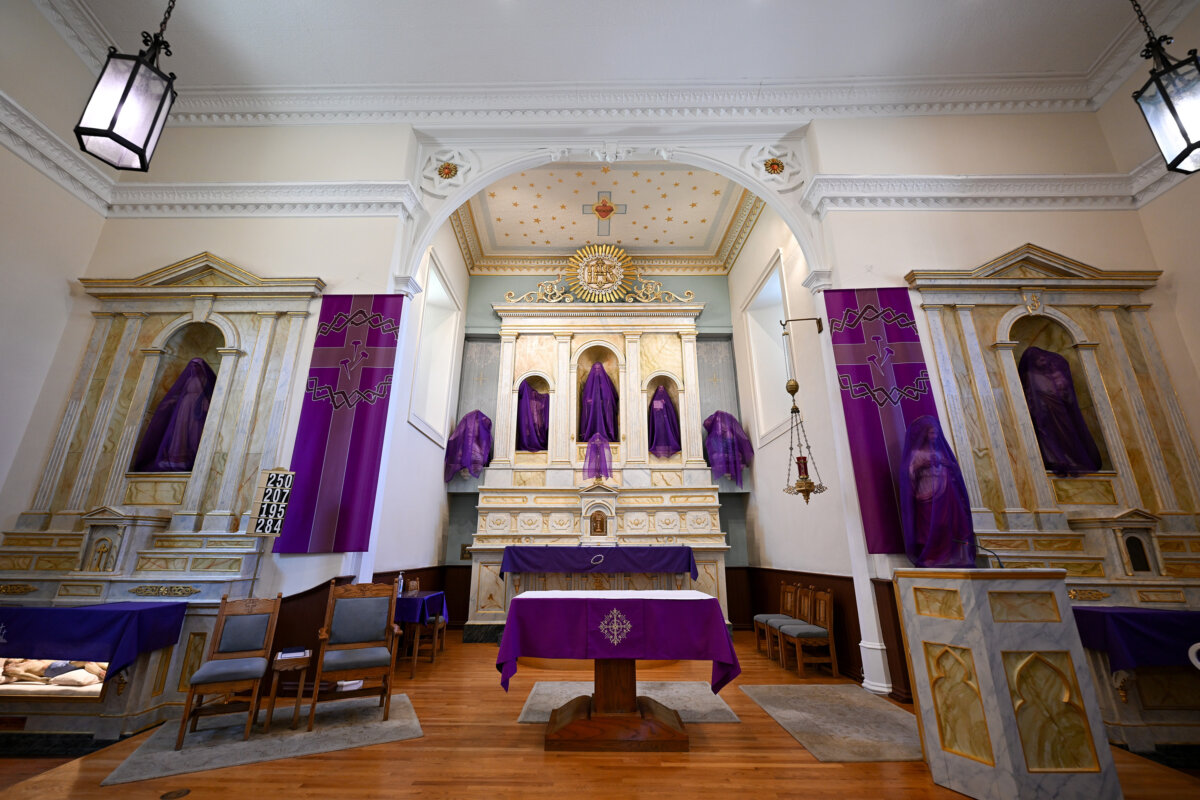
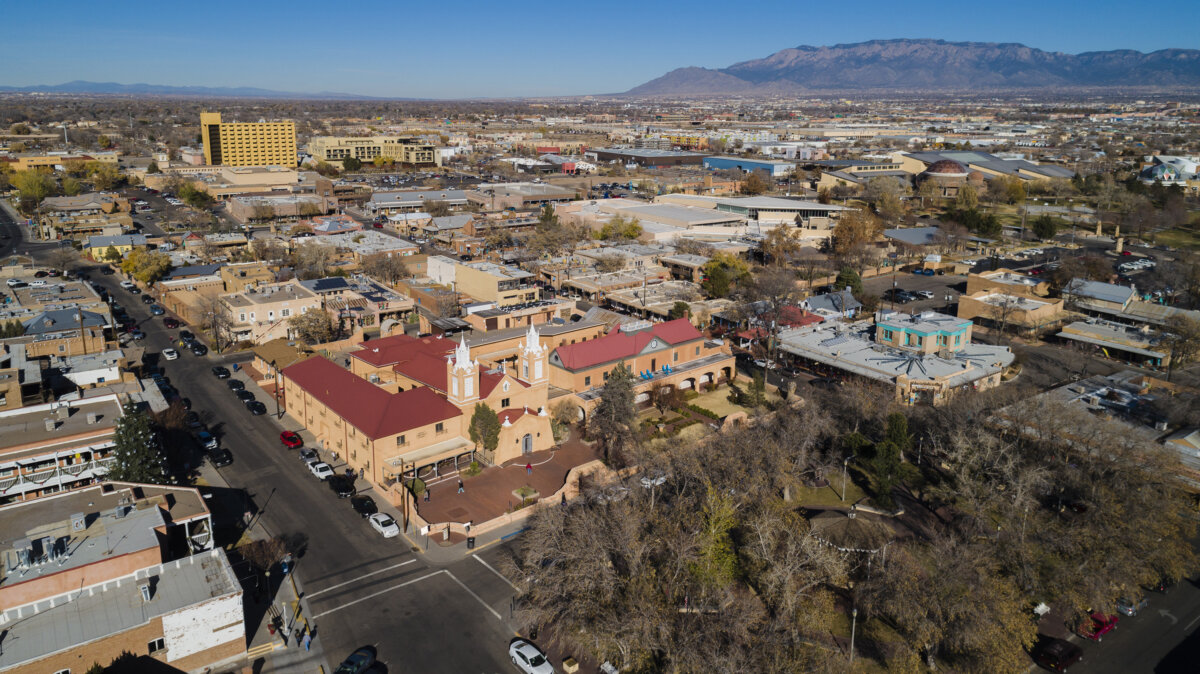
White wooden crosses are prominent at the apex of the roofline pitches above the church’s front door. A small, Gothic-arch shrine, also with a roof pitch, holds a statue of the Virgin Mary and Christ Child. (Michael Warwick/Shutterstock) Five-foot-thick adobe walls surround the arched entryway of San Felipe de Neri. An arched transom in four triangular sections tops the entryway’s double, paneled doors. Decorative iron sconce lanterns with cross decorations flank the blue doors. (Florence-Joseph McGinn/Shutterstock) The two large belfry towers with white crucifixes top spires and louvers; they are prominent against the church’s earth-toned stucco walls. Although the church is made of rustic adobe, the smooth stucco and angled roof pitches give it a polished façade against the coarser adobe pentagonal arch gateway. (Nina B/Shutterstock) Five sections along the church’s nave are arches supported by pilasters. The adobe walls are smooth, painted plaster and the space’s ceiling is pressed tin. Wrought iron and glass lamps hang from chains on either side of a strip of ceiling-seam molding. The floor is hand-made brick from the early 1900s. Window casings feature patterned tilework. (Felix Lipov/Shutterstock) Although the statuary and icons are covered while the church observes Lent prior to Easter, the wooden altar and pulpit are noteworthy for their treatment that resembles gilded marble. Their design is classical, with pilasters, arches, keystones, and pediments on display. Dentil-style picture-rail and crown moldings frame the space. (Felix Lipov/Shutterstock) An adobe arcade consisting of arches on square columns surrounds the church’s courtyard. Thick pilasters on the wall align with the columns, and proportionally positioned between the pilasters are windows covered in ornamental wrought-iron grates. (Faina Gurevich/Shutterstock) From an aerial view, San Felipe de Neri Church is distinguishable in Old Town Albuquerque due to its traditional Spanish colonial terracotta red roof, contrasting sand-colored stucco exterior, and conspicuous white tower spires and crosses. (Alex Potemkin/Getty Images)
What arts and culture topics would you like us to cover? Please email ideas or feedback to features@epochtimes.nyc.
A 30-plus-year writer-journalist, Deena C. Bouknight works from her Western North Carolina mountain cottage and has contributed articles on food culture, travel, people, and more to local, regional, national, and international publications. She has written three novels, including the only historical fiction about the East Coast’s worst earthquake. Her website is DeenaBouknightWriting.com