



Essentially, much of the town of Vicksburg, Mississippi, in sight of the Louisiana state line, is a history lesson. Here Civil War battles and a siege lasted from mid-May to July 4, 1863. Confederate president Jefferson Davis called the town “the nail head that holds the South’s two halves together.” As such, Union president Abraham Lincoln considered Vicksburg “the key” to victory.
Under Ulysses S. Grant’s leadership, Union forces eventually took the town, but not before both sides suffered thousands of casualties. Today, all through the town is evidence of and tributes to that historic event in the form of museums, murals, walking tours, and especially the 1,800-acre Vicksburg National Military Park.
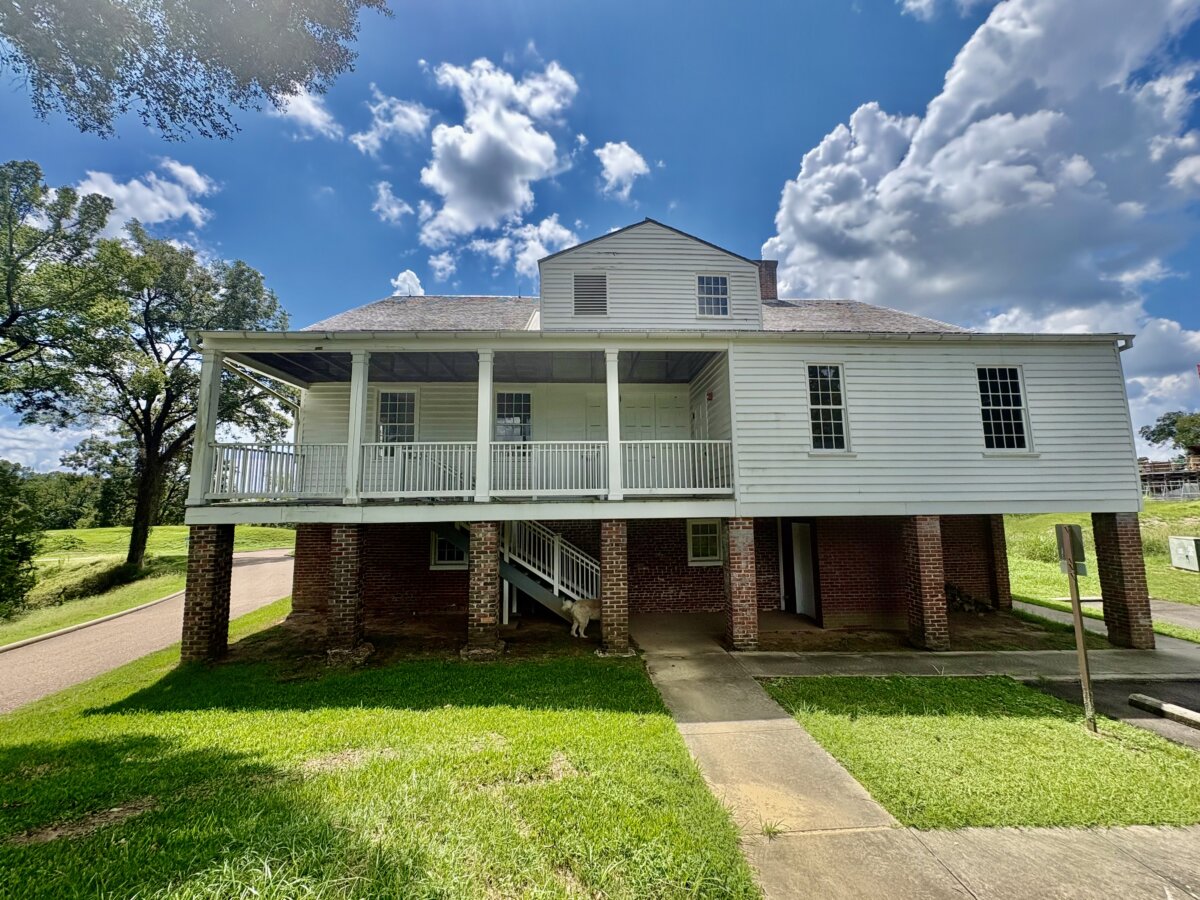
Signs, including more than 1,300 monuments and markers, trenches, and earthworks all stand along a 16-mile tour road. Despite so many memorials, the only wartime structure still standing is the Shirley House, which Federal soldiers called the “white house.”
Built in the 1830s, the home and surrounding property were purchased by attorney and judge James Shirley and his wife Adeline in 1851. The white clapboard house has four square columns that support a balcony and a pediment-covered upstairs entryway. Tragically, it was directly in the pathway of fighting on May 18, 1963.
With James and their daughter stuck in Clinton, Mississippi, due to cut rail lines, Adeline and their son were alone at the house when Confederate soldiers tried to burn it down to prevent it from being used by Union troops. Although Confederate soldiers successfully torched the barn and a few other outbuildings, the house was spared when a Confederate soldier wielding a torch was killed by a federal sharpshooter.
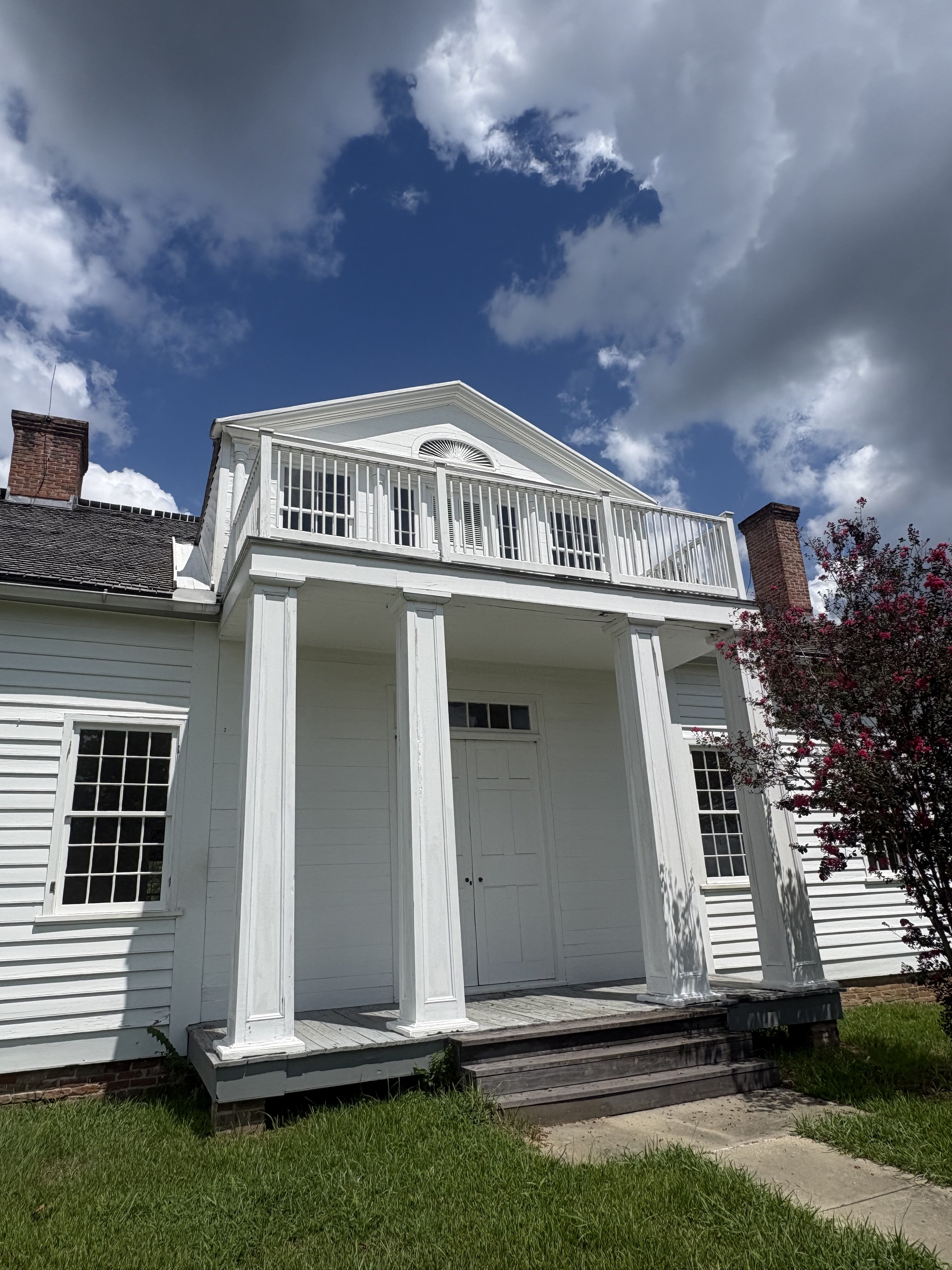 Four columns are a clue to the southern character of this 1830s home. (Deena Bouknight)
The Shirleys were secretly Union sympathizers because a main source of their income was selling fruit from their orchards to Northern consumers. But Union soldiers didn’t know that, so the home was shelled along with the rest of the Confederate-held lands. During the worst of the barrage, Adeline and her son, Robert Quincy, as well as a few servants, took refuge in a bricked chimney corner. After three days, Adeline tied a white sheet to a broom handle and hung it from the top-floor balcony. Union soldiers recognized her surrender and advanced to remove the home’s occupants.
New Digs
The Union soldiers took the frightened group to hastily dug caves on a steep, sloping bank at the edge of some nearby woods. In fact, because Vicksburg sits on a plateau of hills 200 feet above the Mississippi River, many caves were dug, as fighting ensued. There, civilians had a better chance of surviving the shelling and gunfire than if they were to stay in their homes.
According to the National Park Service, “During the siege, the city of Vicksburg appeared to be, in the words of one citizen, ‘so honeycombed with caves that the streets look[ed] like avenues in a cemetery.’”
With just a trunk, rocking chair, and blanket—which she used as a door to the cave entrance—Adeline and company sheltered inside, where they slept on the ground for three days. Poor living conditions resulted in them becoming ill.
Although she did not keep a journal of her experience in the cave, Vicksburg resident Mary Loughborough later published a book titled “My Cave Life in Vicksburg.” She noted, “Caves were the fashion—the rage—over besieged Vicksburg.”
“The explosions were so loud and frequent” that she often did not believe she would live to see the next day.
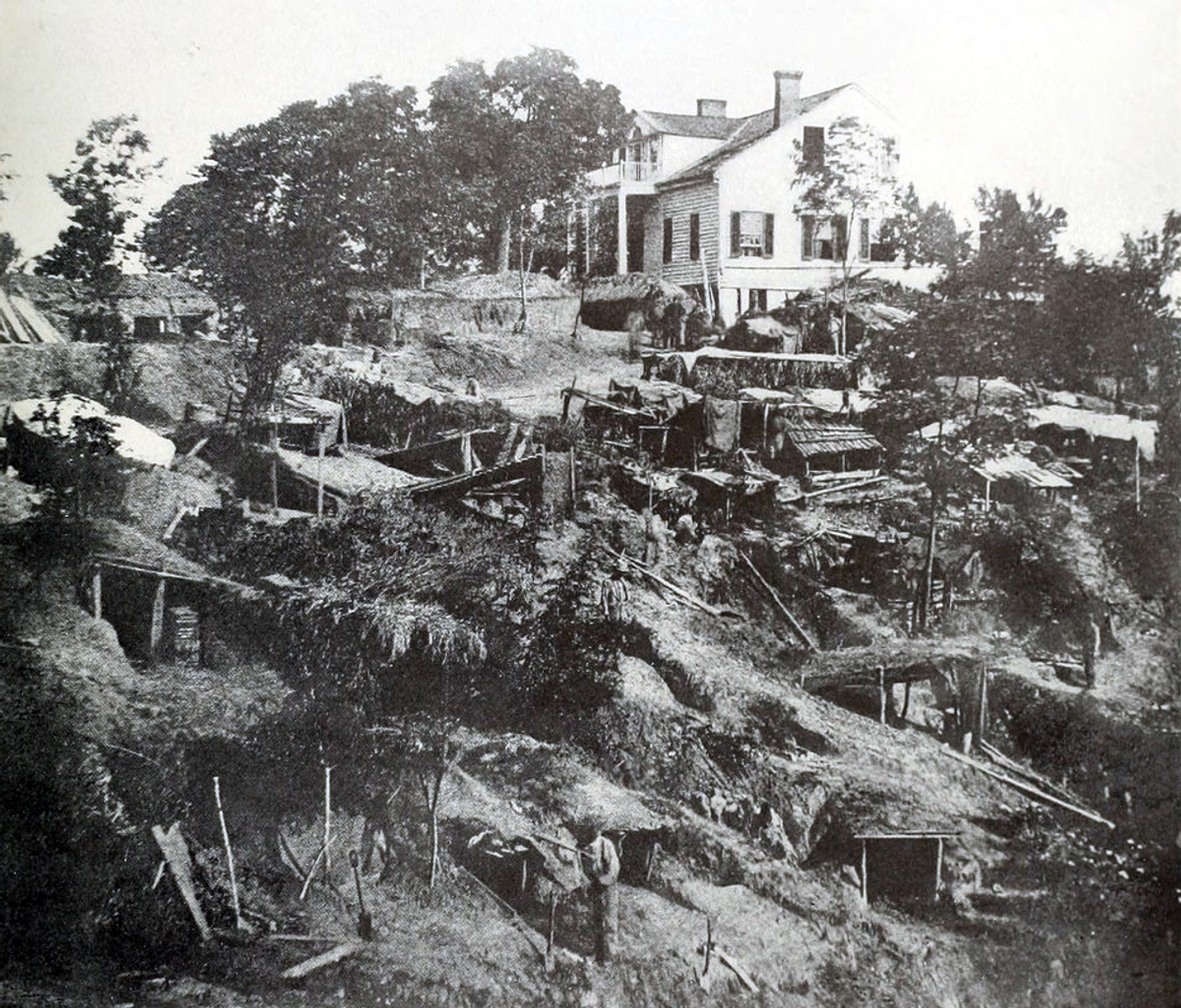 Caves dug into the side of the bluff in Vicksburg, Miss. in 1863 during the Civil War. (Public Domain)
Sometime after the siege ended, author Mark Twain interviewed a Vicksburg citizen who described to him how the caves were “desperately crowded,” and the “air so foul, sometimes, you couldn’t have made [a] candle burn in it.”
When James Shirley and his daughter reunited with Adeline and Robert Quincy, they all eventually left Vicksburg and took up lodging in slave quarters at a plantation farther away from the fighting.
With her property surrounding the house in shambles, the home used by Union troops, and her husband dying just three weeks after the 47 days of fighting ended, Adeline Shirley moved to Ohio with her daughter and her new son-in-law.
After the war, Adeline wrote to then-General Ulysses S. Grant, expressing her loyalty to the Union and asking for compensation for the home and property. Her request was not granted, however, because Mississippi was in rebellion. Adeline died at age 77 in 1888, and was buried next to her husband in Cedar Hill Cemetery in Vicksburg. The house, unused, fell into disrepair.
When the Vicksburg National Military Park was in development in 1899, the Shirleys’ daughter, Alice, negotiated partial overdue compensation for the house and property from the federal government.
 The Vicksburg National Military Park has preserved Shirley House for visitors. (Deena Bouknight)
In 1900, the house was restored to its 1863-era appearance, which was captured by an anonymous photographer in a photograph that included the caves. That photograph became so relevant historically that it is now held in the Library of Congress’s archives.
None of the Civil War-era caves exist today. However, visitors to the Shirley House can clearly see the steep bank where they once were, and depressions in the earth under the dense foliage are somewhat visible.
The grounds around the Shirley House are always accessible, but the home is open to the public only on weekends during summer months and special events. Visitors can stand in the home’s front yard, which is perched on a slight hill, and look out over the military park and down the embankment where the caves were. There, they can imagine all that was endured during those tumultuous days from May to July in 1863.
What arts and culture topics would you like us to cover? Please email ideas or feedback to features@epochtimes.nyc.
