Sitting in a recliner on his Texas ranch, the consummate Western artist Wayne Baize might look like other men his age who’ve retired decades ago. But at 82, the former president of Cowboy Artists of America is still riding, roping, and painting.
Right now, however, he’s in recovery mode.
“A cow kicked me in the leg last week and I’m kind of hobbling around,” Baize told The Epoch Times.
He had been weaning calves on the ranch in West Texas where he and his wife raise Hereford cattle, and he stepped too close to a cow with an attitude.
But cattle aren’t how the artist makes his living. Baize has been showing and selling his Western oil paintings since he first rubbed elbows with members of the Cowboy Artists of America (CAA) in 1983. They had spurred him as a young artist to go from using colored pencils to oils. He has lived by the brush ever since.
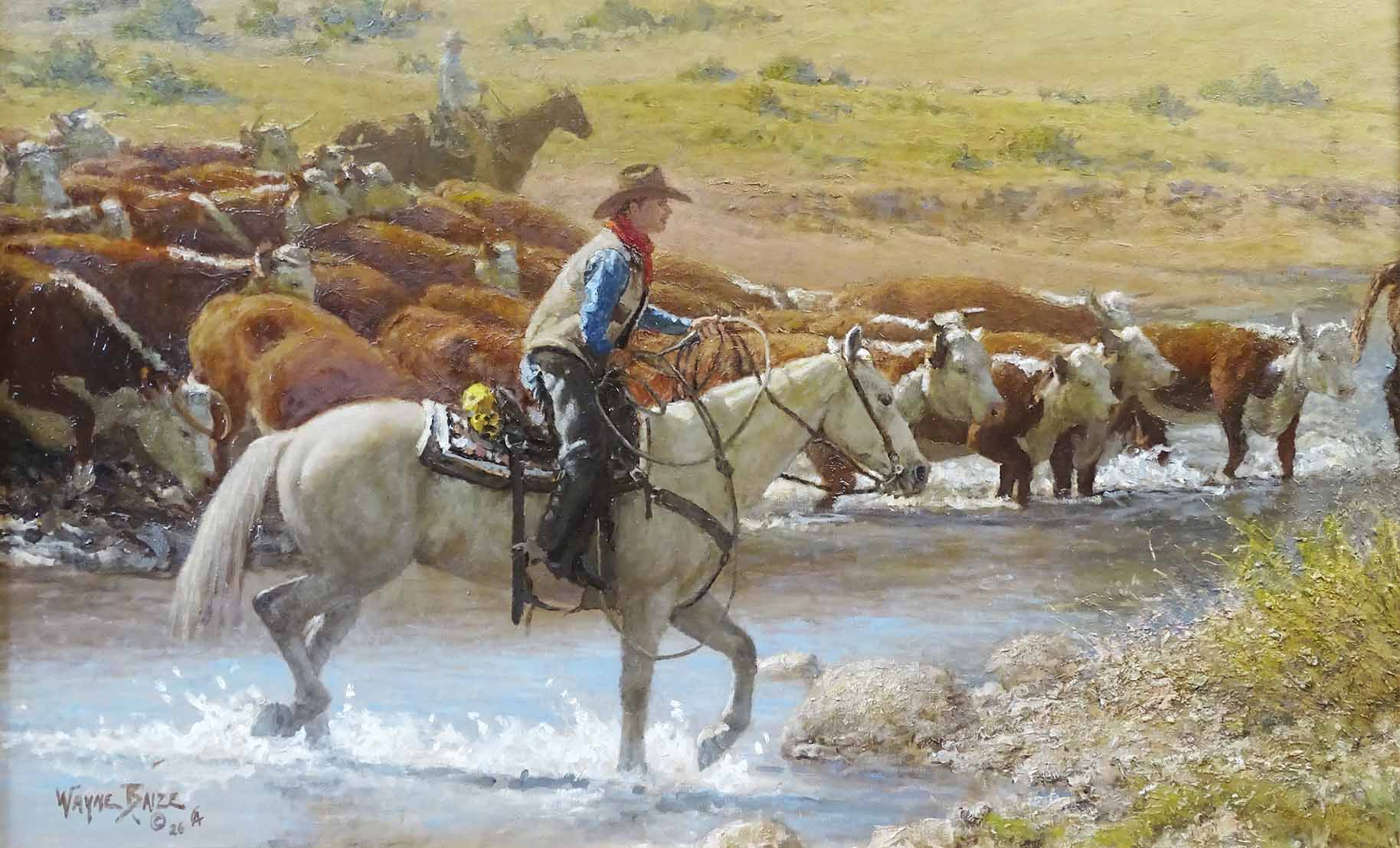 “Living the Life” by Wayne Baize. (Courtesy of Wayne Baize)
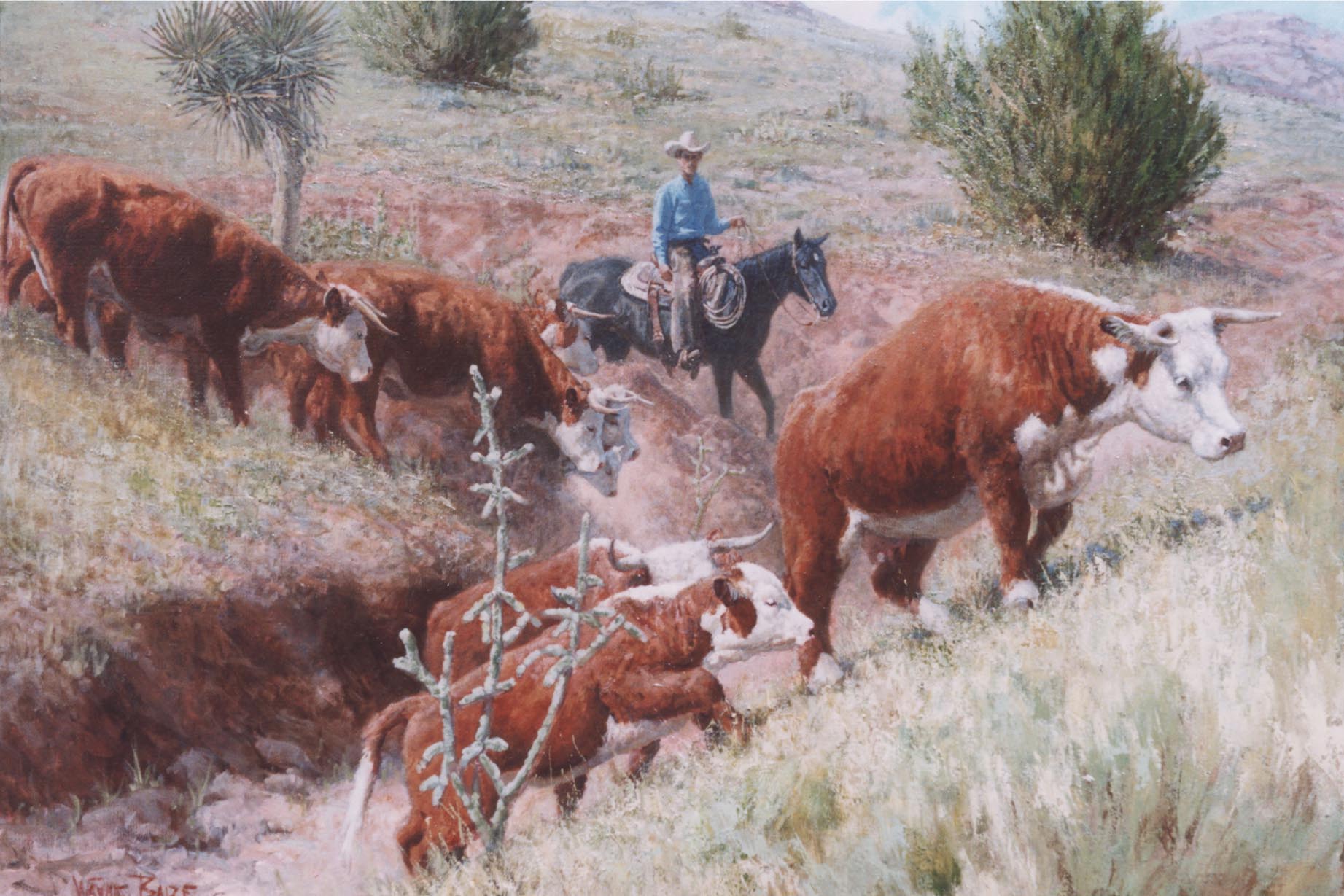 “Down the Gullies and Up the Draws” by Wayne Baize. (Courtesy of Wayne Baize)
Baize’s studio—where he heads most mornings when a canvas waits on his easel—is a map for his artistic engine. He sifts through a sea of reference photographs, taken while out riding on neighboring ranches around the Davis Mountains, including the legendary Four Sixes Ranch in Guthrie, the source of some of his most inspired works. Or he simply looks up at his wall, absorbing the many Western oil paintings by his famous mentor, Tom Ryan.
“That kind of sets the mood for me,” he says. A portrait he rendered of his daughter hangs next to a stuffed Longhorn steer’s head and a buffalo’s skull.
Baize prefers the comfort of jeans while in the studio, and he isn’t obsessive about order. “I’m kind of messy,” he jokes.
That looseness transfers into his work. He often begins without any preparatory sketches at all.
But some preparation is needed before Baize will put brush to canvas. He has to kill the glaring white of the canvas by laying down an overall mid-tone wash. Once dry, that neutral ground allows him to either go dark or build up highlights.
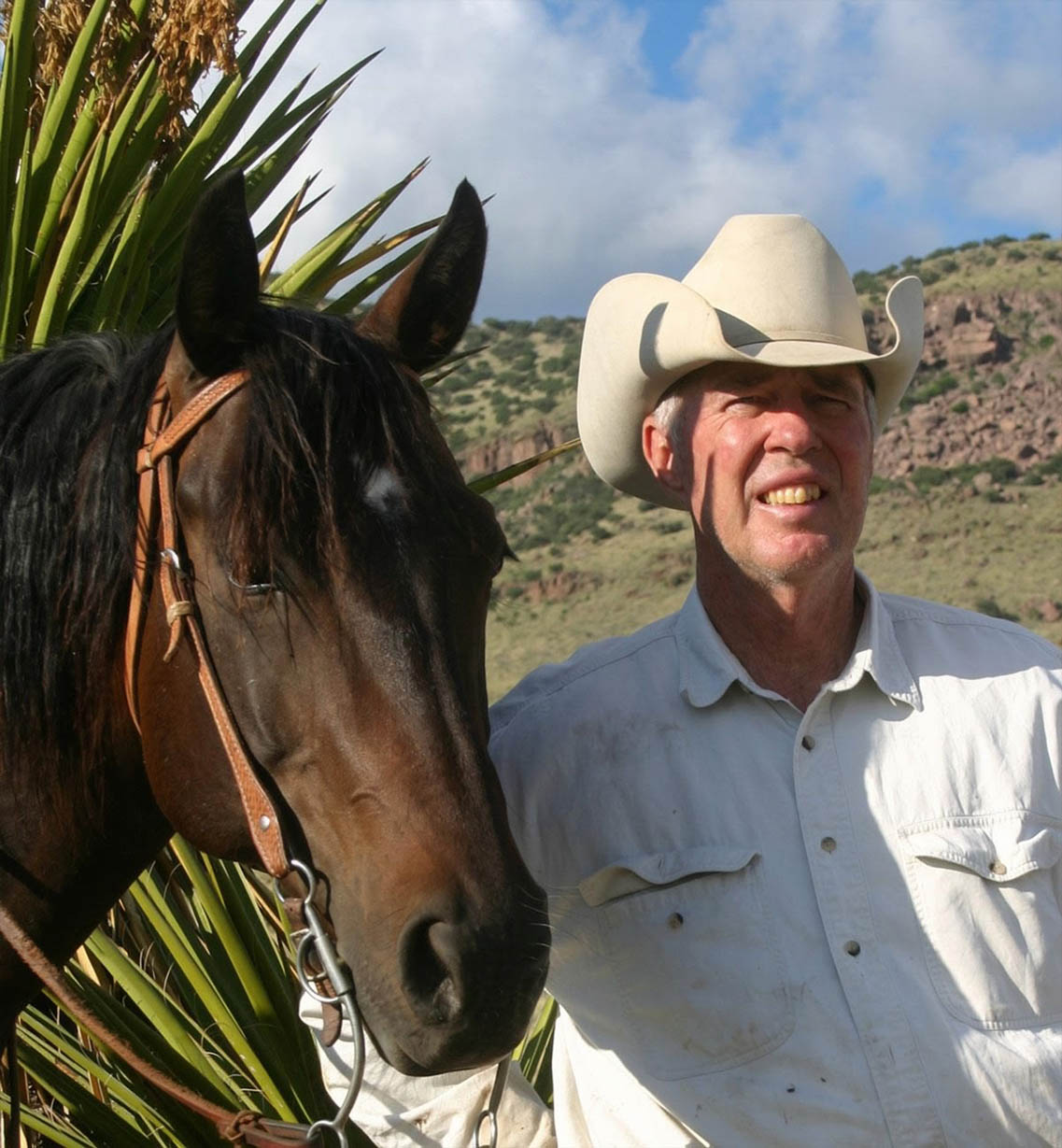 A recent photo of the artist. (Courtesy of Wayne Baize)
He lays out a “simple” palette of colors. If an area of fresh color doesn’t look right, he scrapes it down and starts again. He is his own worst critic.
“Sometimes I wish I were a little bit bolder with my brushstrokes,” he says. “I get timid sometimes.”
Baize’s mentor, Ryan, often began with a monochromatic underpainting, but Baize dives right in. “Most of the time, I just go straight to the color,” he says.
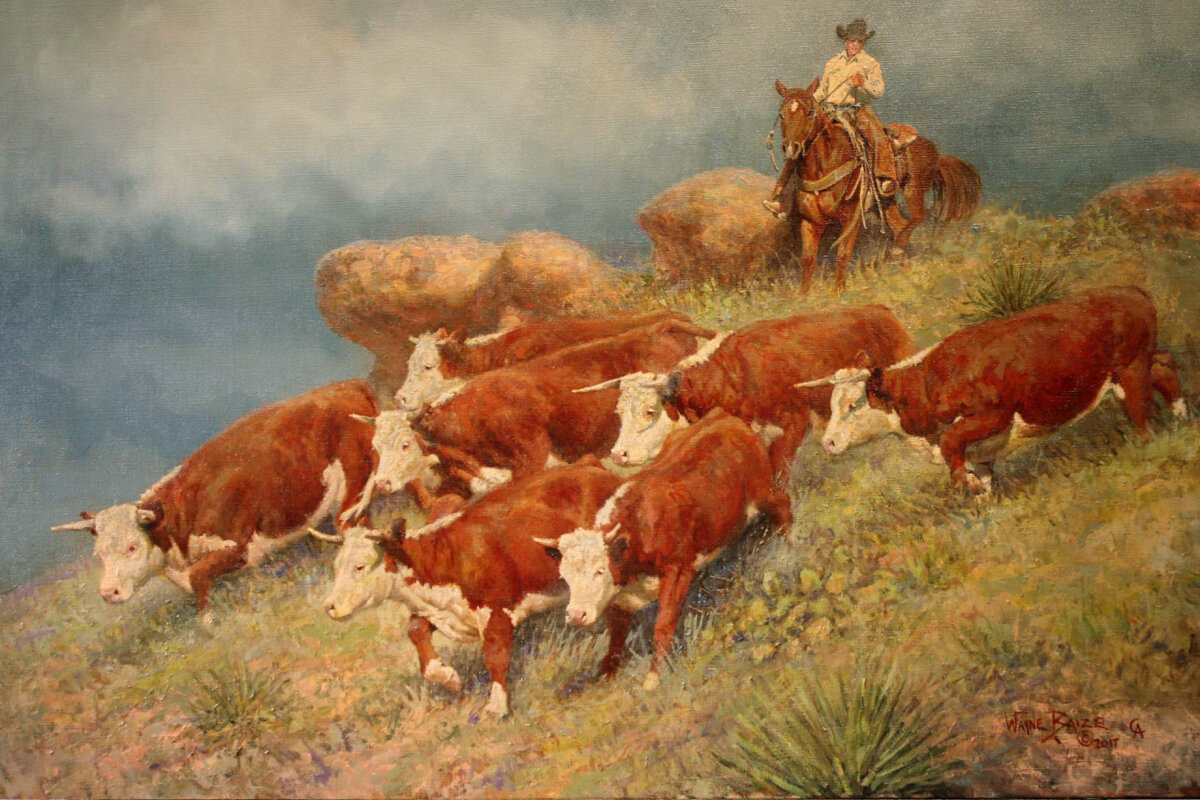
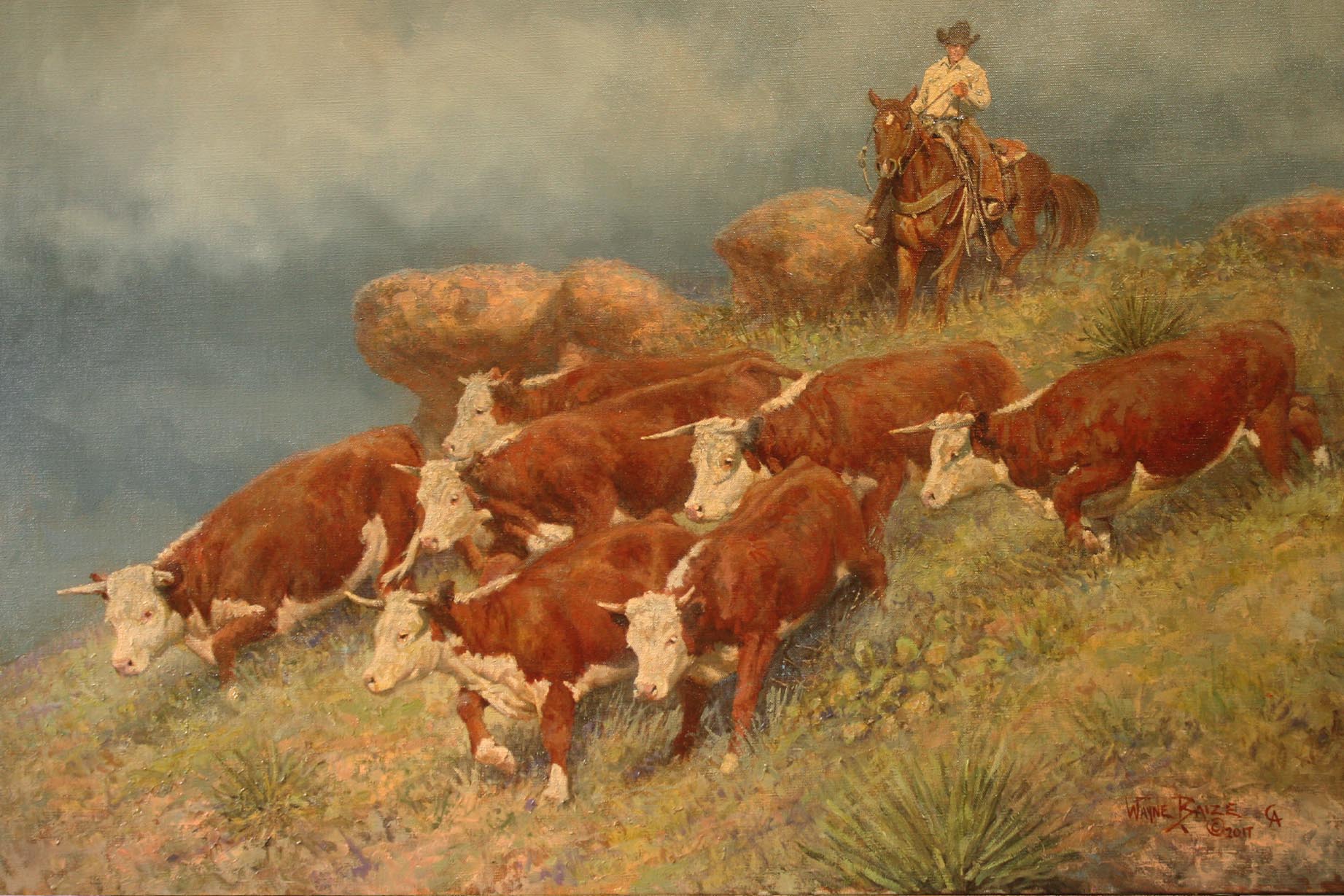 “Racing the Storm” by Wayne Baize. (Courtesy of Wayne Baize)
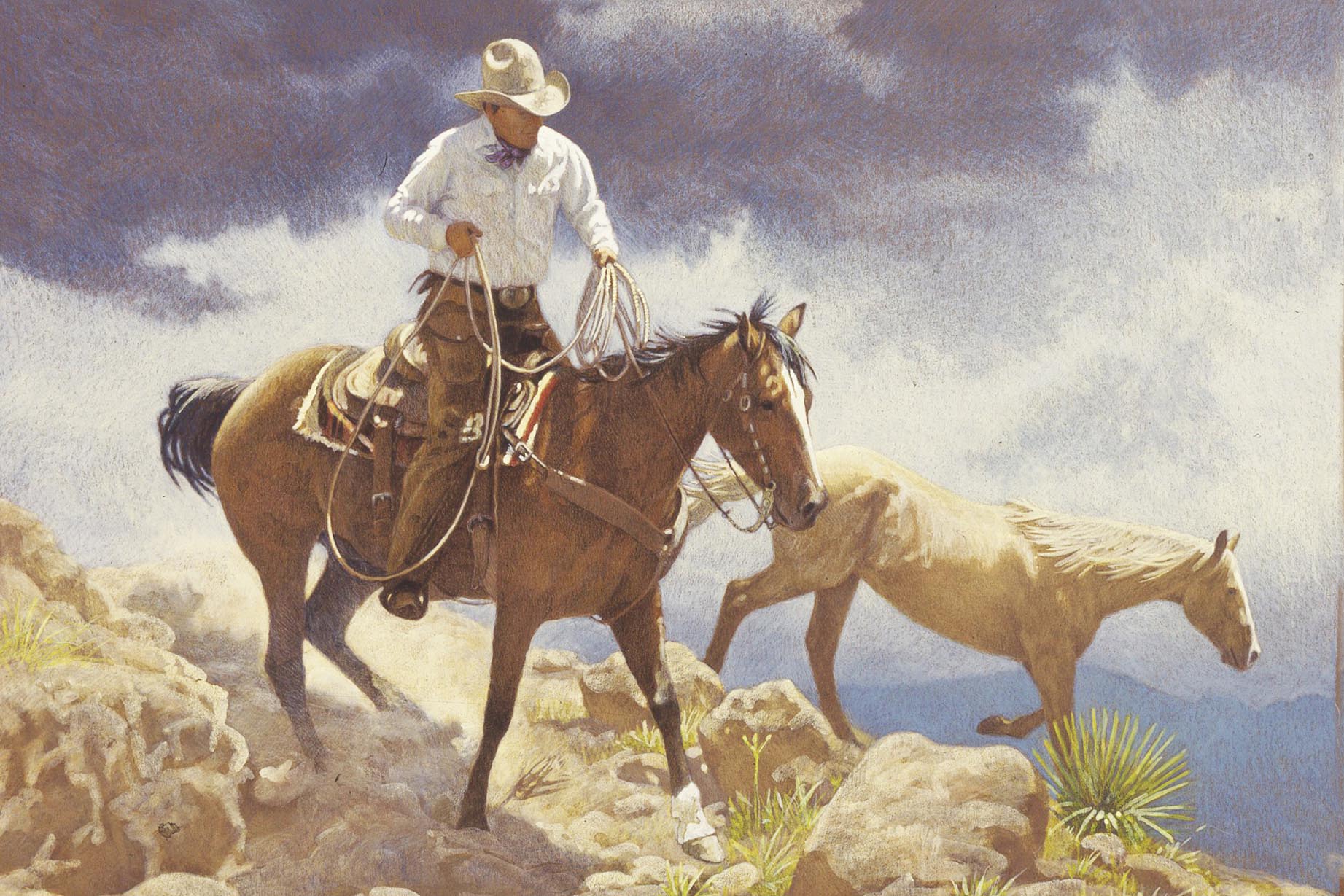 “Two Jumps Ahead of Getting Wet” by Wayne Baize. (Courtesy of Wayne Baize)
Earlier this year, Baize had been dashing paint with additional fervor in preparation for a milestone event. At the beginning of October, he and a host of elite Western artists nationwide came together to commemorate the CAA’s 60th year with a show at the Legacy Building at National Western in Denver.
“The Cowboy Artists is a very special organization,” Baize says. “It’s nearly like a family.”
Seven big Baize originals hung among 120 new Western masterpieces. The show generated $1.1 million in sales to fund scholarships and workshops for a new generation of Western artists.
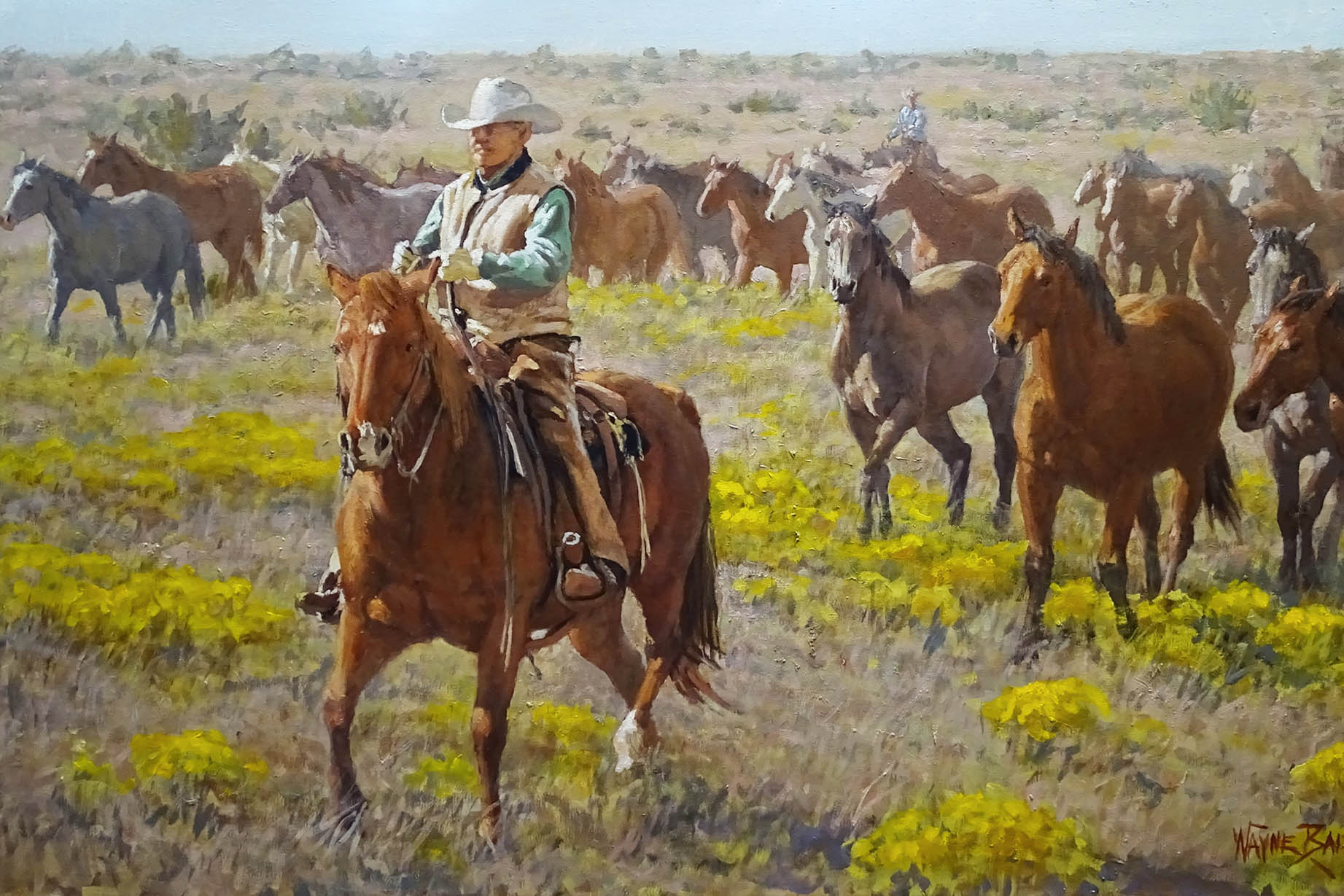 “Four Sixes Ranch Legend in Men and Horses” by Wayne Baize. (Courtesy of Wayne Baize)
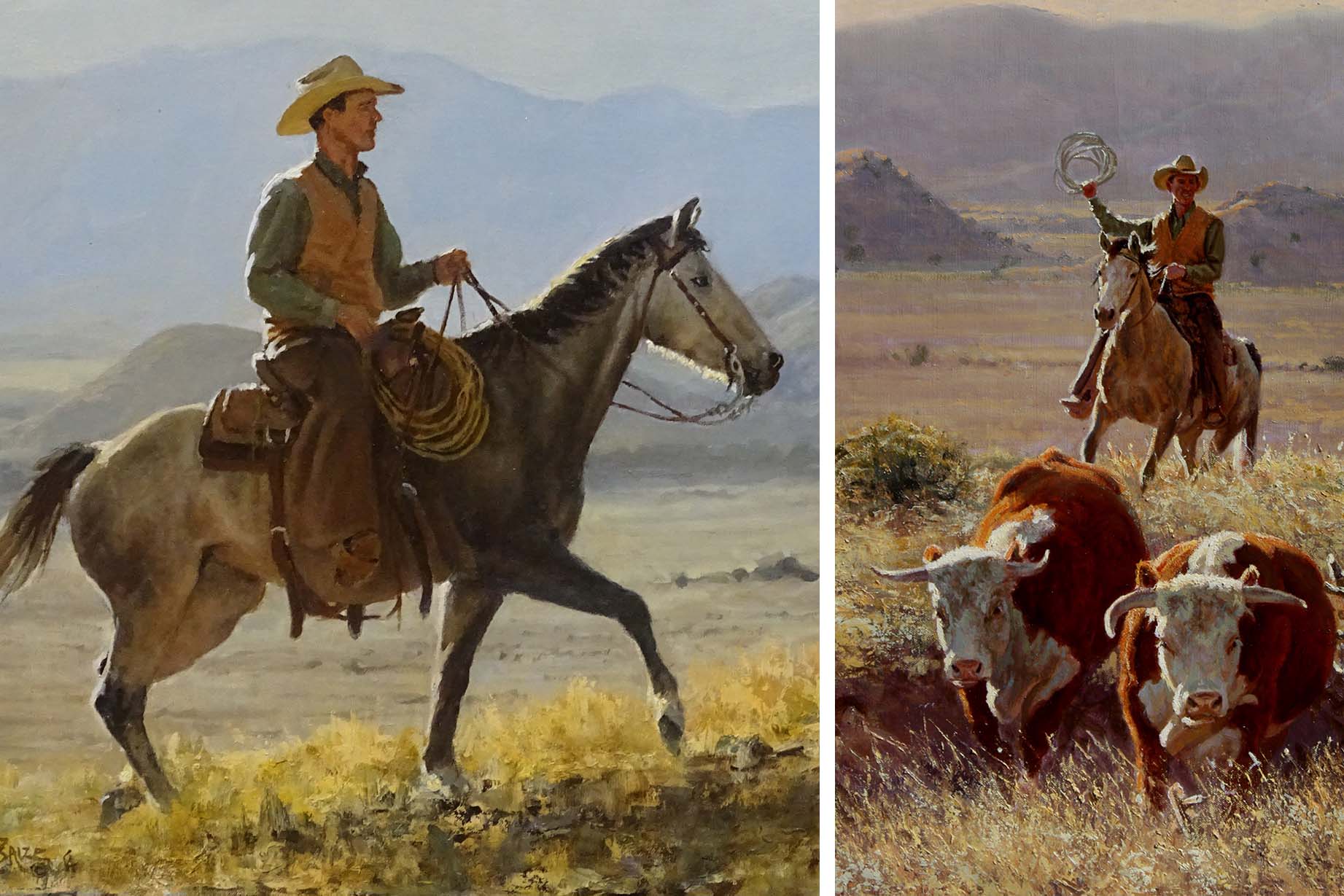 (Left) “Pressing On to Higher Ground,” and (Right) “Keep ‘em Moving” by Wayne Baize. (Courtesy of Wayne Baize)
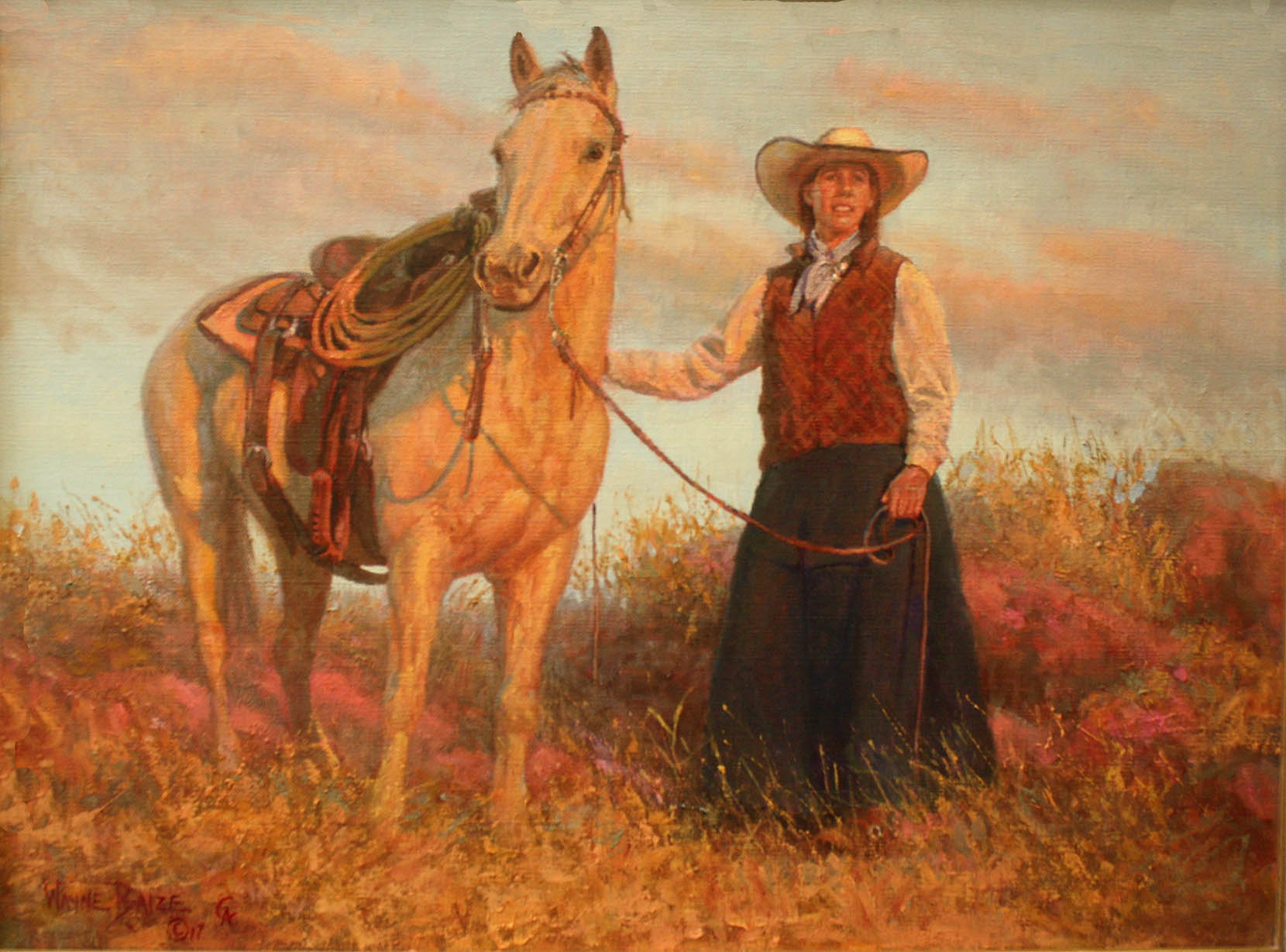 “A Heart For the West” by Wayne Baize. (Courtesy of Wayne Baize)
Today, if you ask Baize if his generation was ever considered “new,” his mind drifts back seven decades. He was 12 when he first enrolled in private art lessons that carried on through high school. A brush with a college art course then turned him away from post-secondary art instruction forever.
“It wasn’t the type of art that I wanted. Too modern,” he says. “They criticized my work because it looked too much like what I was doing.”
In the ’60s, young Baize sold pencil horse portraits in Luskey’s Western Store in his hometown of Abilene. He worked in a lumber yard by day until his first sold-out show in 1964.
“That’s when I was able to start doing it full time,” he says.
He bridged the gap from graphite to oil paint after a random run-in with Ryan, who was already a legendary Western realist, at the Fort Worth Stock Show and Rodeo in 1969.
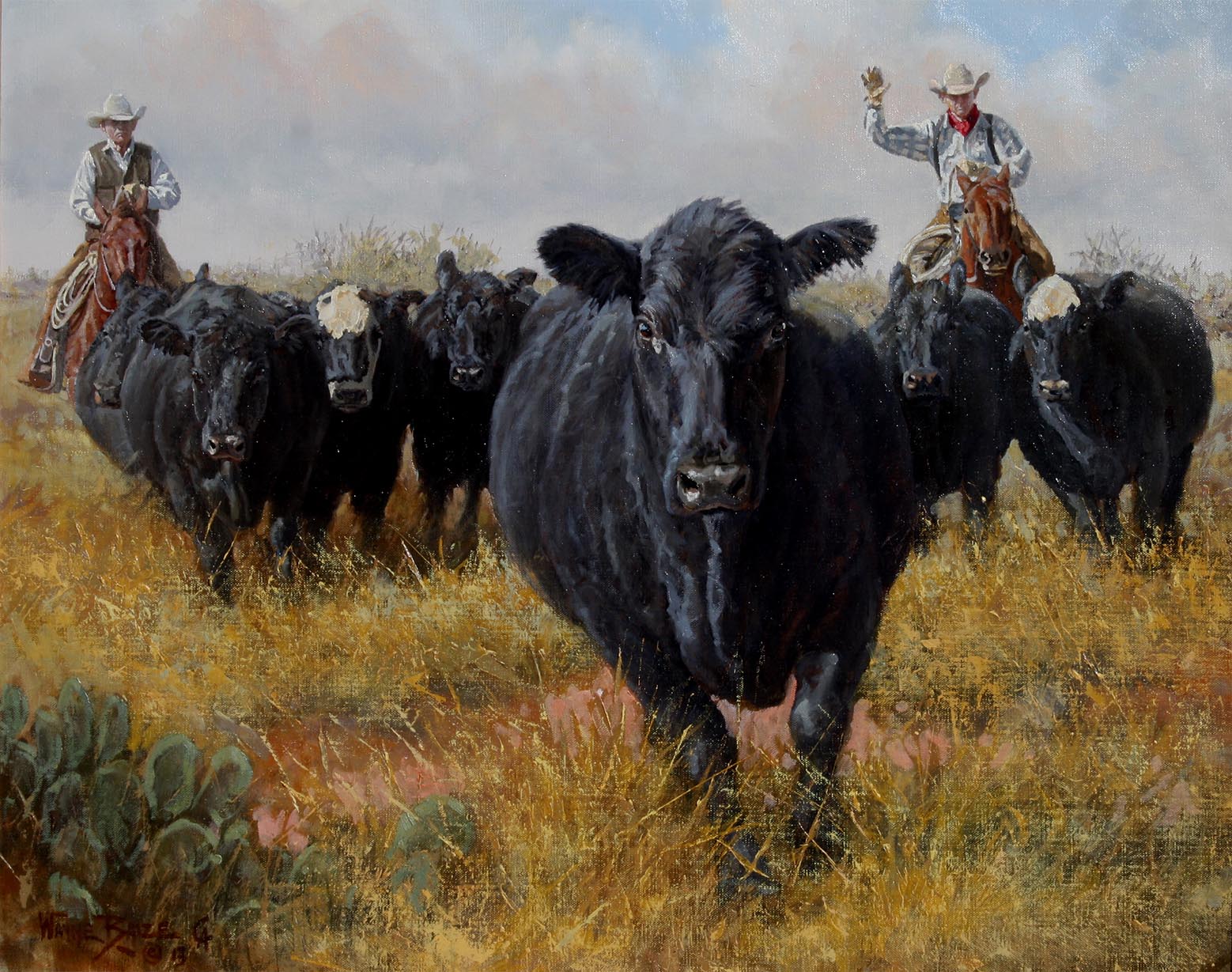 “Comin’ Thru” by Wayne Baize. (Courtesy of Wayne Baize)
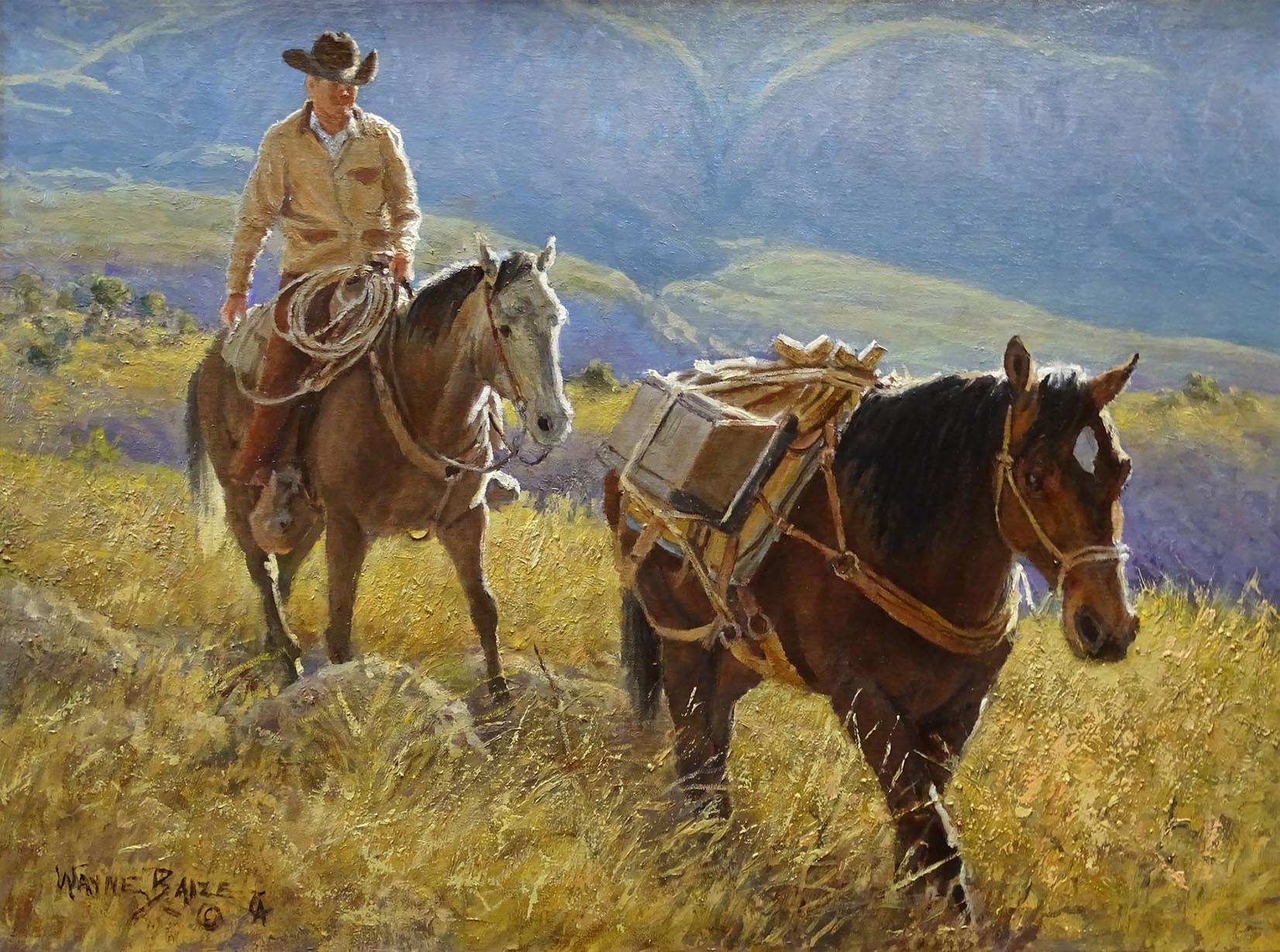 “Topping Out of Madera Canyon” by Wayne Baize. (Courtesy of Wayne Baize)
“I worked up the nerve to walk up to him and introduce myself. He was just so kind and invited me to come to Lubbock and bring some of my work,” Baize says.
“He’d critique them for me, and he could have torn them to pieces, but he always left me encouraged when I left.”
For years, Baize kept at it. He was invited to shows by Ryan, who was a member of the CAA, and the organization grew into a second family. Baize became a member in 1995, and served as president from 2006–2007.
Over a storied career, Baize didn’t just paint the West—he documented its giants. He committed living legends like cowboy and rancher Boots O’Neal to canvas, capturing the iconic cowpuncher on horseback against the wide Texas sky. It now hangs at the Four Sixes Ranch. His works also found permanent homes in private collections of prestigious Western art patrons across the country.
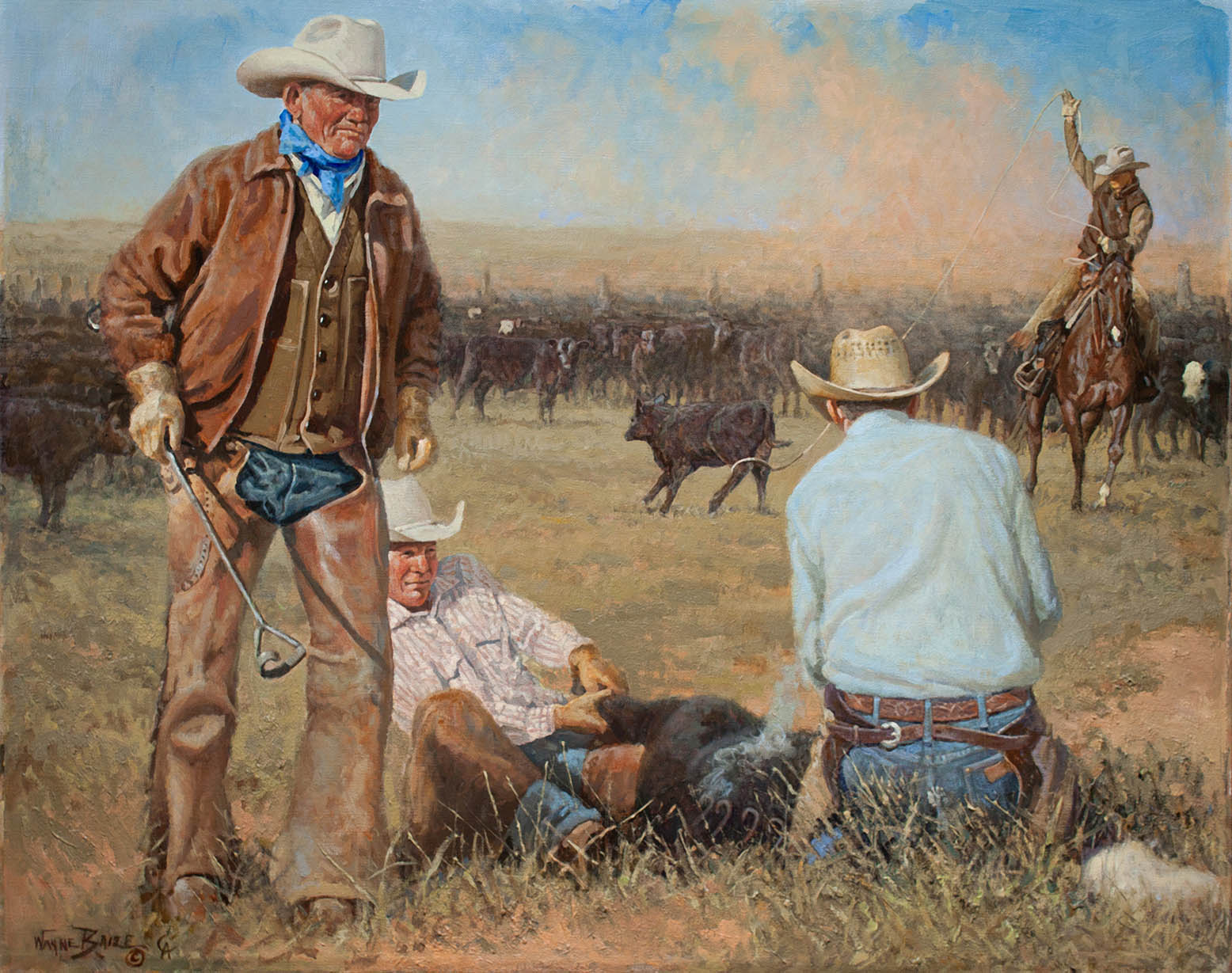 “The Legend Goes On” by Wayne Baize portrays the preeminent cowboy Boots O’Neil on the famous Four Sixes Ranch. (Courtesy of Wayne Baize)
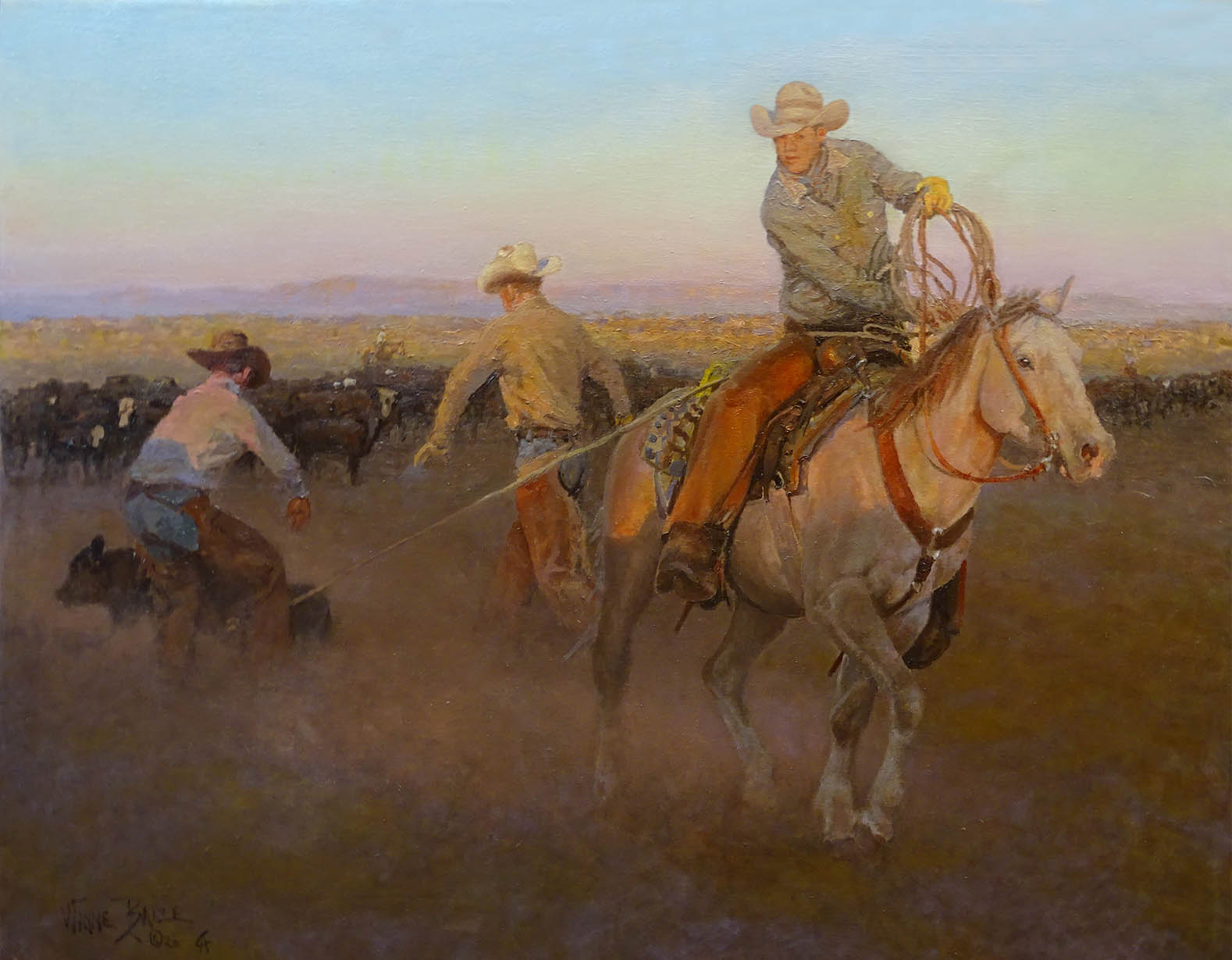 “Early Start to a Long Day” by Wayne Baize was one of seven Baize original works at the CAA’s 60th anniversary show at the Legacy Building at National Western in Denver. (Courtesy of Wayne Baize)
But even after decades, the critiques Baize values most do not come from uppity art connoisseurs in high society circles. He says he prizes the opinions of the wranglers who know every crease in the Stetsons he paints, every scuff on a well-worn stirrup leather.
“When the cowboys like my work, that’s the biggest compliment I could get,” he says, “because I try to represent their lifestyle and their passion and their work style.”
Now, looking over his land, his career, and family, Baize shifts toward quiet gratitude. He views his long legacy not as a monument to success as an artist, but as a grace.
“I can’t express how blessed I’ve been,” he says. “To be able to live out here on this land, raise a few cattle, and paint the things I love every single day—it’s more than a man could ask for.”