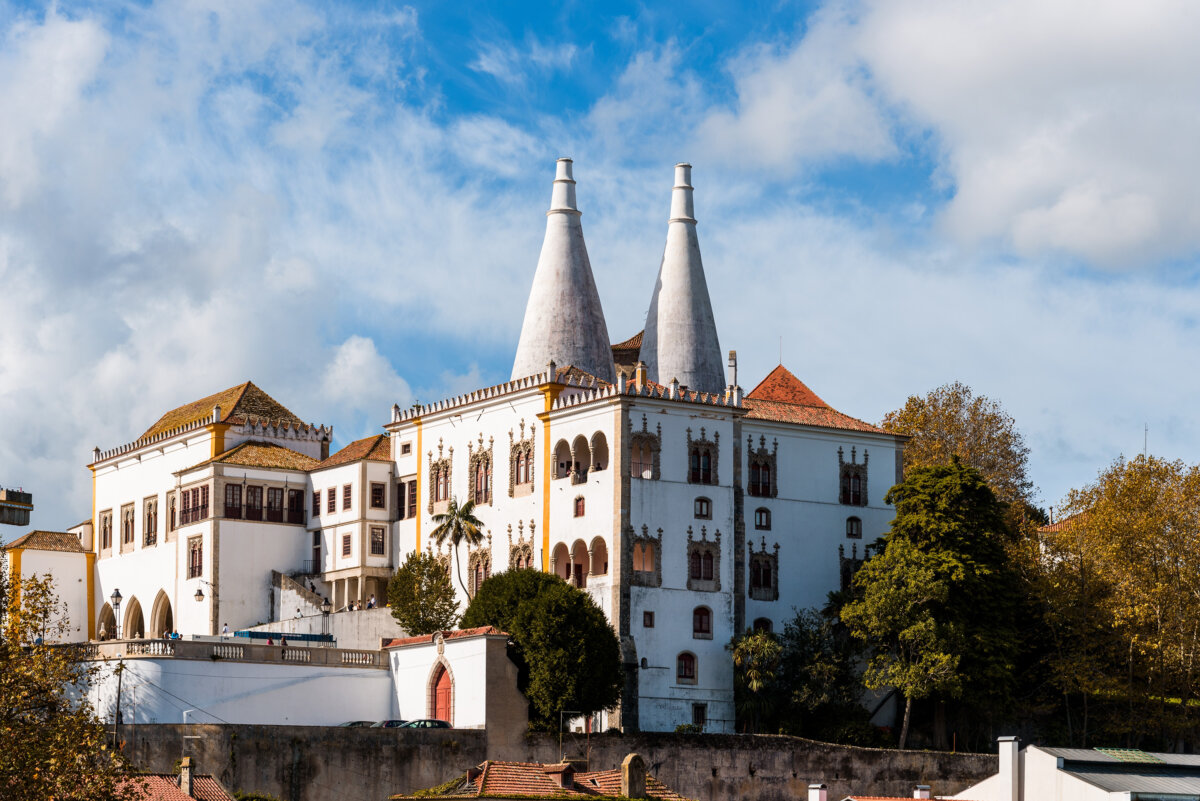
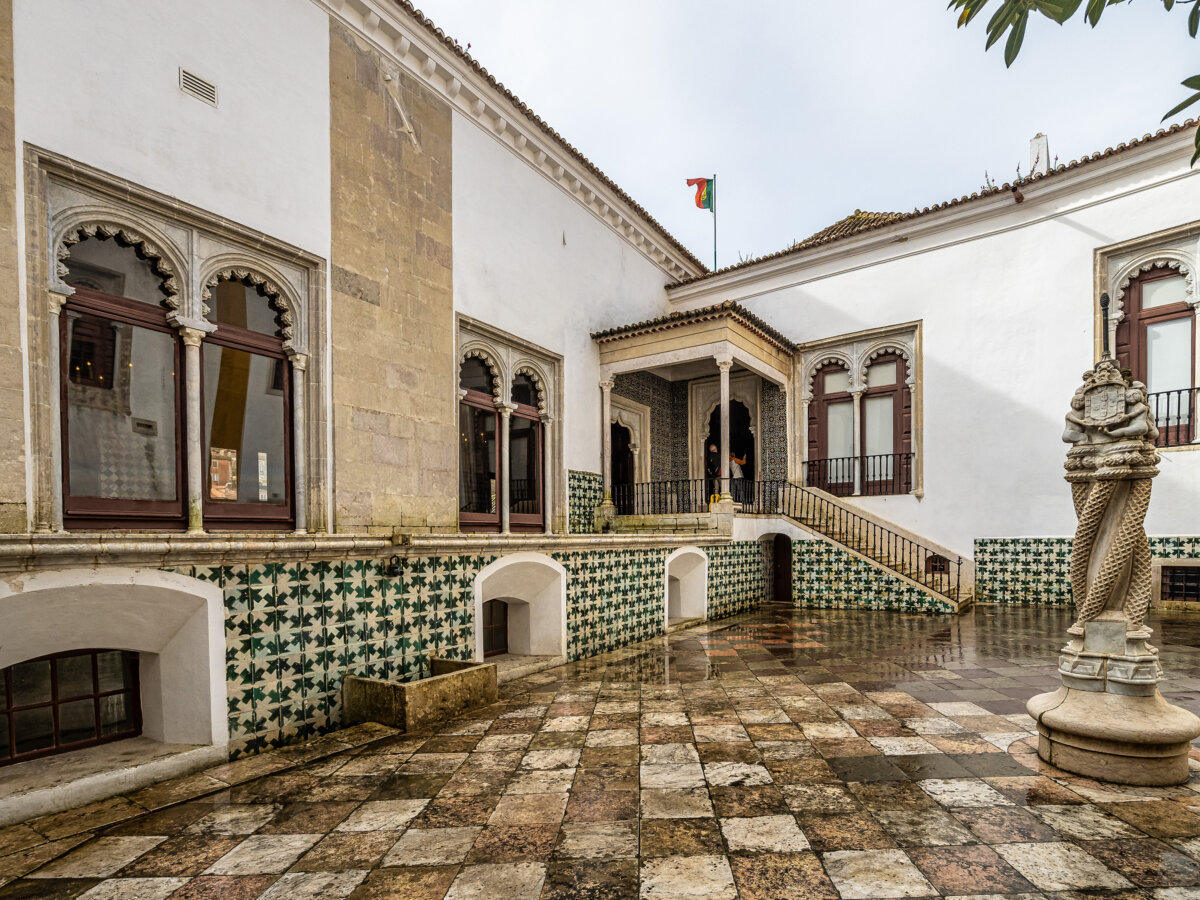
Added during the reign of King Manuel I, the palace’s Manueline wing showcases Portugal’s distinctive maritime-inspired architecture. Its twin mullioned windows feature ogee arches, formed by two curves meeting at a pointed peak. These elegant details exemplify the Manueline style, a uniquely Portuguese architectural tradition known for intricate ornamentation and maritime motifs. (JJFarq/Shutterstock)
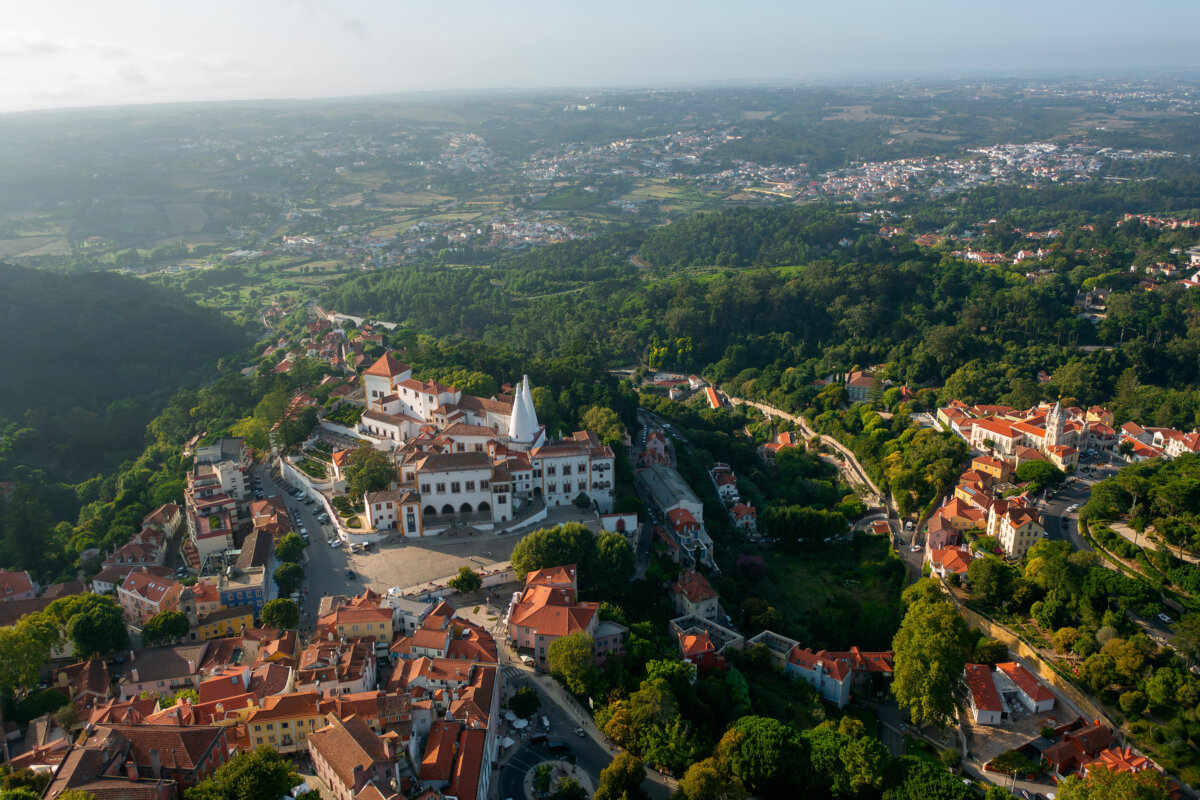
In Portugal, high above the terra-cotta rooftops, two enormous white chimneys rise like sentinels, unmistakable landmarks of the National Palace of Sintra, the country’s best-preserved medieval royal residence. For centuries, the town of Sintra has drawn visitors with its cool mountain air and misty emerald hills, so enchanting that Portugal’s royals made it their summer retreat.
Those royal visitors left their imprint on the palace, a building shaped by centuries of cultural and political change. Its story begins in the Moorish period, when two castles overlooked what is now Sintra. One has since crumbled into ruins; the other became the palace. King Afonso Henriques captured the site in 1147, and by 1281 it was recorded as a royal residence that successive monarchs enlarged.
The palace blends European and Islamic traditions through Gothic, Manueline, and Mudéjar influences. Its Gothic elements include soaring structures and intricate stonework. The Manueline style is named for King Manuel I, developed during the Age of Discovery in the early 16th century. It celebrated the wealth and maritime victories of Portuguese exploration through nautical motifs such as cordage, anchors, and navigational instruments. Mudéjar design fuses Islamic and Christian traditions, expressed through geometric and vegetal patterns, horseshoe arches, ornamental stucco, and glazed tilework.
The National Palace of Sintra holds 26 main rooms, plus courtyards, terraces, a chapel, service areas, and two vast kitchens whose towering conical chimneys dominate the exterior. Each room has its own character, defined by carved ceilings, painted surfaces, or tilework.
The tilework is the palace’s most celebrated feature. Its azulejos, glazed ceramic tiles that reflect Portugal’s artistic exchange with the Islamic world, cover walls and floors in the geometric patterns and vivid glazes of Hispano-Moorish and Mudéjar traditions.
Panels added in later centuries show figurative scenes, tracing the shift in Portuguese taste from Moorish geometry to narrative imagery.
The palace grew over time to meet changing needs, serving as a self-contained royal residence that also hosted official business, diplomatic visits, religious ceremonies, and court gatherings. Portuguese monarchs used it until the monarchy fell and the republic was established in 1910.
The National Palace of Sintra is now a museum and protected monument, with its rooms, collections, and architecture open to visitors. Ongoing conservation protects the building and its furnishings. The World Monuments Fund Portugal and Parques de Sintra–Monte da Lua are restoring the palace’s tiles, mosaic flooring, and other ornamental details, while workshops led by specialists help advance the care of this artistic tradition.
Part of the Cultural Landscape of Sintra, a UNESCO World Heritage Site since 1995, the palace reveals daily life at the royal court, from ceremonial halls to private chambers, and traces how European and Islamic traditions shaped Portuguese culture.
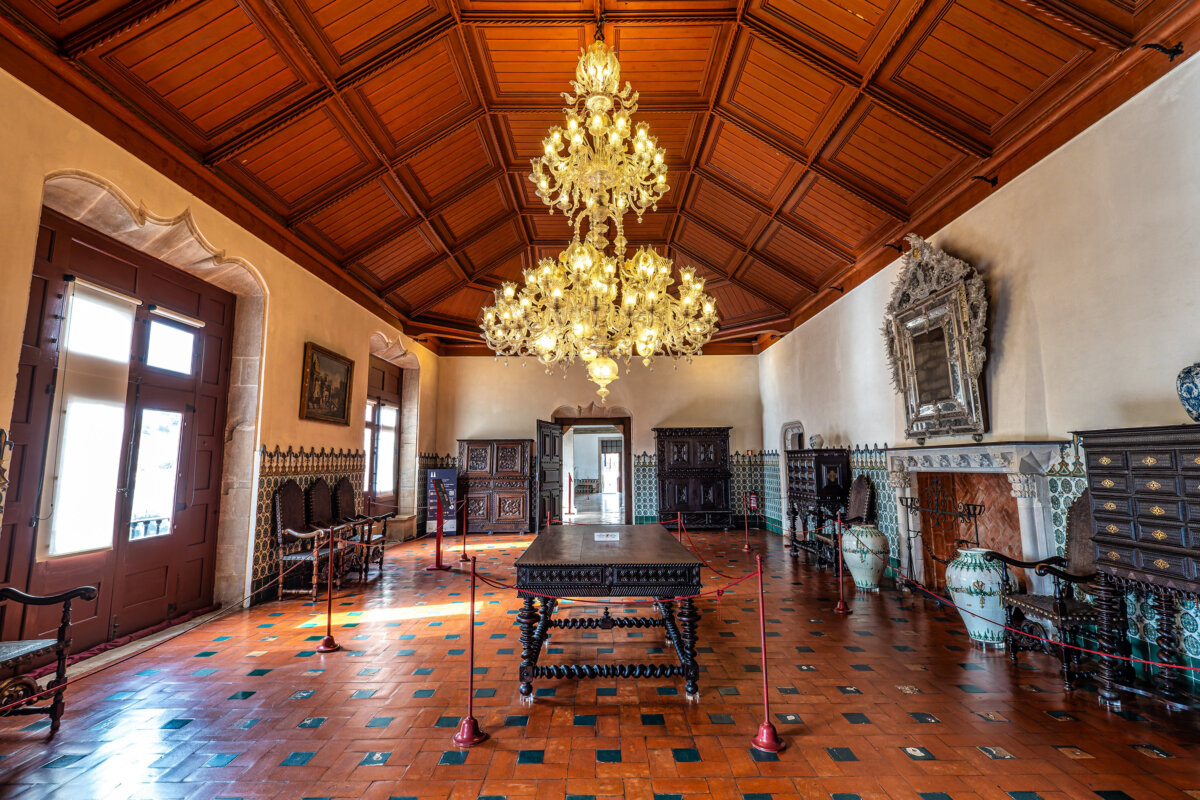
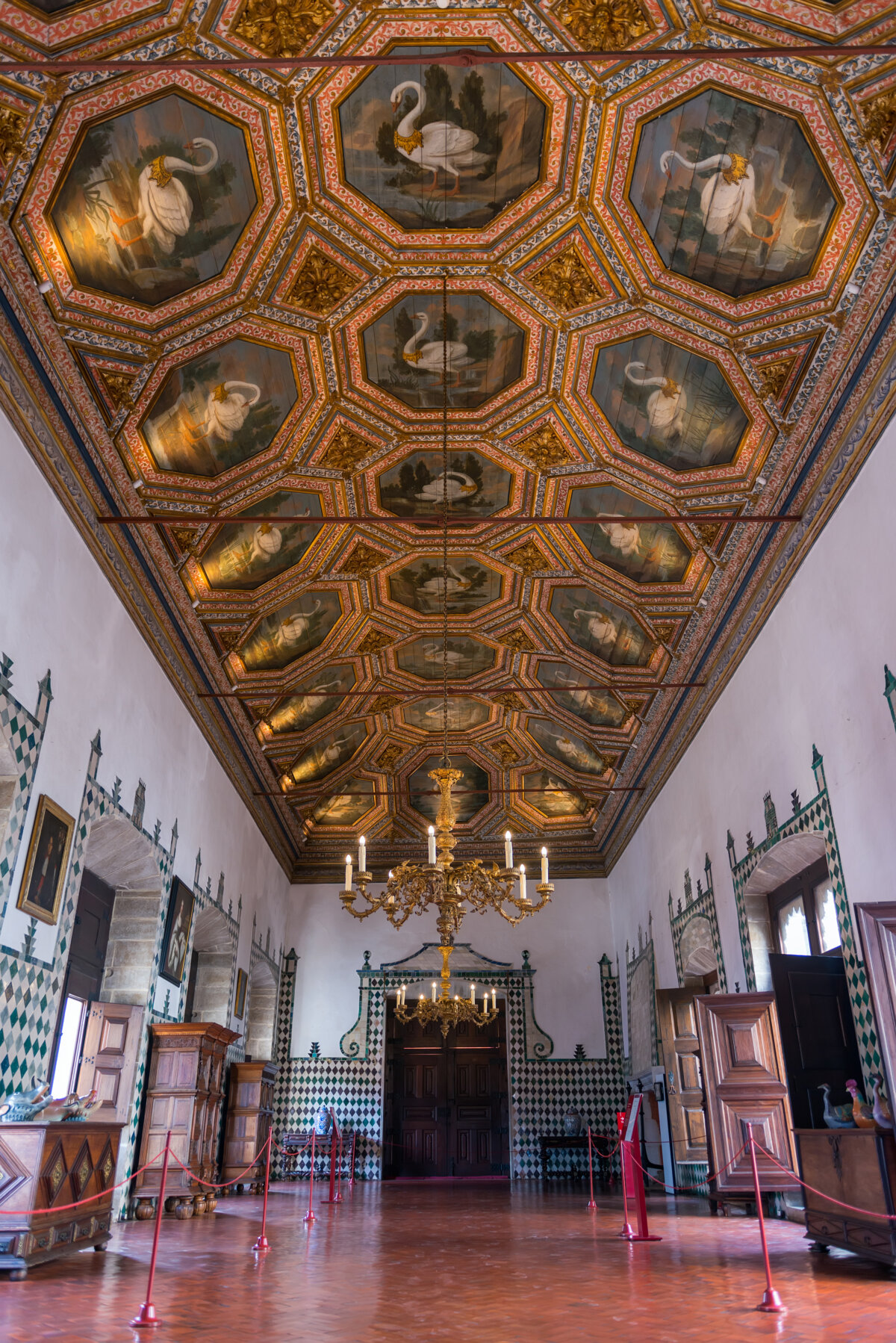
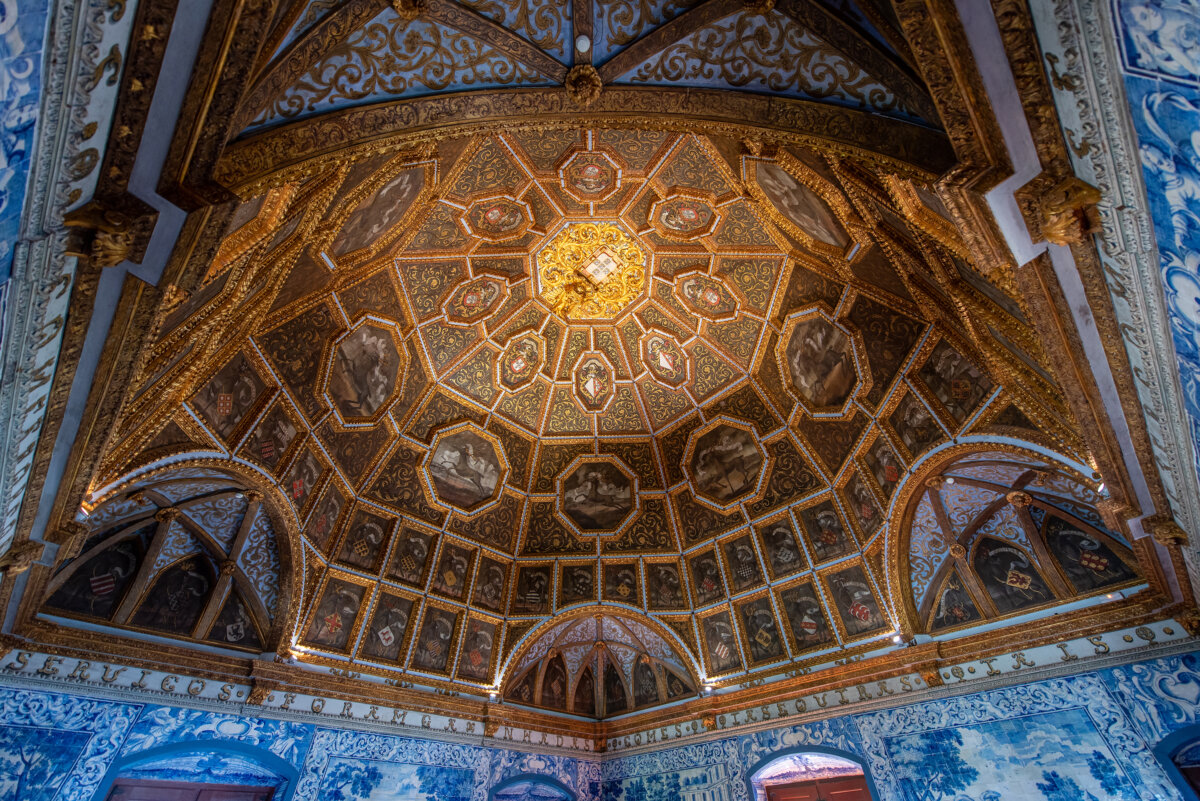
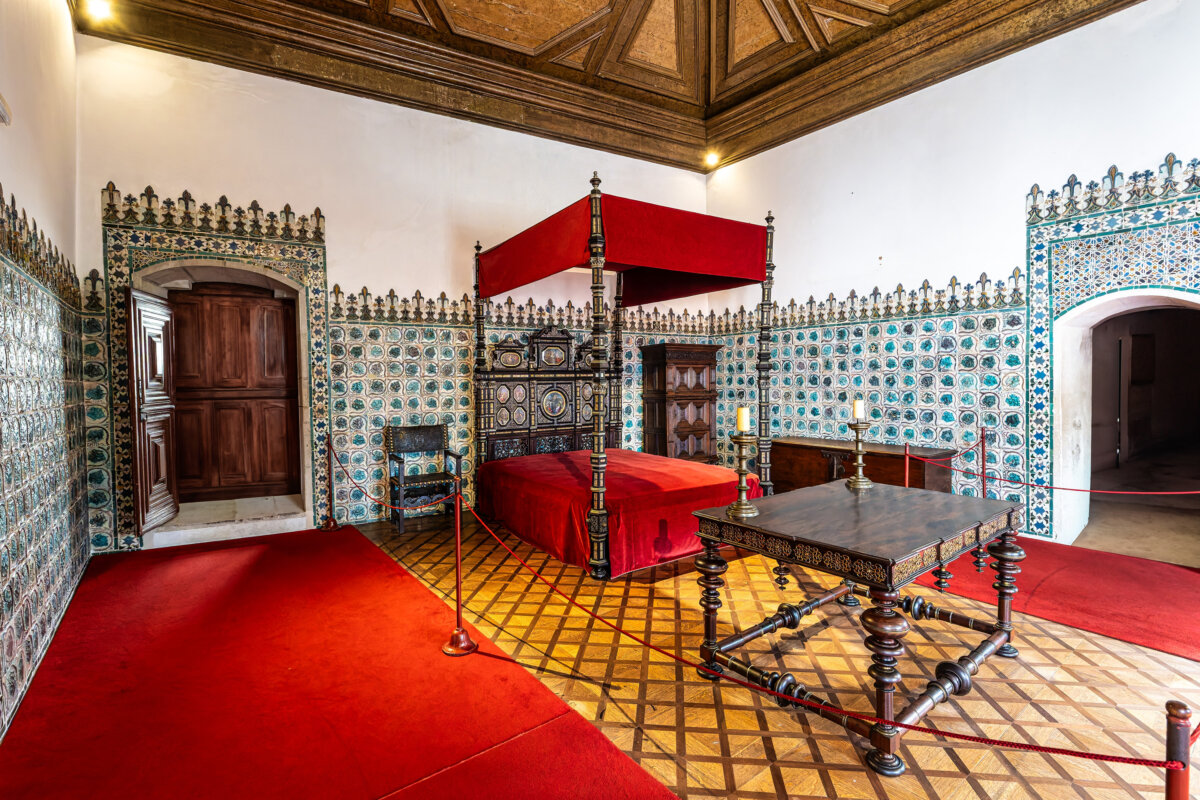
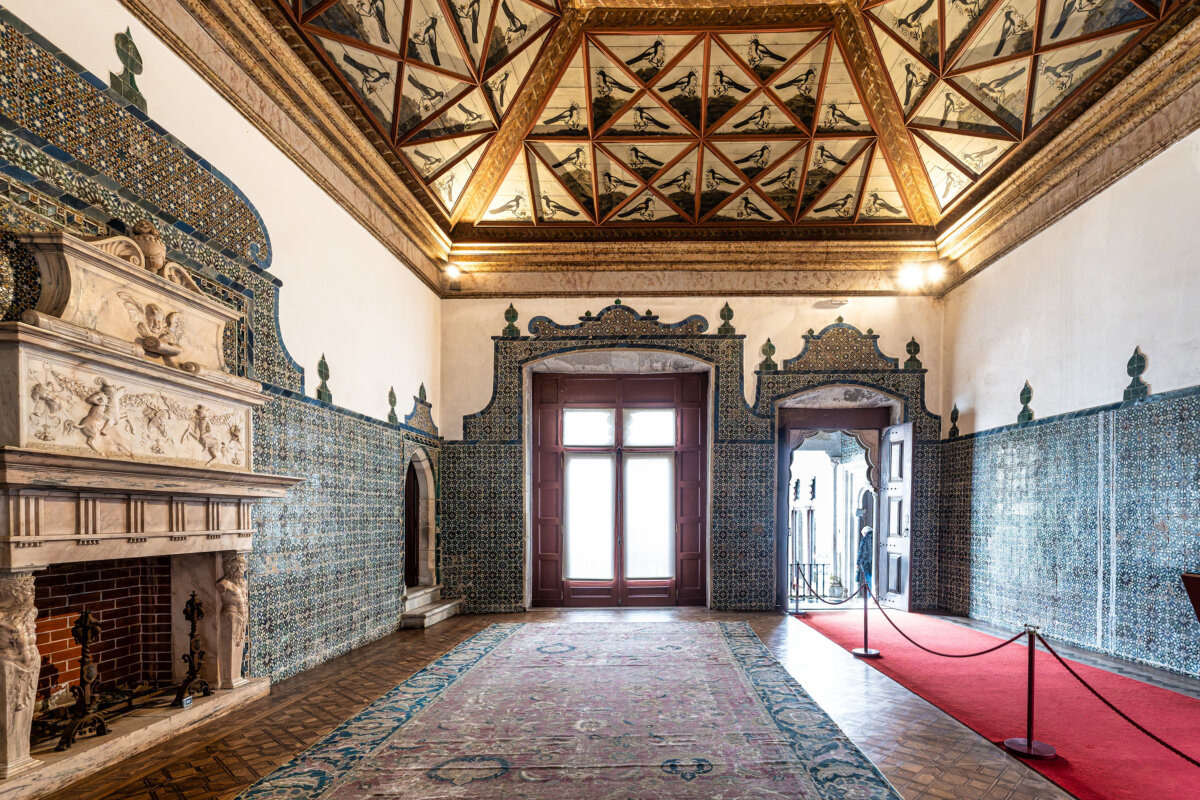
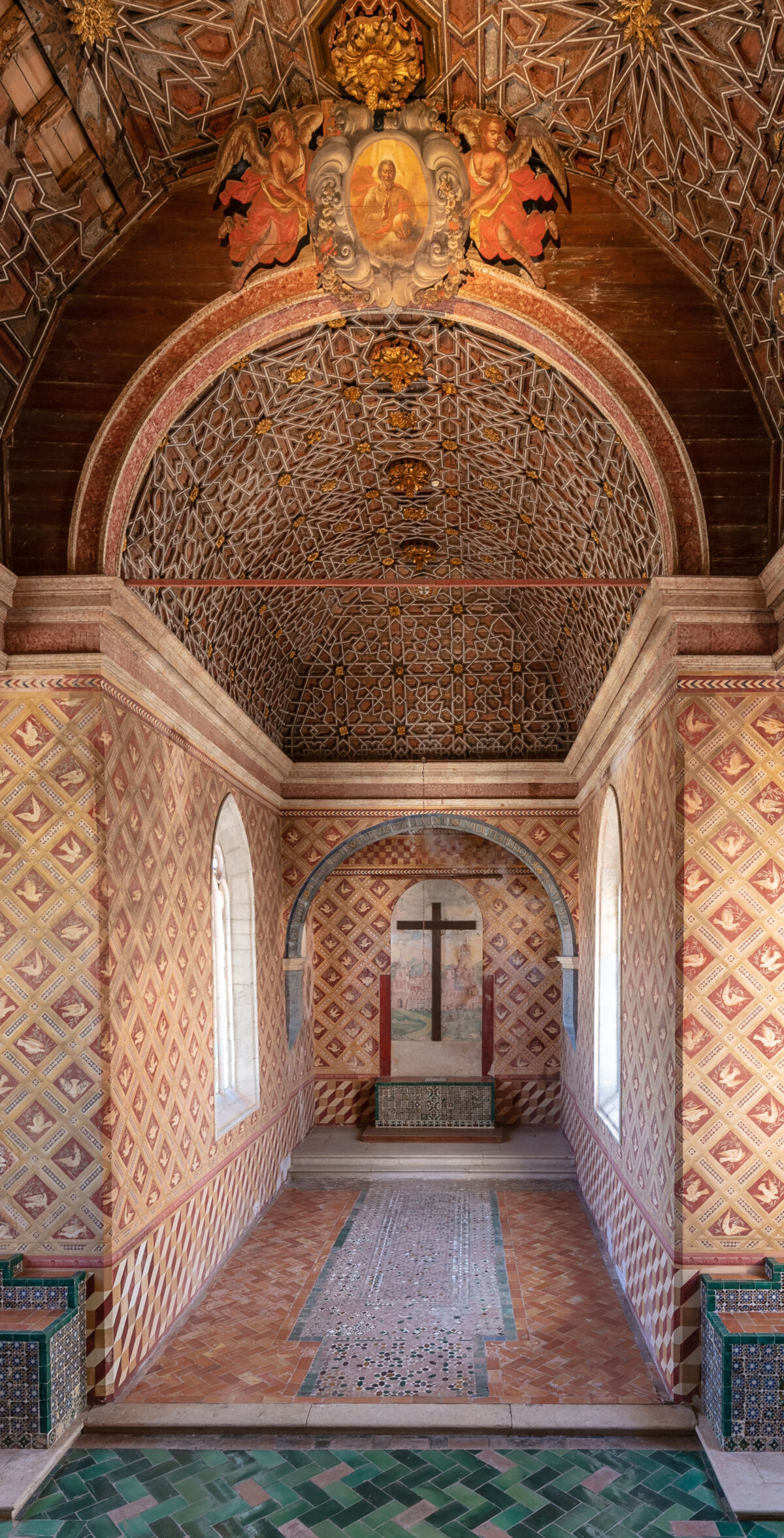
Just 45 minutes from Lisbon by train, the National Palace of Sintra is Portugal’s oldest surviving royal palace. For nearly seven centuries, Portuguese royalty made this palace their residence, until the fall of the monarchy in 1910. Its most striking features are two conical chimneys, rising more than 108 feet above the rooftops and defining the palace’s silhouette. (andreonegin/Shutterstock) The Manueline Room served as the Great Hall during King Manuel I’s reign. Twisted rope designs and plant motifs adorn its doors and windows, reflecting the period’s distinctive decorative style. Above, a coffered wooden ceiling complements the geometric terra-cotta floor tiles. Early 20th-century restorations revived the room’s grandeur, incorporating antique furniture transferred from other Portuguese royal palaces. (RudiErnst/Shutterstock) The palace’s former main reception hall, the Swan Room, hosted royal audiences and state gatherings. It takes its name from the 27 swans painted across its coffered ceiling, said to represent the Infanta Isabel’s age when she married Philip the Good. Diamond-patterned azulejos line the walls, and terra-cotta tiles cover the floor. (Kraft_Stoff/Shutterstock) The Coat of Arms Room features a magnificent gilded dome displaying the royal arms of Manuel I and the emblems of 72 powerful Portuguese noble families. Its decorative azulejos reflect Portugal’s long tradition of glazed ceramic tilework. One deliberately blank space among the coats of arms reminds visitors of the consequences of disloyalty to the crown. (Sky Sajjaphot/Shutterstock) Although its golden decoration has been lost to time, this chamber remains striking, from its ornate furniture to the Spanish ceramic tiles commissioned from Seville artisans, each bearing the armillary sphere, an emblem of King Manuel I. Here, King Sebastião received guests of the highest standing, such as Queen Catherine of Austria, and slept in the four-poster bed, attended by a servant or close relative sleeping on the floor. (RudiErnst/Shutterstock) Legend has it that King João I ordered the Magpie Room painted after Queen Philippa caught him kissing a lady-in-waiting. When the court began to whisper, the king answered with a flourish of defiance. He had 136 magpies, the chattiest of birds, painted across the ceiling, each clutching a banner that reads “por bem,” or “for good.” The motto was his tongue-in-cheek reply to silence the gossiping at court. (RudiErnst/Shutterstock) At the heart of the palace, the Central Patio brings together Mudéjar-style windows divided by slender stone columns, richly patterned tilework, and a 16th-century fountain shaped like a twisted column. The patio was designed to join the wings of King João I and Queen Philippa’s palace. (RudiErnst/Shutterstock) Dating to the reign of King Dinis and Queen Isabel of Aragon in the early 14th century, the palace chapel was later altered and enlarged under King Afonso V. Its remarkable wooden ceiling features intricate Mudéjar latticework, featuring interlocking geometric patterns that rank among Portugal’s best-preserved examples. Restored in the 20th century using surviving fragments, the wall paintings depict doves carrying olive branches to symbolize the Holy Spirit. (Diego Delso/CC-BY-SA-4.0)
What arts and culture topics would you like us to cover? Please email ideas or feedback to features@epochtimes.nyc.
Sarah Isak-Goode is a writer and art historian rooted in the Pacific Northwest. Her name—pronounced EYE-zik-good and meaning “good laugh”—hints at the warmth she brings to everything she does. Equal parts scholar and storyteller, Sarah brings the past to life through a distinctly human lens, exploring what connects us across the centuries. Away from her desk, she feeds her curiosity through traveling, painting, reading, and hiking with her dog, Thor.