Every so often, a new way of making images does more than change the tools artists use. It changes who gets to be an artist, who gets to own an image, and what that image is worth. Lithography offers one of the clearest illustrations of this shift.
Lithography’s invention in 1796 was almost accidental. The German playwright Alois Senefelder was reportedly looking for a cheaper way to print his own plays, and by his own account, the breakthrough came while he was jotting down a laundry list in grease pencil on a stone slab. Over the following decades, it grew from a curiosity into a major artistic and commercial force that altered how images circulated through the world.
Rethinking the Original
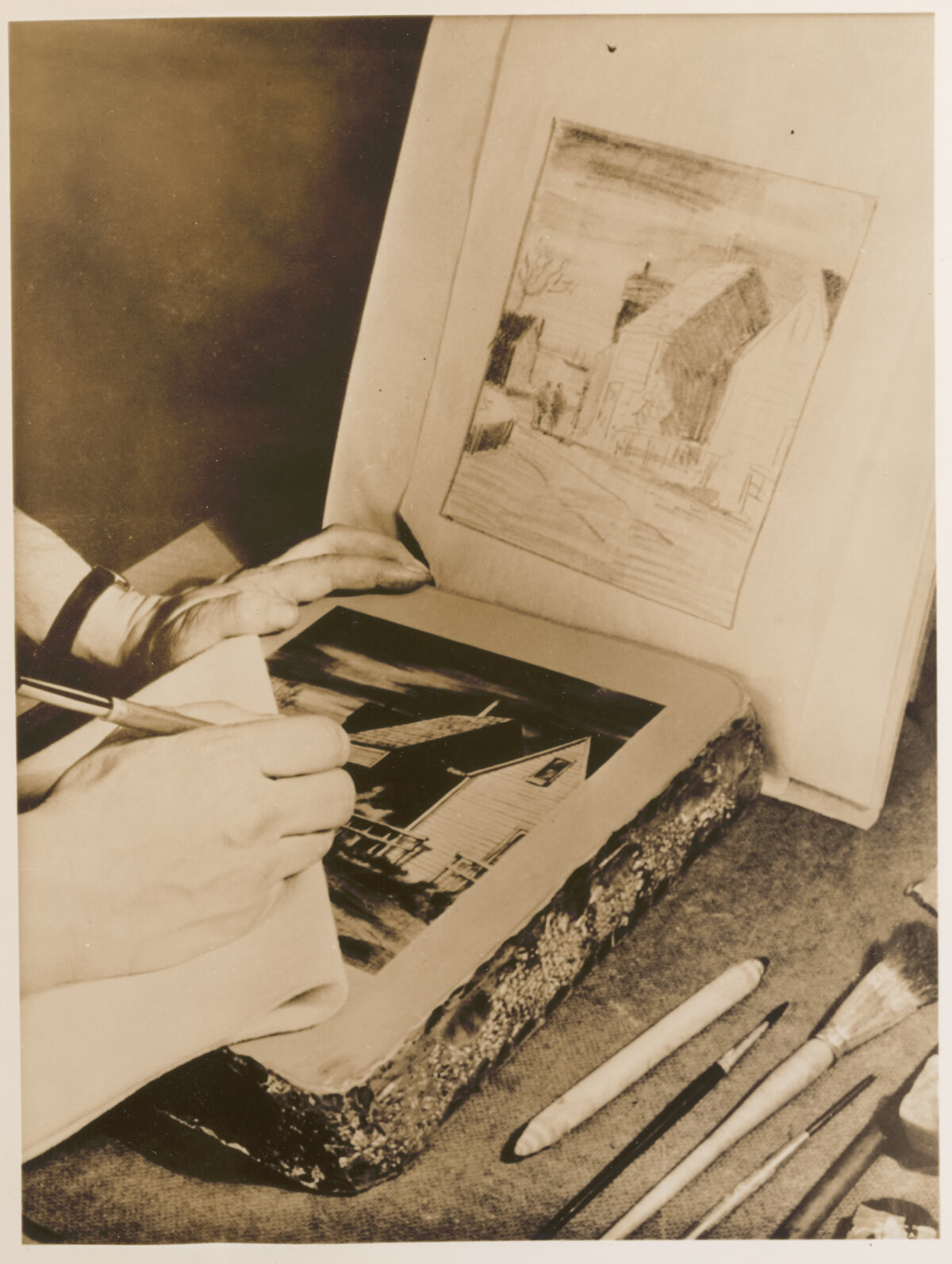
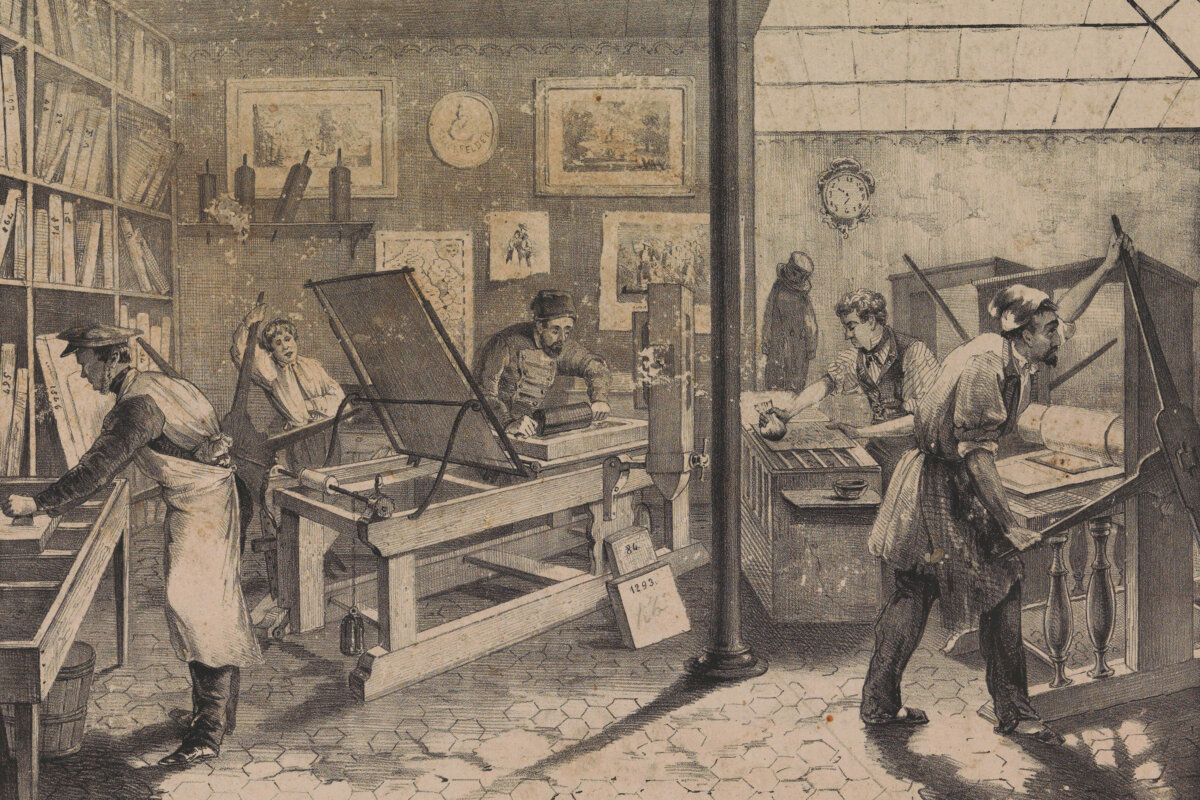
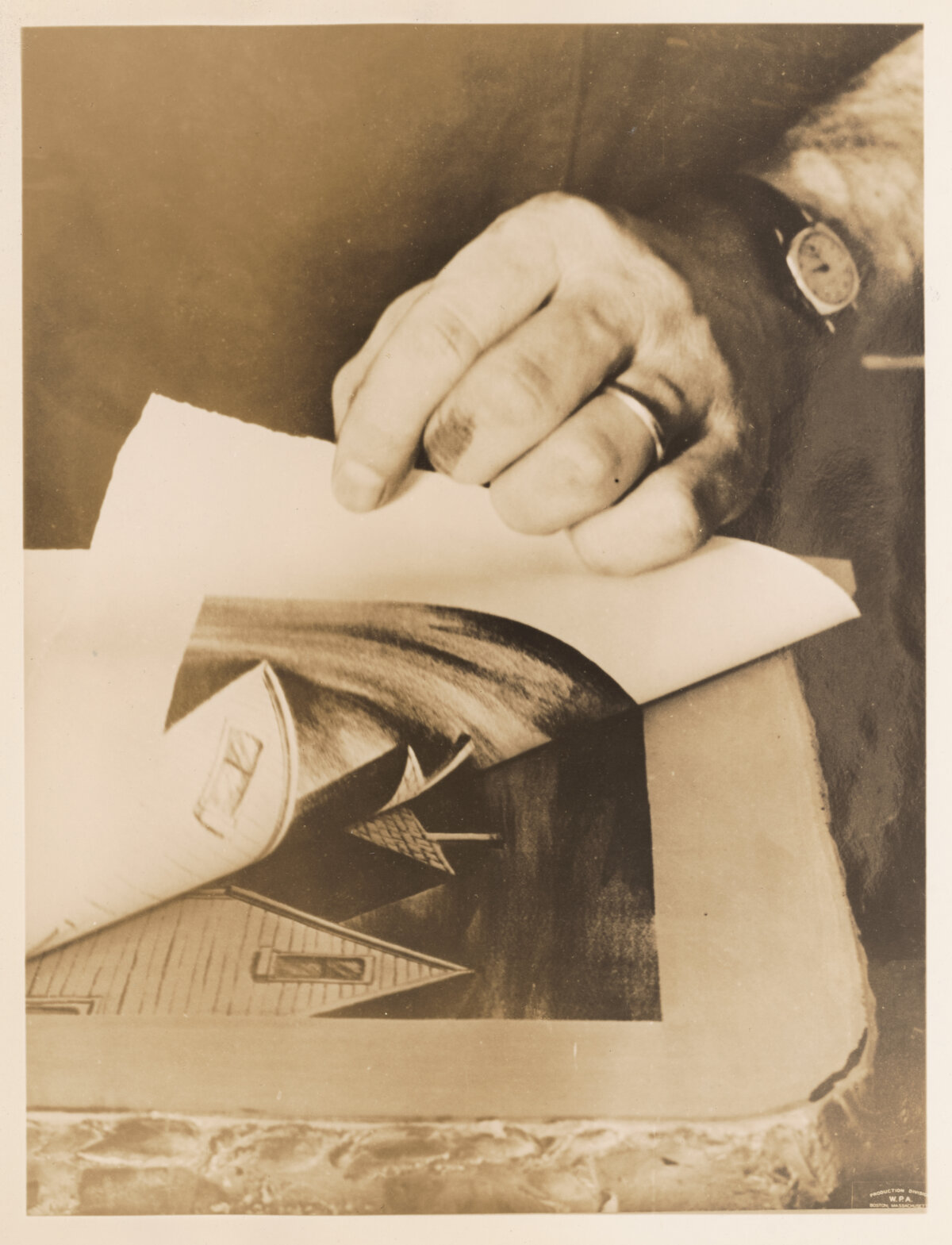
Before lithography, printmaking generally required a craftsman to cut images into wood or metal, a slow and costly process. Lithography changed that. Senefelder discovered that a greasy drawing made on limestone could be chemically treated so that oil-based ink clung only to the drawn areas, allowing the image to transfer to paper without the stone ever being carved. Because the surface remained flat, artists could draw on it much as they would with a pencil or crayon, allowing for more artistic freedom.
In his book “The Invention of Lithography,” Senefelder wrote that “because of the greater ease of inking, the speed of stone-printing may be assumed to be at least five times as great, often ten times, and especially so when large plates are to be printed.” That increased efficiency also changed the scale at which an image could exist. A painting or drawing ordinarily existed as a single object, while a lithograph could exist as hundreds of nearly identical impressions pulled from one drawing.
The new abundance of images, combined with mechanized presses and cheaper materials, allowed illustrated newspapers, journals, and books to reach far bigger audiences. Senefelder recognized the commercial potential early: He secured European patents for the process and, in 1809, became inspector of Munich’s newly formed Lithographic Institute, with sister institutions soon following in Berlin, Paris, London, and Vienna. An image no longer needed to stay in a studio, gallery, or private collection. It could enter ordinary commercial and public life.
When Art Entered the Streets
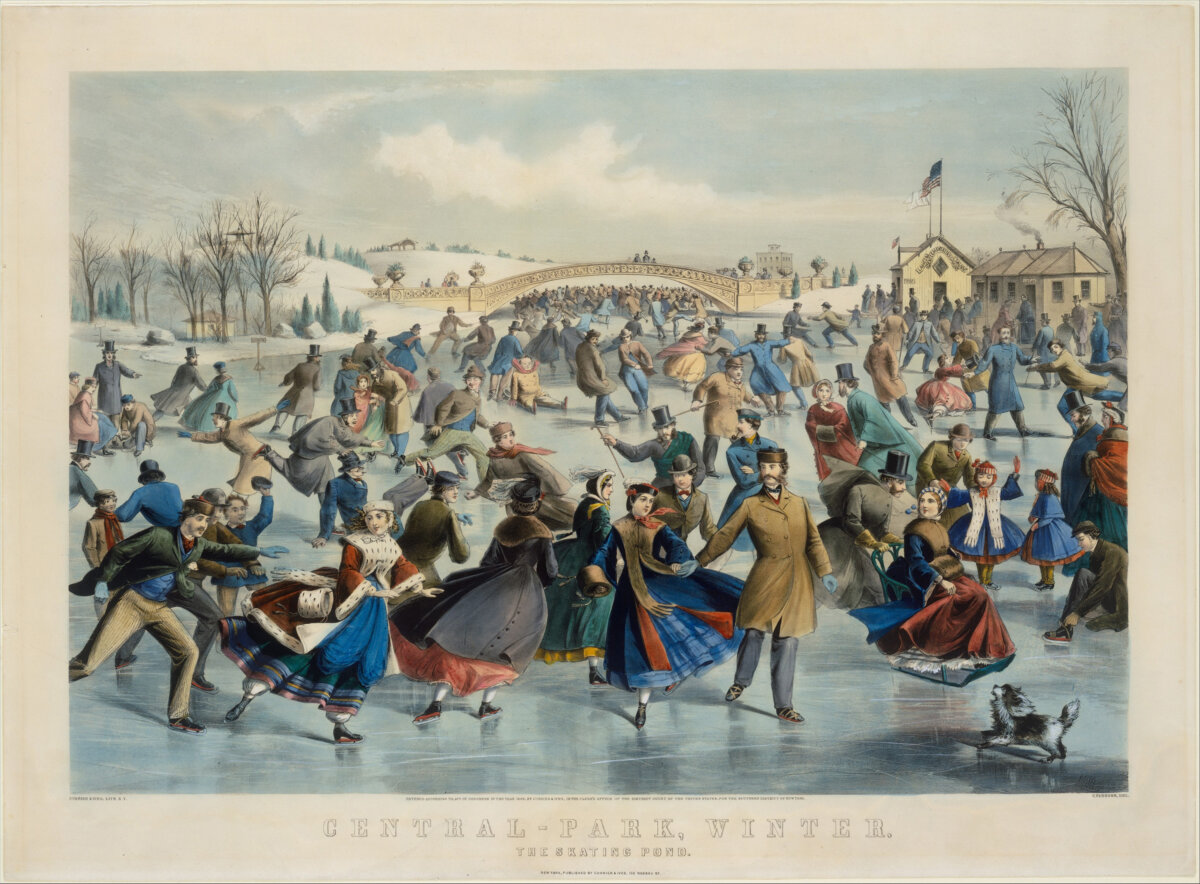
That opportunity found its greatest champions in the American company, Currier and Ives. Calling themselves “Publishers of Cheap and Popular Prints,” Currier and Ives printed more than 7,500 lithographs between 1835 and 1907. Each work began on a limestone printing plate that could take more than a week to prepare, with every print hand-colored by a dozen or more women working assembly-line style, one color per worker. Together they produced more than one million prints, making Currier and Ives the most prolific and successful lithographers in the country, and their work some of the most cherished prints of the Victorian era.
European publications also capitalized on the new process. When the Parisian journal Le Charivari promised readers a new image every day, the artist Honoré Daumier rose to the challenge. He used the medium to comment on the comedies and conflicts of daily life for as many as 2,000 subscribers, producing roughly 4,000 lithographs over the course of his career. His work marked a turning point for the printing industry: Artwork now appeared regularly in newspapers alongside written commentary, much as comics appear in the Sunday paper today, becoming part of readers’ daily routine.
Color lithography pushed this transformation further. Godefroy Engelmann developed chromolithography in the 1830s, and later improvements made large, brightly colored images practical to print. By the 1880s and 1890s, color posters had transformed advertising. Henri de Toulouse-Lautrec’s 1891 poster for the Moulin Rouge was his very first attempt at lithography, yet an estimated 3,000 impressions plastered across Paris made him famous almost overnight. The Metropolitan Museum of Art cites these advances as a major factor behind the expansion of commercial posters and illustrated publications, as art moved beyond spaces set aside for culture and into the public eye.
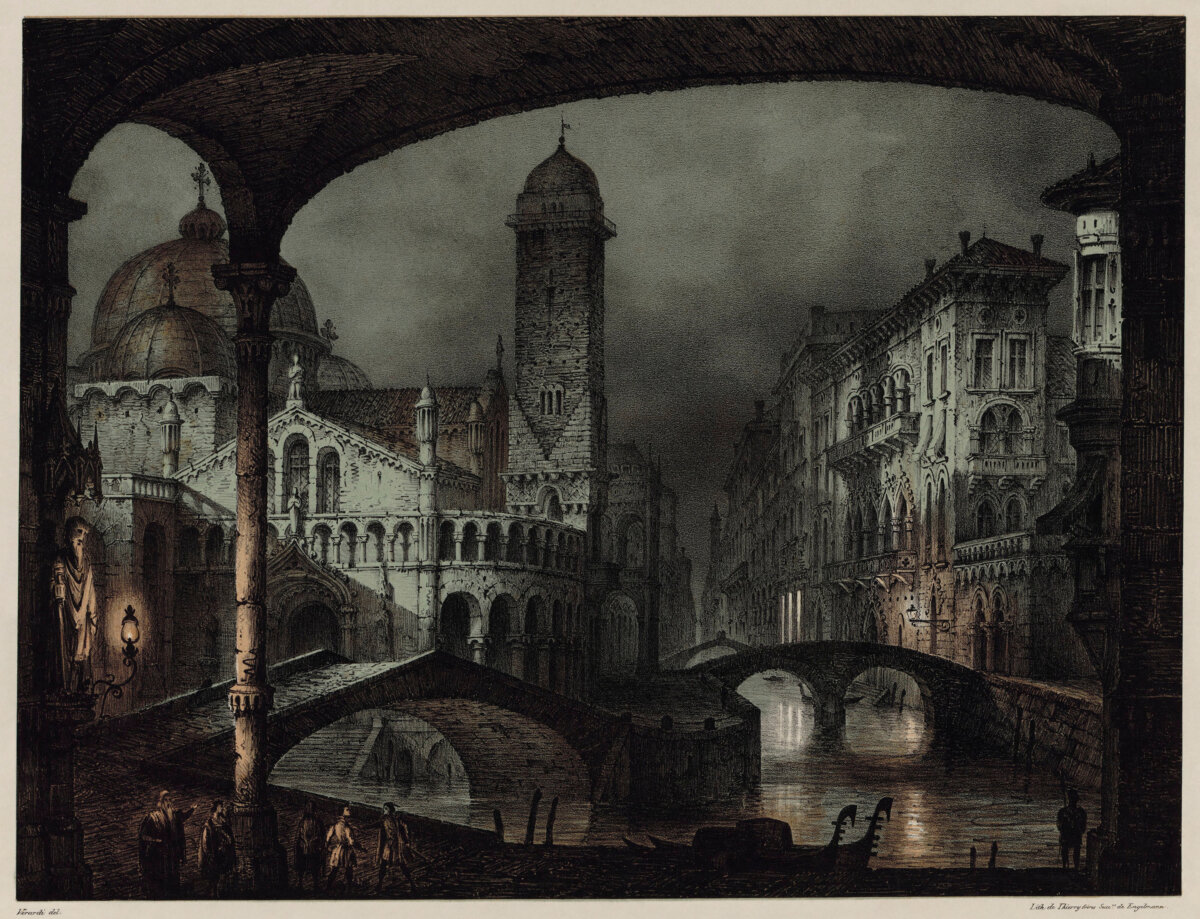
Lithography challenged the idea of the image as a unique object by producing multiple impressions from one drawing. In lithography, the relationship among the original drawing, the stone, and each printed impression complicated the line between original and copy. New tools always bring change, for better and worse, as Senefelder himself recognized. He once asked whether every invention was truly useful, and to what extent, “for science, arts, and industry.”
Lithography’s real significance lay not in the technique itself, but in how it reshaped art by making artwork accessible to everyone. That shift set a pattern that later technologies would repeat.
What arts and culture topics would you like us to cover? Please email ideas or feedback to features@epochtimes.nyc.