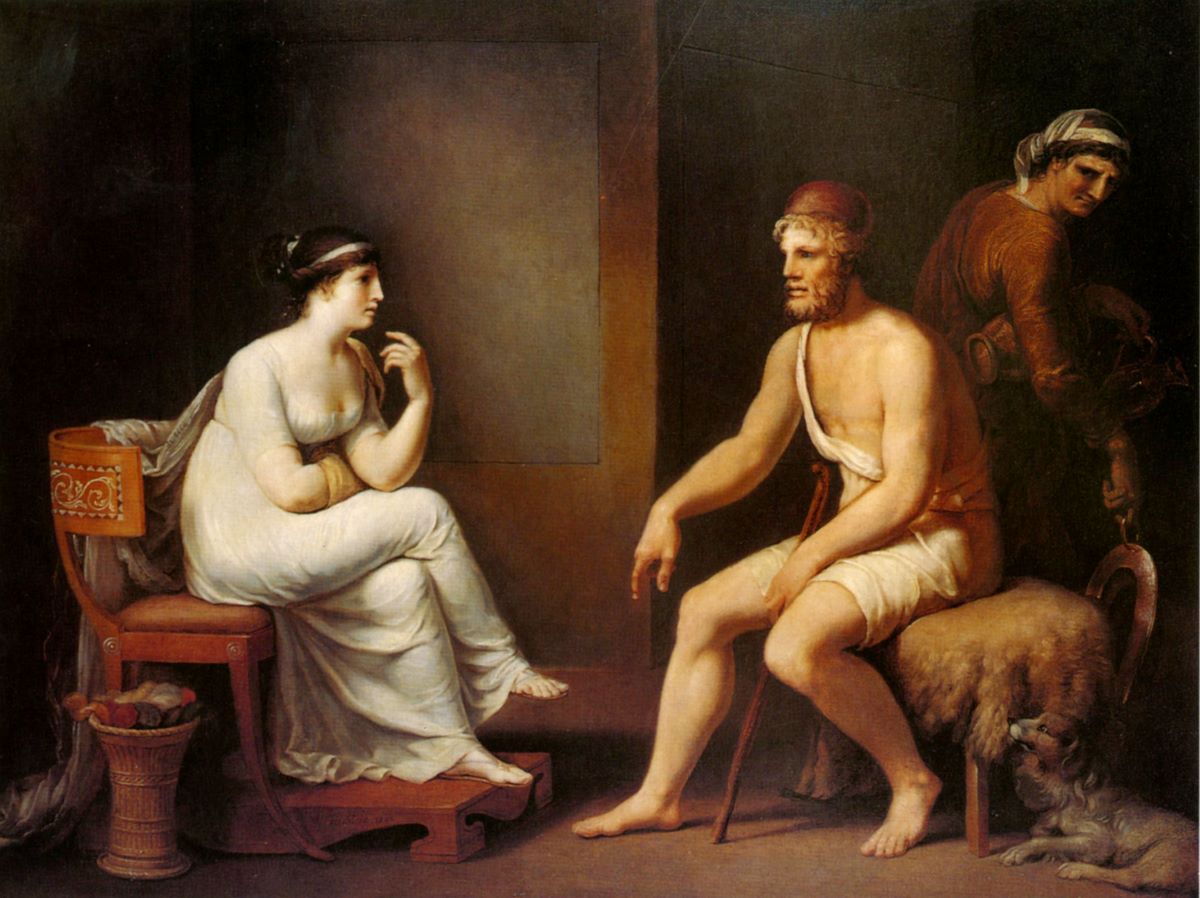
So far as the Western canon is concerned—and excluding the Bible, which surpasses every other text in the extent of its influence in the West, and perhaps even globally—Homer’s “Odyssey” must rank among the two or three greatest poems ever written.
For the best part of a century, modernism and postmodernism have worked to dethrone the Western canon, frequently appropriating its greatest works in order to invert or degrade them. James Joyce’s “Ulysses” is the most celebrated example: Homeric heroism is reduced to bodily functions, marital restoration becomes Molly Bloom’s adultery, and epic myth is made to crawl through the sordidness of an ordinary Dublin day. Joyce’s admirers call this reinterpretation; others may regard it as desecration.
Yet the genuine epic impulse refuses to die. In a 1997 British bookseller Waterstone’s and Channel 4 poll of more than 25,000 readers, Joyce’s “Ulysses” finished fourth among the books of the 20th century. J.R.R. Tolkien’s “The Lord of the Rings”—a true modern epic founded upon heroic courage, sacrifice, providence, and the struggle against evil—came in first by a considerable margin.
Literary and academic fashion may prefer the anti-epic, rolling contentedly in its mud, but the public continues to hunger for the epic.
The latest proof is Christopher Nolan’s “The Odyssey.” At the time of writing, the film has grossed approximately $1.5 billion worldwide—and the figure is still rising—against a reported production budget of $250 million. This is not merely a successful film adaptation; it is a global cultural event. If Homer’s story belongs to a bygone age whose values and moral assumptions have nothing left to say to us, filmmakers, investors, and audiences seem blithely unaware of the fact.
Nor is Nolan’s film an isolated phenomenon. Only the previous year, audiences saw Uberto Pasolini’s “The Return,” starring Ralph Fiennes and Juliette Binoche: an austere, atmospheric, and, at moments, almost mystical feature concentrating upon the final section of Homer’s story. Its commercial fortunes were much more modest: around $3.7 million worldwide against a reported budget of $20 million. Yet its very existence—and the artistic seriousness and distinguished cast it attracted—testifies to the creative impulse that Homer continues to engender.
That impulse is not simply commercial. Homer provides an inexhaustible imaginative source because his poem addresses perennial questions. What does war do to the warrior? Can a man return to the home he left 20 years earlier? Can a marriage survive absence, temptation, and suffering? How can a son know a father who has become a legend before becoming a parent? Above all, how can identity, family, and moral order be restored after they have been violated?
But Nolan and Pasolini have not merely retold “The Odyssey”: They have substantially reinvented its hero. Their Odysseuses are traumatized veterans, psychologically alienated from home and morally injured by war. Homer’s Odysseus is something different: cunning, resilient, dangerous, proud, and ultimately capable of restoring the order overturned in his absence. Put another way, in both films, Odysseus is portrayed primarily as a victim; in Homer, he is a hero.
The films understand trauma; Homer understands restoration.
We are therefore confronted with three competing versions of the same man. Will the real Odysseus please stand up?
A Tour of 3 Odysseuses
Three scenes or elements reveal the differences between these three characters clearly. Nolan’s “The Odyssey” is a stupendous cinematic achievement. Visually overwhelming, physically visceral, and filled with memorable images, it converts one of the foundational works of Western literature into compelling modern cinema. Pasolini’s “The Return” is altogether smaller and is also well worth seeing.
Perhaps nowhere is their achievement more evident than in one of the defining moments of the poem: the bending of the bow.

Who is Odysseus? He is the man—the only man—who can bend the bow. And the whole poem has led us towards this moment, when the great warrior, the man of many wiles and subterfuges, the subtle strategist, becomes fully himself again. We can think of the awesomeness of Tolkien’s trilogy: the whole third volume is entitled “The Return of the King,” such is the sublimity of the idea. Or think further back: When will King Arthur return, as legend promises? The return of the rightful king is one of the deepest patterns in the Western imagination.
And here Nolan and Pasolini do not disappoint. Pasolini builds suspense through technical detail: The suitors do not understand that the bow must be heated and waxed before attempting to string it. Nolan’s brilliance lies in psychology and sound: Penelope’s disappointment as she turns away when the “beggar” apparently fails to string the bow—and then, on the second attempt, the whole cinema filled with the twang and whoosh as the bow is strung and ready for use. Magical cinema.
But then both directors go astray and, in doing so, seriously damage the character of Odysseus. Their battle scenes are impressive, but they fundamentally misunderstand what Homer is doing.
In Homer, Odysseus shoots Antinous, the leader of the suitors, first. Nolan and Pasolini instead arrange for Antinous to die last: The ultimate villain, according to familiar cinematic convention, must be reserved for the climactic kill. In Pasolini’s film, it is not even Odysseus who kills him, but Telemachus.

This is profoundly wrong because Odysseus is, above all, the master strategist.
Hollywood logic demands that the chief villain die last; Homeric logic demands that the chief enemy die first.
One of the oldest principles of strategy is to strike at leadership: Strike the shepherd and the sheep will scatter. The Pharisees employed the principle against Jesus. Alexander the Great applied it spectacularly against Darius III at Gaugamela, deliberately manoeuvring to create a gap in the Persian line and then leading his cavalry directly towards the Persian king. His aim was not merely to defeat an army but to break it at its center. Bring down the king and the army collapses.
The same ancient principle has surfaced with startling literalness in the current conflict with Iran, where the United States and Israel targeted Iran’s supreme leader and senior leadership at the outset of the war. The modern military term for precisely this strategy is “decapitation.”
Homer understood the principle nearly three thousand years ago. Odysseus does not waste time working his way dramatically towards Antinous. He kills the leader first.
This leads to a second major faux pas in understanding both Odysseus and the poem: Telemachus.
Telemachus is marginalized in both films, although paradoxically he occupies considerable screen time. The first four books of Homer’s epic—the “Telemachy”—belong principally to him. His journey is not merely a subplot. He must grow from a powerless boy into Odysseus’s son. Odysseus must come home, but Telemachus must become someone to whom he can come home.

The climax, therefore, is not merely an old warrior killing again. It is father and son recognizing one another and fighting together to restore the household. In Nolan, Telemachus’s role in the battle against the suitors is underwhelming, to say the least. Pasolini goes further still, importing the modern trope of the resentful teenager who tells his returned father, “I hate you.”
Whatever its psychological plausibility to a modern audience, this reverses Homer’s moral architecture. Homer’s Telemachus longs for his father and gradually becomes like him. Their recognition restores the lineage. They do not merely cooperate tactically: The son’s emerging identity confirms the father’s.
Finally, in this all-too-brief review that necessarily omits much more, there is what I call the Robinson Crusoe factor—something neither Nolan nor Pasolini understands in their determination to reflect contemporary assumptions.
In “Robinson Crusoe,” after his long “civil death,” Crusoe discovers that his place in the world and the fortune from his Brazilian plantation have been preserved during his absence. Something has been kept for him beyond the horizon of his knowledge. His wealth is restored. He has been successful, for want of a better word, and all is made good.
Significantly, both Nolan and Pasolini omit the Phaeacians and their treasure.
After losing his ships, his companions, and the spoils of Troy, Odysseus tells the Phaeacians his story. They honor him, load him with gifts, and carry him, sleeping, to Ithaca. This treasure satisfies one of our deepest imaginative and spiritual longings: not simply that suffering should end, but that it should not have been wasted.
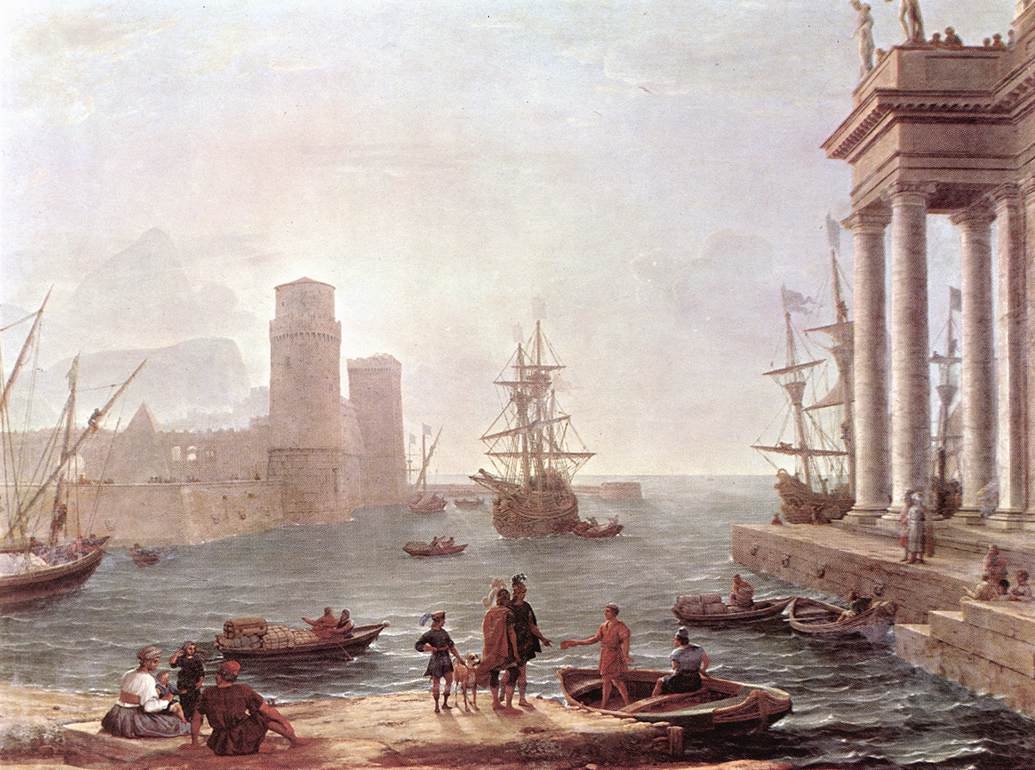
Odysseus has lost beyond calculation, yet loss does not have the final word. His suffering becomes a story; his story elicits recognition; recognition produces the gift. He returns not merely alive but endowed, equipped materially as well as morally to resume his place as Ithaca’s rightful king.
But Nolan and Pasolini wash him ashore as a wreck. In Homer, Odysseus disguises himself as a beggar. In these films, he really is one. And at the end of both films the kingship is not renewed through him. Here is a distinctly modern fable: Men of bloodshed and war must not be allowed to be—or even appear to be—restored, renewed, triumphant or comfortable. Whatever else that may be, it is not Homer.
If you know no Homer, both films are wonderfully evocative and well worth seeing. But if you know the poem, something strange becomes apparent. Modern cinema can reproduce the ships, the bows, the blood, the bodies, and the battles; what it struggles to reproduce is the heroic imagination that gives those things their meaning.
For Homer, Odysseus is not finally a victim of his experiences. He is the man who survives them, learns from them, and returns to restore what has been violated: his household, his lineage, his wealth, his kingship, and, ultimately, himself.
That is why Antinous must die first, why Telemachus must stand beside his father, and why the Phaeacian treasure matters. Strategy, succession, and restoration are not incidental details. They tell us who Odysseus is.
So, will the real Odysseus please stand up?
He already has. He has been standing there for nearly 3,000 years, in Homer.
And if you have not yet met him, read the poem—preferably in Michael Solot’s resonant and compelling new translation. Then, see the films. You may admire them just as much; but you will see much more clearly what they have gained—and what they have lost.
What arts and culture topics would you like us to cover? Please email ideas or feedback to features@epochtimes.nyc.