
Sponsored Content by The Hume Pod. This article includes affiliate links, which may earn us a commission, to support truthful and independent journalism (at no extra cost to you).
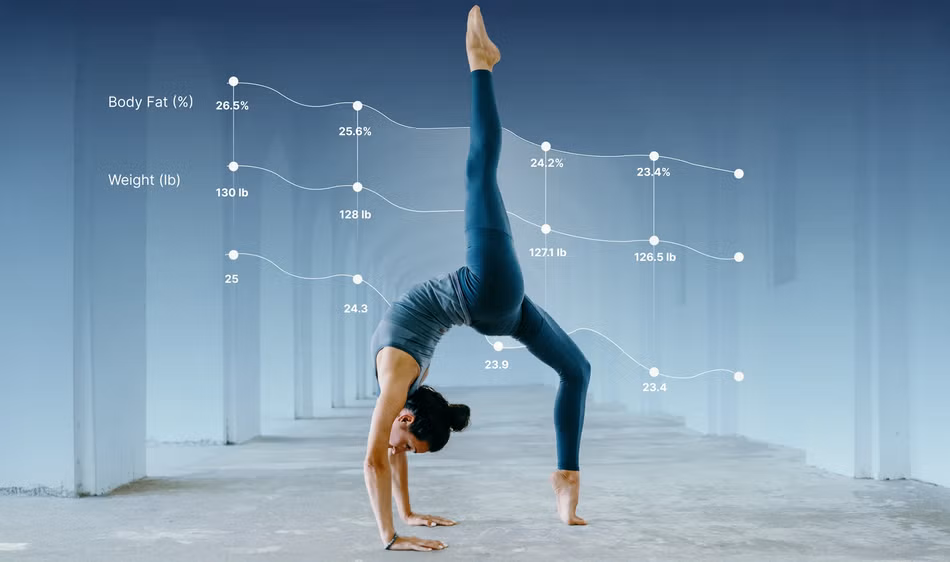
A bathroom scale gives you one number. That number can be useful, but it does not always tell the whole story.
Someone starting a strength-training routine may lose fat while gaining muscle and see relatively little movement on the scale. Changes in hydration can also move body weight up or down from one day to the next without necessarily reflecting a meaningful change in body fat.
That is where a body-composition scale can add context. The Hume Pod is one example. Instead of measuring weight alone, it uses bioelectrical impedance analysis, or BIA, to estimate a range of body-composition measurements and track them over time through an accompanying app. Hume says the Pod tracks body fat, muscle mass, visceral fat, body water, metabolic age, and dozens of other measurements.
The more important question, however, is not whether a scale gives you more numbers. It is whether those numbers help you better understand your progress.
Why Weight Alone Can Be Misleading
Body weight includes fat, muscle, water, bone, and other tissues. That means two people who weigh the same can have very different body compositions.
It also means your weight may barely move while other things are changing. For example, if you’re strength training, you might lose some fat while adding muscle. A traditional scale would show the combined result, not what changed underneath that number.
Body-composition scales try to provide more context by estimating those different components.
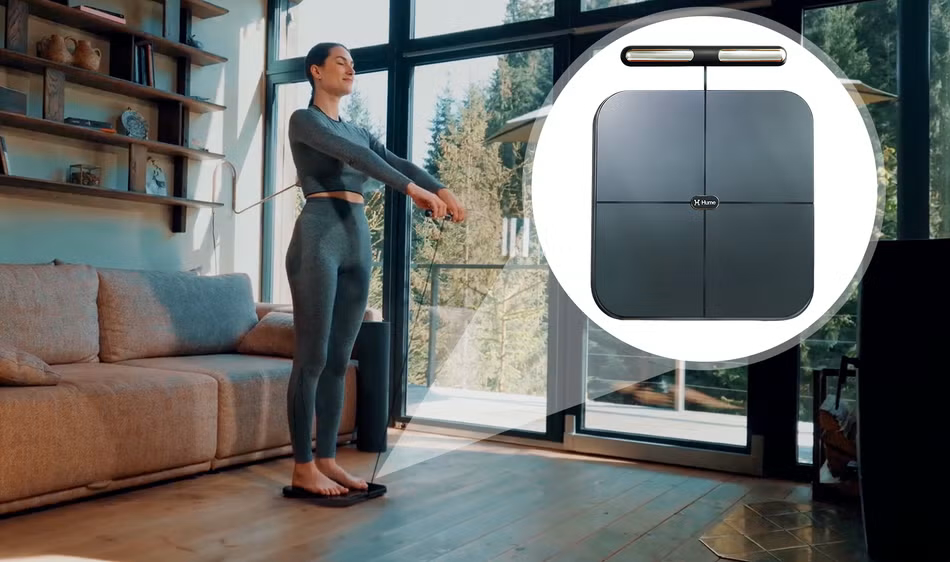
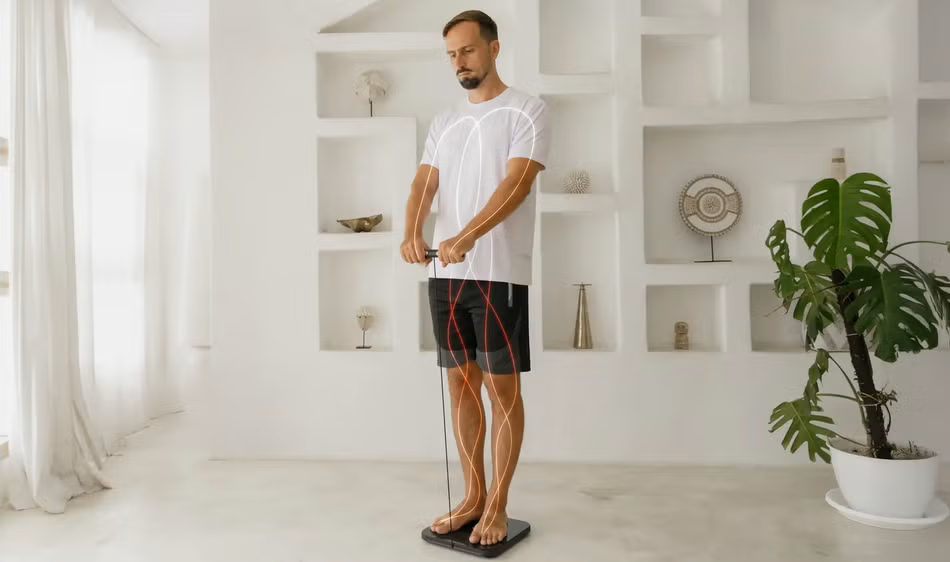
The Hume Pod uses BIA, which sends a small electrical current through the body and measures how different tissues resist that current. Because water-rich lean tissue conducts electricity differently from fat tissue, the device can use those readings along with personal information to estimate body composition.
These measurements are estimates, not direct laboratory measurements. Hydration, recent exercise, meals, and other conditions can influence BIA readings, which is why longer-term trends are generally more useful than reacting to a single day’s result.
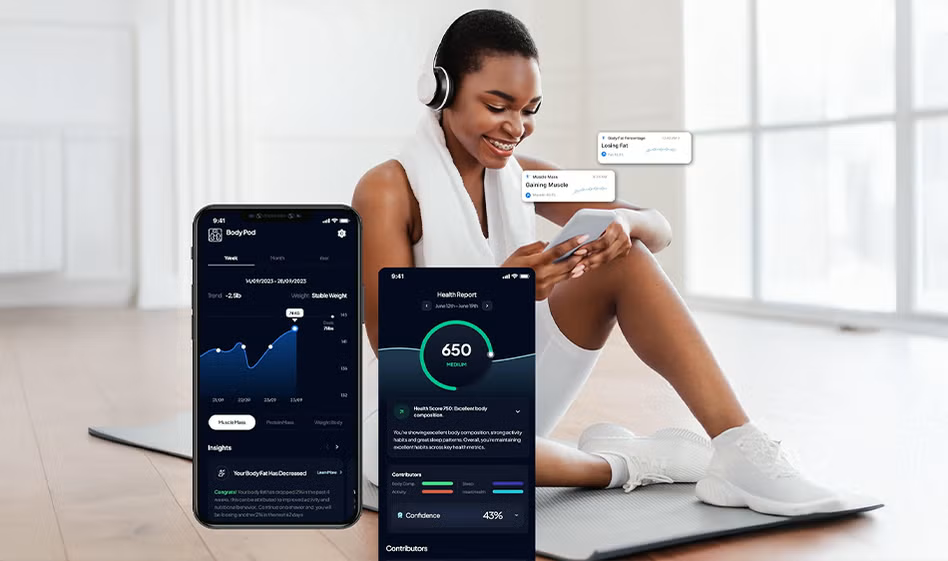
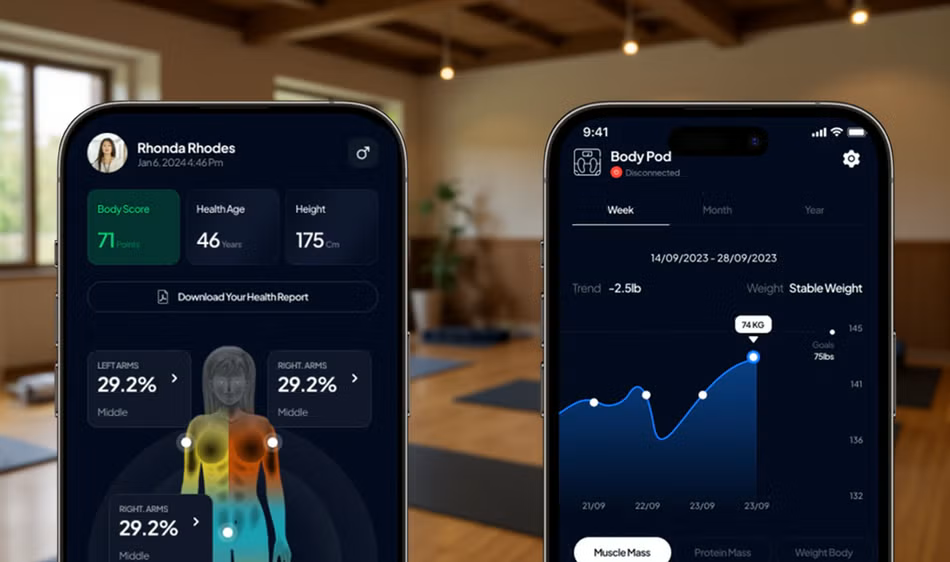
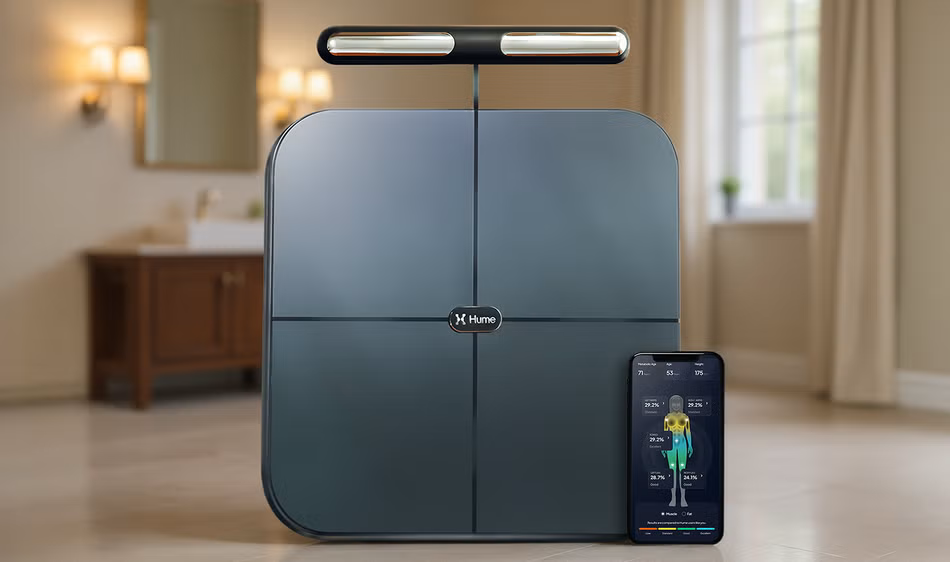 The Hume Health app organizes body-composition measurements so users can follow changes over time. Source: The Hume Pod
What the Hume Pod Tracks
Hume says the Pod tracks more than 40 measurements, including weight, body-fat percentage, muscle mass, visceral-fat estimates, body water, BMI, metabolic age, and related body-composition metrics.
That can be useful if you want more information than a standard scale provides, particularly when the goal is to follow changes over several weeks or months.
A few measurements also need careful interpretation. For example, a smart scale’s bone mass estimate should not be confused with a clinical bone-density examination used to diagnose osteoporosis or assess fracture risk.
The Hume Pod is best viewed as a consumer wellness and trend-tracking device, not as a substitute for medical testing.
Why the Handles Matter
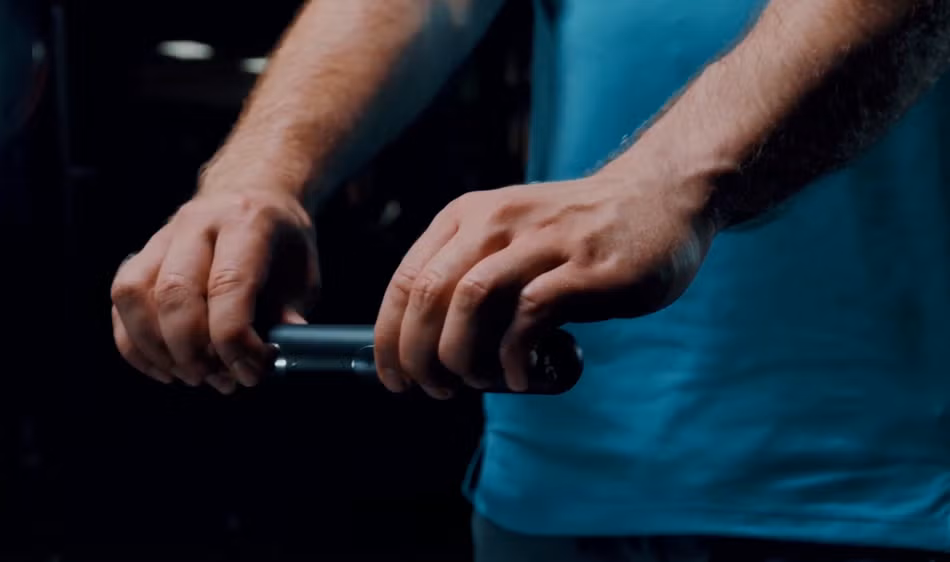
One of the more noticeable differences between the Hume Pod and many basic smart scales is the retractable handle.
Some smart scales measure impedance only through electrodes under the feet. Hume’s system adds hand contacts, allowing measurements to involve the upper and lower body rather than relying only on a foot-to-foot reading. Hume describes the Pod as using multi-frequency analysis and segmental measurements to estimate body composition across different areas of the body.
This may be useful for people interested in tracking where muscle changes occur or looking for differences between body segments.
It is still BIA, however, so the readings should be interpreted as estimates and trends rather than exact clinical measurements.
How Accurate Is a Home Body-Composition Scale?
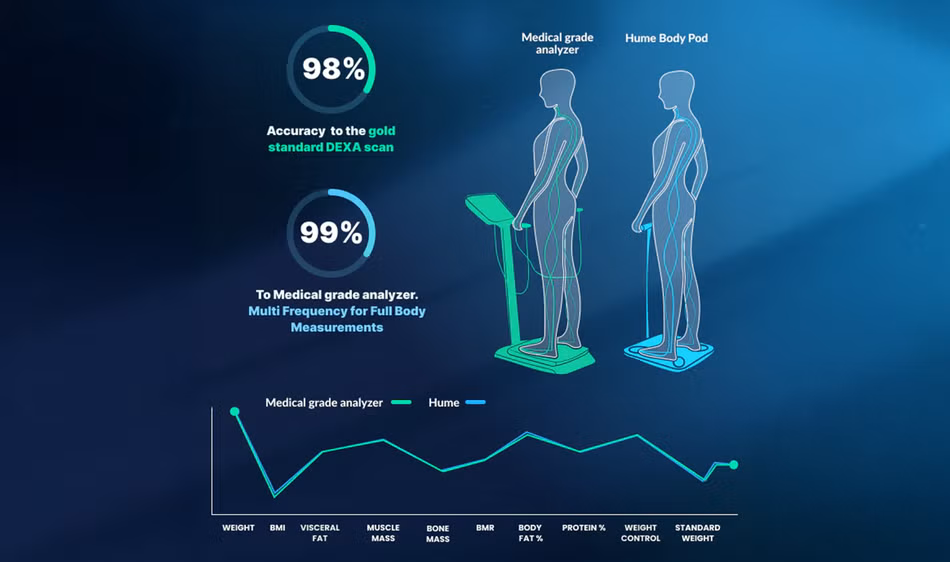
Hume says its Pod has been tested against DEXA and cites results within roughly 3 percent of DEXA under controlled conditions. The company also advertises the device as having 98 percent DEXA accuracy.
A home BIA scale should not be assumed to provide the same information as a clinical DEXA scan simply because the two measurements correlate closely in testing. DEXA and BIA use different methods, and individual results can vary.
The practical takeaway is simpler: the Pod can provide a consistent set of at-home measurements that may help users watch how body-composition estimates change over time.
Consistency Matters More Than One Reading
Body-composition readings can change with hydration, meals, exercise, and time of day. That means one unusual reading may not tell you very much.
A better approach is to measure under similar conditions. For example, you might use the scale at about the same time in the morning, after using the bathroom and before eating or exercising, and then focus on weekly or monthly trends.
This is where a smart scale can become more useful than a basic scale. Instead of asking whether today’s body-fat estimate moved by a fraction of a percentage point, you can ask whether the overall trend has been moving consistently over several weeks.
The Hume app provides trend views and reports designed to help users follow those changes over time.
What About Heart Rate?
The Hume Pod also records heart-rate information as part of its measurements.
That can be a convenient additional data point if you are already using the scale regularly, but it should remain in perspective.
A heart-rate reading from a wellness device is not the same thing as a clinical cardiac evaluation. Don’t use the scale alone to interpret an abnormal or unexpected reading; discuss concerning patterns with a health professional.
In practical terms, the heart-rate feature is another trend you can track alongside weight and body composition rather than a diagnostic tool.
The App Is a Big Part of the Experience
The hardware collects the measurements, but the app is what turns them into something easier to follow.
Hume says its free app allows users to track the Pod’s body-composition measurements over time. The company also offers premium features for users who want deeper reports, coaching, and personalized guidance.
That distinction matters because buyers should know what comes with the scale and what may require an ongoing subscription.
The most useful part of the app may be organization. Instead of trying to remember whether your muscle or body-fat readings changed from one month to the next, the app can turn those trends into charts and reports.
Hume also offers automated coaching and personalized insights through its premium features. These tools can help organize goals and habits, but they shouldn’t replace a registered dietitian, personal trainer, or medical professional.
Can It Work With Other Fitness Data?
If you already use a smartwatch or fitness tracker, combining that data with body-composition information may make the app more useful.
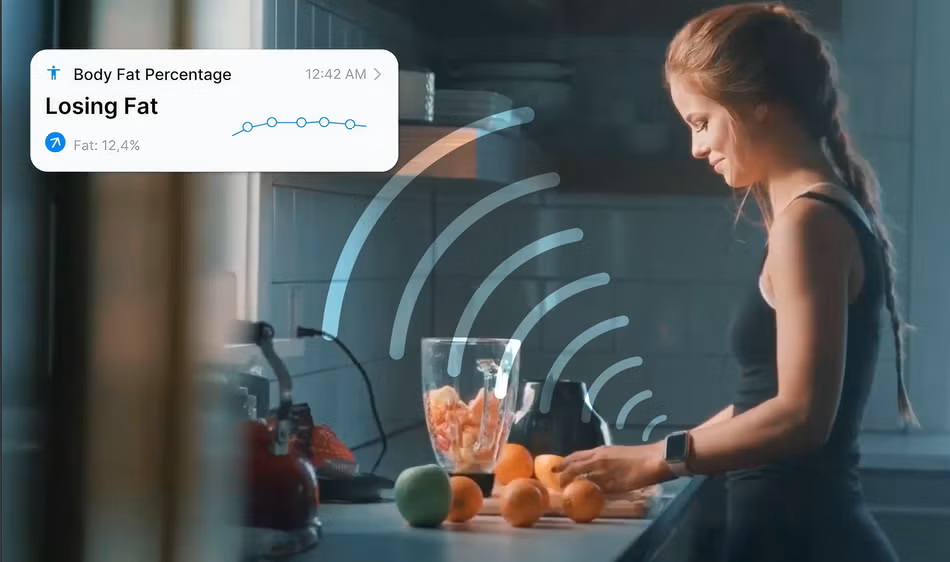
Hume says the system can connect with other health and fitness platforms, allowing users to view information from multiple sources in one place.
That can help you look for patterns. For example, you may notice that periods of regular training line up with changes in estimated muscle mass or that body weight fluctuates during weeks when your activity changes.
The important distinction is between seeing a pattern and proving a cause. A smart scale cannot tell you with certainty that one night’s sleep, one workout, or one meal caused a particular change in body composition.
Its value lies in helping you see the bigger picture.
One Scale Can Serve a Household
A body-composition scale becomes more practical when multiple people can use it without mixing their results.
The Hume Pod can support multiple users, with separate profiles for individual measurements and trends. Current product information describes support for up to 24 users.
That means one device can serve a household without everyone sharing the same measurement history.
For families or couples who both want to track fitness or body-composition changes, that is a more meaningful feature than simply adding another measurement to the list.

Battery Life and Everyday Use
The Pod is rechargeable and doesn’t rely on disposable batteries. The Hume Pod advertises battery life of up to about a year per charge, depending on use.
The scan itself is also relatively quick. Hume’s current product materials describe a full body-composition scan in under 60 seconds.
That matters because a health-tracking device is only useful if it is convenient enough to use consistently.
A routine that takes less than a minute and automatically sends the results to an app is easier to maintain than a complicated measurement process, particularly when the goal is tracking a trend for months rather than taking one reading.
Who Might Find It Useful?
The Hume Pod probably makes the most sense for someone who wants more information than body weight alone provides.
It may be particularly useful if you are:
-
strength training and want to follow estimated muscle changes;
-
trying to lose fat while maintaining lean mass;
-
interested in longer-term body-composition trends;
-
already using activity, sleep, or fitness trackers;
-
interested in segmental body measurements;
-
or sharing the scale with several household members.
On the other hand, someone who wants an accurate body-weight reading may not need this much information. A basic digital scale is cheaper, easier, and may be all you need if you’re not interested in tracking body composition.
That is an important part of deciding whether a device like this is worth the extra cost.
What the Numbers Cannot Tell You
More data does not automatically mean more certainty.
A body-composition scale cannot diagnose a health condition. It cannot tell you whether you have osteoporosis, diagnose cardiovascular disease, or replace a clinically necessary medical body-composition assessment. It also cannot eliminate the normal uncertainty that comes with BIA.
The best use of a device like this is generally to look for patterns under reasonably consistent conditions.
If your estimated body-fat percentage, muscle mass, or other measurements gradually move in one direction over several weeks, that trend may be more useful than whether today’s reading changed slightly from yesterday’s.
For many people, that is enough. The scale doesn’t need to function like a hospital scanner to provide useful feedback on a fitness or weight-management routine.
What to Check Before Buying
Before buying the Hume Pod—or any advanced body-composition scale—it is worth asking a few practical questions:
-
Which measurements matter to you?
-
Which features are included without a subscription?
-
Do you want automated coaching, or just measurement tracking?
-
Will it integrate with the health apps you already use?
-
Will several people in your household use it?
-
Are you comfortable treating the body-composition readings as estimates?
-
Will you actually use the trend information?
It is also worth checking the current price, warranty, return policy, and premium app terms before purchasing because those can change.
At the time of writing, Hume lists the original Pod and the newer Pod 2.0 on its site, so readers should also make sure they know which version they are considering.
The Bottom Line
The most useful thing about the Hume Pod is not that it gives you dozens of measurements. It gives you another way to see how your body may be changing over time.
If you exercise regularly, are trying to change your body composition, or want more context than a standard bathroom scale provides, estimates of fat, muscle, water, and other measurements can help explain why body weight doesn’t always move the way you expect.
But those readings need to stay in perspective. The Pod is a wellness and trend-tracking tool, not a substitute for medical testing or professional diagnosis.
For the right person, that can still make it useful. Sometimes the better question is not simply, “What do I weigh today?”
It is, “What direction am I moving over time?”
 Friends Read Free
Copy
Facebook
Tweet