
September 10, 2026
American Thought Leaders
The Hidden Costs of a World Without Anything Worth Fighting For | Rusty Reno
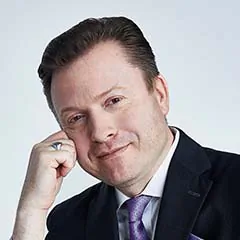
[RUSH TRANSCRIPT BELOW]Rusty Reno is the editor-in-chief of First Things Magazine and author of “Return of the Strong Gods: Nationalism, Populism, and the Future of the West.”
In his book, Reno argues that after the World Wars, Western intellectual elites concluded that the “strong gods”—nationalism and intense ideological loyalty, to name a few—were the root causes of violence. In response, figures like Karl Popper promoted an “open society” framework, aimed at diluting strong loyalties.
Decades later, Reno argues, we live in an age when the frameworks that gave human beings stability, purpose, and a sense of belonging have been stripped away.
In this episode, Reno unpacks questions such as: What about the 1980s is so desirable to people today? Why are young people dissatisfied with endless choices? And why ought questions of meaning, national identity, and truth return to the center of politics?
Views expressed in this video are opinions of the host and the guest, and do not necessarily reflect the views of The Epoch Times.
RUSH TRANSCRIPT
Jan Jekielek:
Rusty Reno, such a pleasure to have you on American Thought Leaders.
Rusty Reno:
Great to be with you.
Mr. Jekielek:
I’ve been fascinated by this strange nostalgia that we have for the 80s, and not even just people like me who grew up in the 80s and I suppose are allowed, but even much younger people, Gen Z, right? Alpha also seems to have inherited this. I find it absolutely fascinating. Actually, as I was preparing for this interview, I decided I would look this up, and it’s actually quite documented that this is a reality. And after reading Return of the Strong Gods, I was wondering what thoughts you might have about why that might be.
Mr. Reno:
Maybe it was before the Cold War ended. We still lived in the framework of the fight against global communism; there was purpose somehow. But the Reagan era also, you know, it was tough at the beginning. There was a recession that Paul Volcker motivated or caused by raising interest rates to whip inflation. But once things got rolling, it was good times. It was also post-Vietnam syndrome that had waned.
It’s hard to realize how dispiriting the 1970s were. I always tell people the worst of the 60s was actually the 70s. It was hedonism without idealism. I think those are probably some of the factors. The 90s, I think, also people are nostalgic for, although in retrospect, it seems like the commissars in the Soviet Union warned the Americans who had come to oversee their dissolution that we would miss them when they were gone. There’s something to that.
What I argue in the book is there’s this open society consensus that animates the American imagination and our politics after World War II. The constraining reality of the Cold War and the Soviet Union kept it within bounds. The end of the Cold War removed those limits. In retrospect, I think we’ve been dispirited by the kind of flesh-eating quality of this open society consensus when it’s taken too far.
Mr. Jekielek:
So, this is super interesting. So, there was this sort of unbridled hedonism, open society hedonism of the 70s that you’re describing. And the 80s were this kind of respite where you could actually just kind of enjoy that freedom. And just before 1989, where I don’t know, the doors opened up again?
Mr. Reno:
The end of the Cold War seemed like a great triumph. I remember very vividly the fall of the Berlin Wall, and it was a little disorienting, actually, because the free world/communist world was such an organizing binary. It was Francis Fukuyama’s famous end of history thesis, and it was a time of great dreams in the early 90s, dreams of a fundamentally different, American-led world order. But I think that’s really when the Uniparty was born, also, and this notion of an open economy and open culture. The Democratic Party took the lead on cultural liberalization and pressing an ever more inclusive society, and Republicans took the lead on economic deregulation and laying the groundwork for the global economy.
So it was a kind of shared, but everybody, you know, the Republicans would sort of run on cultural issues to reassure voters that they were going to, you know, prevent this from happening too fast. And Democrats would run on these old-fashioned union issues to try to promise voters that economic liberalization wouldn’t happen too fast. But I think the elite consensus is we needed to have a more culturally fluid and porous society. Fewer limiting norms, and combined with, we need to have a deregulated and globalized economy where labor, capital, and goods can move without friction. Why do you think people are nostalgic for the 1980s?
Mr. Jekielek:
Well, to be honest, it’s something I’ve been thinking about. I myself am a bit nostalgic for the 80s, and I think the reason for me is that I think it was one of the freest societies possibly that’s ever existed. You know, when you watch, I don’t know, E.T. The Extraterrestrial, I guess people still watch that film, right? Kind of a wonderful film. And, you know, you see the kids on the bikes, just, you know, there’s no parents. Once in a while, the parents kind of interject and come in to help out or something. But the kids just are living their own lives. That’s how we lived, an actual reality, right? Like, I don’t, I think, I don’t know if people understand that we had a really unbelievable amount of freedom. The parents didn’t, you know, were busy doing their thing.
And somehow it feels like, you know, there are these kind of waves of political, I remember there was this first wave of political correctness that came in, and then it sort of relented a bit, and then it really came down hard. And it’s sort of a, it’s very, you know, like it’s supposed to be transgressive, right? The society, but it’s wildly anti-transgressive and, you know, controlling. And, you know, you think to yourself, you know, I just want to be able to be normal and not have to constantly police myself so that I can function in normal society. Now, of course, I get away with it a little bit because I surround myself with people who want to think openly.
Mr. Reno:
A strong social consensus has the effect of creating freedom. It limits some things, like you have to have norms of civility and sexual norms and all those kinds of things. But it provides you a framework. Whereas when you try to get rid of all the norms or you make them all, you problematize them all, then everything has to be thought about, negotiated, debated over and over and over again.
At a personal level, I would put it this way. I’m old enough that for me life was like a train ride; go to college, get a job, get married, have kids, retire, then die. I was confident that the train was going to take me to all those stations. I took all kinds of side trips because I never asked myself, should I get married? Now, who to get married to? That’s always hard. You know, that’s a fraud. Or am I going to have children? Much less, am I a man or a woman?
Now, you’re 21-years-old and we wonder that mental health isn’t a toilet. You have to invent your life from scratch. It sounds like that gives a chord much more freedom, but in fact, it paralyzes. There’s this phenomenon of too much optionality. It actually has a paralyzing and demoralizing effect.
Mr. Jekielek:
Oh, listen, I live this myself. I remember as a kid, just on this point, you evoked this memory, right? But when I would go to the corner store and I would get to choose candy, right? And you got your wall of candy, which I didn’t know what to do. It’s funny, right? But I think it illustrates the point.
Mr. Reno:
Yes, my friend who’s younger than me said, oh, no, no, life’s not like a trellis ride. It’s like being in a sailboat and you have to tack back and forth to a destination of your own choosing. And I said, Oh, God, that sounds exhausting. With the train ride, like I said, I took a lot of side trips because I had the freedom of, you know, the framework provided the freedom.I would have been like, I get all my ducks in a row, all these sorts of things that young people worry about, talented young people.
My father, he said to me, he said, oh, major in whatever you love. You’re more likely to be successful at it. You’ll be good at it. And he said, don’t worry about a career. Our country is set up for being talented and hardworking, and our country is set up for people like you to do well. It’ll take care of itself. It’s still true. But young people are really, really anxious about getting everything just so because they feel there are many reasons for this.
But one of them is they’re very aware that there are no guardrails, to change the metaphor. The rails of the train take you to the destination, but there’s also, when I was a child, guardrails. They’re norms, sort of middle class morality, as they used to call it, functioned as guardrails. Without guardrails, you got to be careful, otherwise, off the edge of the cliff.
Mr. Jekielek:
I’m going to quote from your book. I had so many moments that jumped out at me, but this one I think is very appropriate here. You said that the shapers of the postwar consensus regarded metaphysical poverty as essential for an open society.
Mr. Reno:
Big word; metaphysical. Well, two words.
Mr. Jekielek:
Well, and painful, right? And in fact, but let’s go back, right? Even people in my generation don’t have a sense of the psychic or metaphysical devastation that these two world wars back to back had on the world. And so if you could flesh that out for me and how you get this idea, this consensus around an open society, which these days for many viewers of this show isn’t exactly a positive thing.
Mr. Reno:
It’s well documented that the slaughter in the trenches of the Western Front during the First World War had a devastating effect on the cultural confidence of European nations. The old system lost its credibility, and I think there was a vote in the Oxford Union as to whether or not you would fight for England. Many of the undergraduates voted that they would not. So, this sense that there was a kind of betrayal by the system.
We often think the sixties are when people rebelled against the system, but it really gets its start in the 1920s, the aftermath of World War I. Then there’s a global depression, and the Spanish Civil War is kind of a warm-up for what everybody thought was the inevitable clash and another round of violence. Then lo and behold, yes, 1939. And did people estimate that something between 60 and 80 million people were killed during World War II?
A genuine global war that required the mobilization of entire nations, aerial bombardments. The orgy of violence is, I think, hard for us to imagine. Imagine, of course, culminating in the use of nuclear weapons in Hiroshima and Nagasaki, and then revelations about the true nature and extent of the Nazi genocide of Jews in Europe. Albert Camus said in the aftermath of the war, maybe in 1948, he says, disaster is our fatherland, using the German term, the Nazi term, and giving it a twist, that everyone was implicated in this disaster.
Winston Churchill, I think it’s his final volume of his History of World War II, is titled Triumph and Tragedy. So those who participated in the war had a sense of its necessity, given the stakes were very high, but also this brutality. One time I remember talking with a friend who knew Robert McNamara, an early friend. And I said about McNamara, he must have had a guilty conscience for Vietnam.
He was the Secretary of Defense during the Vietnam War under Lyndon Johnson and John Kennedy. And he said, oh, no, no. His guilty conscience stemmed from the fact that he was a staff officer for Curtis LeMay, who orchestrated the firebombing raids of Tokyo and other cities in Japan. He was genuinely troubled in his soul. Hundreds of thousands of innocent people were killed in the pursuit of victory.
So it’s hard for us because we, as Americans, have a mythology that this was a good war, but it had a traumatizing effect. And I talk in the book about how in 1943, when it was clear that Stalingrad was that winter of 1943, victory was now clearly on the horizon. The president of Harvard University formed a committee to think about how to reconstruct the West.
Now, they were educators, so ultimately the end product was a document called Education for a Free Society. And that, to me, is just one instance of this American-led effort to think, how can we make sure this never happens again? So, never again becomes the big imperative. This was based on a diagnosis that these disasters, from 1914 to 1945, arose from the inflamed ideological passions of men.
Mr. Jekielek:
From the strong gods, as you call them.
Mr. Reno:
Blood and soil. And that if we tamp down, if we lower the temperature of people’s commitments, we won’t get such a volatile political life inflamed into warfare. That wasn’t the only explanation. In fact, I’ve thought about writing a book about the books about what went wrong, which is a very interesting genre of books about how it all went off the rails.
Hannah Arendt, a famous German Jewish thinker, wrote a book, The Origins of Totalitarianism. Her thesis is that modernity actually deracinates and atomizes people. Lacking the strong loves and loyalties that the strong gods create, in that situation, atomized and isolated, they’re easily seduced by demagogues. So, she, I think, would have. But the dominant accepted view was that it was this overzealous commitment to the strong gods. So, we had to weaken people’s loyalties, weaken people’s passions and loves.
There is Karl Popper’s essay, The Open Society and Its Enemies. For him, truth itself is a dangerous concept. It’s very interesting to see the origins of political correctness in Karl Popper. Of course, I think he’d be rolling in his grave to see how people put these ideas to use. I think he was a moderate liberal in his own thinking, one of the founders of the Mont Pelerin Society, although he withdrew from the society in its early years. But, you know, part of it was he wrote the book during the war in a kind of fevered state. And so it’s a kind of Manichaean struggle between the open society and its enemies.
And who is the great enemy of the open society? It was Plato, the founder of the Western philosophical tradition. It turns out that the Western tradition broadly is the problem. It’s already there in Popper in 1945 when the book was published, and eventually, we get academics saying, hey ho, Western civ’s got to go, as the students were chanting at Stanford University in the late 80s, trying to get rid of the Western civ requirement.
Mr. Jekielek:
Before I continue, you often hear these days the word Manichaean as a descriptor. Explain what it means.
Mr. Reno:
Yes. Mani was a Persian religious sage, and the Manichaeans were his followers. Reality itself is divided between forces of good and evil, that there was a good God and then there was an evil God, and that they were in conflict, and that this manifested itself in every aspect of life. So when you use the word Manichaean, you’re denoting someone that makes a sharp distinction between the good guys and the bad guys, between the forces of good and the forces of evil. Look at the very title of Popper’s essay, The Open Society and Its Enemies.
So, and again, this foretells a kind of, we get this woke cancel culture where if you’re not for us wholeheartedly, you’re against us. This is manifest in Popper’s essay from 1945. I mean, if you’re not on board with his open society agenda, which involves rejecting the nation as a legitimate framework, it’s a purely artificial designation in his mind, he, as I say, truth is not something that he thinks we should substitute meaning for truth. We make meaning. We obey truth, but we make meaning. So, meaning is a softer word; it’s not as demanding a word. And he consistently substitutes meaning for truth.
If you look at one of those Google searches of word use, you’ll see in the 1950s this big increase in the use of the word meaning. Because it becomes, in the post-war context, for truth. Truth is either right or wrong. It requires us to make a decision. I’m either for it or against it. Whereas, meaning is a soft word. You have your meaning, I have my meaning.
Mr. Jekielek:
This is something that I found so fascinating as I was reading the book, because as The Return of the Strong Gods, because you have this situation where that itself is a kind of Manichaean position. Like you’re arguing for trying to weaken these strong beliefs, the things that animate people’s passions, right? But you’re building a structure to police that in a very Manichaean way. And this manifests constantly, right? So isn’t there like a profound irony here? Or I don’t know what you would call it.
Mr. Reno:
These ironies are rampant in modern political thought.People have to be forced to be free. So, you know, you want to create a new world. Traditionally, people like Popper and others, they recognize that in a traditional world, we organize our lives around our loyalties. There’s the hearth and the home, there’s civic life and political life, and then there’s religion, which is the most obvious.
This is an instance of not a strong god in a metaphorical sense, but a God, a capital G God. And they recognize that the open society requires restructuring in a deep way. And you’ve got to use powerful tools if you’re going to demolish a building. You can’t do it with a toothpick. You’ve got to get a sledgehammer.
And so that’s, I think, part of the reason why it’s paradoxical there. You’ve got to police people so that they don’t say things that police others. We include everyone who includes everyone, which turns out to be hardly anybody. And so, people have to be socialized to be inclusive. You have to be socialized to use your pronouns properly and all the kind of create a more inclusive environment and on and on and on and on.
Mr. Jekielek:
This is the part that I find kind of so crazy because, you know, obviously communism and national socialism are both these strong gods that we’re seeing very clearly as such at the time, by someone like Popper, right? Yet, you know, we decided to adopt the tools of, you know, this type of a system in effect, right? By kind of forcing social engineering to create the utopia, you know, essentially a utopian reality or something, right?
Mr. Reno:
In its early stages, if I go back to that Harvard document, Education for a Free Society, there was a lot of wisdom in that document. The drafters saw that young people need to be educated into their own, the noble traditions of the West. So they had authority, the great books, to use that terminology. So we as educators in that era felt that you could legitimately demand of young people you have to learn this because these are the touchstones. We leave lots of room for the students to question and frame their own readings and take on these authoritative. So it’s a kind of balance between authority and this kind of more open, fluid, make of it what you wish.
Over time, though, all the prestige was in the change, the fluidity, the openness. And, you know, within a generation, people were saying, now, wait a minute, isn’t it an unfair constraint on students to make them read required classes in Western civilization? Isn’t that a kind of authoritarian imposition of the patriarchal past and homophobic past and any number of politically correct sins? And so it evolves to the point where what was a kind of reasonable balance that didn’t require policing becomes this extreme demand that requires policing—not that we want a society that’s more open than, which is, you can easily imagine situations.
I could imagine being a Soviet citizen in 1975 and very much wanting to have a more open society. So it’s not as though it’s something, but it becomes this all-encompassing, super-dominant imperative. And because it’s counter to what it means to be human, because we’re made to love things and to honor and serve them and be loyal and devoted to the. Because it’s counter-human, it has to become more and more paradoxically authoritarian; thou shalt be a loyal son of the open society, or else, buddy.
Mr. Jekielek:
Right, right. You know, one of the things that I also found incredibly fascinating is you keep coming back to, and you know, when you first made this connection, I was kind of shocked, coming back to, you say, Popper and Hayek, right? Of course, I find The Road to Serfdom, Friedrich Hayek’s Road to Serfdom, an incredibly helpful book in understanding a great many things. And I wouldn’t have, I didn’t expect you to come in and view him as a, of course, he was a contemporary of Popper, but essentially on Popper’s side.
Mr. Reno:
A fellow Austrian. Again, this speaks to the trauma. They both fled Vienna after the German Anschluss, the German absorption of Austria into itself. Karl Popper had many sides to him, probably most influential in his philosophy of science. And Friedrich Hayek had many sides to him as well. And The Constitution of Liberty, which is probably his most considered work of political philosophy, is very nuanced.
But The Road to Serfdom is not a nuanced book. It too was written during the war, and it too has this kind of urgent extremism in it. In order, in the face of this disaster of the monster state smashing and disfiguring human dignity, we have to use the tool that will break that apart and prevent it from ever happening again. Road to Serfdom shares a lot of qualities with Milton Friedman’s Capitalism and Freedom book.
And there’s a minarchism—it’s not anarchism, but it’s a minarchism in Hayek. The more we can subsume under the logic of the market, the less coercive society will be. Because the market, the miracle of the market, is that I decide I like what you’re producing. Then I ask, how much? And you are free to decide, I’ll charge this much. Then I’m free to say, I’ll take it, or say, that’s too much.
So, this kind of non-coercive coordination of human beings to the market, which I think is, in fact, a real virtue of markets, Hayek expands that to essentially envision in a kind of utopian way that it will take the place of coercive law. He’s smart enough to know you have to obviously prevent cheating. And you have to have regulations in the market and all that kind of stuff. But he says very hostile things about the state, the nation, and group loyalty in The Road to Serfdom.
Mr. Jekielek:
You understand that today, when, say, I read Hayek, I see his concerns about the large state having some good points about the current existence of the large state, right? I think others do too.
Mr. Reno:
Yes. But let’s think about it. If you look at higher education over my lifetime, it has become fundamentally hostile to people who are culturally conservative. That is to say, people who are patrons of the strong gods, whether it’s truth with a capital T or God with a capital G, or having men are men and women are women.
Mr. Jekielek:
Actually at a lecture where I think we last met before this interview, Mary Harrington had come to speak with you. She mentioned that the idea that Aquinas would be cited was unimaginable to her. She was like, what? Someone’s actually cited Aquinas? That’s crazy.
Mr. Reno:
Yes, metaphysics. Yes. But in this context, you can have libertarian political economists are clubbable. That tells you something. By the time you get to the Clinton administration in the 90s, the American left was no, it may be coming back, return of the strong gods, this notion of economic control. But basically, there’s been a kind of gentleman’s agreement among American elites left and right that the free market system and they were all in on globalization and what have you. So again, we’re back to this point that to make the world more fluid was a, it’s going to make life better, to make the boundaries between Mexico and America porous, to make the boundaries between men and women porous.
Mr. Jekielek:
And to make the boundary between truth and opinion porous.
Mr. Reno:
Yes, exactly. So that all has been serving this dream of having a society without authority, a world without a norm, which is queer theory in academia. It says it out loud, how do we make the world a better place? We queer everything. And queering here doesn’t just mean homosexuality. Queering means transgressing established norms to make what is prohibited into what is permitted and to make the old prohibitions into symbols of oppression.
Mr. Jekielek:
You know, it’s funny that you’re saying this, but I have another quote.Right in front of me, where you say the open mind and soon the transgressive mind was seen as the indispensable guardian of the open society, which I suppose in its apotheosis or whatever is becomes this queer theory approach.
Mr. Reno:
I think we should be asking about the hiring committees that hire the academic theorists who are at the forefront of queer theory. What were they thinking? And here’s what I think they were thinking: They were liberals. They were establishment liberals. They believed in the open society consensus. And in that world, it’s helpful to have kind of the village transgressor, somebody undertaking what John Stuart Mill called experiments in living.
Now, you didn’t want everybody to be like that, but it would just be good. It livens, loosens people up. It forces people to ask critical questions. It’s good for the students to have their beliefs challenged. These are all clichés that get bandied about, but it helps you understand there’s an old school leftist: once you gain the levers of power, you immediately execute the liberals. That’s what happened in the French Revolution. That’s what happened in the Russian Revolution. That’s what happened in the academic revolution.
Mr. Jekielek:
Well, so exactly the transgressors turn out they’re totalitarian and they bring.They bring their own people in and they take over.
Mr. Reno:
And we have a paradoxical situation where transgression is the establishment view. So, you know, you go to SoHo or, I mean, go to Chelsea in New York where the big art galleries are, and it’s shockingly uniform, you know, transgressive art at the highest levels of the artistic world. And so, I mean, this is one reason why the Gen Z attitudes have changed so much. It’s ridiculous, you know, to have the people, the wealthiest, most powerful people, pretending to be anti-establishment or purporting to be anti-establishment. Like, wait a minute, you are the establishment. And I think if I was 21-years-old, I would be resentful of the fact that the people in charge won’t accept and acknowledge their own authority.
Mr. Jekielek:
Also speaks to this infantilization of society, which I think is, you know, many, many people have kind of been documenting in this kind of, I mean, I see it manifested in all sorts of forms. Well, the safetyism, that’s one.
Mr. Reno:
But safetyism, I mean, my metaphor of the strong gods, I mean, the strong gods are the things that evoke love and loyalty in us, that cause us to move out of ourselves, beyond ourselves toward something that we care about enough to make a sacrifice, to tighten our belt, to take a risk. Love does that. Love draws us.
Mr. Jekielek:
Or faith. Faith does that.
Mr. Reno:
Well, love is the. Faith is the intellectual. Love is the form of the will. So what happens is the one effect of the suppression of this impulse is to create small, anxious, insecure people. We are made great from without. We’re not great within, if that image makes sense.
Mr. Jekielek:
Does it matter how much you say?
Mr. Reno:
St. Peter and his buddies were doing some street preaching in Jerusalem after Pentecost. And the temple authorities issued a cease and desist order. Like, hey, we can’t have this rabble out there talking about high things, like God. But they refused to obey. And they said, we obey God, not men. And that is a much more powerful source of freedom than any enumerated rights in the First Amendment. Because it’s basically somebody saying, no, this is what I’m loyal to. And you can’t prevent me from doing that.
And as we suppress this, in young people, they become more docile, more anxious, and less large-hearted. And I think that’s one that manifests itself in this kind of impulse towards safetyism. But you can see what is motivating, or the people who laid the foundations for this, what I think has now gone off the rails. Look, if nothing is worth fighting for, nobody will fight. We’ll have to make a sacrifice.
So you could see there’s a kind of promise here of peace and the freedom to sort of just live your life without being disturbed. That is kind of alluring. It can seduce us. If nothing is worth fighting for, no one will fight. So let’s educate young people to believe there’s no such thing as truth, because then there’ll be nothing worth fighting for and they’ll never fight. Now, if it turns out that’s not true, people find reasons to fight no matter what. And also, the effect on us is to make us very small-souled people, kind of unable to have even any intimation of transcendence.
Mr. Jekielek:
And susceptible to, frankly, enemies that are very strong, God-motivated, let’s say.
Mr. Reno:
Yes. The book argues that the stronger gods are coming back whether we want them or not. Some of the reasons, as I say, have to do with human nature. Pope John Paul II said that all men desire to give themselves away in love. So there’s an impulse within us that we want, actually. We don’t want to live for ourselves. We want to live for something nobler than ourselves. I think there’s a lot of truth to that. But there’s also historical reasons that they’re coming back.
One is World War II was a long time ago, a long time ago, 80 years ago, and the historical memory is fading. And I think that there’ll be a time, we’re not there yet. It’s funny, you know, you can be a frat boy at the University of Virginia and dress up in a KGB uniform and go to a frat party and everybody will laugh. But if you wear an SS uniform, you’ll be expelled immediately.
Mr. Jekielek:
Right. So why that distinction?
Mr. Reno:
Because, well, because it’s an interesting question. Roosevelt said about communists that they were liberals in a hurry. So there’s a theodicy, an explanation of the origins of evil. There’s a theodicy in which communism is a crime of excess. They were just too in a hurry.
Mr. Jekielek:
I don’t want you to lose your point, but I find that particularly annoying, right?
Mr. Reno:
If your parents grew up, lived in Poland, and when you had the boot of the Red Army on your neck for a generation or two, you’re right to be resentful. But in the theodicy, Nazism becomes the personification of evil, and Hitler becomes the devil incarnate. And so, in a way, the open society needs the constant threat, whether it’s Jim Crow, Joe Biden talking about Trump’s policies as Jim Crow 2.0, as someone who grew up in Baltimore, Maryland at the very end of the effects of Jim Crow, I just have to believe me, whatever we have now, it ain’t that. So it was a long way away.
And secondly, people feel pressure, new pressures. They’re new threats. They’re new challenges, and people sense them. They feel them. Our elite in America is increasingly united in a consensus that we’re going to have to gather ourselves as a nation to deal with China, the competition from China.
Mr. Jekielek:
Very slowly, I might add.
Mr. Reno:
Yes, maybe you and I would wish that they would be more clear-minded about this and sooner. But the Biden administration did not remove the tariffs that were imposed by the first Trump administration. And living in New York and moving in circles with friends and finance, the change over the last half dozen years has been quite striking. So there is that realization.
Also, we’ve undergone tremendous demographic change in the United States. When I was young, in 1970, it was peak homogeneity in America. Less than 4 per cent of the population was non-native born. We’re now at 15 per cent non-native born. Many thoughtful people are feeling we need to discern and encourage the civic and cultural foundations for us to be united as a people. And that meets with a lot of rejection. Oh, well, you mean white culture?
I’ve been in a public forum where I say that we face a crisis of solidarity in our country, and the number one job of any good statesman at this point is to encourage the things that make us proud to be Americans, proud to share our country with our fellow citizens. And this always gets an uproar from people because they suspect that some strong God is going to come, some exclusionary.
It’s the nature of loyalty to have an inside and an outside. So they’re not wrong. Look, the open society project of having a society without a normative center is failing. So we need to have a conversation as Americans. Like, what does it mean to be an American? And what do we want to honor and encourage in our children as Americans?
Mr. Jekielek:
It’s failing for everyone who isn’t actually interested in seeing it dissolve.
Mr. Reno:
Yes, I agree. If I’ve got two or three passports, you know, a Swiss bank account and things like that, then like, what do I care?
Mr. Jekielek:
What about if I’m, you know, I decided that having the U.S. be the global superpower is a bad idea? We want to create this sort of multipolar world, right? That’s the line I think we’re hearing often. So we really have to kind of keep weakening the United States.
Mr. Reno:
You worked in the human rights area. And there is—I mean, I’m a supporter of human rights as a baseline—but there is a notion that we can kind of supersede the reality of national sovereignty with a system of global international criminal courts and things like that.
Mr. Jekielek:
And there’s an organization called the Open Societies Foundation, I think, that’s committed to this.
Mr. Reno:
George Soros was a student of Karl Popper’s in the early 1950s, himself a young teenage refugee from Hungary. Totally understandable that George Soros still sees the world through this open society lens. But as I say, those people are on their way out. Trump, born in 1946, Bill Clinton, born in 1946, Joe Biden, born in 1944, and George W. Bush, born in 1946. It’s pretty astounding that four of the last five presidents have been born within 24 months of each other. They’re all baby boomers with the mythology of World War II and its kind of decisive reality, without the actual experience with its complexities.
The men that led the country during the Cold War made many mistakes, but they were cautious.They knew the hard consequences and terrible suffering of all-out war, and they avoided it. If you were born in 1946, this makes you a peak baby boomer. Peak baby boomers have inherited the kind of highly moral mission without the sobering knowledge about the peril of using harsh means, that they wind up overseeing the woke and all of the excesses of policing and the loss of freedoms in our society.
Mr. Jekielek:
Yet one of them clearly isn’t for the open society at all.
Mr. Reno:
Trump?
Mr. Jekielek:
Of course.
Mr. Reno:
Yes, he was always an outlier. I had my misgivings in 2016. I came to see he had all the right enemies, and that softened me, looking more closely. And yes, he’s a paradoxical figure. He’s going to wreck the wreckers. He’s the Vishnu of politics. And if you, as I did, I became more and more alienated from this open society consensus and more anxious about the damage that it can do.
You have 100,000 people a year, thankfully, lower numbers now, people here are dying of fentanyl overdose. And you have to say, this is a very bad sign of social health. And so probe into that. I’m in favor of taking strong measures to break the grip of the open society consensus on our imaginations.
Mr. Jekielek:
And I think, I mean, it seems like, you know, people will often say that, I mean, the election of Donald Trump and many other elections where leaders, you know, I could make a list now, it’s more than off the top of my head, of countries that have chosen leaders that are clearly against the open society consensus as you describe it.
Mr. Reno:
The big driver is immigration because it touches on this core question of who are we as a people? Are we even a people at all? Are we kind of a joint stock company where everybody’s got shares and it’s just an economic machine where we all tap into? Or is there something metaphysical there that we want to honor and cherish and pass on? That’s pretty explosive, it’s a fundamental question. The first duty of the sovereign is to preserve the realm.
I remember being at a meeting, it was after Merkel had opened the borders in Germany, it was a meeting in Europe. Her Muslim neighbors, they would go to Libya or Morocco and refer to their vacation as going home. And she said with a quavering voice, if I lose France, where can I go? And I was struck, wow, the fear of homelessness, that is a powerful fear and politically explosive.
So I’m not at all surprised by the uproar in politics in Europe. It looks like Marine Le Pen, her party, looks like it might win in France. And of course, Farage goes up and down. But these were unimaginable outcomes even a half a dozen years ago. And now they seem likely. And why? It’s because people don’t want to be homeless. They want a place.
We’re funny, you know. St. Augustine said, our heart is restless until it finds its rest in thee, or finds its rest in God. There’s a restlessness to the human soul, a desire to go, as I said, to transcend, to love something and to go out to it. But there’s also a desire for rest, repose, comfort, familiarity.
So we’re funny animals, you know. We both want the transcendence, but we also want the homecoming. And we’ve been deprived of homes. I mean, just think about how many young people, no father at home, no father in heaven. Then maybe they are told that the country that they’re born into is an ignoble passel of terrible crimes and injustices. So they don’t have a family, they don’t have a faith, and now their pride in their country has been taken away from them. I think, wow, who wants to live without belonging to anything or anybody?
Mr. Jekielek:
Well, so isn’t the real question how to find that true sense of identity that, you know, Lenin and Stalin and Hitler and, you know, kind of co-opted, if you will, right? That’s the thing that the post-war consensus wanted to stop from happening. From this, what Hannah Arendt saw was these atomized people not connecting with each other, but connecting with the mass or connecting with the charismatic totalitarian leader. But also, it’s a system, right? Ubiquitous propaganda or tools to say how you’re supposed to be.
Mr. Reno:
Today, we have this amorphous, but equally powerful social media environment. And the algorithms undoubtedly tilt it, but it seems to be more of a swarm than Joseph Goebbels pulling levers. But we’re still very easily swept into it. People are seduced by it, and they live their political lives by it. I think the protesters against ICE [U.S. Immigration & Customs Enforcement] in Minneapolis—I mean, it was a kind of imperative that emerged out of social media. So there’s no doubt about that.
And my argument is that, yes, the strong gods can be abused; they can be perverted. And history is full of examples, modern history especially. But the strong gods are also anchoring; they anchor. And they ennoble, and they give solidity to people’s lives so that they cannot be so easily whipped up into a frenzy.
We saw this with the school board meetings in Virginia and elsewhere when parents stood up to the experts and said, no, you cannot do this to my children when it comes to transgender ideology. And that speaks to the fact that the bond, the family, is a strong God. And, you know, don’t mess with my kids. Nietzsche said that the first word of freedom is no, I will not, or, no, you won’t. That helped me. We tend to think of freedom as being able to do what we want. And the problem is, we don’t often know; we most of the time don’t know what we want.
Mr. Jekielek:
Yes, well, you’re for the freedom to say no without getting squashed, right? Just the freedom to do it at all.
Mr. Reno:
Freedom to do it at all. Yes. And love is the great engine of freedom. The more powerfully you love, the more motivated you are, your spine is stiffened, and you will not allow yourself to be deterred or deflected or the thing that you love be defiled or desecrated. So I think to restore a culture of freedom in America, we need to encourage these loves and loyalties; essentially, it’s strong gods. I’m in favor of the Ten Commandments in schools. Louisiana and Oklahoma have those laws that are being contested in the courts. But we’re not living in a world where young people are subjected to oppression.
Mr. Jekielek:
Yes, theocratic edicts or something like that, exactly.
Mr. Reno:
We live in a world where they’re told there is no truth and to have something that’s a symbol that, yes, there are moral truths, and maybe even a lawgiver.
Mr. Jekielek:
Yes, and these ones have been pretty useful over the years.
Mr. Reno:
We suffer from a kind of corrosive nihilism underneath our society, and the Ten Commandments are an antidote to that. Would it be such a bad thing in 2026 for a child to think that maybe there are things that are universally true? And I wonder how you would try to figure that out. I think the Ten Commandments are a pretty darn good roadmap, but just to have the question in mind, I wonder if there are these things. And if there are, I should probably be thinking about them. I should probably be seeking these truths. That would be a wonderful shift as opposed to being socialized to say there are no truths and only opinions.
Mr. Jekielek:
And your advocate for the returning of the strong gods and all the complexities that come with that and the inadvertent demagogues and whatnot. And, you know, this, like you mentioned, right? You can have someone who, you know, is just very convincing and doesn’t have much else with them that has millions of followers through social media today. It’s this, I think, a unique aspect of the technology.
Mr. Reno:
Public life, but also life in general always involves risks. And you have to decide, you know, what time it is to use what the kids say these days. You have to ask yourself, what time is it? Is it 1955 and I’m living in a racially segregated society with a super powerful middle class, highly punitive social consensus, homogeneous, where everybody’s watching the same TV shows, everybody’s listening to the same music? Or do I live in a fragmented, disintegrating, dispirited country with no functional center of gravity, no common? Commitments, no common loyalties. I think it’s clearly the latter.
If that’s the case, then you’ve got to take the risk of the strong gods. Just like there were leaders in the 50s who took the risks, maybe recognizing that, well, you know, cynicism, skepticism, moral relativism, we don’t want that, but we’ve got to open people up, we’ve got to make them more critical and questioning.
Forget college students. The amount of kind of woke indoctrination that children are subjected to by the time they’re 16, to 17-years-old, deeply cynical. They’re deeply cynical. The remedy is to say, you’re right, you have been sold lies, but not everything is a lie. Search, look, and find things that are worth honoring, even obeying.
Mr. Jekielek:
Well, and it’s also, you mentioned something very important, which is that it’s just this kind of cynical frame of mind that, you know, a lot of the thinking out of these critical theories that, you know, like queer theory being the example that we mentioned, but in gender, you know, I remember reading this book years ago, Cynical Theories, by James Lindsay and Helen Pluckrose, and I was just fascinated by the title. I knew what it was about, but it took me a while to figure out why it’s called Cynical Theories because they assume that all human relations are power dynamics and that everything else is just kind of window dressing to cover the true, you know, someone trying to exert power over another and someone else trying to, you know, overcome that power being exerted on them. What a horrible way to live if you believe that, right? Like, how many of our young people have come to believe that this is how it works?
Mr. Reno:
It’s a disenchanting move.
Mr. Jekielek:
It’s a wildly disenchanting move. And I think I actually believed it at some level at one point without even realizing it, you know, when I was younger, but I kind of disabused myself of this. I’ve worsened it.
Mr. Reno:
It’s one thing to make a moral observation that people often use other people, but it’s a whole other thing to make a metaphysical claim that that’s the essence of human beings.
Mr. Jekielek:
A hundred percent.
Mr. Reno:
A doctrine of original sin gives you ample room to account for people’s manipulative and power-hungry ways. In the book, one of the things that I say is that higher education’s sympathy for this reductive, disenchanting view stems in part from its recognition that it serves the open society consensus. Again, if nothing is worth fighting for, nobody will fight.
Mr. Jekielek:
Why part of the reason why there’s this, I guess, resentment to the working class or this inability, because I just think like people, most normal people, aren’t going to look at this stuff and be like, just stupid, right? Like, I mean, and so you have a whole group of people that are just not going to buy into these ways of thinking because it doesn’t make any, it’s just not common sense, right? It’s something that’s going to be forced on society.
Mr. Reno:
That’s from Michel Foucault who said that everything is power. But in economics, everything is utility. There are reasons to simplify because you can’t model unless you simplify, and the modeling has a. So I’m not saying one oughtn’t to think about these things, but it’s just this tendency to say, well, and that’s the whole story. And my experience is Gen Z, especially Gen Z guys, they are desperate for some vocabulary and some vision that lets them.
Mr. Jekielek:
You teach them, right? So you encounter quite a lot of them, I guess?
Mr. Reno:
No, not anymore. But I encounter them because I go and give talks at universities and such. And they really want a vocabulary to talk about noble things, higher things, virtue, you know, honor. And those have been driven to the margins of our vocabulary by the open society consensus. And we need to bring them back and talk frankly and directly about virtue and honor and nobility of soul.
Mr. Jekielek:
And celebrate it. Celebrate it.
Mr. Reno:
Yes.
Mr. Jekielek:
Right. As opposed to, you know, it is the source of, frankly, all evil, right? Or this is really what you argue here.
Mr. Reno:
Yes. Astute Leftist readers of the book have recognized that there is an aroma of authority and hierarchy in the final when I pivot to encouraging the return of the strong gods. And they’re correct. You know, strong gods, they come with authority. It strikes fear in the proponents of the open society consensus. And it is hierarchical. Answer the call with greater zeal. Some are able to, their devotion and service of these strong gods is greater than mine and yours.
So, yes, both of those things, these are archaic things. But again, my argument is it speaks to a need in the human soul, and not a perverse need, but a humanizing need in the human soul. And A and B, it’s actually what our unhappy, dispirited societies in the West need. We have a kind of, I mean, to overcome this flesh eating nihilism.
Mr. Jekielek:
Well, and just, we talked about this a little bit earlier, but in effect, this approach where all of these strong gods are down upon itself is a strong God and clearly not a particularly good one. It’s become this sort of perversion, or it’s increasingly becoming this sort of perversion of that idea in itself. Would you say that?
Mr. Reno:
Yes, it’s too singular.
Mr. Jekielek:
So there’s an irony there that someone’s looking like, hey, wait a sec. This is some pretty authoritarian stuff there, buddy. It’s like, yes, it’s not the kind of authoritarian you want.
Mr. Reno:
It’s the God of weakening, as I say. It’s too singular, too unbalanced, too hostile to other human needs. We do need elbow room because there’s a curse of being in a prison cell, and that’s real. George Orwell captures that kind of imprisonment of mind and soul. But there’s also exile or abandonment, a different kind of hard and terrible fate. That’s a different kind of curse. We live in an age that’s less characterized by the dangers of imprisonment and more characterized by the dangers of exile. A French author from the late 19th century said that the hardest exile is to live in the country that you no longer recognize.
Mr. Jekielek:
Rusty, this has been an absolutely fascinating conversation. Thank you for it. A quick final thought as we finish from you?
Mr. Reno:
We talked about how the politics of the West is changing and populist politicians are on the rise. Our job is not to fend off these strong gods, but to encourage the best and most noble dimensions of our religious, moral, and political traditions to restore this love and loyalty that animates lives. Because if we don’t encourage and midwife the return of the noble, strong gods, then the dark and destructive gods from below will emerge. One way or another, the age is changing, and we need to exercise leadership in these difficult times.
Mr. Jekielek:
Well, Rusty Reno, it’s such a pleasure to have had you on.
Mr. Reno:
Thanks.
This interview was partially edited for clarity and brevity.
Read More
Popular
Related Videos
American Thought Leaders
American Thought Leaders
American Thought Leaders
American Thought Leaders

American Thought Leaders

American Thought Leaders

American Thought Leaders
American Thought Leaders
American Thought Leaders

American Thought Leaders
American Thought Leaders

American Thought Leaders
American Thought Leaders


American Thought Leaders