Commentary
Yes, things “evolve” in the general sense that they change and adapt to new circumstances; viruses do this, ideas do this, fashions do this, and so on. However, a totally new species or new class of things does not emerge through such evolution. This basic fact remains despite being obscured by terms such as “new strain” or “sub-species.”
To put it another way, a skirt does not evolve into an apple pie. It sounds idiotic even to suggest it. Yet, frankly, believing that one species evolved into a completely distinct species is the same.
Other than a dearth of direct evidence of actual new species creation, there is the extreme and utter improbability (basically zero chance) of Darwinian evolution working through random mutation, and there is the impossibly huge gap in intermediate species in the fossil record. In surprisingly non-chronological displays of creativity, scientists have lined up animals and body parts in rows to create a kind of Charles Darwin-inspired art. There is a lot of hopeful guesswork and graphic artistry here but no consistent chain of species that actually changed.
You are, of course, free to believe what you like, but the sad reality is that the institutionalized belief in the junk science spawned by Darwin has had negative impacts on our culture that are far-reaching and life-changing.
One example is our understanding of history. Looking at the colossal and precise stones of the Egyptian pyramids, the 2-billion-year-old nuclear reactor in Gabon, and the 12,000-year-old temple, Gobekli Tepe, in Turkey (to name just a few sites), it is reasonable to leave open the possibility that there was an advanced civilization of human beings before ours. Yet such possibilities are categorically shut down by the cult of Darwinism to make as much time as possible for its sacred mystery of evolution to take us from a single-celled organism to an Albert Einstein.
If it were not for the Darwinian evolutionary timeline, our ancient history books would probably look quite different, through the insights of open-minded researchers of prehistoric civilization such as Graham Hancock and many others.
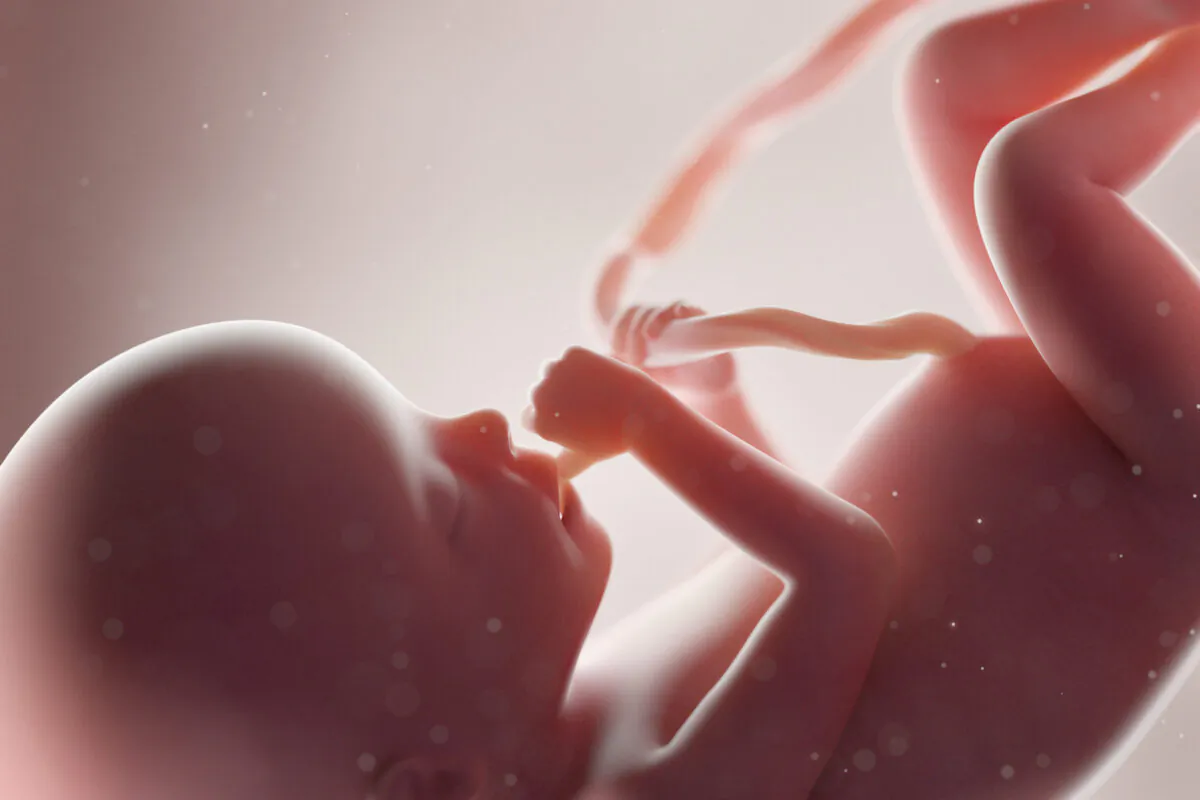
Even more serious is the devastation of human life wrought by the mainstream acceptance of abortion. This is another rotten fruit from Darwin’s tree. By effectively unseating the role of God as the Creator and denying the pan-cultural belief that human beings are in a divine image, the value of a human baby has been downgraded. A sense of spiritual obligation has been replaced by personal convenience.
As one writer said in the Harvard Crimson, “Viewed through Darwin’s prism, abortion can be seen as a tool that women use to increase their survivability, their ability to compete for limited resources, and even their ability to have greater future reproductive success.” This Harvard University writer laid bare the shallow materialistic perspective, supported by Darwinism, in which abortion flourishes.
It is no coincidence that the Soviet Union was the first modern nation to put its official stamp of approval on abortion in 1920; the communist superpower was begun by staunch Darwinists. As leading Soviet scientist Nikolai Vavilov said, “We are now raising the teachings of Darwinism to grand heights.”
Abortion advocate and founder of Planned Parenthood Margaret Sanger was also a big fan of Darwinism. She celebrated its rising, writing, “The heaven of the traditional theology had been shattered by Darwinian science.”
She also loved eugenics, the infamous controlled breeding of human beings used later by the Nazis. For Sanger, abortion was part and parcel of that control.
In 1920, she wrote, “Eugenics thus aims to seek out the root of our trouble, to study humanity as a kinetic, dynamic, evolutionary organism, shifting and changing with the successive generations, rising and falling, cleansing itself of inherent defects.” Basically, as a product of Darwinian evolution, human beings could continue that evolution through abortion—at least in Sanger’s mind.
Tennessee was the first U.S. state to repeal its ban on teaching evolution in schools in 1967, and the next year the U.S. Supreme Court declared all such bans unconstitutional. At the same time, U.S. states began repealing their bans on abortion in 1967. The timing was no coincidence.
Many women were having abortions before it was legalized, regardless of the law. But the practice was rightfully looked down upon, just as killing innocent adults is rightfully looked down upon today. Even before the first state ban in America in 1821, abortion was stigmatized and allowed only before the baby started moving (then commonly called “quickening”) in the second trimester.
Meanwhile, last year, an estimated 70,000 or more babies were aborted in America in the second trimester or later—likely after the baby was moving.
This is to say, something significant changed in the hearts and minds of Americans that brought them to a place where they were willing to allow something they had never allowed before—mainstream social and legal acceptance of abortion, even after the first trimester.
What changed is likely Darwinism and neo-Darwinism gaining traction. Not addressing gaping holes in these theories isn’t just intellectual laziness, it’s quite possibly aiding and abetting murder.
Views expressed in this article are the opinions of the author and do not necessarily reflect the views of The Epoch Times.
 Friends Read Free
Copy
Facebook
Tweet