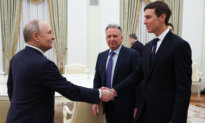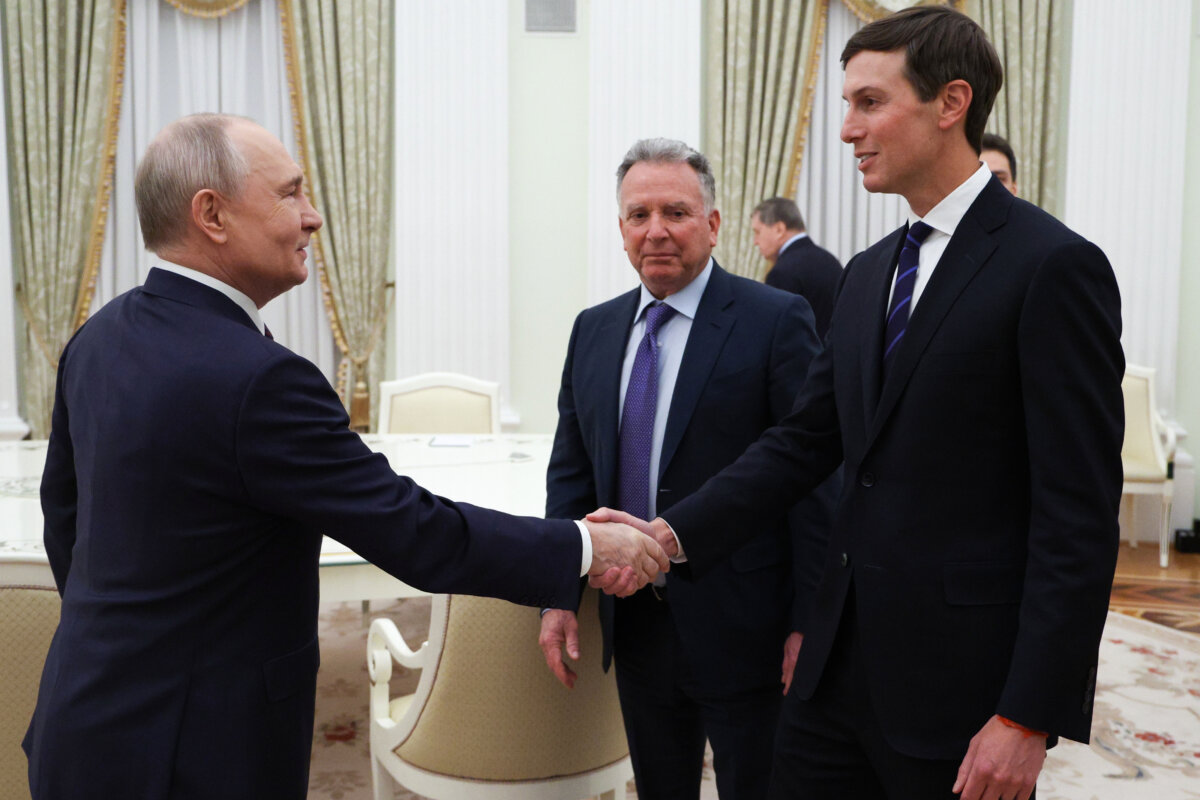
U.S. envoys Jared Kushner and Steve Witkoff met with Russian President Vladimir Putin in Moscow on Nov. 12 to discuss the Ukraine conflict.
The talks at the Kremlin follow two days of trilateral peace talks in Abu Dhabi, United Arab Emirates. Those talks wrapped up on Nov. 11, and Russia and Ukraine agreed in principle to a prisoner exchange.
Putin’s special envoy Kirill Dmitriev met Kushner and Witkoff at Vnukovo International Airport, on the outskirts of Moscow, and escorted them to the Kremlin.
Witkoff and Kushner flew to Dublin later on Nov. 12 for talks with Ukrainian President Volodymyr Zelenskyy.
Russia and Ukraine resumed bombing each other’s energy infrastructure last week, just days after a brief humanitarian ceasefire in Oleshky, which U.S. First Lady Melania Trump helped secure.
Kushner said the Abu Dhabi discussions, the first direct negotiations between Russian and Ukrainian delegations since February, were tough and substantive, touching on all relevant issues in the long-running conflict.
Speaking in Moscow, Kushner said the Russian and Ukrainian delegations in Abu Dhabi “agreed on many of the principles, but are still apart on some of the ways to accomplish” peace.
Kushner welcomed the prisoner exchange in a Nov. 11 post on X.
“Today we achieved an important humanitarian breakthrough, with Ukraine and Russia agreeing in principle to what will be the largest prisoner exchange of the war,” Kushner wrote. “This will reunite families, build trust, and create momentum toward peace.”
Zelenskyy told reporters in Denmark on Nov. 10 that negotiators were considering an exchange involving 1,000 or 1,500 people from each side.
A prisoner exchange was agreed in June 2025 during talks between Russia and Ukraine.
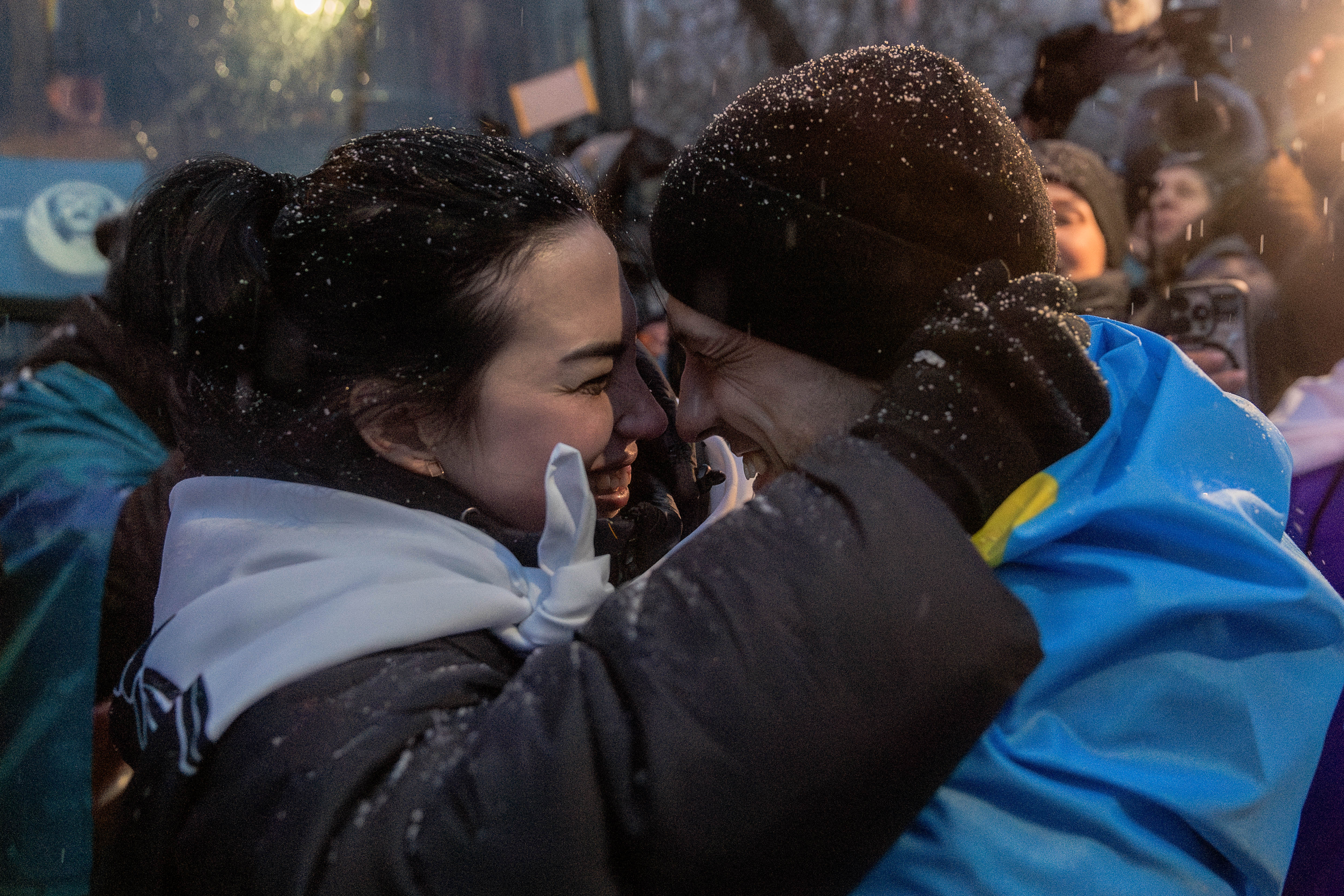 Olha Kurk-Malaeva (L) hugs her husband, Ruslan, a Ukrainian soldier who was captured during the defense of Mariupol in 2022, after he was released during a prisoner exchange at an undisclosed location in the Chernihiv region on Feb. 5, 2026. (Roman Pilipey/AFP via Getty Images)
A joint U.S.–Ukrainian–European statement said that participants emphasized that any future arrangements must respect sovereignty, territorial integrity, and independent decision-making and provide Ukraine with credible security guarantees.
On Nov. 12, Putin restated his position that the idea of sending European troops to Ukraine as a security guarantee after a ceasefire was “absolutely unacceptable” and that Russia would regard them as threats.
“In other words, the war would resume immediately,” Putin said.
After Russian troops invaded Ukraine in 2022, Putin repeatedly demanded that Kyiv accept Russian territorial claims over Crimea and the Luhansk, Donetsk, Kherson, and Zaporizhzhia regions.
In May 2025, U.S. Vice President JD Vance told defense leaders in Europe that Putin was “asking for too much.”
At the time, he said Putin had demanded that Ukraine surrender some territories that Russia had failed to occupy or capture.
Ukrainian forces continue to hold territory in the Donetsk, Zaporizhzhia, and Kherson regions, which Russia claims.
Zelenskyy Responds to Negotiations
Zelenskyy told reporters in Dublin on Nov. 12 that he knew very little about the negotiations between the United States and Russia.
“If someone in America is making a decision that basically treats Ukrainian territory as if it is not Ukrainian, then this tells us where things are going,” Zelenskyy said. “We need to be clear and never recognize Russia’s occupation of Ukrainian territory in any way.”
However, Zelenskyy later announced in an X statement that he met with Witkoff and Kushner in Ireland following the negotiations. He thanked them for “intensive communication” and said there were three outcomes to this week’s peace talks.
The Ukrainian president confirmed plans for the prisoner exchange, noting that Ukraine is “counting on the largest prisoner exchange since the start of this war.”
Zelenskyy also said future peace talks will involve European representatives, giving them “an equal seat at the negotiating table.”
“This is important for us because the war is in Europe. We will be a member of the [European Union] in the future,” he told reporters.
There are also plans for additional multilateral meetings following the negotiations in Abu Dhabi, Zelenskyy said.
“Diplomacy will remain active,” he wrote in the Nov. 12 statement.
On Oct. 9, Trump announced an agreement to buy diesel from Russia, as part of his effort to bring down fuel costs, which have risen sharply during the Iran conflict and as Ukrainian strikes against Russian energy facilities intensified.
Announcing the deal, Trump said that more than 300,000 tons of diesel would be shipped immediately and that another 500,000 tons were expected in November, followed by 1 million tons “immediately thereafter.”
At the time, Zelenskyy expressed his disappointment with Trump’s decision to agree to the Russian oil deal.
Dmitriev said on Oct. 22 that a similar deal to the Trump–Putin diesel agreement could be struck with the EU, if there were demand.
Reuters contributed to this report.
 Friends Read Free
Copy
Facebook
Tweet