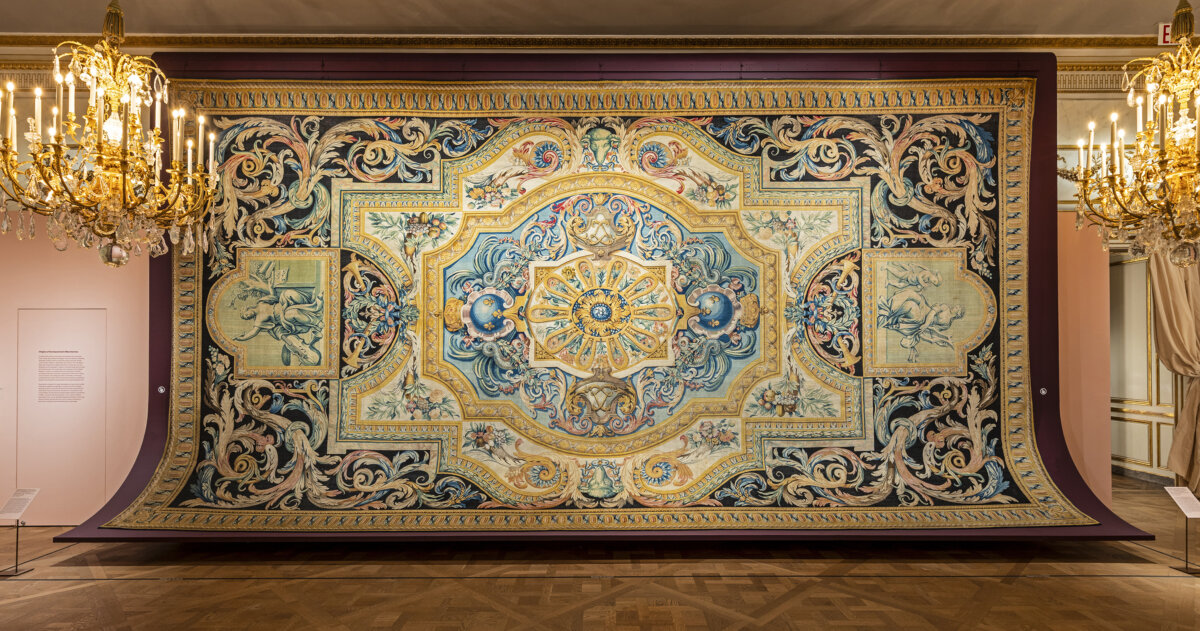
Step into the Metropolitan Museum of Art’s Wrightsman Period Rooms until March 5, 2028, and you will come across a stunning example of a cultural undertaking that exemplifies art’s ability to mold perceptions of authority, power, and myth. “A King’s Carpet: Louis XIV and the Savonnerie” is a small but sumptuous exhibition that presents the complicated and at times chaotic history of the largest carpet project ever commissioned.
The story began in 1668, when King Louis XIV of France and his chief minister, Jean-Baptiste Colbert, commissioned a huge carpet for the Grande Galerie of the Louvre Palace—a magnificent corridor that, today, leads tourists directly to the Mona Lisa. The court painter Charles Le Brun designed the carpet to cover 480 yards, and the extremely thick, luxurious rugs were meant to impress foreign ambassadors. In fact, although the project was meant to demonstrate France’s self-sufficiency, it depended entirely on wool imported from England and Wales.
In the end, the king lost interest in the Louvre and turned his attention to Versailles, so the entire set of carpets was probably never unrolled together. The project became a huge historical puzzle. To present this important history, the exhibition includes four complete carpets along with a private collection of surviving fragments.
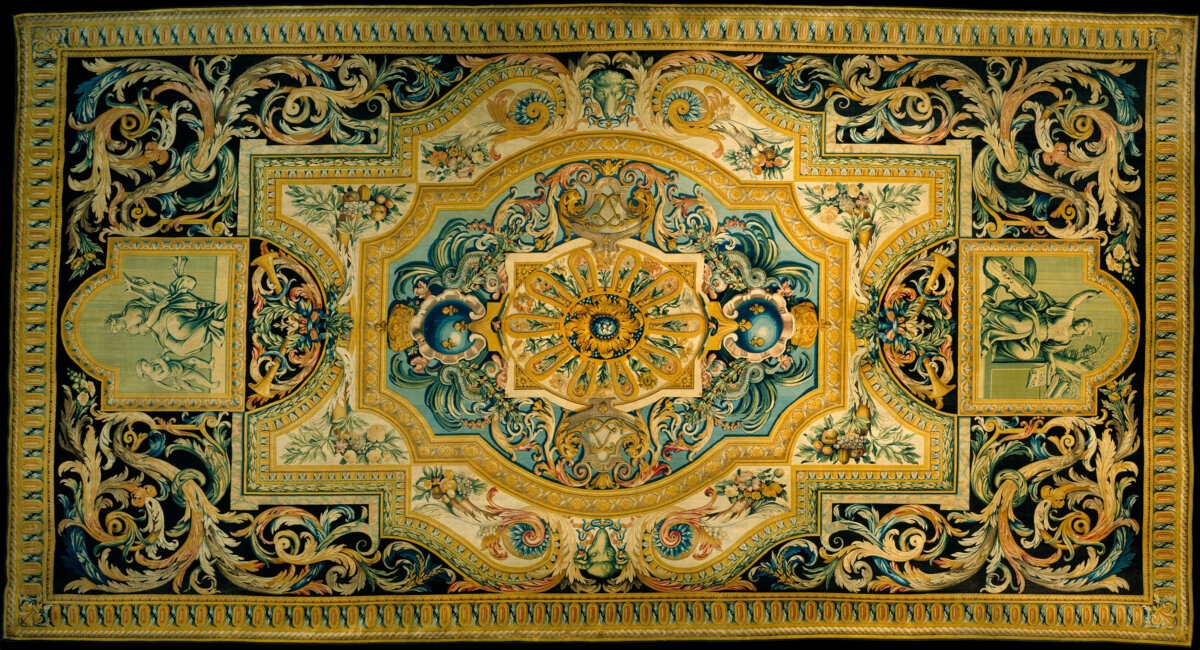
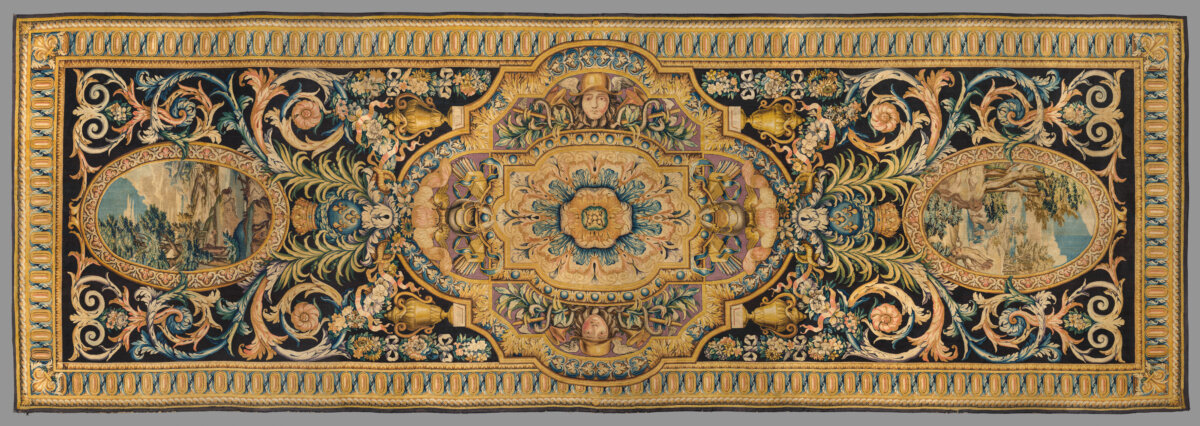
Before weaving the Grande Galerie carpets, the Savonnerie Manufactory created 13 carpets for the Louvre’s adjacent and shorter Apollo Gallery, whose decoration celebrates Louis XIV as the sun king. The enhanced scope and style of the Apollo carpets served as a trial run for the Grand Galerie endeavor. A spectacular circa 1664–1666 example from this series in both aesthetics and provenance is on loan to the exhibit from a private collection. This is the first time it has been shown publicly.
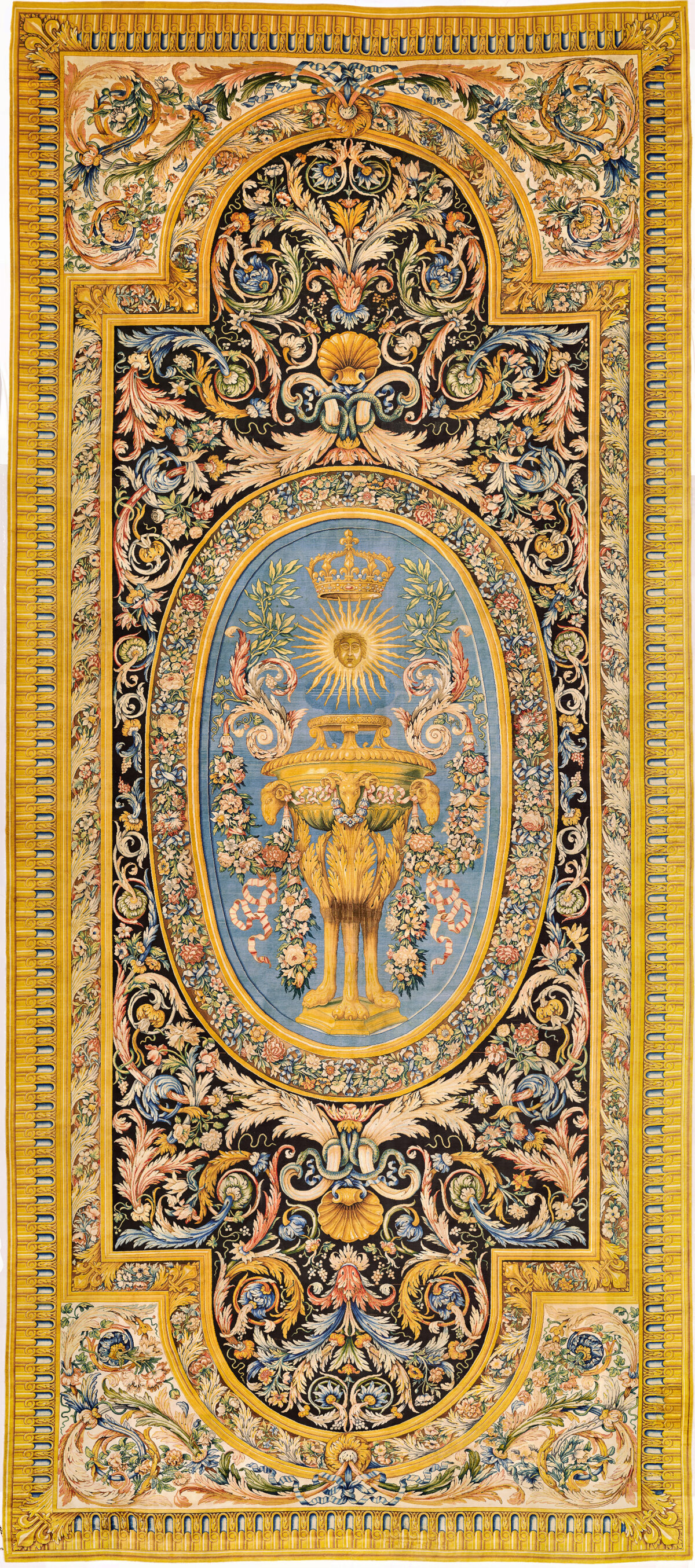
13 feet by 29 feet, 5 inches. Private collection. (Courtesy of the Metropolitan Museum of Art)
In 1785, Queen Marie Antoinette used this carpet for temporary game rooms that she had built. At The Met, it is happily situated in a Wrightsman Room that contains pieces of furniture that the queen also owned. Subsequently, this carpet was in the collection of the Rothschild family. Arbiters of taste, the Rothschilds’ appreciation of Savonnerie carpets created a renewed interest for other elites to incorporate them in their interior decoration.
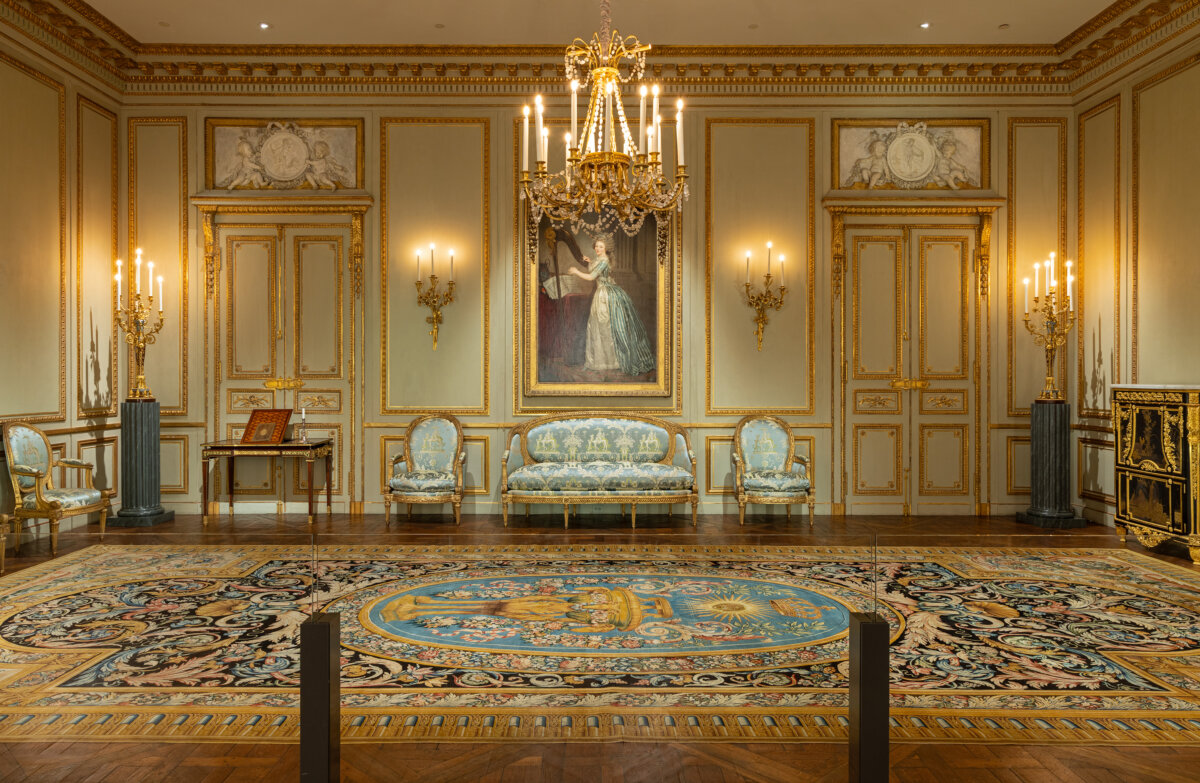
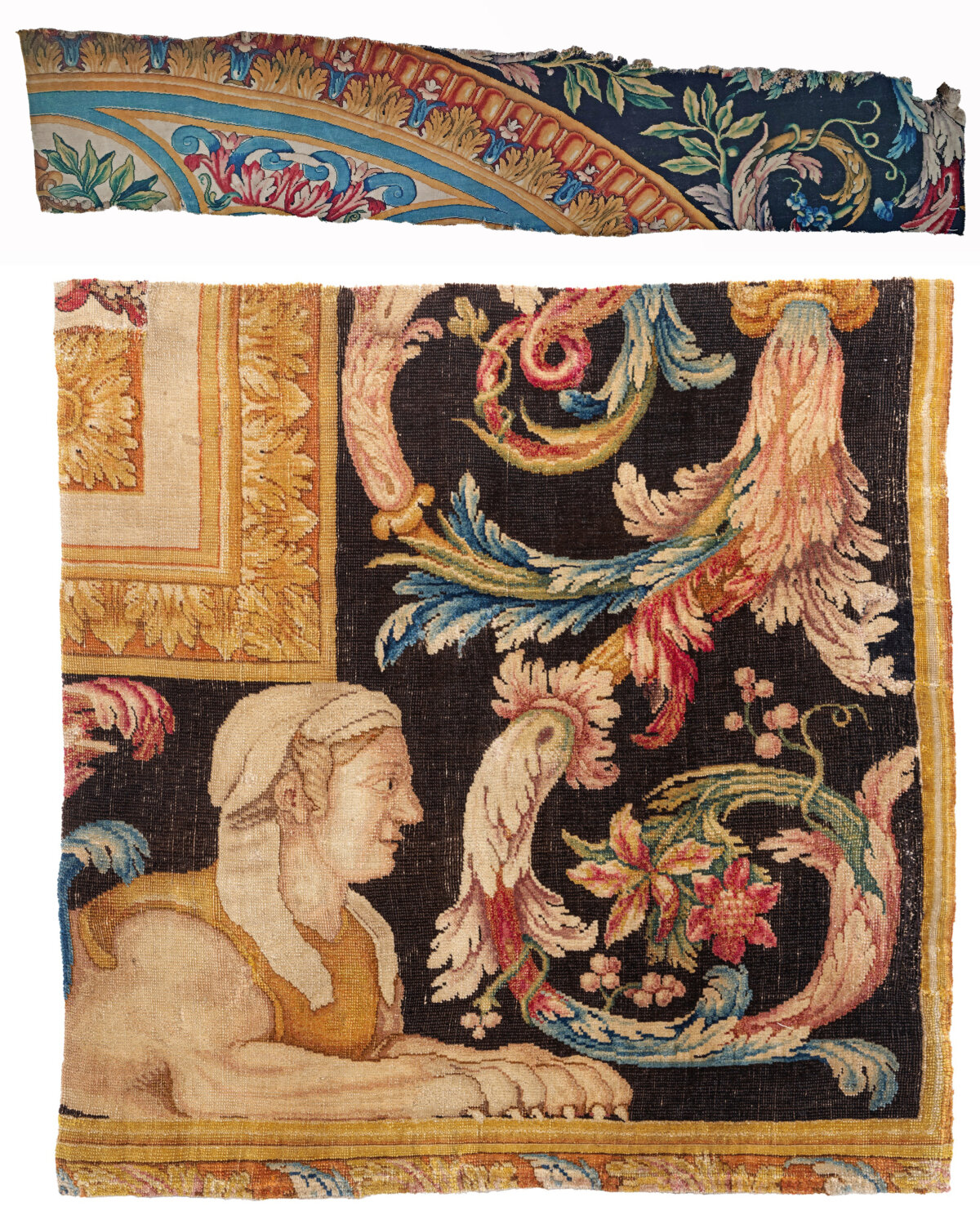
Although the exhibition includes smaller trial-run textiles, such as an early floral Louis XIII carpet and a rare carpet that Queen Marie Antoinette used in her private game rooms, the core of the show are two Grande Galerie carpets with astonishing, internationally extensive backgrounds.
‘Fame and Fortitude’
Grande Galerie Carpet No. 38, “Fame and Fortitude” was the first carpet from Louis XIV’s major undertaking to reach the United States, and before it crossed the Atlantic, it had passed through the elite hands of both the chief minister of Louis XVI and the king’s aunt because of its French origins. The descriptive title of the carpet derives from the imagery at its narrow ends: the personifications of fame, blowing a trumpet, and fortitude, with a lion and a column.
In the 1880s, American millionaire Alva Vanderbilt bought the carpet to feature in the grand ballroom of Marble House, her famous Gilded Age mansion in Newport, Rhode Island. After going through a dramatic divorce, she tried to sell the carpet to Mrs. Widener, another leading figure in high society based in Philadelphia. However, the sale fell through because Mrs. Widener had just bought a different Grande Galerie carpet herself.
In the 1920s, Alva sent the carpet back to France for her daughter Consuelo, the newly divorced duchess of Marlborough. The carpet made one more crossing across the Atlantic in 1949 when the collector Samuel H. Kress bought it. His foundation gave it to The Met after his death. Today, visitors can see conservators repairing the carpet’s centuries of wear and tear in a temporary conservation studio inside the gallery.
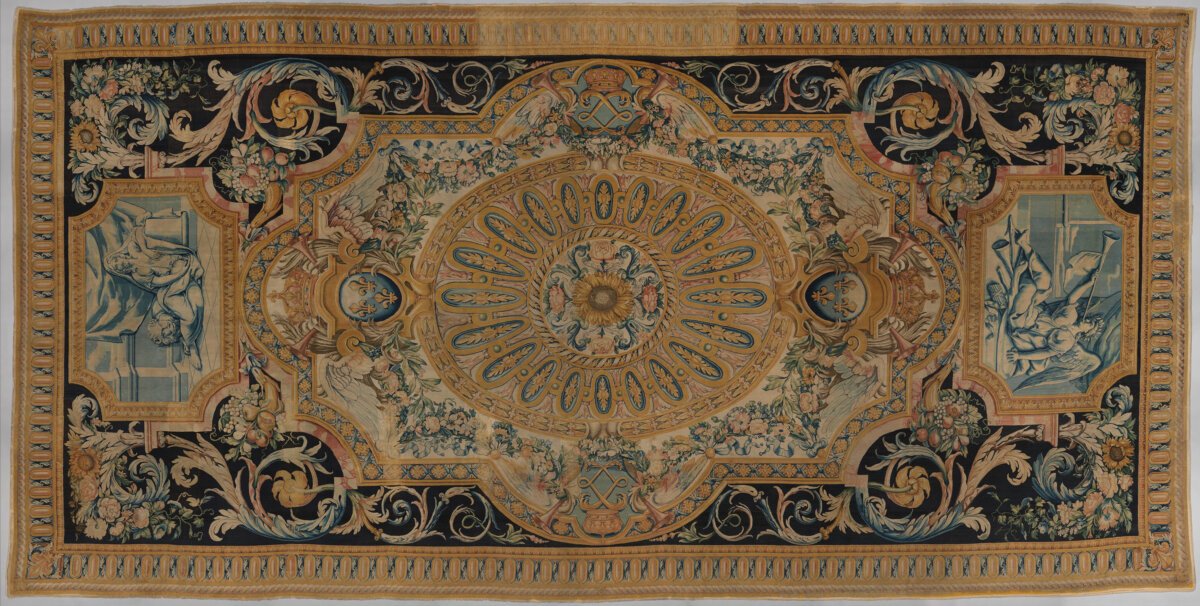
‘Music’
Because the carpet is too large for Wrightsman Period Rooms, The Met has hung the “Grande Galerie No. 11 Carpet: ‘Music'” on the wall like a tapestry. This piece was woven at the end of the project and features symbolism associated with music: The carpet displays the figures of Euterpe, the muse of music, and Erato, the muse of erotic lyrical poetry. These were muses of Apollo, the sun god, a symbol of Louis XIV, the Sun King. Erato is accompanied by a cupid playing the trumpet.
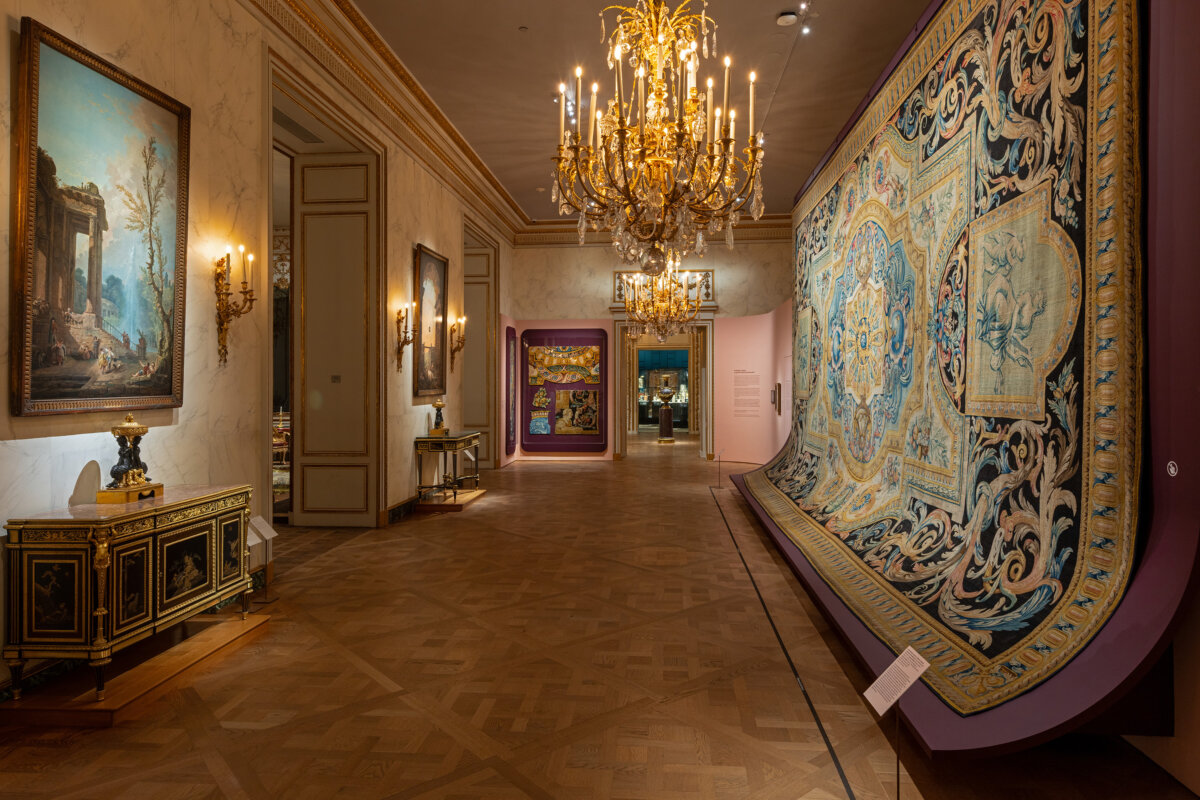
In 1715, Louis XIV gave this carpet as a splendid diplomatic present to the ambassador from Persia. Although the ambassador left France that year by sea, he suffered severe, persistent seasickness and had to abandon his sea route altogether, so he changed his journey and went overland, hauling the huge, heavy carpet through St. Petersburg and Berlin.
When the diplomat arrived in Gdansk, bandits attacked his caravan and stole half of his diplomatic goods. To raise money for the rest of the way home, the ambassador, stranded and without funds, had to sell the remainder of his cargo. The enormous carpet disappeared from sight until 1914, when it unexpectedly reappeared in a private collection in Germany. Mrs. Herbert N. Straus (the heir to the Macy’s fortune) later purchased it for her Fifth Avenue mansion but never used it after her husband died prematurely. She sold it to The Met in 1952.
A Royal Jigsaw Puzzle
What became of the rest of Louis XIV’s grand plan? The French Revolution permanently scattered the carpets, breaking up the original project. The new government sold many of the carpets to pay off the nation’s debts, although later rulers such as Napoleon I tried to get them back.
Today, the Mobilier national in Paris maintains about 40 of the surviving textiles and has used them to furnish important government buildings such as the Elysée Palace. Having miraculously withstood centuries of foot traffic, 32 of the scattered carpets came together for a major exhibition in Paris in February 2026—their biggest reunion since they were displayed when the Treaty of Versailles was signed in 1919.
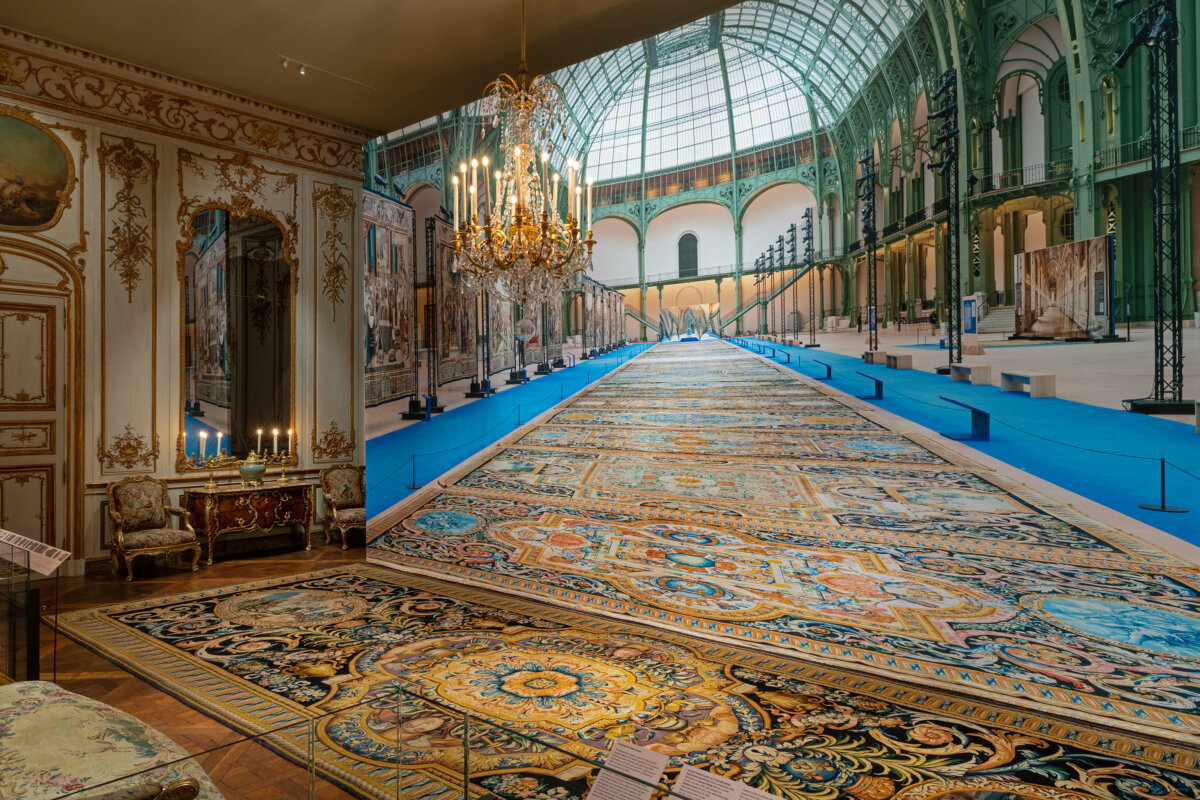
However, the carpets’ royal history has a troubling human side: The manufactory employed orphaned children and adolescents, selecting them for their sharp eyesight and quick fingers. As art historians prepare a new monograph on the Savonnerie manufactory for publication in 2027, The Met’s current exhibition offers a tantalizing glimpse into this unique chapter in art history.
What arts and culture topics would you like us to cover? Please email ideas or feedback to features@epochtimes.nyc.