



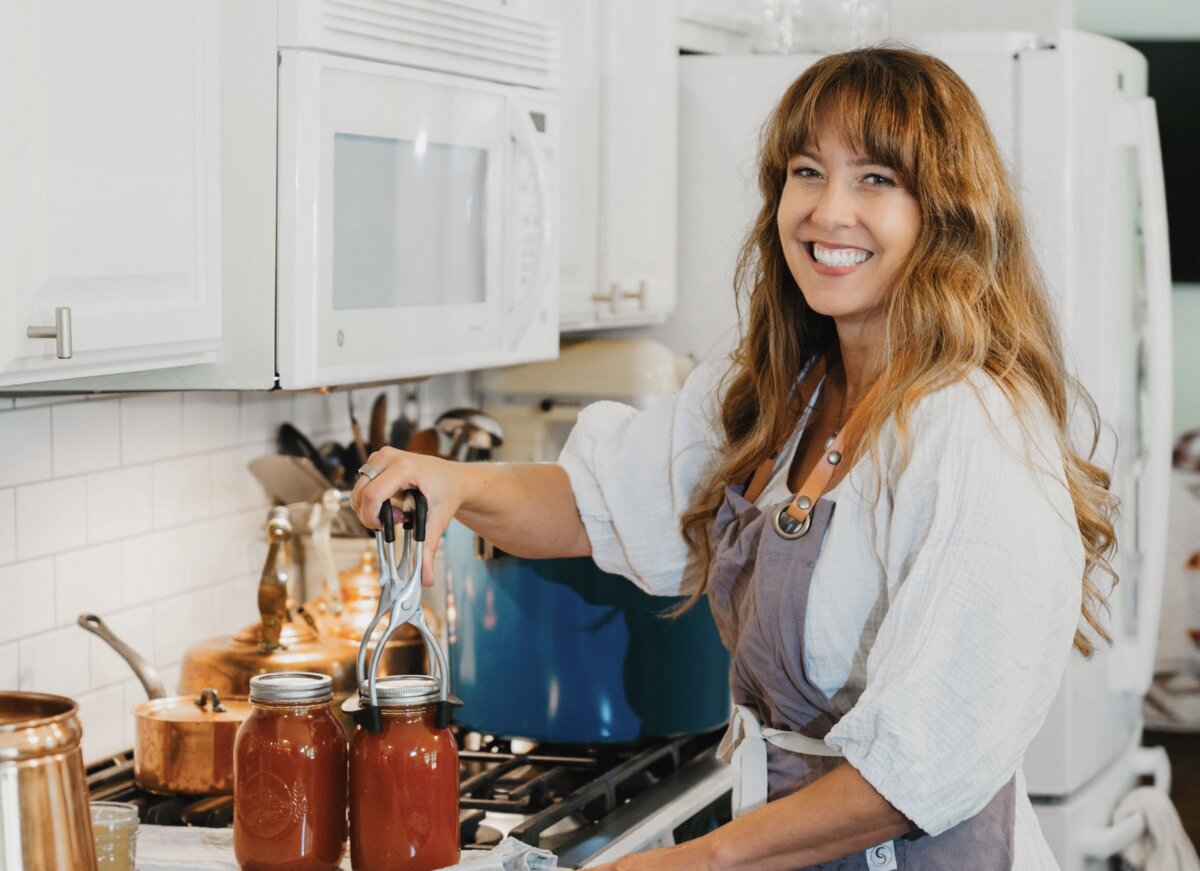
Melissa K. Norris’s family has lived in the rural foothills of the Cascade Range in northwestern Washington state for five generations. One of 10 kids, Norris grew up reading Laura Ingalls Wilder books, growing vegetable gardens, watching cattle graze the back pastures, and canning preserves with her parents and grandparents.
“The jiggle of a pressure canner was the background music of summer for me,” Norris said. She recalls picking blackberries in August. “My mom would make blackberry jelly and syrup for pancakes or ice cream.” In the fall, “we’d get apples from the orchards and make applesauce, apple butter, and apple pie filling. I just thought that all people did that. It wasn’t until I was in high school and visiting friends’ houses for dinner that I realized: ‘Oh, not everybody does this.’” After high school, Norris started work as a pharmacy technician, got married, and had children. She continued to garden and make preserves, but her busy schedule caused her to slide into the trap of using convenience items. “[Using] taco seasoning makes you feel like you’re cooking from scratch, but you’re not really,” she said.
A cancer scare in 2008 was a wake-up call for Norris. She’d been experiencing chronic heartburn, and the high doses of medication she’d been taking had caused lesions in her esophagus and stomach lining. Though they were benign, her doctor informed her that she needed to make a radical change to her diet in order to control the heartburn without the damaging medication. So Norris threw away all the processed foods in her house and dove back into the traditions her family had been practicing for generations. “We probably quadrupled the size of our garden, and I went from preserving a year’s worth of green beans to [making] all of our jam, jelly, pickles, and sauce. There’s almost nothing in my pantry that’s store-bought,” Norris said.
She would eventually swap out her pharmacy career for one as a local newspaper columnist, blogger, and radio host. Originally called “Pioneering Today,” Norris’s blog would eventually become a pivotal hub of information for the burgeoning interest in homesteading that was taking place in the 2010s. Today, her blog and YouTube channel serve thousands of readers and viewers.
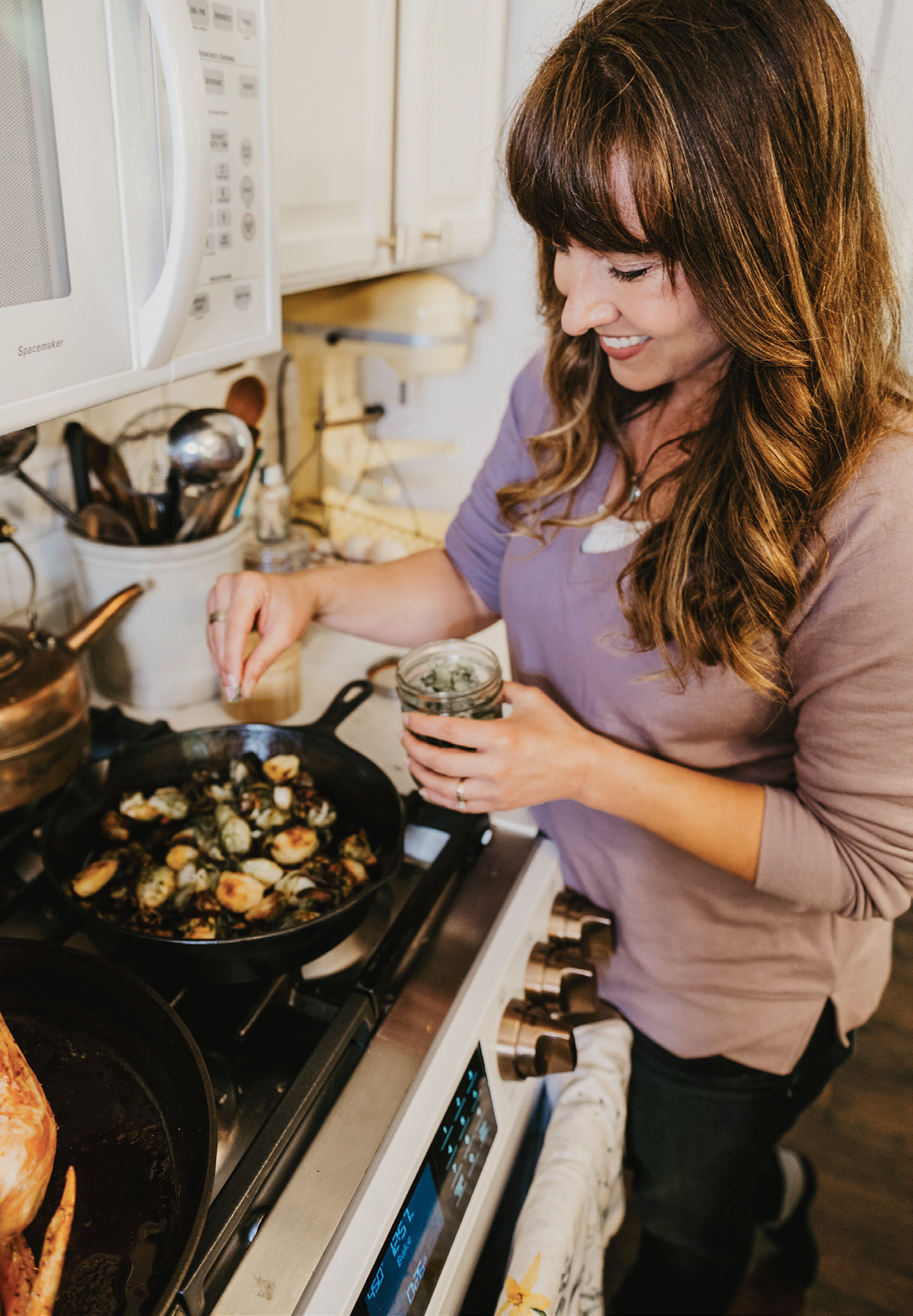 At her homestead in Washington state, Melissa Norris enjoys making food from scratch and tending to her farm. (Suzy Holling)
The Canning Season
Though she comes from a long line of homesteaders, Norris will be the first to tell you that “it’s not a requirement.” “Honestly,” she said, “canning is something you can do no matter where you live. So long as you have someplace where you can operate a stovetop, you can can food.” On her Washington homestead, Norris’s canning season runs from summer to fall, when the vegetables and fruit in her garden are ready to be harvested. Canning seasonally fresh produce is key because it starts losing nutrients the moment it’s picked. The sooner the fruits or vegetables are processed, the more nutrients are retained, yielding a more flavorful result. Fall and winter are traditionally when she processes beef, pork, or chicken, as well as fall produce like squash, pumpkins, apples, or any frozen fruit that she didn’t have time to can in the summer.
Apart from canning produce you grow yourself, you can also buy seasonal vegetables and fruit in bulk from a nearby farm or local grocery store and then can the surplus. “It’s going to have more nutrients than something that’s been shipped across the country. Plus, buying in bulk means you end up saving more money per pound. Once it’s canned, your food is shelf-stable, so you don’t have to worry about power outages or your freezer dying,” Norris said.
Preserving the Past and the Future
To Norris’s mind, learning to preserve your own food is not just about eating healthier or having food readily available in your pantry. It’s also about holding onto traditions that have allowed communities to be self-sufficient for generations. “I think there’s a danger in today’s society of losing these skill sets. It’s important that we keep them alive for health and frugality, but there’s something so beautiful about getting a group of people together to work and exchange stories and knowledge. I think we really need that in-person fellowship,” Norris said.
There’s also a more personal reason she wants to keep these traditions alive. She shared an anecdote about her late father-in-law. Soon after her marriage, “he asked if I knew how to make mustard pickled relish. I’d never heard of it before. So, I told him if he got me a recipe, I would happily make some. Well, my husband’s grandmother was cleaning out stuff and found the old family mustard pickled relish recipe tucked away in a book. So she gave it to me and I loved it.” It became tradition for Norris to make the dish for her father-in-law for Christmas and family functions. When he passed away, Norris made preparations for the funeral dinner and was thinking of what to serve. “I thought that I was all out of mustard pickle relish for the year, but I found one last jar on our pantry shelf. And so I got to serve him mustard pickles one more time. For me, canning food is as much about remembering people you love as it is about passing on the skills to future generations.”
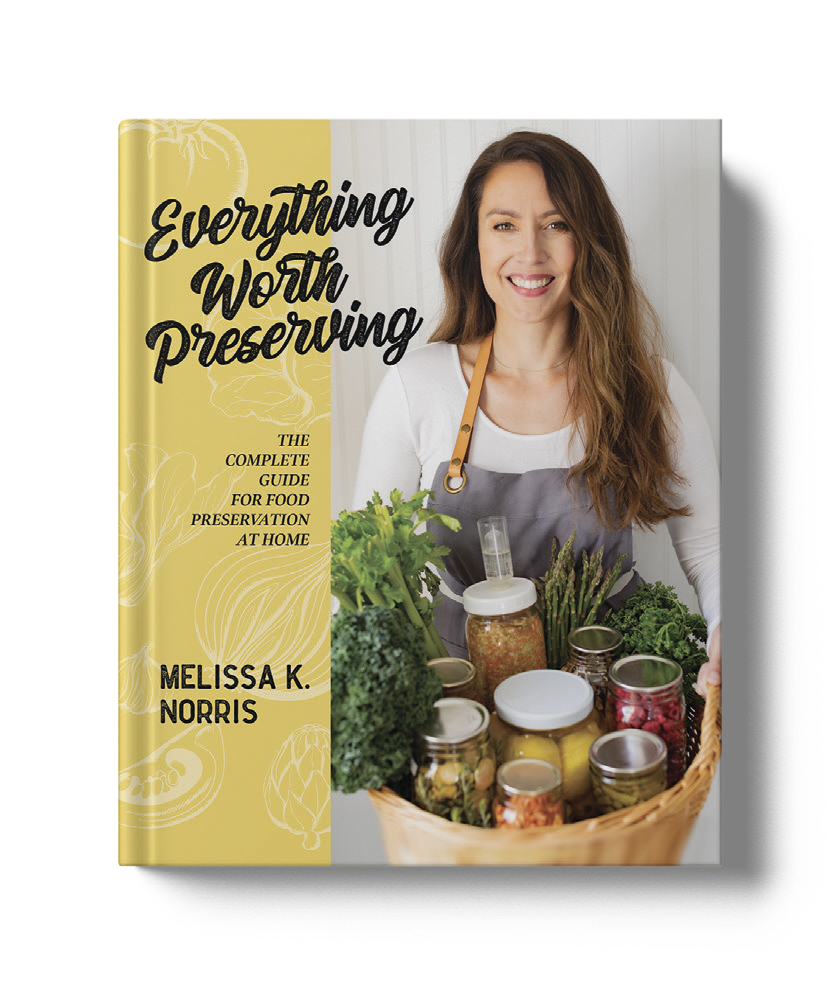 Norris published a book in 2023 with recipes and tips on how to do food preservation year-round. (Suzy Holling)
Canning for Beginners
Water bath/steam canning
What is it: a method of preserving food by submerging canning jars in boiling water or having them enveloped in trapped steam. Botulism spores, which occur naturally in soil and can be carried in vegetables and fruit, are killed off by the acidity and high temperatures.
Good for: foods with high acidity, meaning a pH level of 4.6 or lower. Can make pickles, jams, jellies, canned peaches or canned pears. Tomato recipes can be cooked with lemon juice, vinegar, or citric acid to ensure enough acidity.
Method: Use any large boiling pot, so long as the jars are kept off the bottom of the pan. This can be done either with an inserted rack or some spare canning rings placed along the pot base. This prevents the jars from rattling against the pan, and it allows the heat to circulate evenly.
Pressure canning
What is it: a method of preserving by building up pressure inside a chamber so it can reach the 240 degrees Fahrenheit required to kill botulism spores.
Good for: foods that are not acidic, such as meat, chicken or beef broth, and non-pickled vegetables like green beans, carrots, beets, and certain squashes.
Method: requires specialty equipment, usually a large, sealed pot specifically for canning.
This article was originally published in American Essence magazine.
