The history of show business is not lacking in tales of great stars who self-destructed. One of the most prominent examples was John Barrymore. His talent shone brightly in the 1920s and early 1930s before years of reckless behavior destroyed his health and fueled his death in 1942 at age 60.
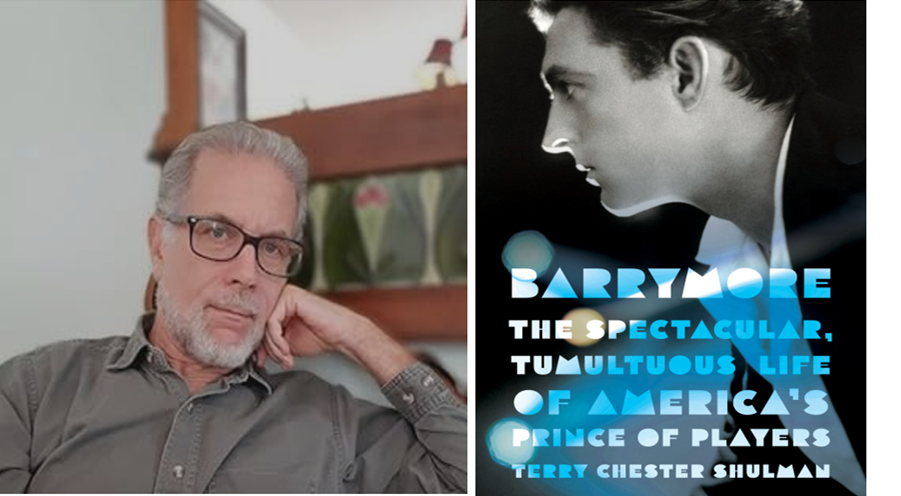
Terry Chester Shulman’s biography “Barrymore” offers a sympathetic but lopsided consideration of the actor’s life. Anyone who reads this book will come away with a valuable lesson on how not to embrace a meteoric rise to fame and fortune.
A Theatrical Dynasty
He was born John Sidney Blyth on either February 14 or 15 in 1882 (his family disputed the exact date of birth). His father was Herbert Blyth, a British actor who performed under the name Maurice Barrymore; his mother was Georgiana Drew, a member of a notable theatrical family. John was their third child, following brother Lionel and sister Ethel. All three siblings were forcibly encouraged to follow their parents’ lead and become actors.
Barrymore’s formative years were painful and traumatic. His family toured in theatrical productions. He was shipped off to boarding schools, thus depriving him of a solid home for his upbringing. His mother died when he was 11, and his relationship with his father was without love. He developed a drinking problem in his teens that plagued his adult life.
His widower father remarried to actress Mamie Floyd, and Barrymore claimed he lost his virginity to Floyd when he was 15. Barrymore never enjoyed a stable romantic relationship, marrying four times and having multiple lovers.
Although he initially sought a career as an artist, his father steered him into acting at age 18. His good looks and the Barrymore name helped create near-instant stardom as a light leading man.
A Bold Shakespearean
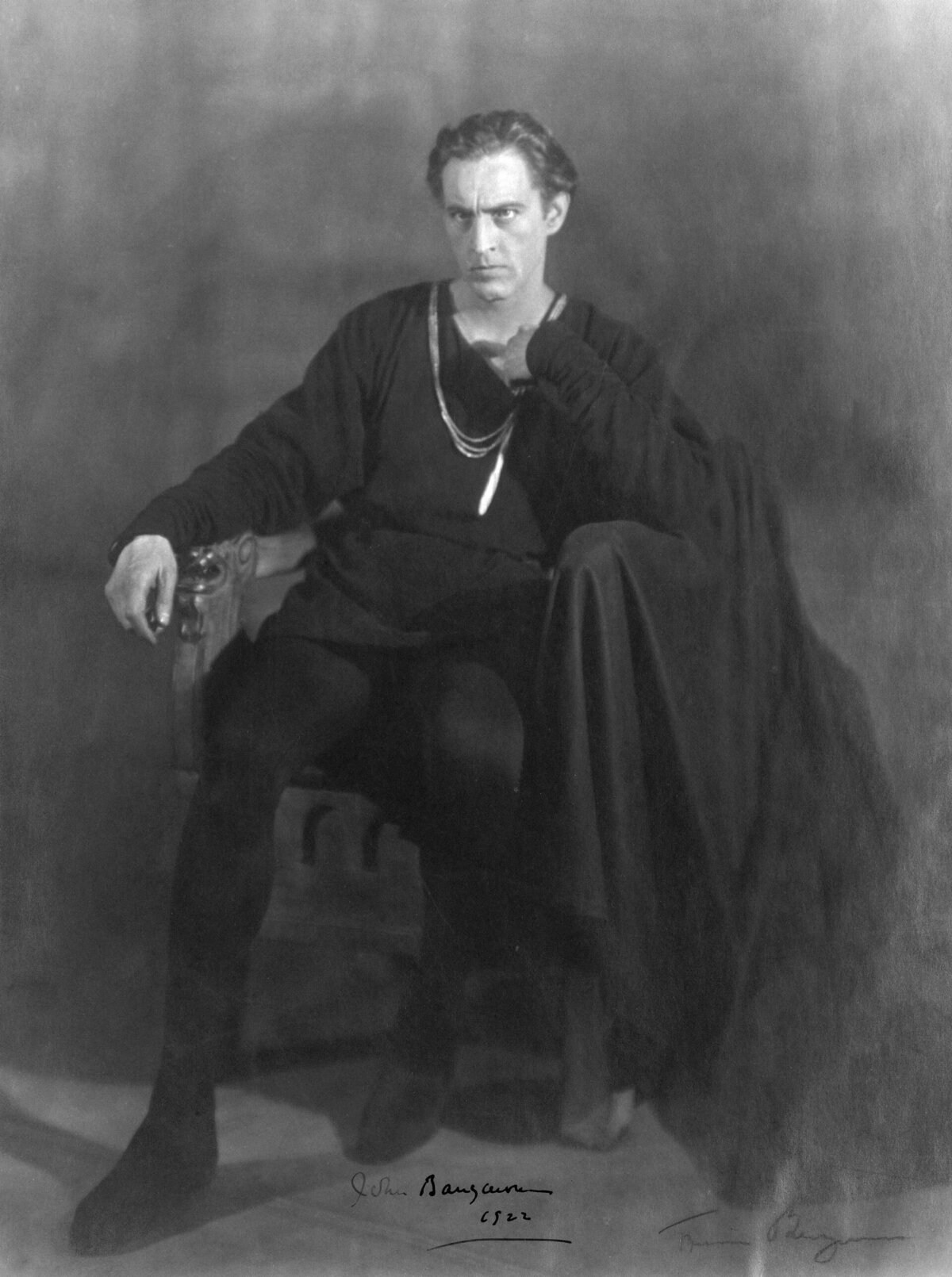
Barrymore’s elevation from pleasant matinee idol to serious actor began in 1920. Shulman wonderfully describes how Barrymore undertook intensive study under voice trainer Margaret Carrington. She helped to turn his “furry” voice into a “medium of easy and beauty” to play the title role in a Broadway production of Shakespeare’s “Richard III.”
Two years later, he raised the ante in “Hamlet,” offering a startling performance that deviated from the overripe theatrics often associated with the role.
“Unlike his predecessors, the words weren’t statically uttered or accentuated with stock gestures,” Shulman writes. “Realistic pauses, accompanied by natural, fluid movements, made the difference.”
Barrymore would repeat this performance in a 1925 production staged in London’s West End. Among those who attended this “Hamlet” were young Laurence Olivier and John Gielgud. They would use Barrymore’s interpretation to guide their later performances of the role.
Big Screen Stardom
Barrymore’s Shakespearean triumphs came while he was also appearing in prestigious silent films, notably the 1920 “Dr. Jekyll and Mr. Hyde” and the 1926 “Moby Dick” adaptation “The Sea Beast,” playing Ahab. He headlined the 1926 “Don Juan,” which made history as the first silent feature film released with a synchronized music and sound effects. His bold presence made him an audience favorite.
With the of sound in filmmaking, Barrymore permanently relocated to Hollywood. Shulman details the actor’s initial West Coast triumphs, including starring roles in A-list films, such as “Svengali” (1931), “Grand Hotel” (1932), “Dinner at Eight” (1933), and “Twentieth Century” (1934).
But Barrymore’s heavy drinking and chain smoking began to damage his health, while his erratically prankish behavior aggravated producers. When Metro-Goldwyn-Mayer assigned him the part of Mercutio in its 1936 version of “Romeo and Juliet,” studio executive Irving Thalberg had to be called to the set to force an irascible Barrymore into delivering his lines properly. The actor’s reputation sank to a point that 20th Century Fox studio chief Darryl F. Zanuck refused to take Barrymore’s phone calls.
A Sad Decline
The old spark of Barrymore’s genius emerged unexpectedly in radio appearances from the late 1930s, where he brilliantly recited scenes from Shakespeare, sometimes in collaboration with Orson Welles. But too many of his later film roles were in forgettable B-movies, sometimes as self-parodies in which he played a washed-up actor.
Shulman has a difficult task of trying to make Barrymore an agreeable character. Not unlike many self-destructive people, the actor had great charisma and wit. Yet he constantly tested the patience of those who continued to believe in him, even after common sense dictated that he was a lost cause. Shulman effectively calls out the circle of enablers who helped steer Barrymore to wreckage.
While going into great depth on the actor’s personal struggles, the author winds up giving too brief insight into much of his professional life. As a result, large chunks of the actor’s Hollywood output are mentioned in passing, most notably, the 1933 Technicolor test footage of Barrymore for a potential “Hamlet” film. Other aspects are omitted, such as Bette Davis’s failed attempt to get Barrymore cast by Warner Bros. in the film version of “The Man Who Came to Dinner.”
Ultimately, “Barrymore” serves as a harsh reminder that fame and fortune cannot protect those who fail to respect themselves and the wider world. It is a sad but effective biography.
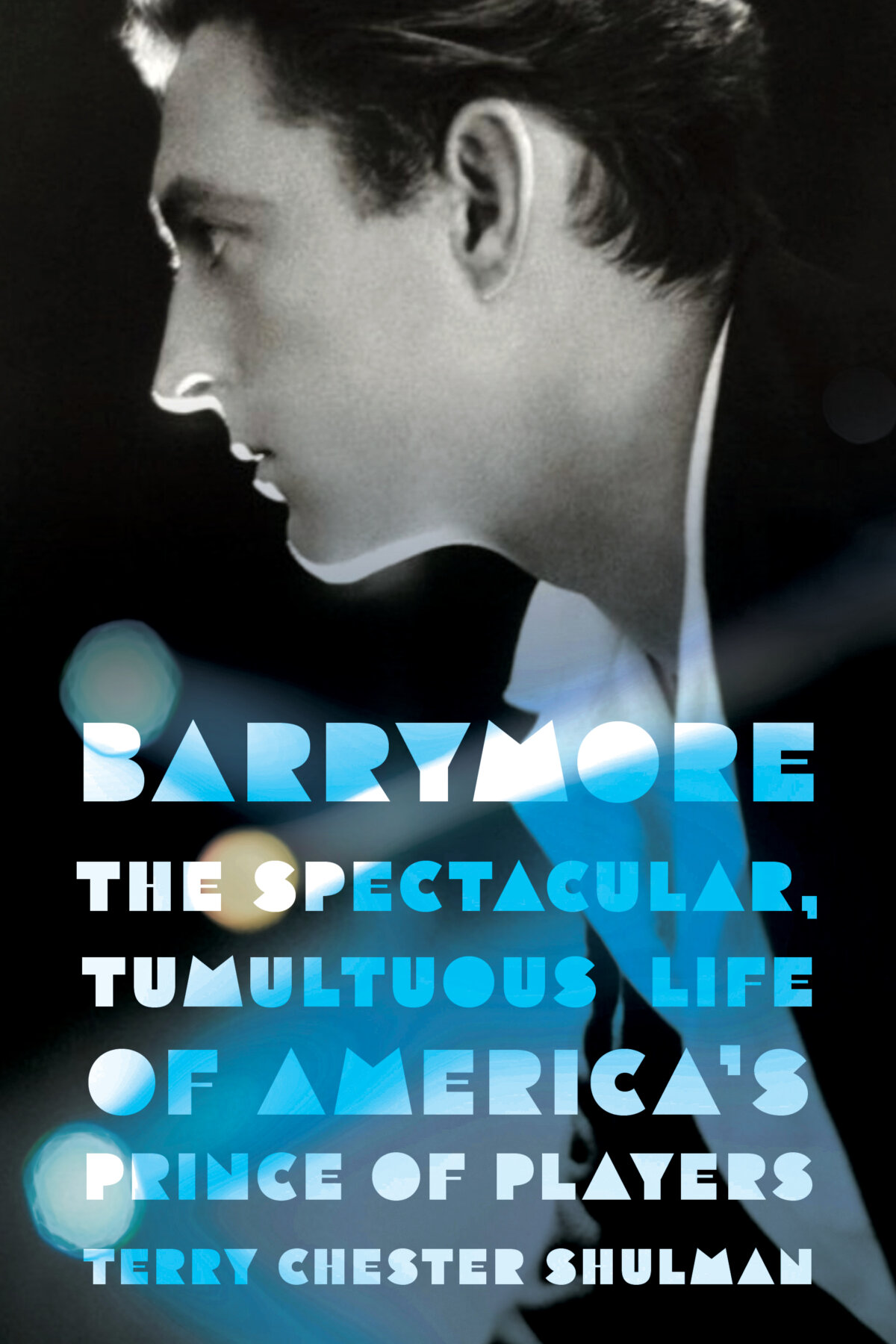
‘Barrymore: The Spectacular, Tumultuous Life of America’s Prince of Players’
By Terry Chester Shulman
University Press of Kentucky: July 21, 2026
Hardcover, 448 pages
What arts and culture topics would you like us to cover? Please email ideas or feedback to features@epochtimes.nyc