



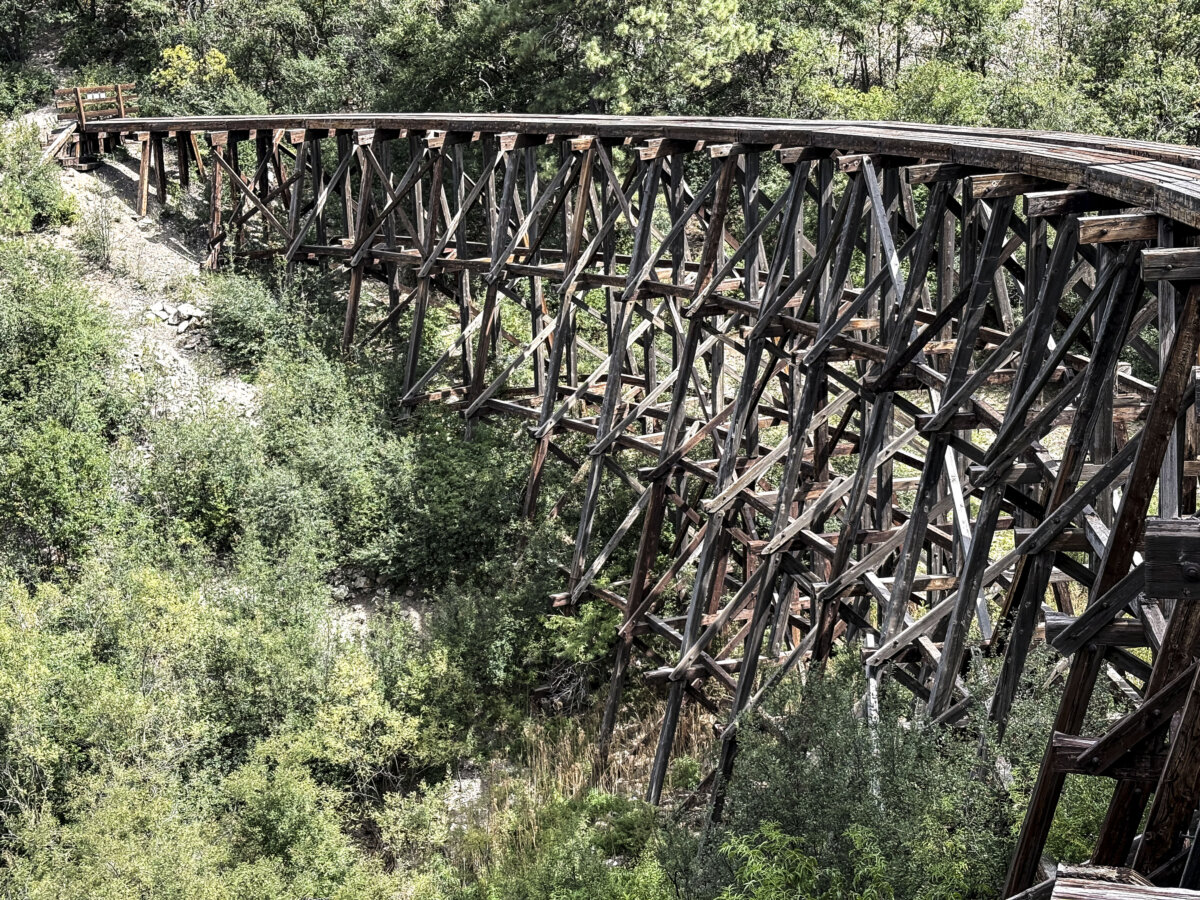
When the railroad system opened up vast western territories for commerce and travel to the densely populated eastern United States, laying track through rocky, mountainous areas became a challenge for engineers. Yet, tenacity, ingenuity, and hard work helped them build train routes in regions that seemed impossible to traverse.
In 1899, a 32-mile section of railroad track in rural New Mexico opened. It connected Alamogordo, New Mexico, to the Sacramento Mountains. That is, trains rose from the flat, desert Tularosa Basin, near what is now White Sands National Park, to the thickly forested mountains surrounding the small town of Cloudcroft. Referred to as “The Cloud Climbing Railroad,” trains climbed in elevation around 4,100 feet from the basin to the forests, replete with Douglas firs and Pondarosa pines. The trees’ predecessors were logged to construct the older homes and businesses in Alamogordo.
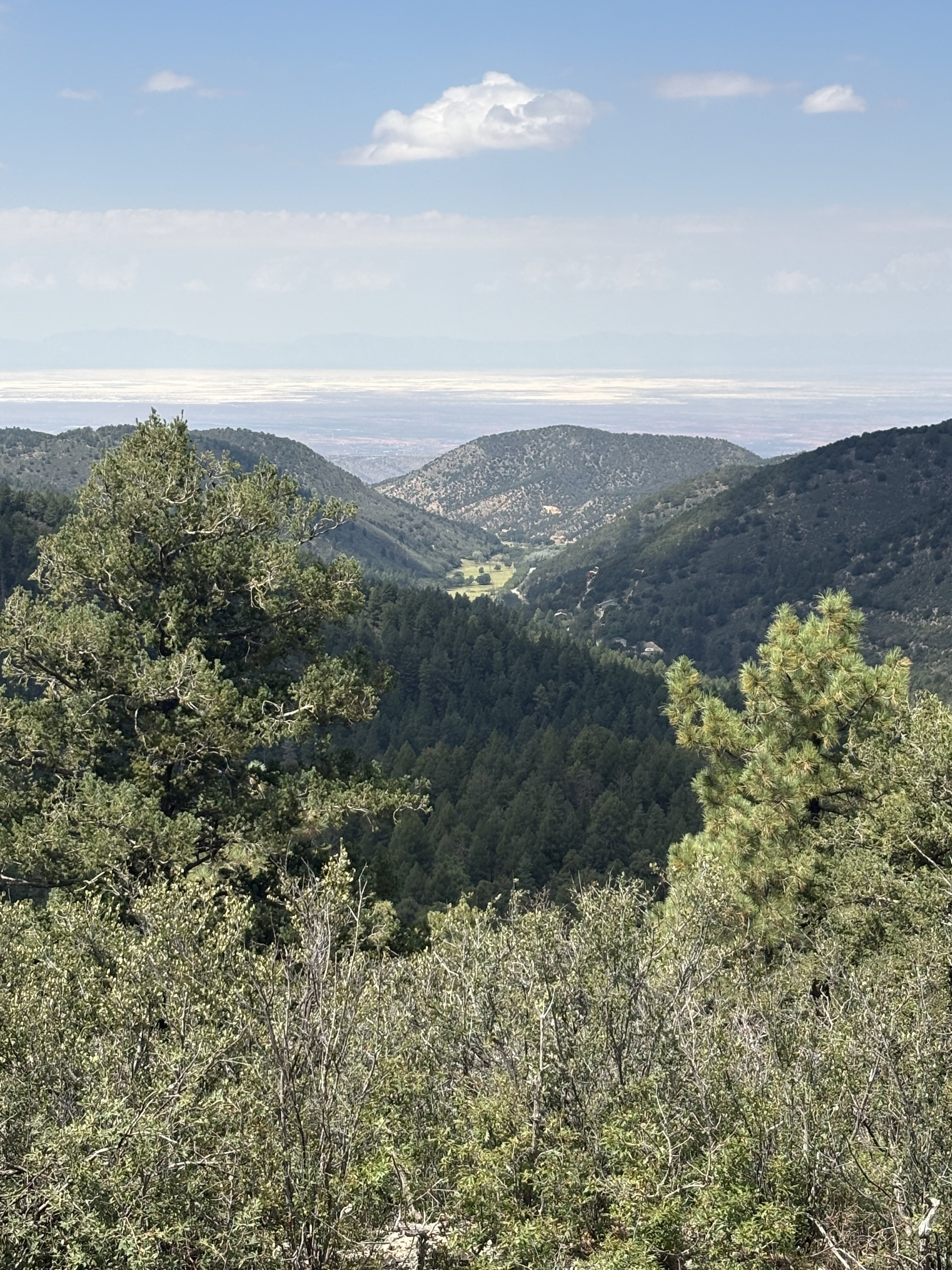 The view from Cloudcroft, N.M. to Alamagordo and the White Sands National Park beyond. (Deena Bouknight)
Since the temperatures between the basin and the mountains can differ by 30 to 40 degrees Fahrenheit, residents used the train route to escape the oppressive heat, especially in the summer months. As a result of this trainline, Cloudcroft grew primarily into a resort town.
To navigate the many canyons between Alamogordo and Cloudcroft, railroad engineers designed and laborers built multi-tier wooden trestle bridges. The rail system ceased operating in 1947, when automobiles made the journey easier, and many of the elaborate trestle bridges deteriorated and collapsed.
However, in Cloudcroft, one of more than 50 trestle bridges has been restored. It is the largest 19th-century trestle bridge still standing in the Lincoln National Forest.
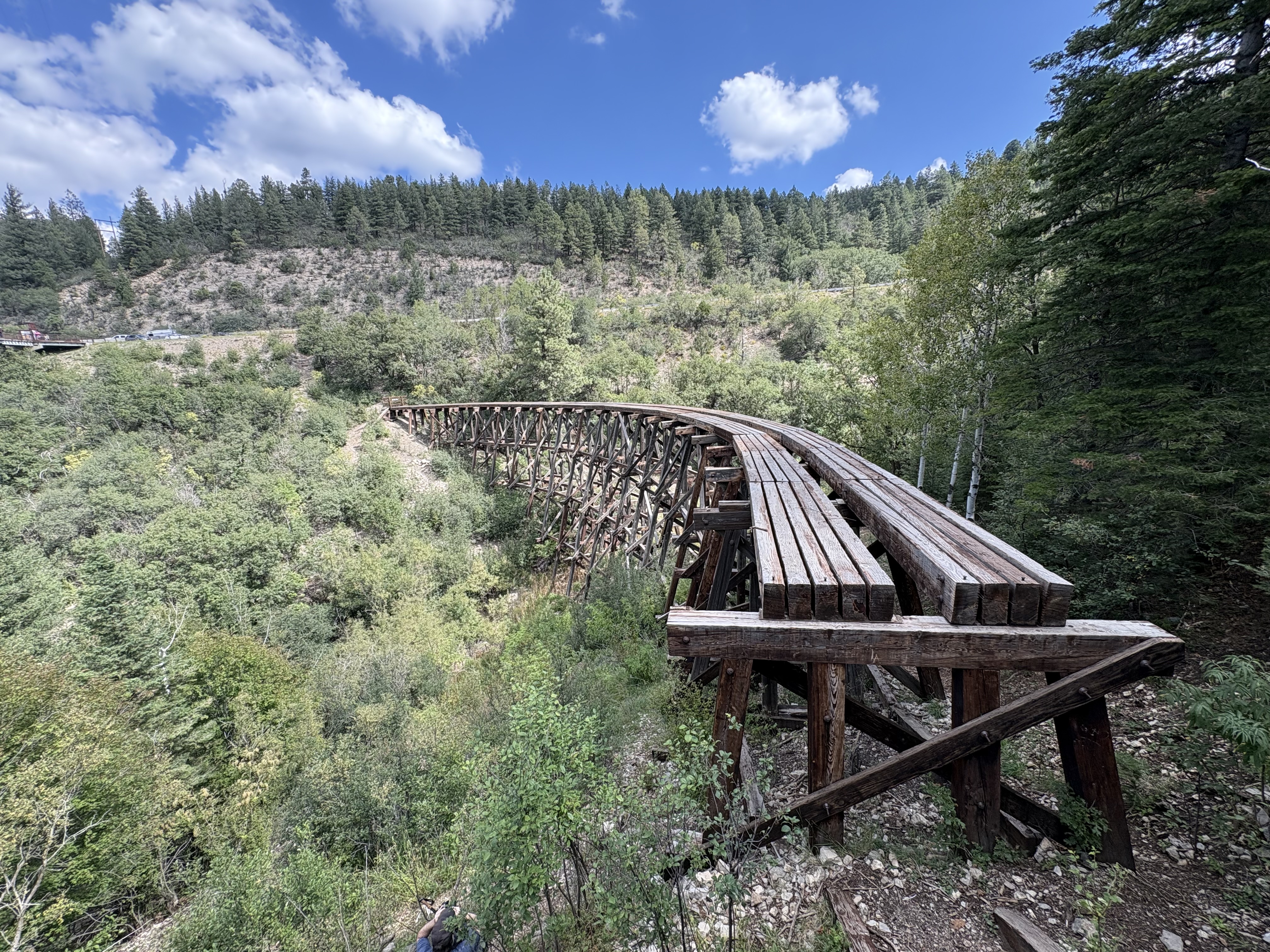 View of the trestle bridge from one end. (Deena Bouknight)
Visiting the Trestle Bridge
While travelers can park at an overlook to view the structure, a more informative way to experience history off the beaten path is to hike the Cloud Climbing Trestle Trail (called Mexican Canyon Trail on AllTrails). Along the wide, well-marked fir and pine-scented trail are signs telling the railroad’s history.
The trail ends at the main event, the trestle bridge. A first impression is its size: as long as a football field and as tall as a six-story building. The actual train track no longer exists. But viewing it up close from an observation area with signs at the end of the 2.5-mile trail, visitors can marvel at the multiple Douglas fir timbers in 21 sections crisscrossing in an elaborate pattern, secured by three-quarter-inch bolts and cast-iron spacers.
A metal guard rail once ran on each side of the trestle bridge’s track. Passengers who rode in one of the bright-yellow train cars and sat on benches bolted to the floor described that, during the descent, they experienced what might be compared to an amusement park ride. Switchbacks and steep grades were part of the route. And when the train approached a trestle bridge, passengers undoubtedly tensed in fear or enjoyed the thrill.
Another site along the trail is a collapsed trestle bridge. Douglas fir beams from it are piled in a heap.
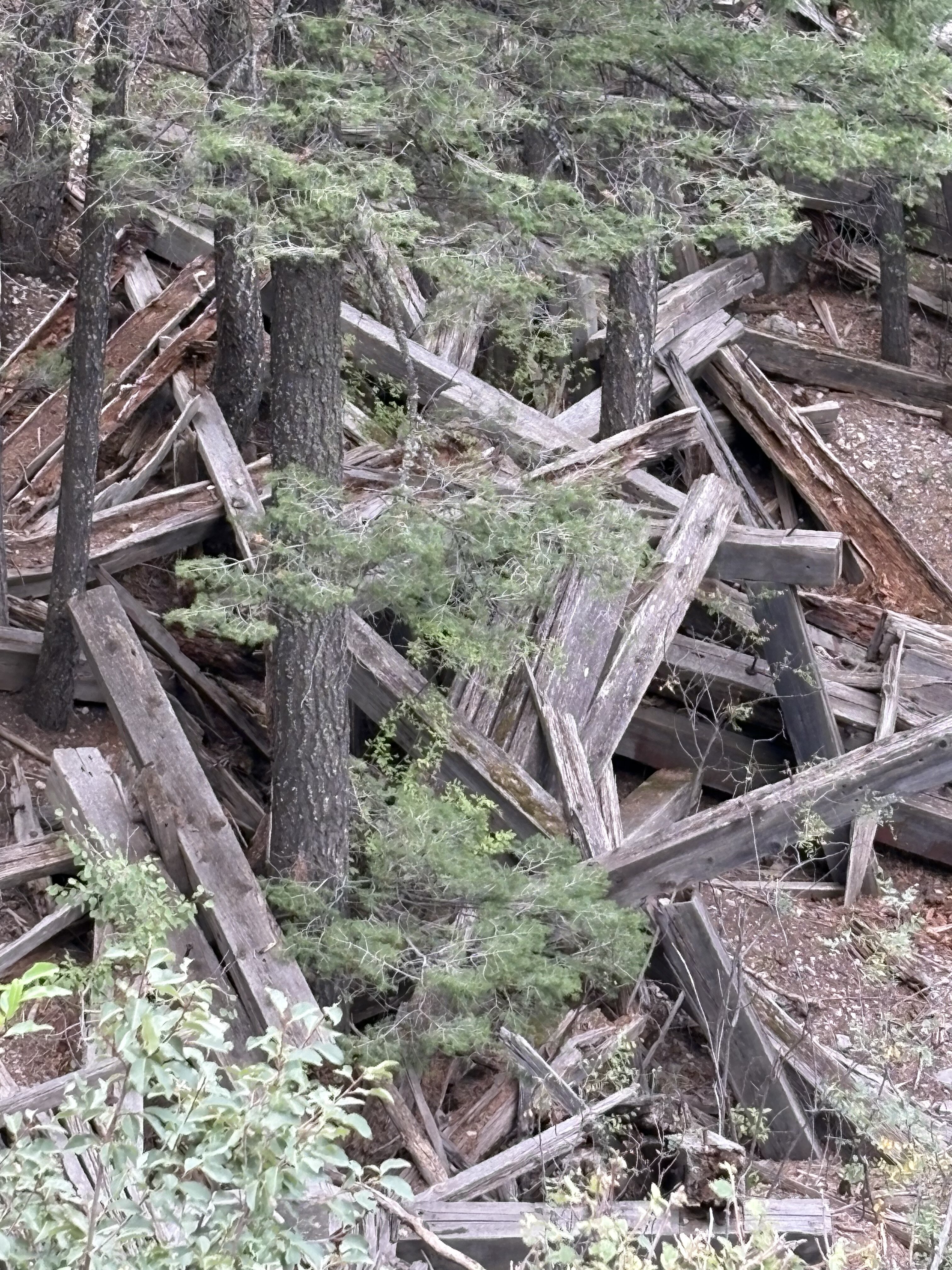 The remnants of a collapsed trestle bridge have begun to disappear into the forest. (Deena Bouknight)
Another observation area provides a vista of Alamogordo with the basin below and the backdrop of White Sands and the San Andres Mountain range. It highlights one particularly difficult section of train track called Devil’s Elbow, a sharp curve cut through limestone. The stone had to be dynamited and then removed by horse or mule-drawn wagons from a deep ravine in order to continue the track. The signage features a black and white historic photograph of a clearing crew.
The Cloudcroft trestle bridge was added to the National Register of Historic Places in 1979. Although the train no longer travels along this route, the railroad’s remnants and signage reveals much about that bygone era.
What arts and culture topics would you like us to cover? Please email ideas or feedback to features@epochtimes.nyc
