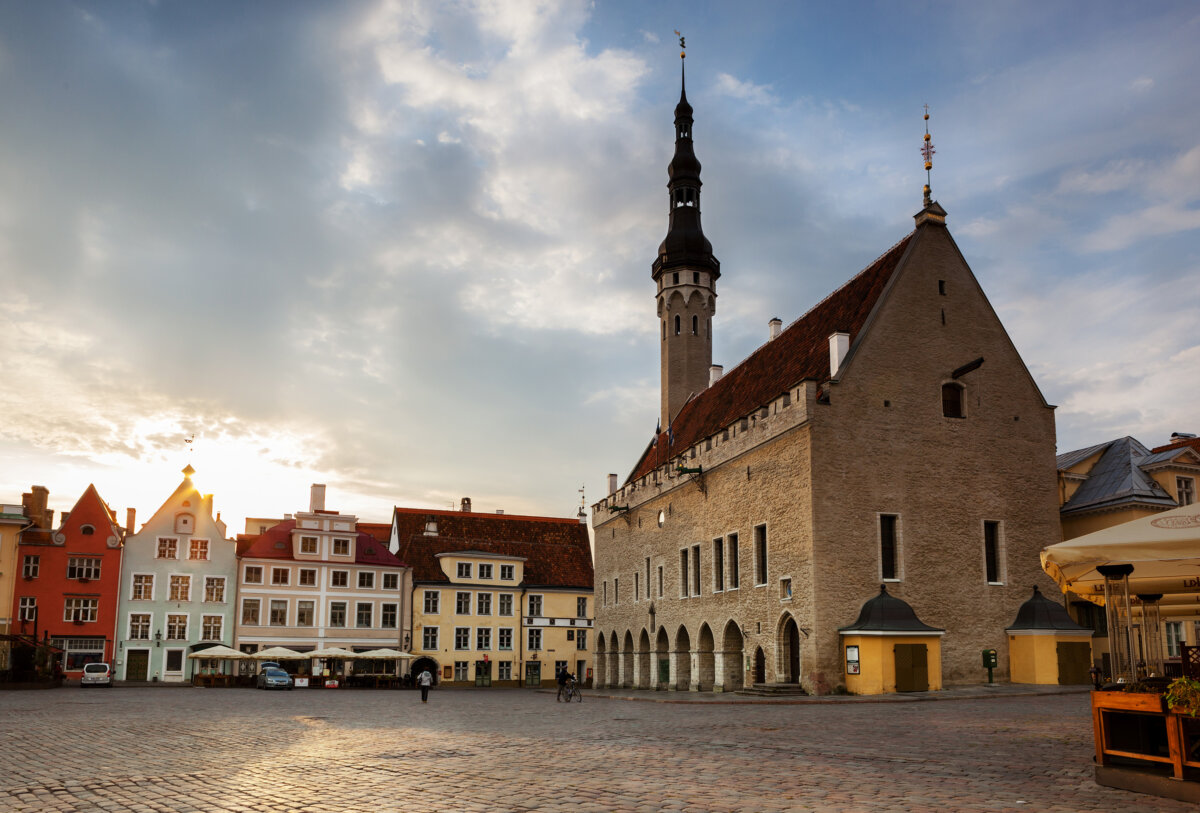
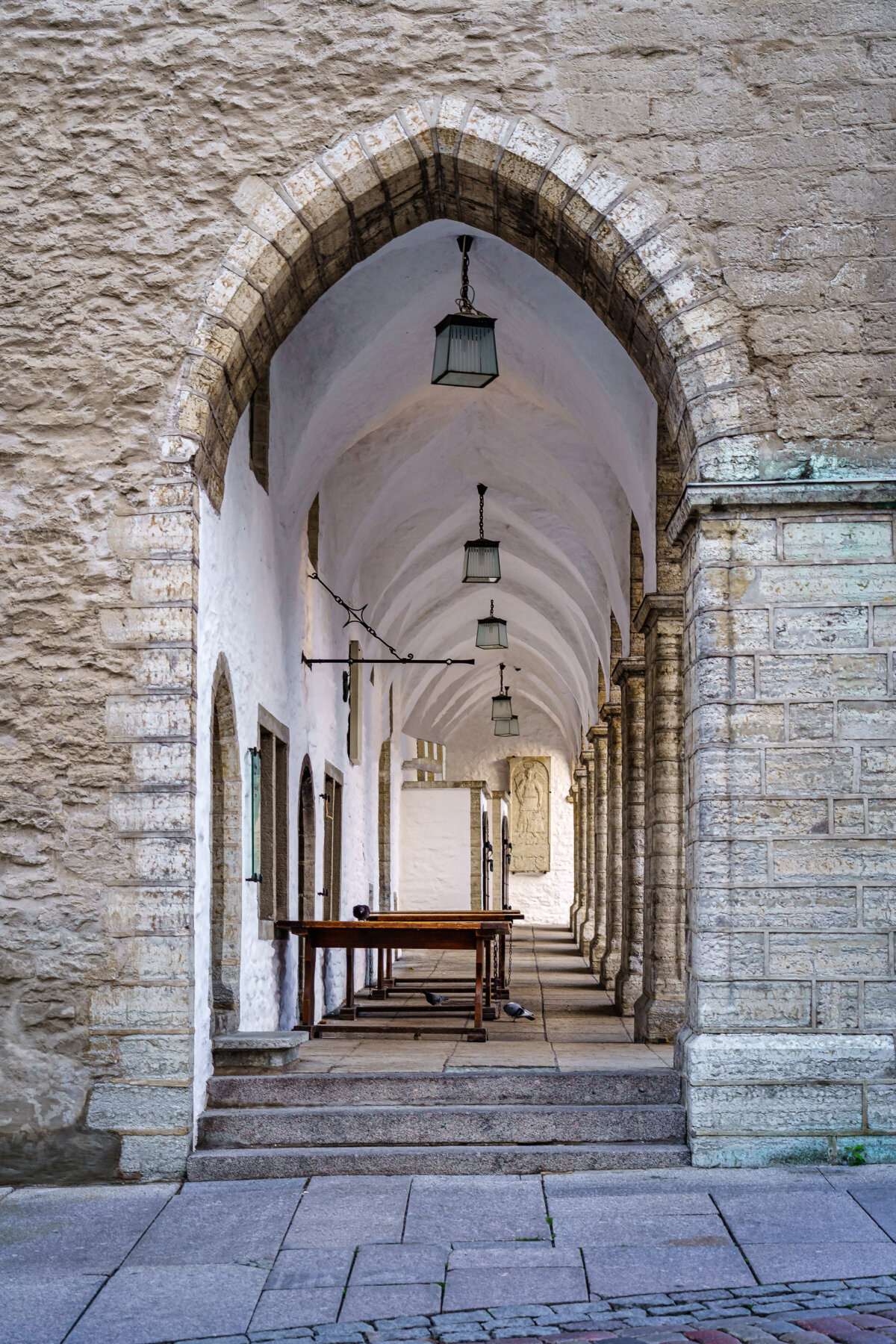
The centerpiece of Tallinn’s Old Town district is the centuries-old town hall. Its tall, narrow presence is almost ecclesiastical in architectural appearance. However, the formidable tower, arcade with Gothic arches, and battlement-style roofline present elements of a medieval castle. Multiple rectangular windows were originally positioned for natural light to flow through during daylight hours. (SAKhanPhotography/Shutterstock)
From the 14th century until the 1970s, Tallinn, Estonia, city officials worked in the same tall, narrow, limestone building with a conspicuously lofty tower. In the country’s largest city and capital, located about 50 miles south of Helsinki, the town hall now serves as a ceremonial government building as well as a venue for weddings and events.
Tallinn Town Hall has impressed generations with its Gothic-style architecture and artistic medieval details. Initial construction on the town hall began in the 1300s, with master stonemasons doing major work in the 1400s to enlarge the structure into its current form.
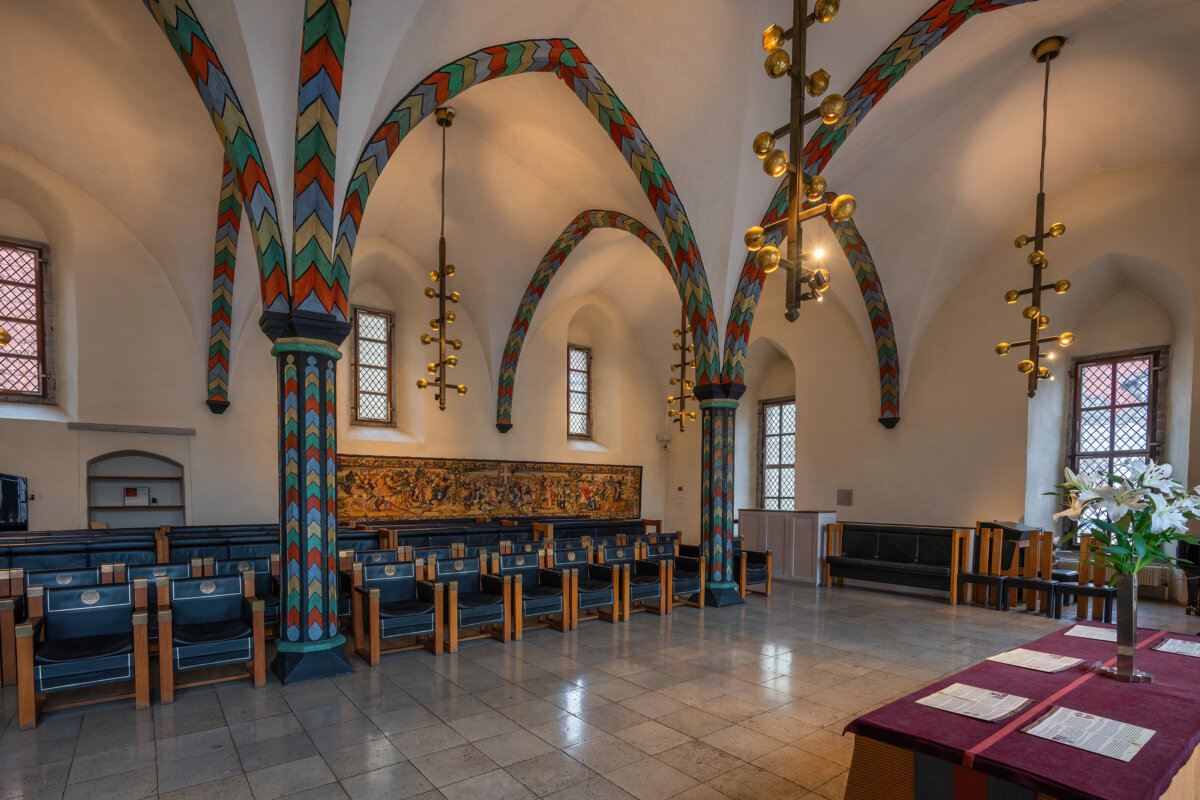
True to the Middle Ages culture, the first floor of the town hall once included a torture chamber and wine cellar. In contrast, an accounting room, citizens’ chamber, and council chamber-parlor were established on the second floor. Tapestries embellish some walls, and elaborate carvings and paintings beautify the spaces.
Although a March 1944 World War II Soviet air raid destroyed about 50 percent of Tallinn’s houses, the town hall stood firm, with only the tower’s spire affected. Solidly constructed of tightly stacked gray limestone and topped with red clay tiles, the town hall has stood the test of time. It has required only periodic restorations over its long history to maintain its steadfast, striking presence for future generations to enjoy. In 1997, Tallinn Town Hall was added to the UNESCO World Heritage List.
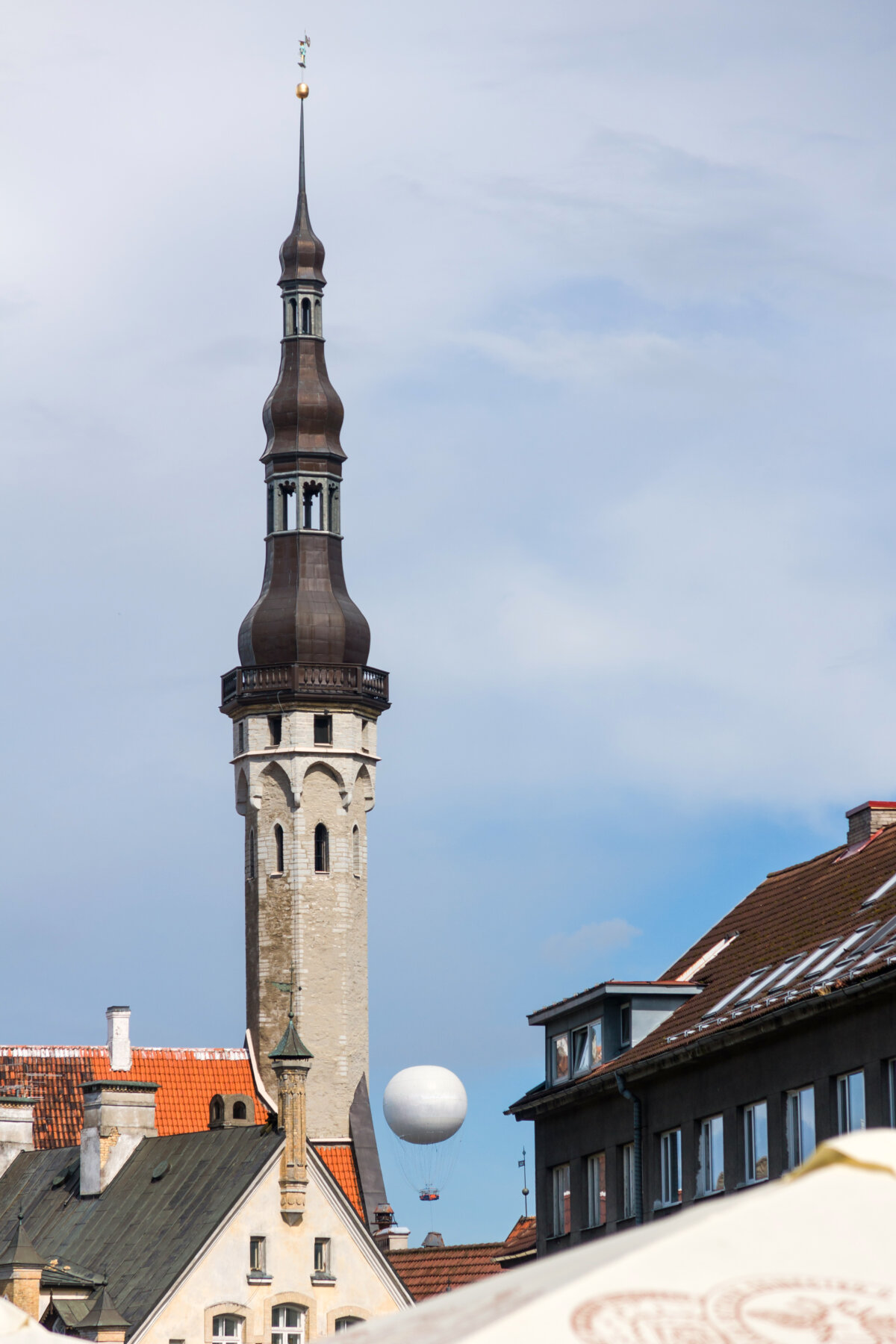
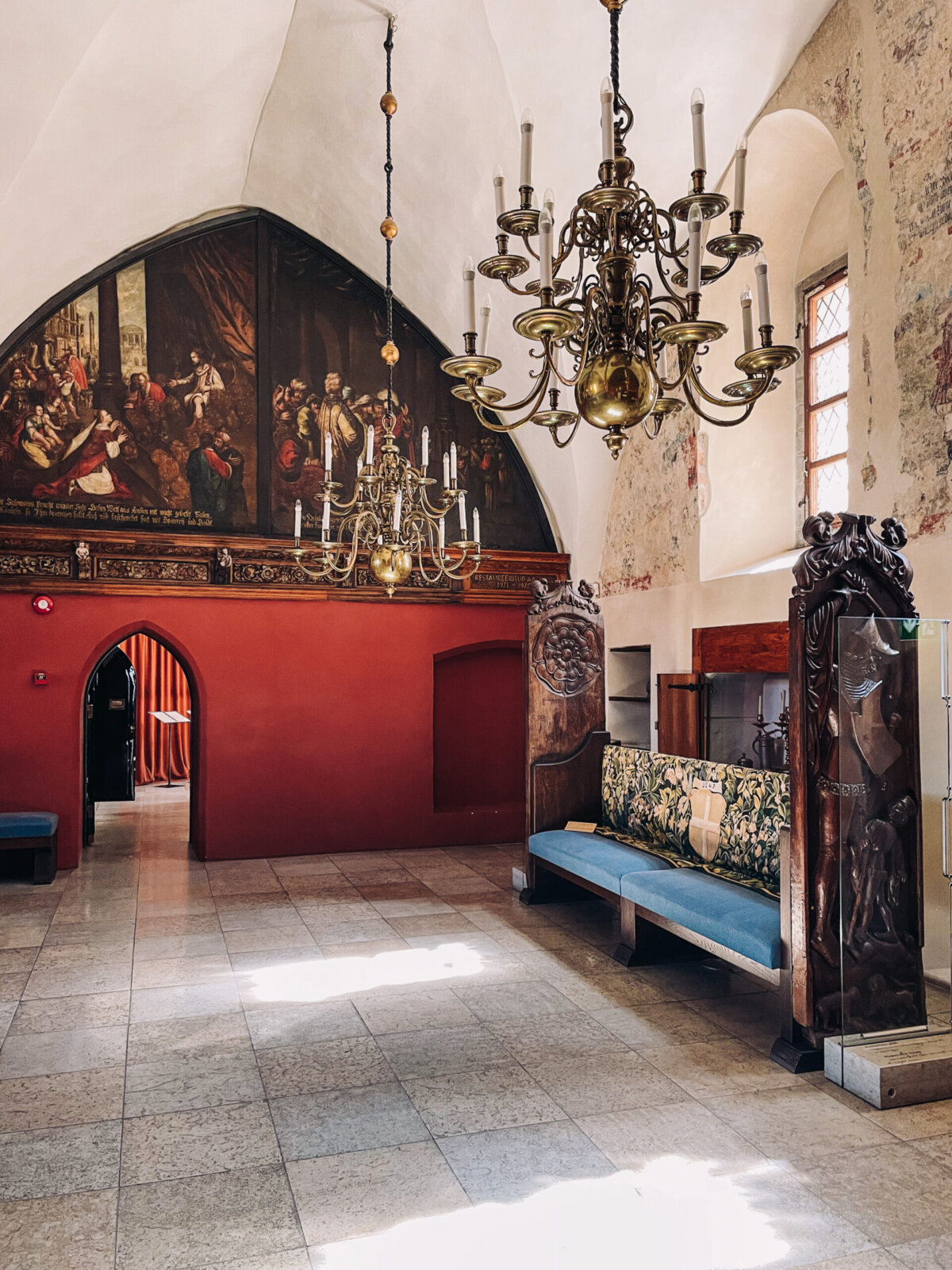
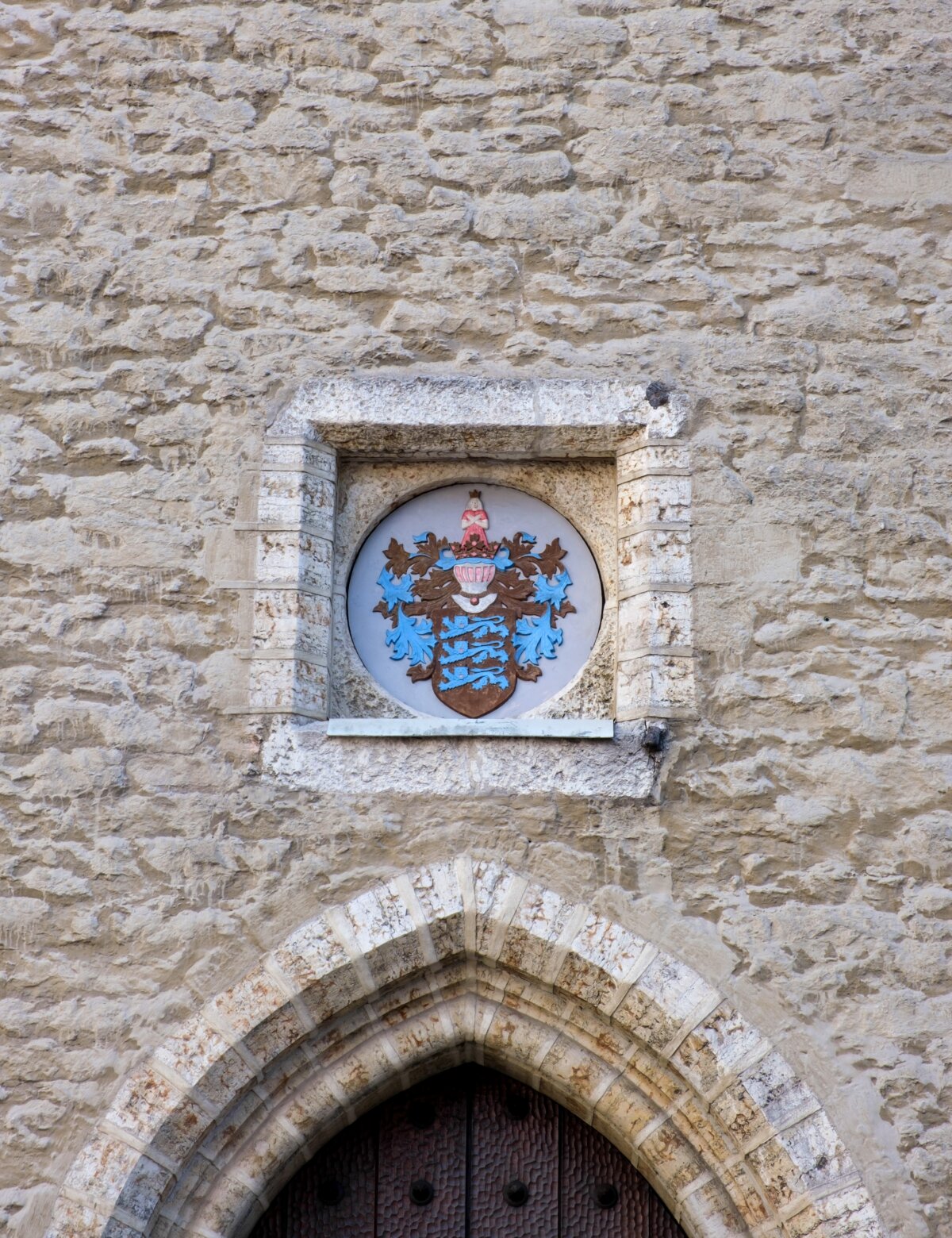
The 210-foot, eight-sided tower has three levels of onion dome designs and features a noteworthy weather vane on its spire dubbed “Old Thomas.” Locals consider the weather vane, a prominent symbol of Tallinn, to be a local peasant in guard clothing, watching over the town. A narrow staircase inside the tower allows for only one person at a time to climb to the lookout areas. (Antipov/Getty Images) Nine pointed, Gothic-style arches supported on one side by beefy square columns define the town hall’s arcade. Lanterns are hung symmetrically between the arches, and the arcade showcases different eras of stone masonry. (Jose Miguel Sanchez/Getty Images) A multi-colored herringbone pattern adorns the citizen chamber-reception room’s eight-sided pillars and trims the pointed Gothic arches. The flooring is of limestone slabs. The walls feature copies of 500-plus-year-old Dutch, dyed-wood tapestries depicting aspects of the story of King Solomon in the Bible. Originals are in the Tallinn City Museum. (Diego Grandi/Shutterstock) In the latter 17th century, the council chamber-parlor’s design was enhanced. The half-moon-shaped Gothic pointed arch above the doorway features a lunette painting highlighting various biblical scenes. Underneath the paintings is a carved wooden frieze. Also adding to the room’s decor is a heavily carved bench. The floor is limestone while the chandeliers are brass. (Tallinn Town Hall) The ends of the skillfully carved bench in the council chamber-parlor include scenes from the biblical story of Samson and Delilah in the Book of Judges, such as Samson killing a lion with his bare hands. (Peeter Jahe/CC-BY-SA-4.0) The city of Tallinn’s coat of arms is displayed in its true colors above the town hall’s doorway. Framed in stone, the coat of arms includes three blue, crowned lions on a gold shield; lions are a historic symbol of Estonia. Atop the shield is a silver crown, while a woman wearing a crown and dressed in regal red oversees the coat of arms. Gold and blue foliage flows on either side of the center-point imagery. (Oleg Proskurin/Shutterstock)
What arts and culture topics would you like us to cover? Please email ideas or feedback to features@epochtimes.nyc.
A 30-plus-year writer-journalist, Deena C. Bouknight works from her Western North Carolina mountain cottage and has contributed articles on food culture, travel, people, and more to local, regional, national, and international publications. She has written three novels, including the only historical fiction about the East Coast’s worst earthquake. Her website is DeenaBouknightWriting.com