Everyone, at some point in their life, has been guilty of rubbernecking. It is a completely natural reaction, but, William Sydney Porter, known also by his pen name, O. Henry, shows in his short story “A Comedy in Rubber” that, like everything else, rubbernecking can be taken too far.
A Rubbernecking Romance
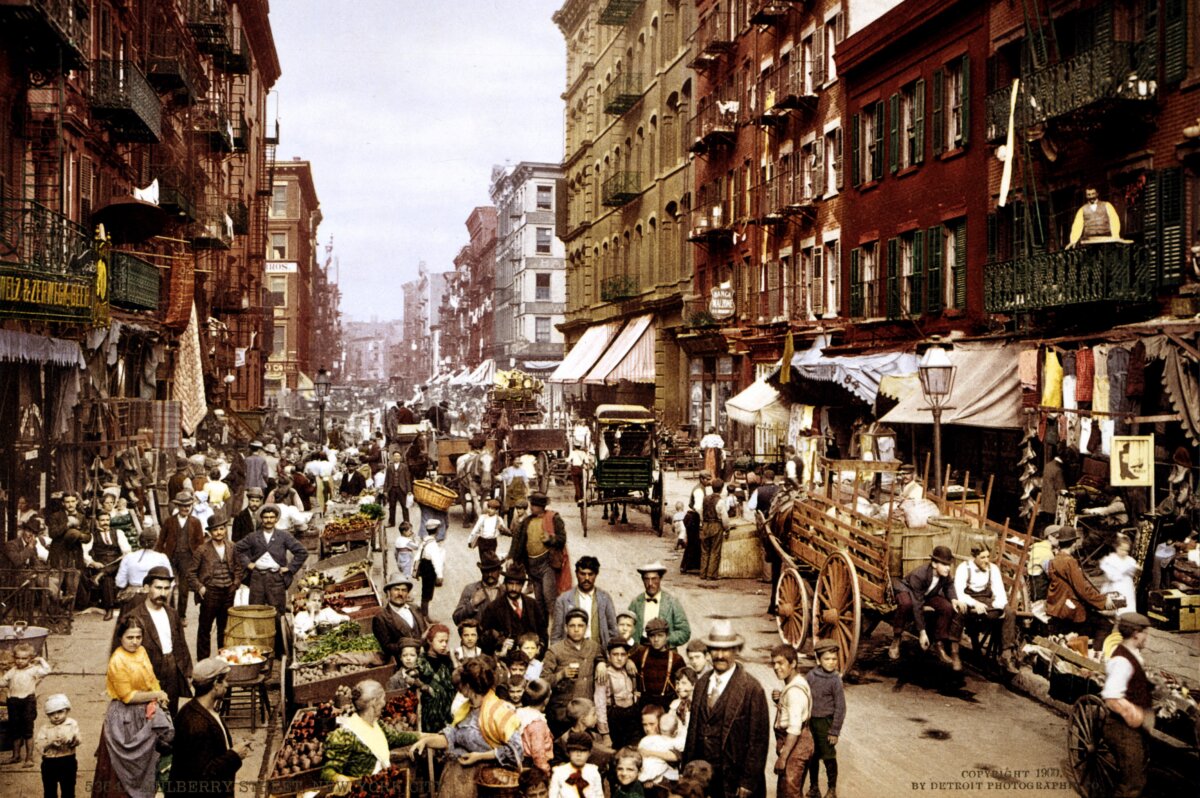
New York is full of excitement and accidents, which are witnessed by a vast and unavoidable “‘rubber’ tribe.” This tribe consists of people of all ages and kinds who flock to watch anything dramatic or out of the ordinary.
One day, the everyday peace is disturbed when a brewery wagon runs over a man. William Pry (an expert and avid rubbernecker) arrives on the spot first. He analyzes the situation with glee, hearing the poor man’s agonized groans rising from the pavement.

People quickly form a tight circle around the poor, injured man. As William stands watching the situation escalate, he notices a commotion in the crowd. People are shoved away here and there and a young woman suddenly emerges from the tightly packed crowd. Violet Seymour, another dedicated rubbernecker, has fought her way to the center of the crowd so that she can witness the disaster. William immediately falls in love.
An ambulance finally comes for the poor man, and, with its arrival, the crowd disperses. Yet William and Violet stay behind to stare some more, for there is something more “in gloating over the spot, in gazing fixedly at the houses opposite, in hovering there in a dream more exquisite than the opium-eater’s ecstasy.” Having filled themselves to the end with staring, William and Violet finally, but sadly, separate.
Taken Too Far
However, the two rubbernecking lovers aren’t destined to be apart very long. They meet again at a fence where a man is painting an advertisement: “Eat Bricklets—They Fill Your Face.” William arrives late and finds Violet already in the inner line watching with satisfaction. He carefully maneuvers his way next to her, ready to take up his part in the great rubbernecking spectatorship.
When the fence painting grows old, William decides to display his love for Violet. He touches her arm and says: “Come with me. … I know where there is a bootblack without an Adam’s apple.” She shyly marvels that he saved such a treasure for her, and the two head off together.
From then on, the two rubberneckers go everywhere, expressing their love for each other through a deep desire for and consumption of drama, scandal, injury, and any other out-of-the-ordinary occurrence.
After many rubbernecking adventures, William and Violet decide to finally tie the knot. However, when their wedding day arrives, the church is decorated, the bridesmaids and groomsmen are ready, a crowd of rubberneckers surrounds the entrance, but the bride and groom don’t show up.
Through this story, Henry shows the need for temperance and prudence in what we partake in, for if we aren’t careful, it may consume us. Rubbernecking, he shows, is natural, since it arises from natural human curiosity, but it can easily go too far.
In anything we do, temperance must be the guide. For, as Socrates says in “Socrates, Essential Thinkers,” “Where temperance comes and stays, there health is speedily imparted, not only to the head, but to the whole body.”
Temperance, thus, serves as a guide that not only prevents overindulgence and danger, but also brings a healthy balance to our intellect, will, and body. It is the wise guide that leads to proper human flourishing.
What arts and culture topics would you like us to cover? Please email ideas or feedback to features@epochtimes.nyc