
A man’s mid-life crisis doesn’t always include buying a convertible. The important changes are physical and mental.
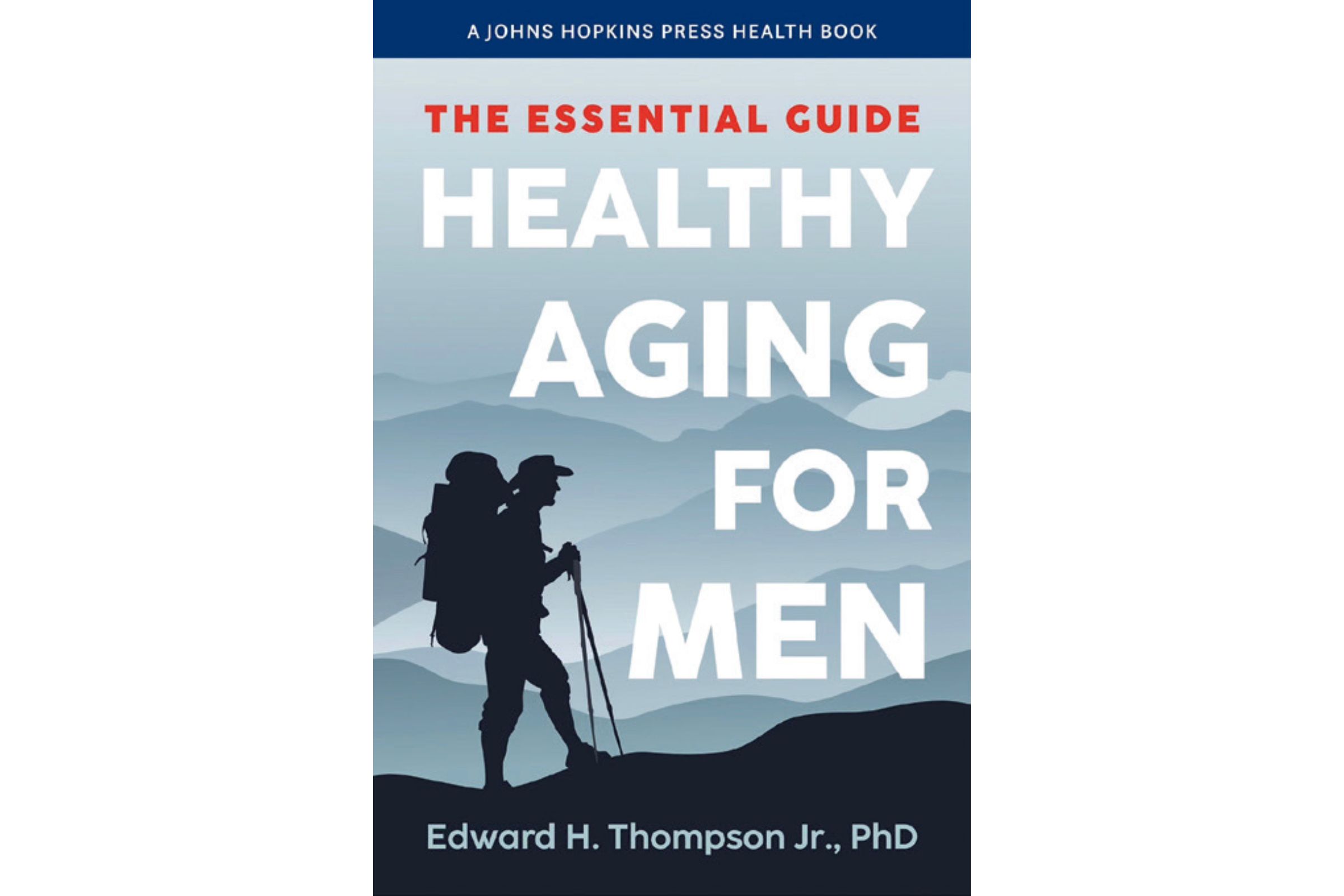
That’s why Edward Thompson Jr. has written a book designed to help men stay healthy after age 50. “Healthy Aging for Men” goes beyond the basic “eat right and exercise” advice you’ll get from every doctor. It touches on additional factors to improve your health, everything from how to remain socially active to exercising your mind as well. It even includes creating an “anti-bucket list” of things you never, ever want to do again. “Stop doing things you don’t want to do or that waste your time,” Thompson said. “Saying ‘no’ to a social obligation that exhausts you, stop[ping] reading a book that has lost your interest,” are all okay. And “don’t give up an experience because of a partner’s lack of interest.”
Thompson, who taught courses on medical sociology and aging at The College of the Holy Cross in Massachusetts for 36 years, talks about the often drastic changes retirement brings, such as going from a busy office setting to a quiet life with much less daily human contact. “A popular cliché is that it takes a community to raise a child. Likewise, it takes social connections to facilitate a man’s health.”
 (Courtesy of Edward H. Thompson Jr.)
And it turns out that one of the best ways to give your brain a workout is to be social. “People who are over 80 [who] have memory ability of someone who’s 20 or 30 years younger, … it’s the social relationships that keep them socially active, and hence keep the mind socially active.”
Bottom line, staying informed these days is critical. “Beyond chosen lifestyle habits, we need reliable information,” such as knowing which practices pose health risks and which ones promote health. “Reliable health information is not found in television advertising or one person’s blog or someone’s advice,” Thompson cautioned. Always consult with your healthcare provider, and “a second opinion is not something to be ignored, if one’s gut remains uncertain.”
Good Health Tips
-
Do solitary activities to keep your mind sharp, such as daily word games you’ll find in newspapers, and jigsaw puzzles.
-
Exercise should be moderate. Don’t overdo it, but on the other hand, don’t do it too lightly. Too much sedentary time and too little physical activity is unhealthy. You don’t have to become a gym rat; just get moving. Even things like washing your car or standing while talking on the phone can help.
-
Take a look at your dietary needs. “The primary mistake as we age, especially after we retire, is that we don’t eat regularly. As a consequence, we don’t eat enough protein-based foods and enough calcium-based food.”
-
If you have an interest in a hobby, find a hobby group. For example: “If years ago you enjoyed working with a camera, go pull it out and find a group that is interested in working with a camera.”
This article was originally published in American Essence magazine.