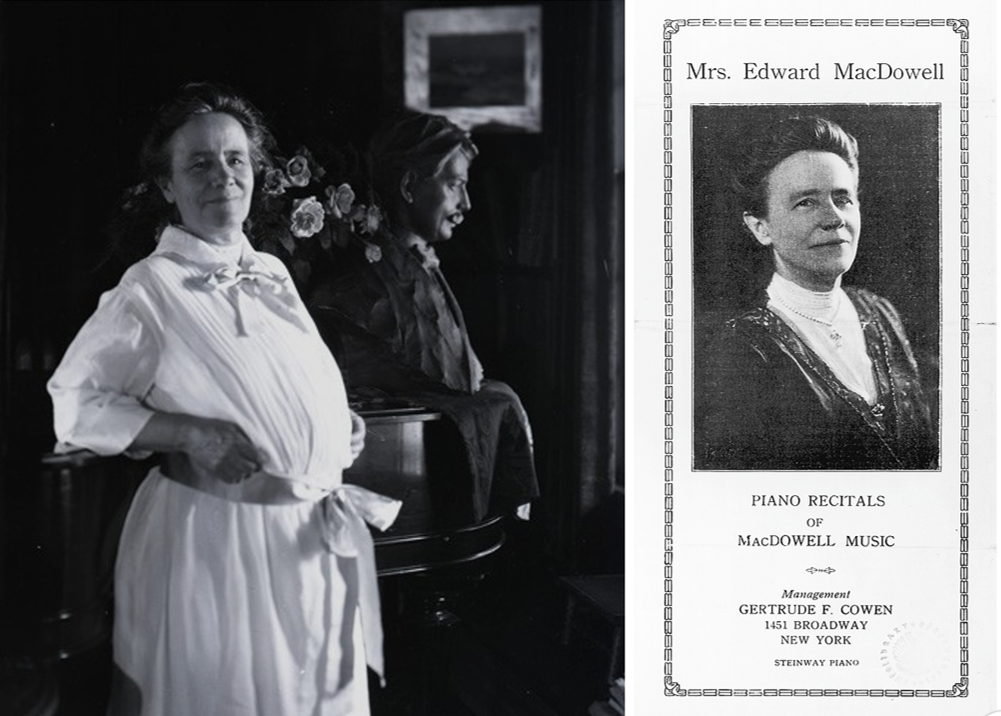
In the years following the American Civil War, New England had a renaissance of classical music such as it had never seen before. American composers, known as the Second New England School of Music, or the Boston Six, spearheaded the composition, instruction, and performance of beautiful music.
Among the six was Edward MacDowell (1860–1908), the shortest-lived but certainly not the least talented or influential. Many great men only achieved their full potential with the help and inspiration of a mate. MacDowell’s relationship with his wife, Marian Nevins (1857–1956), was comparable to that of his mentor, Robert Schumann, and his wife, Clara.
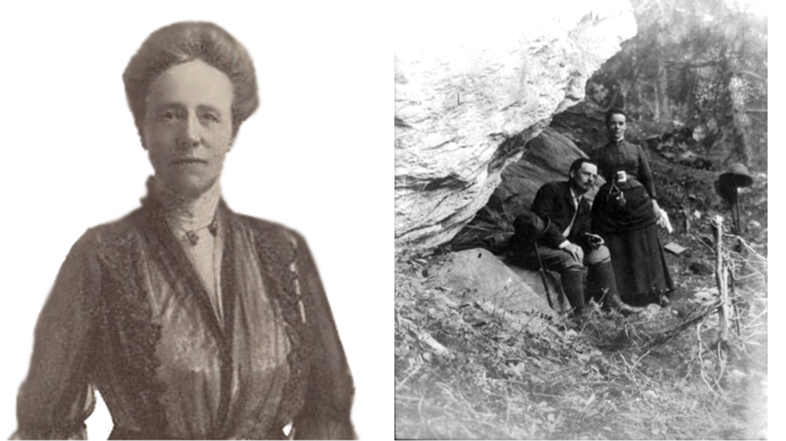
During their marriage and after Edward’s death, Marian’s life and legacy is an example of great talent coupled with even greater love.
A Promising Beginning
Marian Griswold Nevins was born on Nov. 22, 1857, in New York City. Her father was a Wall Street banker. The third of five children, she became the lady of the house after her mother’s death. Although Marian was only 8, she helped raise her two younger sisters.
She spent much of her childhood in Waterford, Connecticut. At age 10, Marian began taking piano lessons with her maternal aunt Caroline Perkins, who quickly realized the girl’s talent.
Marian pursued a career as a professional pianist. In 1880, the serious young woman traveled to Germany to continue her music education. Using an inheritance from her mother, she went to Frankfort-am-Main to study with Clara Schumann.
However, Clara was on tour, so Marian inquired with the head of the Frankfort Conservatory of Music, Joachim Raff, for another teacher. She wasn’t at all pleased with Raff’s recommendation: the young American pianist and composer Edward MacDowell. Edward was three years her junior, and he wasn’t sure he wanted to teach her.
Marian hadn’t gone all the way to Europe to study with an American. However, the two agreed to give it a try out due to their mutual respect for Raff.
When Edward heard her play, he challenged Marian by telling her, “You know, you really have quite a lot of talent, but you can’t play piano one bit.” She rose to the challenge and learned technique from him in the next few years. During that time, they developed a close personal relationship; they bonded over shared grief over the Raff’s death, as well as that of Marian’s father.
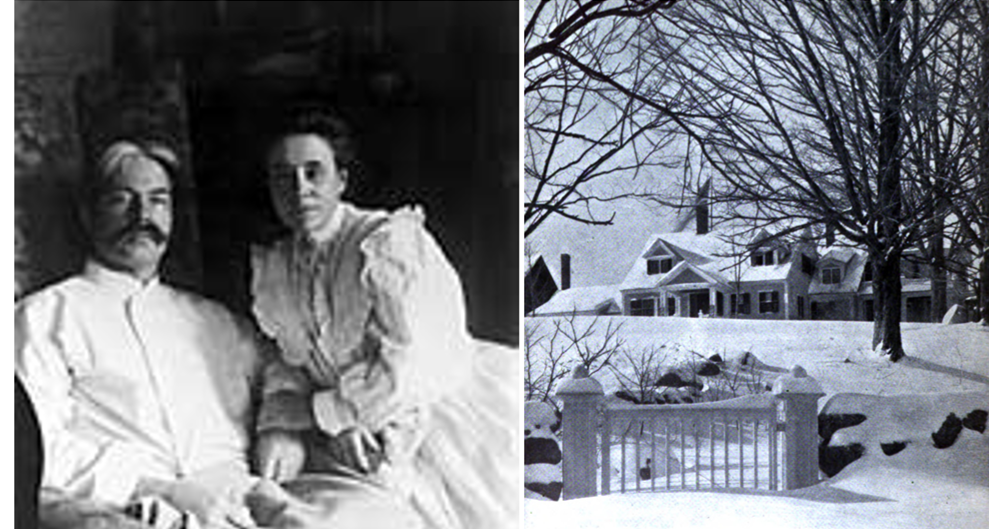
Mrs. MacDowell
When the time came for Marian to return to America, she and Edward began talking about marriage. She accepted his proposal under the condition that he would let her support them with her inheritance for the first years of their marriage so that he could focus on composition.
He agreed to these terms, and they were married in the United States in Waterford, Connecticut, in July 1884. Within three months, Marian realized that she would have to choose between her own career and her husband’s. She chose to provide her husband the stability he needed to flourish.
The MacDowells spent the first few years of their marriage in Germany. She later recounted that, wherever they lived, she ensured that he had a quiet place to work undisturbed. During these years in Germany, she did more than keep their house. She was a tireless muse and inspiration for her talented but sensitive husband. She supported him emotionally as well as financially by acting as his cheerleader and critic.
As a result, after four years, he’d built such a reputation of acclaim in Europe that American musicians implored him to return to the United States. The two relocated to Boston in 1888.
By this point, the MacDowells knew that music was the only legacy they could share. Marian had suffered either a miscarriage or a stillbirth in 1886, after which they realized she could never have children.
Nevertheless, they had 20 happy years together. Edward successfully taught piano lessons and concertized in Boston before joining the faculty of Columbia University in 1896.
This proved a very stressful position which ultimately ended in disappointment. He resigned in 1904 because of unreconcilable differences with the institution’s president. That same year, he was struck by a cab in New York City. This, and other physical ailments, may have contributed to a rapid mental decline.
The 44-year old regressed to the placid mentality of a child. Marian hired a nurse to help her with Edward because she refused to institutionalize him. She cared for him until his death in 1908.
The MacDowell Colony
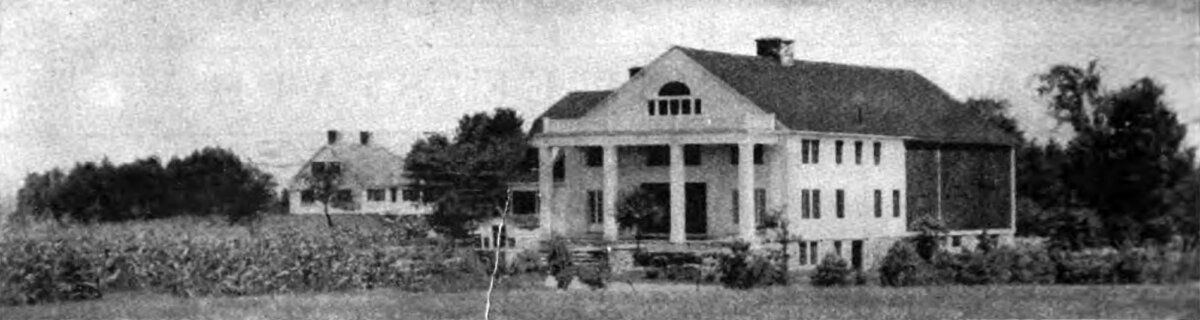
Marian had purchased a rundown New Hampshire farm in 1896 as a summer retreat that could be a haven for Edward, called Hillcrest.
Although initially displeased that she had made this decision without consulting him—as she strategically did throughout their marriage—he grew to love Hillcrest. Marian had a log cabin built for him on the 45-acre property, and this studio inspired him to do some of his best writing.
Edward became fixated on starting an artists’ colony at their country estate. He wanted other artists, not only musicians but also painters and writers, to enjoy this same creative solitude.
To achieve this, Marian started the Edward MacDowell Association in 1907, and the first artists enjoyed the Colony that summer.
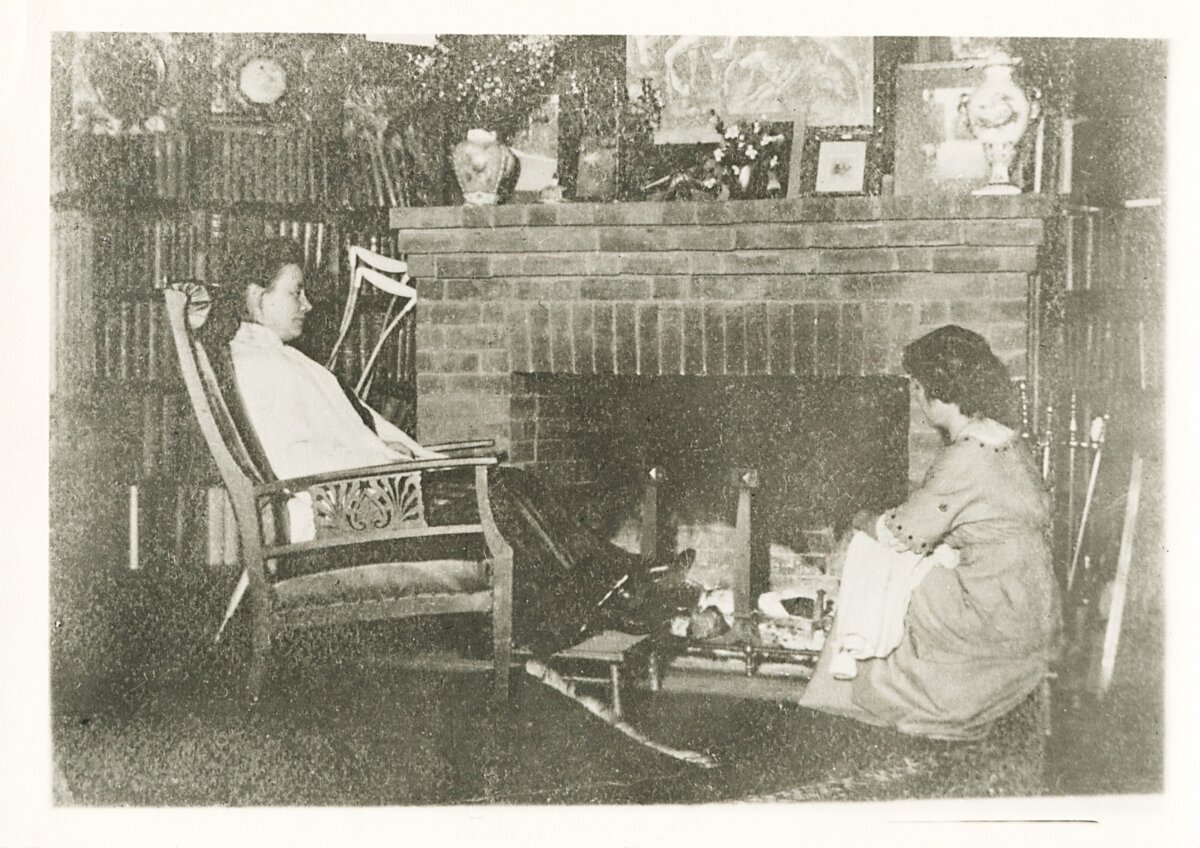
After Edward died, Marian was determined to make a lasting success of the Colony. She dedicated the rest of her life to gaining financial and community support for the endeavor. She spoke at women’s clubs and music groups to raise awareness, and, at one such meeting, the audience asked her to play the piano for them. She hesitated, since she hadn’t played in years, but she eventually agreed to play one of her husband’s pieces.
Seeing the enthusiastic response to her performance, Marian realized how she could preserve his legacy. At about the age of 50, she returned to the concert stage. Marian spent the next few decades giving hundreds of piano concerts throughout the United States and Canada.
During her lifetime, the Colony also grew to hundreds of acres and hosted dozens of talented American artists during their formative years. When poor health forced her to stop performing, she settled in Los Angeles, where she died at age 98 in 1956.
Though Marian never studied with Clara Schumann, she followed in Clara’s footsteps. She used her talent as a pianist to keep her husband’s music and legacy alive after his death. In every beautiful piece of music that Edward wrote, listeners can hear echoes of his wife’s inspiration and their shared love for beauty, nature, and music.
As the MacDowell Colony—now shortened to just “MacDowell”—continues to thrive 70 years after Marian’s death, it’s clear that her life’s work wasn’t in vain.
What arts and culture topics would you like us to cover? Please email ideas or feedback to features@epochtimes.nyc