



In 1875, editor Nikolay Bernard of the Saint Petersburg magazine Nouvellist commissioned Pyotr Ilyich Tchaikovsky for an ambitious project. Bernard presented the classical composer with 12 working titles, each representing a month of the year. Tchaikovsky’s job was to develop 12 pieces of music to go with the titles. Then, the following year in 1876, the music magazine would release one themed song per month.
Tchaikovsky didn’t shy away from commissioned work. He viewed it as a way to supplement his income while working on complex projects, like the orchestration of “Swan Lake,” which he finished up in the spring of 1876. Knowing he’d have some free time to focus on other projects, he accepted the commission from Bernard and began composing for it in late 1875.
The 12 solo piano movements would ultimately transform into the suite, “The Seasons,” one of Tchaikovsky’s simpler works but no less moving or captivating because of it. June’s edition of the collection, “Barcarolle,” was widely popular. But “Troika,” the title for November’s movement, was also well-received. Its romantic undertones and lively piano work draw the listener into a dreamy and idyllic winter atmosphere.
A Romantic Sleigh Ride
Here, Sergei Rachmaninoff performs the piece. (Listen)
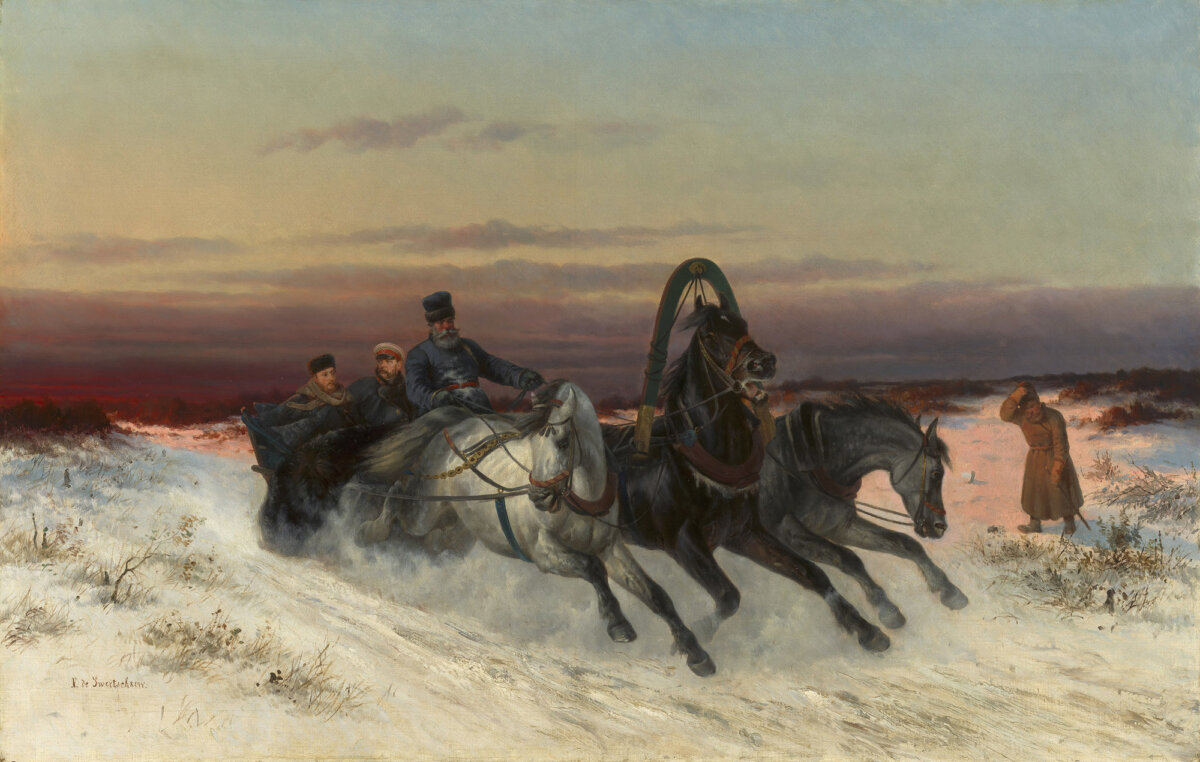
The movements from Tchaikovsky’s “The Seasons” are all character pieces, short works meant to evoke a certain setting, feeling, or idea. “Troika” is the word for a traditional Russian sleigh, and it was considered a national symbol in Russia. Not only was it a fast, reliable way to travel, but the sight of three bridled horses pulling a sleigh or carriage came to represent cultural pride and even the country itself.
For his November work, Tchaikovsky chose to introduce listeners to a serene evening. A troika sits beneath falling snow, signaled by a flowing melody. Its rhythmic accompaniment turns the listener’s attention to the noise of the horses.
A romantic tone in the key of E major suggests a couple is riding in the troika, taking in a peaceful winter night. But at the one-minute mark, the music intensifies as the horses take off on their journey. Over the next minute and a half, the horses become more and more playful as Tchaikovsky’s scale work becomes more involved. He also hovers over two notes to evoke the sounds of the bells on the harnesses.
But at 2:45, dancing notes become serene once again as listeners are invited to contemplate the allure and charm of the winter season. Tinkling notes at around 3:15 suggest one more trot by the horses. Are they ushering the couple home? Will they share a good night kiss with the movement’s gentle closing notes?
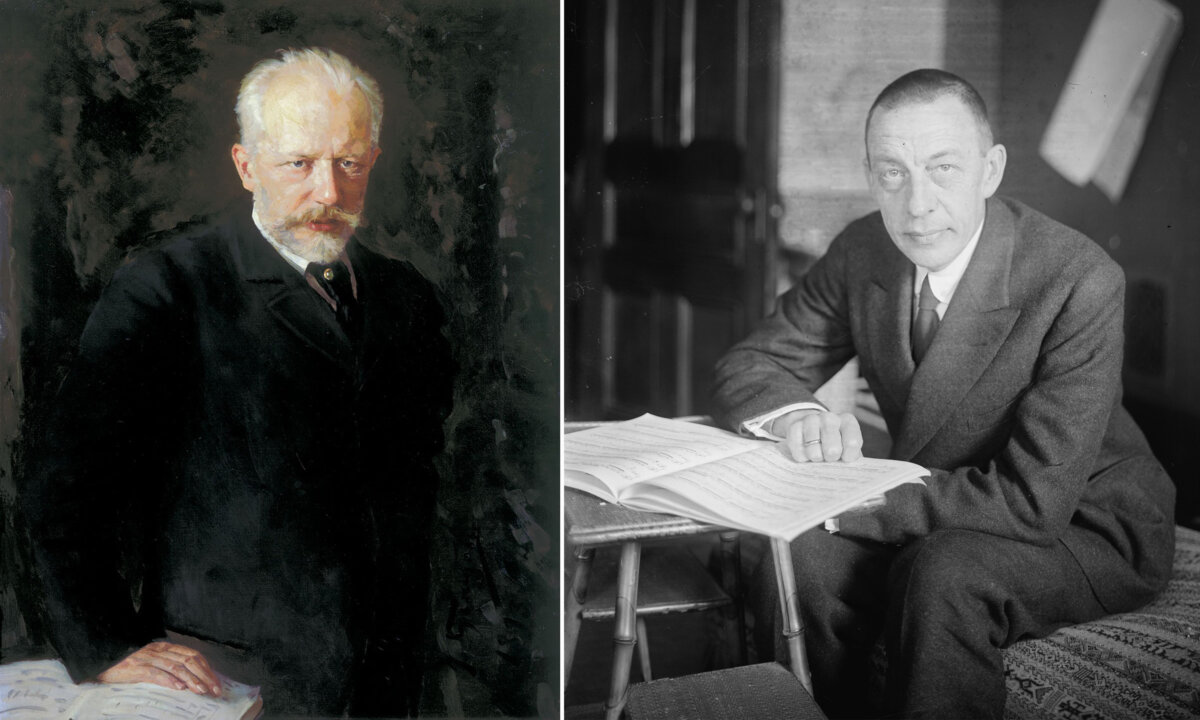
The music depicting the enchanting, wintry scene impressed one fellow Russian composer in particular. While many fans of Tchaikovsky loved his movement for June, November’s “Troika” was a favorite of Sergei Rachmaninoff. He enjoyed playing the movement and began recording his own renditions in 1919.
The recording of “Troika” above is featured in a compilation covering Rachmaninoff’s performances of other classical composers’ works.
‘Little Piano Pieces’
Bernard, the magazine’s editor, assigned an epigraph to each movement in “The Seasons.” For November, he chose a poem by Nikolay Nekrasov:
In your loneliness do not look at the road,
And do not rush out after the troika.
Suppress at once and forever
The fear of longing in your heart.
The epigraph is viewed more as a decorative element to the movement rather than an integral component. The poetic addition is somber, but Tchaikovsky’s music remains upbeat and passionate throughout the whole piece.
In November 1875, Tchaikovsky wrote to Bernard to let him know he was keeping all of his suggested titles for the movements. The composer also wrote that he was “very much in the mood for working on little piano pieces.” Today, “Troika” is viewed as more than a “little” piano piece. It is regarded as a timeless composition and a staple of the Romantic classical style.
What arts and culture topics would you like us to cover? Please email ideas or feedback to features@epochtimes.nyc.
