
When a loved one dies, you may hear that a death certificate unlocks their finances. It helps, but a death certificate is just the first step. Each bank follows its own rules, and what you need will depend on how the account is titled.
What bank procedures go into effect when someone dies? What does each account type require to unlock it? We’ll answer these questions and show how you can avoid costly mistakes.
Quick Answer: What Do You Need to Access a Deceased Person’s Bank Account?
The type of documents you need to access a deceased person’s bank account depend on the account type. A surviving joint owner or named beneficiary on the account usually only needs a certified death certificate and valid photo ID. For an account in the deceased person’s name alone, you generally need court-issued authority, such as letters testamentary or a small estate affidavit (if your state allows one). Call the bank first to confirm its requirements.
What Happens at the Bank After a Death
Banks often learn of the death of an account holder from a family member. Some also learn through federal payment records or database screening. Once the bank becomes aware of the situation, it typically freezes the account, which can stall pending transactions and cause automatic payments to bounce.
Tell the bank about the death as soon as you can. A phone call often starts the process, and you can ask whether the account has been frozen.
Banks generally require a certified death certificate before they release money or change the account, so order several copies, which the funeral home can often arrange. Also list every automatic payment tied to the account so you can cancel or redirect it.
How Each Account Type Works
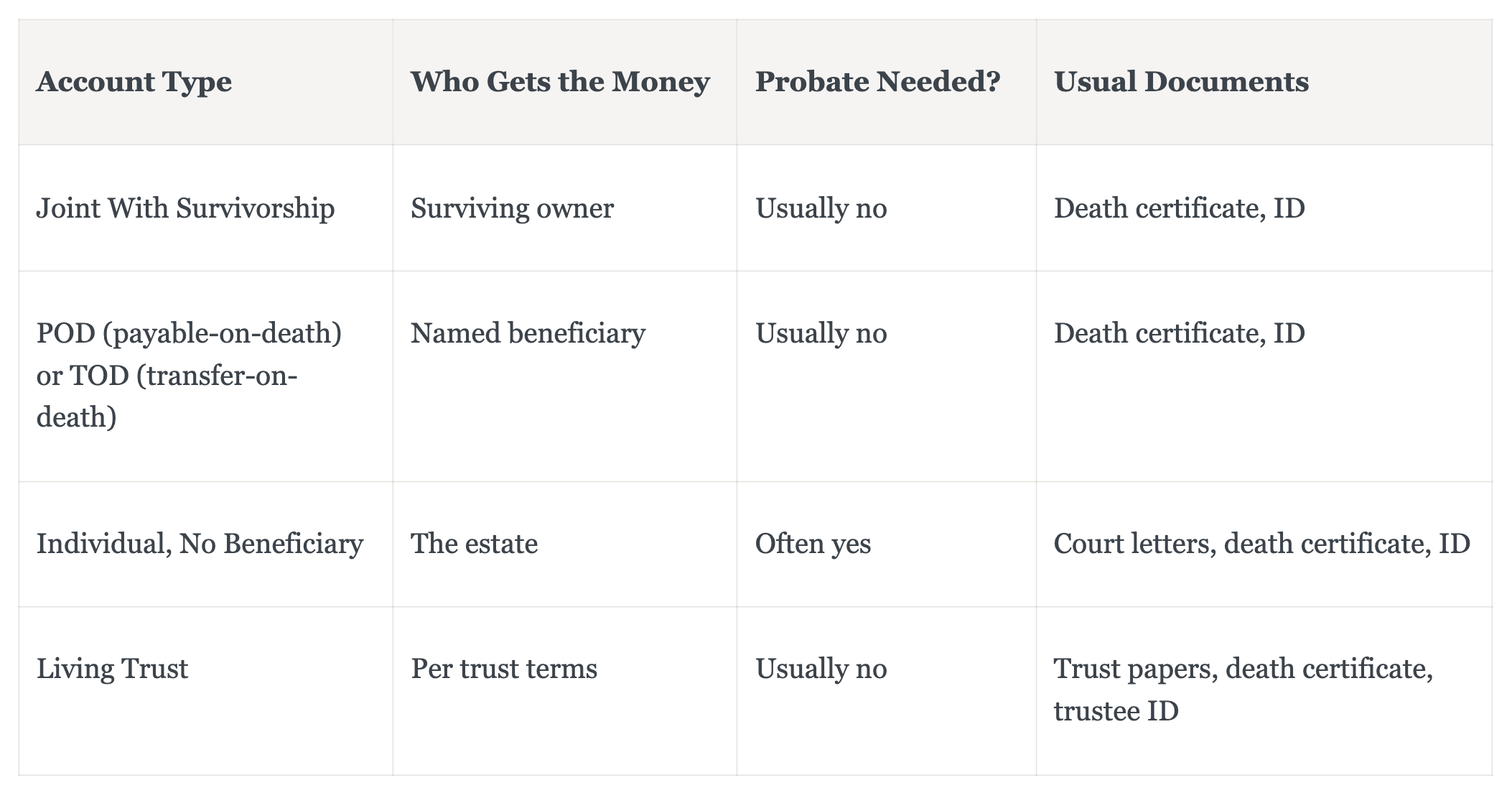
A beneficiary designation almost always overrides a will. A joint account opened only for convenience may not carry survivorship rights, so ask the bank how yours is titled.
When You Need Probate and When You May Not
Probate is the court process that decides who can manage a deceased person’s assets. The court confirms the executor named in the will, or appoints an administrator if there is no will, and issues letters that banks accept as proof of that person’s authority.
Many states also let heirs collect modest sums with a small estate affidavit, a sworn form that skips formal probate. Dollar limits and waiting periods vary widely, so check your state court’s website.
How to Set Up an Estate Account
Once you have court authority, request an employer identification number (EIN) from the IRS. It’s free online, and the IRS warns against sites that charge for one. Then open an estate account with the EIN, the death certificate, and your court letters. Keep estate money separate from your own.
Use the account to:
-
Deposit funds collected from the deceased person’s accounts
-
Pay valid debts, taxes, and funeral costs
-
Track every payment for the final accounting
Creditors usually get a set window to file claims against the estate. If you pay heirs before valid claims are settled, you could be personally responsible for any shortfall, so many executors wait until the claim period ends.
Do Estate Taxes Apply?
For most families, no. The federal estate tax applies only to estates above an exemption of $15 million per person for deaths in 2026, a figure that will be adjusted for inflation beginning in 2027.
A surviving spouse can often add the first spouse’s unused exemption to his or her own exemption by filing an estate tax return for the first spouse’s estate, which can shield up to $30 million for a couple. Amounts above the exemption are taxed at up to 40 percent.
Some states also levy their own estate or inheritance taxes, often with much lower thresholds, so check your state revenue department.
When a Payable-on-Death Beneficiary Is a Minor
A payable-on-death (POD) account passes directly to a named beneficiary, but a bank typically will not hand a large sum to a child. Many require a court-appointed guardian or a custodian under your state’s Uniform Transfers to Minors Act (UTMA).
Rules vary by bank and state, so ask what the bank requires and consider speaking with a probate attorney.
Social Security and Other Government Deposits
Social Security pays a month behind, and no benefit is payable for the month of death. Deposits that arrive after the person dies generally must be returned. Banks are generally required to return them, and the Treasury can reclaim the money from the bank.
Other agencies, such as the VA, have similar rules. A surviving spouse or child may also qualify for a one-time $255 death payment, so ask the SSA.
Mistakes That Can Create Legal Trouble
Don’t use a deceased person’s debit card, online banking, or checks until you have legal authority. Doing so can expose you to serious legal trouble, even if the money goes to legitimate estate bills.
A power of attorney also ends at death, so it gives you no authority over the account. A joint owner with survivorship rights is in a different position, but should still check with the bank first. When in doubt, talk to a probate attorney.
FAQs: Deceased Person’s Bank Account
Can You Use a Deceased Person’s Debit Card to Pay Bills?
Not without legal authority. Using the card before you have that authority can lead to civil or criminal trouble, even when the money covers real expenses. If a bill can’t wait, pay it yourself, keep the receipt, and ask the estate to reimburse you once you have authority. A probate attorney can explain the rules in your state.
Is a Deceased Person’s Bank Account Still FDIC Insured?
Generally, yes, for a limited time. The FDIC generally insures a deceased person’s accounts as if the owner were still living for six months after death. After that, coverage depends on how the account is titled.
What Happens If No One Claims the Account?
If no one claims a dormant account, the bank may turn the money over to the state as unclaimed property. You can still claim it later. Search your state’s unclaimed property website or MissingMoney.com, and be ready to show proof of your right to the funds, such as letters from the court or a death certificate.
The Epoch Times copyright © 2026. The views and opinions expressed are those of the authors. They are meant for general informational purposes only and should not be construed or interpreted as a recommendation or solicitation. The Epoch Times does not provide investment, tax, legal, financial planning, estate planning, or any other personal finance advice. The Epoch Times holds no liability for the accuracy or timeliness of the information provided.