



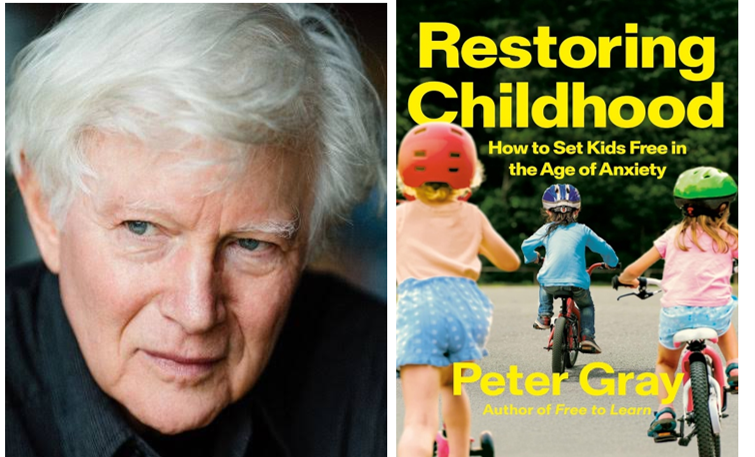
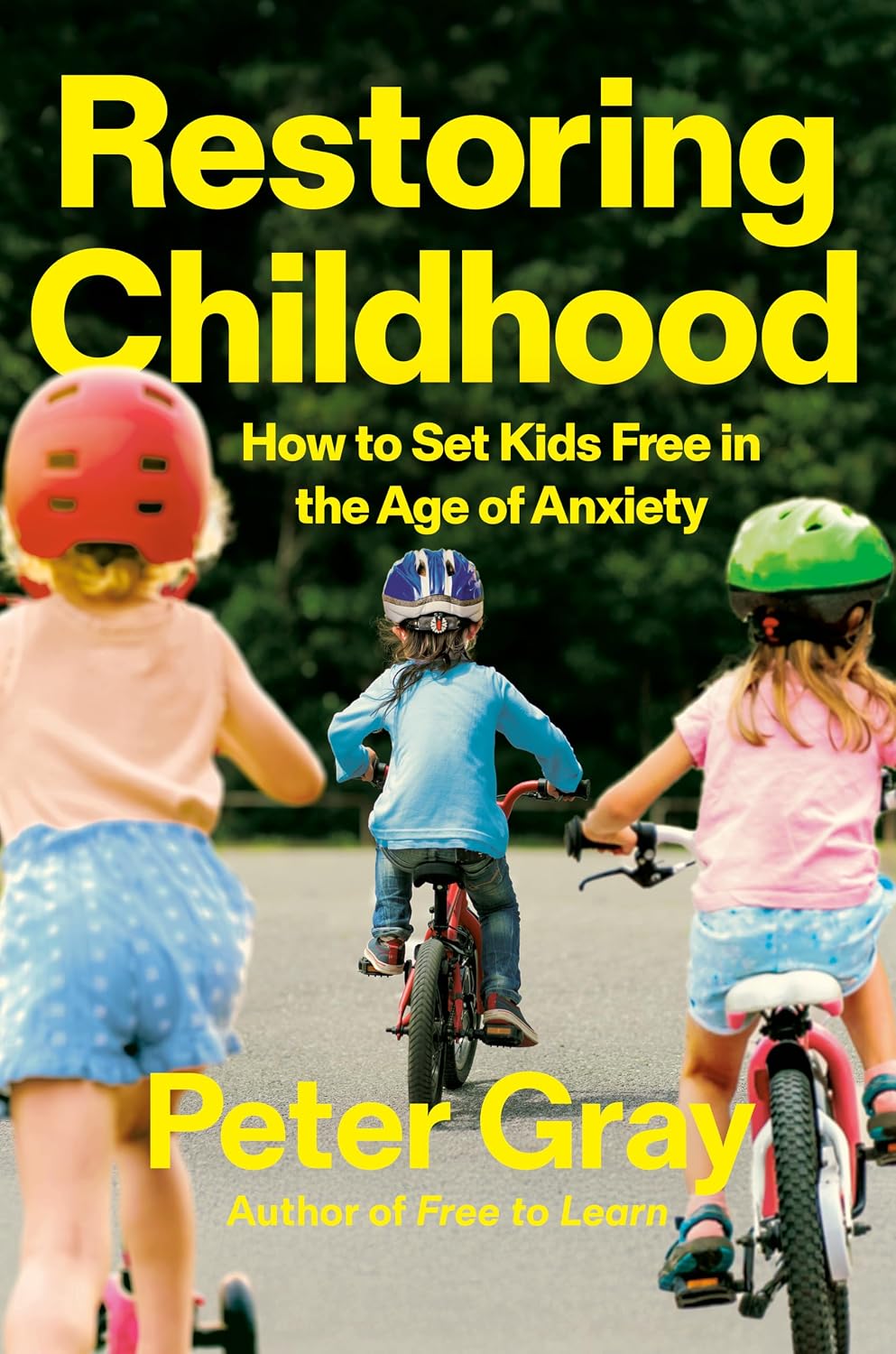
Psychologist and researcher Peter Gray paints an unsettling picture of how today’s kids are being raised and educated. In his new book, “Restoring Childhood: How to Set Kids Free in the Age of Anxiety,” he explains how stresses and restraints are being placed on children during a time that should be spent playing, exploring, and enjoying gradually increased responsibility.
In this detailed examination of modern parenting, readers find the startling realization that, despite parents’ good intentions, kids who are overly supervised and controlled show an increase in anxiety and depression. This isn’t just about middle school and high school ages, but also elementary school-aged kids, some as young as 8.
Experience Risk
Since the 1950s, there’s been a slow and steady decline in the freedom that children have to explore on their own. Up to that point, kids walked to school without adult supervision and played unsupervised in their neighborhoods. Then a turnaround in parenting advice was popularized, calling for more adult guidance and suggesting less engagement in activities that might pose some risk.
Gray points to articles in influential magazines like Good Housekeeping that redefined good parenting; in one 2006 issue, an article titled “Are You a Good Mother?” recommended that children be constantly supervised. The consensus became that the more closely parents monitored their children’s activities, the happier and better prepared for adulthood the kids would be.
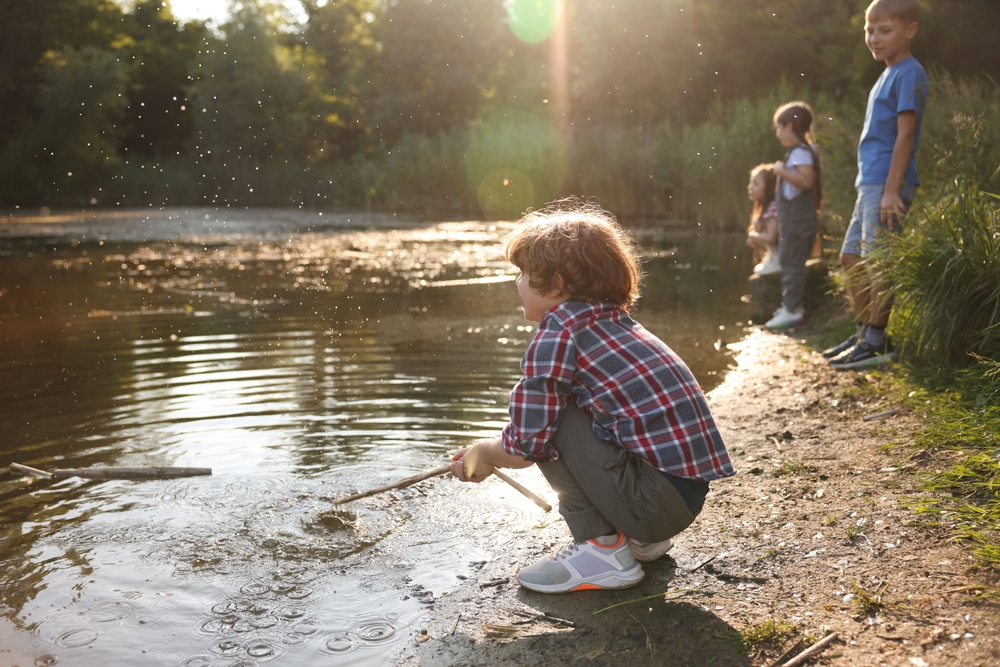
The blame, however, isn’t entirely on parents but on a variety of factors, including the emergence of television. In the mid-20th century, children enjoyed more independence after school. They rode their bikes to playgrounds and ran errands at nearby stores.
However, by 1955, most American households owned a TV. This decreased children’s outdoor play time when they would be out with friends and lessened their need to find ways to be creative with their free time.
Parents began overly managing their children’s day and supervising their activities. They jumped in to quickly solve their problems and curtail their children’s desire for freedom and exploration.
To emphasize this paradigm shift in parenting, Gray frequently compares the life of a child today to the experiences he had as a kid. Talking about his elementary school years, Gray shares that he and his friends would meet up after school and play every sport available.
“Adults were involved in none of this,” he writes. “In fact, there were usually no adults in sight.” Whoever showed up at the vacant lot organized the activity.
Author Research
This isn’t a new subject for Gray to explore. He’s been ringing the bell on the restoration of childhood for almost 20 years. He’s not only a cofounder of two nonprofit organizations that promote more independence for children, but he’s also released many earlier published works advocating for unsupervised play.
His expertise in the subject comes from his position as a research professor of psychology and neuroscience at Boston College, plus his own research in developmental psychology. What makes the sounding of this alarm most troubling is the “high levels of anxiety, depression and suicidality among children today.”
A third factor at play has to do with the introduction of new education policies. The Common Core, initiated during the Reagan administration, threw more focus on rigorous teaching requirements and standardized testing. Rather than causing an increase in learning, it heightened stress levels felt by students from elementary school age and up. With the emphasis on forced learning and drilling, teachers couldn’t offer adequate time for recess, lunch, and learning through enjoyable and engaged involvement.
Abduction Fears
A book advocating for more independence for children must consider the fears that parents harbor about abductions. Gray covers this subject in depth. He refers to the 1981 kidnapping and murder of Adam Walsh.
This triggered an enormous amount of attention to missing children overall and launched the practice of printing photos of missing people on milk cartons. Nevertheless, in the research he’s collected, we read that “statistically speaking, stranger abductions of children are exceedingly rare.”
By the middle of the book, readers have been given enough evidence of the negative culture of childhood. Gray then turns his attention to solutions. It comes down to, he says, the people and institutions who have a say in a child’s life. Besides parents and schools, he calls upon libraries, government agencies, recreation programs, and pediatricians to “reverse the terrible trend this book has described.”
“Restoring Childhood” makes a compelling case to abandon the updated definition of “good parenting.” It reverses parenting from a “tightened leash” to more freedom and time to play. A close second to his suggestion is more opportunities for children to build resilience and problem-solving. This results in healthier children both in their psychological and social development; children can also learn to be self-motivated and more prepared for adulthood.
Autonomy-Supportive Parenting
Gray has given a name to the parenting style he endorses: “trustful, autonomy-supportive parenting,” or TAS. He includes tips that can be performed even on a small scale in the home or classroom.
Parents can involve the child in decision-making, try to see the world from a child’s point of view, and allow a child to experience new things on his or her own, despite the potential for mistakes.
Readers may feel that there’s nothing new in this advice, but considering the statistics of how modern parenting has backfired, what’s laid out here should be discussed at dinner tables and school board meetings around the country.
Gray has more than proven his point. His expert background and writing skills leave readers well informed and hopefully motivated to try out his recommendations.
Those who work with children at any level should take the alarms raised in “Restoring Childhood” seriously, consider it a guidebook for today, and prioritize our children’s need to play.
‘Restoring Childhood: How to Set Kids Free in the Age of Anxiety’
By Peter Gray
Penguin Random House: Sept. 15, 2026
Hardcover, 352 pages
What arts and culture topics would you like us to cover? Please email ideas or feedback to features@epochtimes.nyc.
