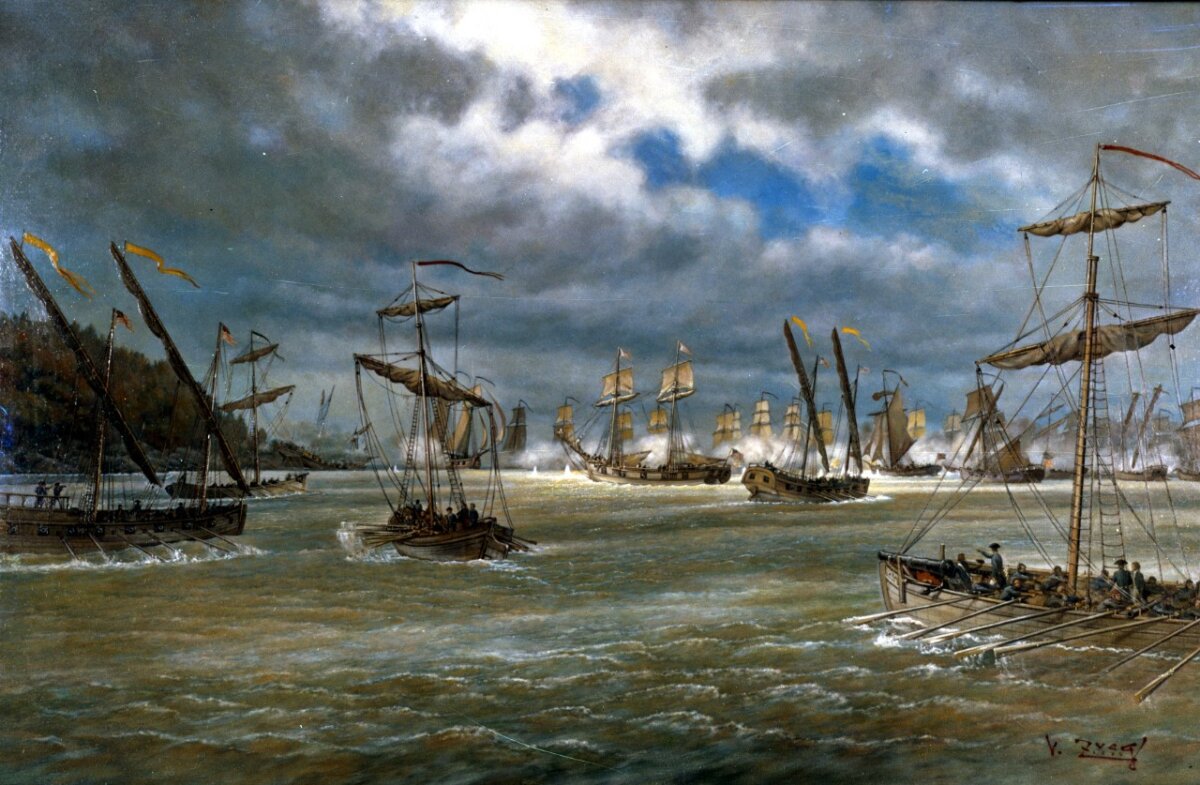
In the fall of 1776, the newly independent United States was fighting for its very existence against Great Britain and its German, Loyalist, and Native American allies.
An estimated 32,000 British and Hessian soldiers under Gen. William Howe had taken Staten Island, Long Island, New York City, and most of Manhattan. By late September, they threatened Gen. George Washington’s Continental Army with encirclement and destruction.
Britain’s navy, which dominated the Atlantic, launched raids and attacks along America’s coastlines. Native Americans allied with Britain waged a war of attrition against American settlers along the frontier, while Loyalist raiders operating out of British East Florida struck settlements in Georgia.
Meanwhile, in Canada, an invasion force of roughly 12,000 British and German soldiers under Gov. Guy Carleton, with Gen. John Burgoyne serving under him, threatened America’s northern frontier.
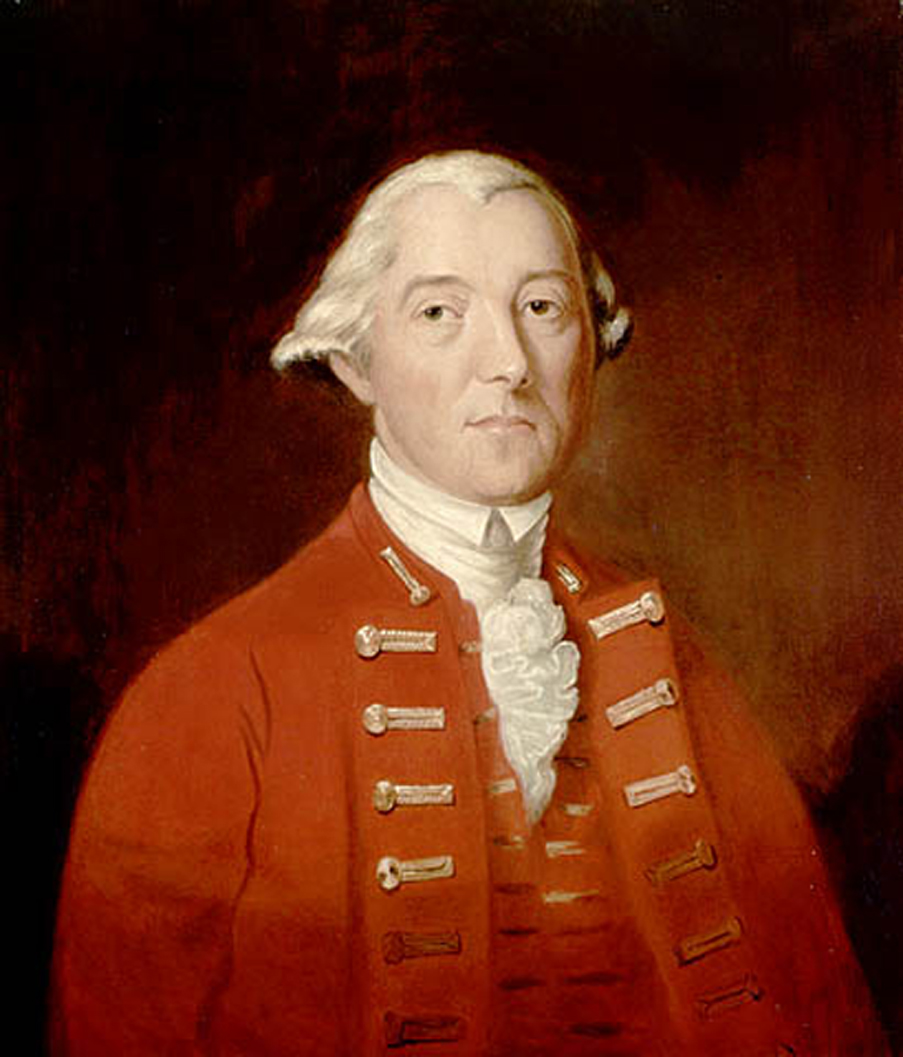
Britain recognized that control of the Lake Champlain-Hudson River corridor could isolate New England, the birthplace of the rebellion, from the other states. In October, Carleton launched a naval expedition south from Quebec into Lake Champlain, intending to clear the way for an invasion.
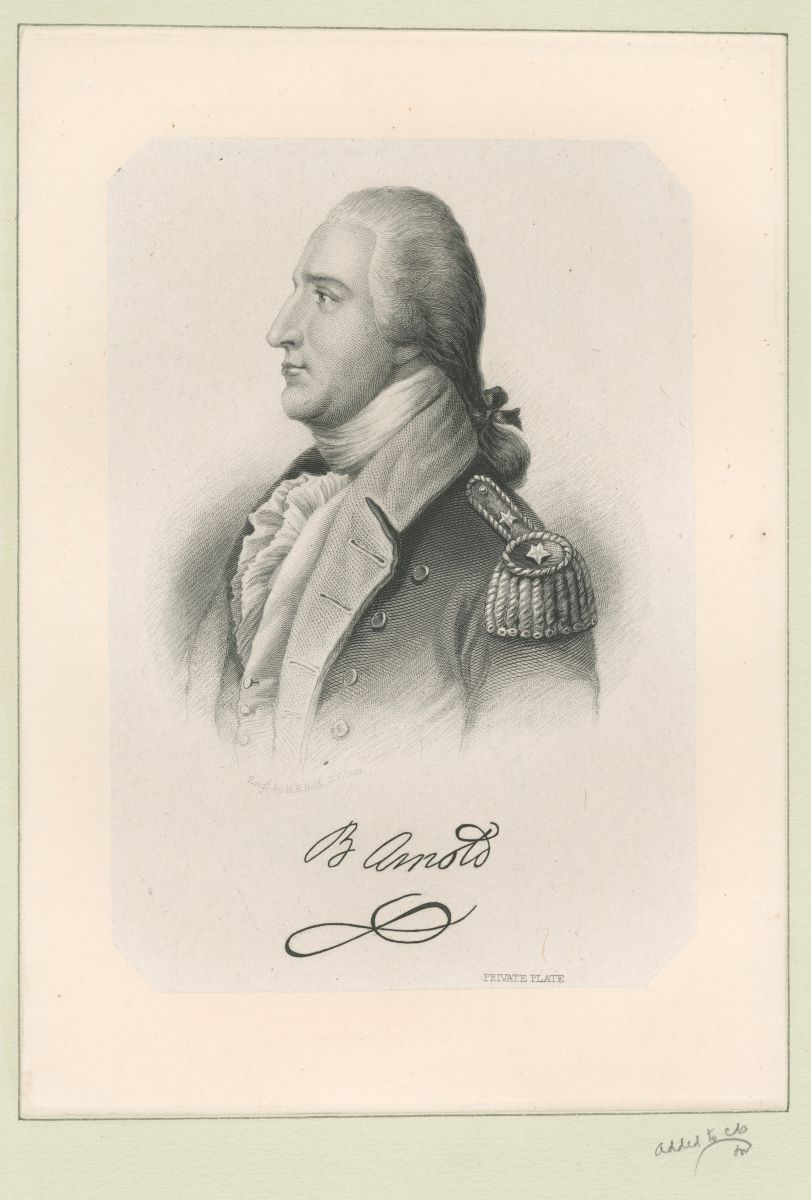
Standing in their way was an improvised American navy, manned by inexperienced but resilient soldiers and led by an aggressive and determined commander, Gen. Benedict Arnold.
Preparations for Invasion
Following the arrival of British and German reinforcements in Quebec, Continental forces were defeated and expelled from Canada in June 1776. During their retreat, Continental soldiers captured or destroyed every ship and boat that could be used by the British.
Because the border region was a dense wilderness with few usable roads, the Richelieu River and Lake Champlain provided the principal routes into New York and Vermont. Without the vessels necessary for transporting men, artillery, and equipment, the British offensive ground to a halt.
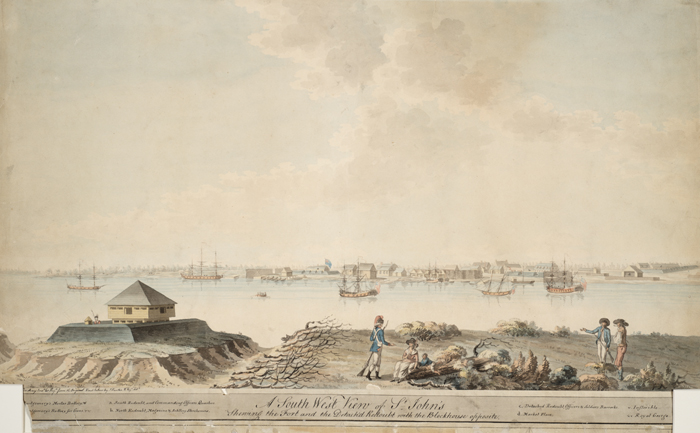
Carleton began building an invasion fleet at Fort Saint-Jean on the Richelieu River. Prefabricated warships, materials, and components were shipped from Britain. Warships operating on the St. Lawrence River were dismantled in Quebec City, transported to Fort Saint-Jean, and reassembled at the fort’s shipyard.
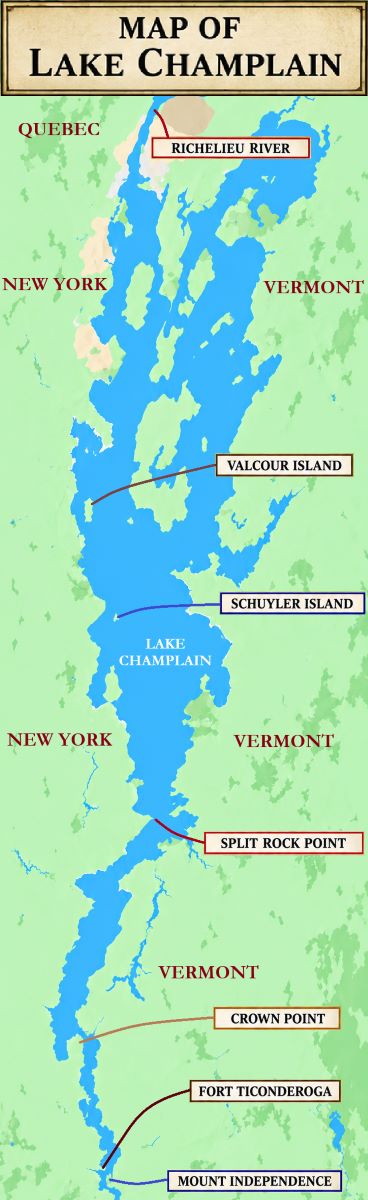
To meet this threat, Gen. Horatio Gates, who commanded New York’s frontier defenses, appointed Arnold to lead construction efforts for an American fleet capable of contesting British control of Lake Champlain. His objective was to delay the invasion long enough for the Continental Army to reinforce defenses at Fort Ticonderoga and Mount Independence. David Waterbury, a Connecticut militia leader with maritime experience, assisted Arnold.
Aside from several existing vessels, including the sloop Enterprise and schooner Royal Savage, much of the fleet had to be constructed. At the shipyards in Skenesborough, (present-day Whitehall, New York) carpenters, soldiers, and blacksmiths worked feverishly to build the makeshift navy.
Finding experienced sailors proved difficult because privateering offered more profitable opportunities. Arnold relied heavily on soldiers, teaching them the basics of ship handling and naval gunnery.
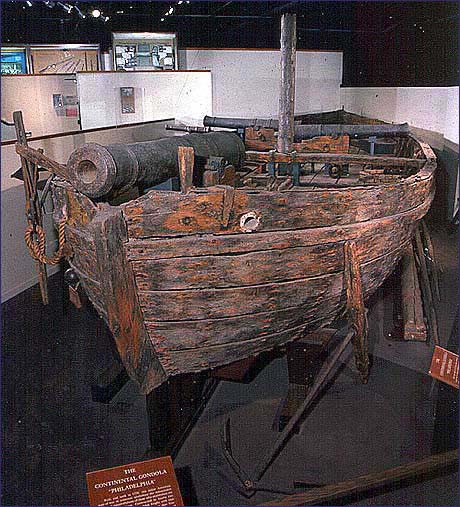
Row galleys and gondolas (gunboats), which could be powered by oars rather than relying entirely on sails, were constructed to better accommodate inexperienced crews.
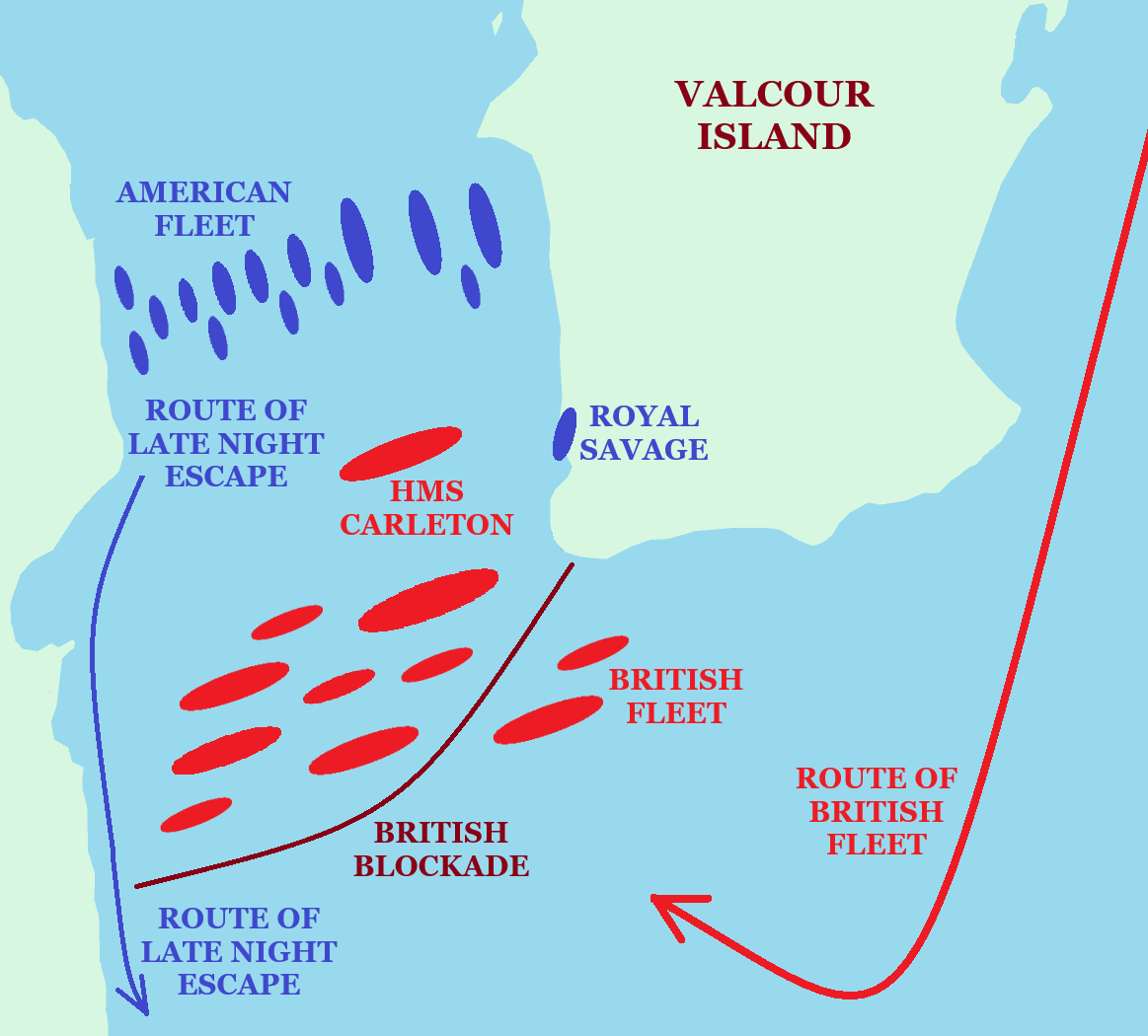
For months, the fleet patrolled the lake before taking up positions in Valcour Bay, a narrow channel between Valcour Island and the New York shore. Arnold had no illusions about his chances. He chose this position to restrict the British fleet’s maneuverability.
Britain Sets Sail
On Oct. 9, Carleton and Capt. Thomas Pringle set sail with an estimated 30 to 34 warships and 50 support vessels. Among the warships was the heavily armed HMS Inflexible. Their immediate objective was to destroy Arnold’s fleet and secure control of Lake Champlain before advancing the main invasion force. Burgoyne and the bulk of his troops remained behind, awaiting the outcome.
For two days, they moved south, cautiously searching for American ships.
On Oct. 11, strong northerly winds provided the British favorable sailing conditions. The fleet picked up speed, heading toward the 15 American warships lying in wait.
That morning, the schooner Revenge scouted the lake’s northern passages while American soldiers and Mohican warriors stood watch along Valcour Island’s north shore. The other 14 warships lay hidden in Valcour Bay. Around 8 a.m., lookouts aboard the Revenge spotted the British fleet and fired a warning shot to alert the American fleet.
Arnold’s men discovered they were facing an enemy with larger warships and heavier guns.
According to Jack Kelly’s “Valcour,” the lookouts stared in amazement at the lead enemy warship with its “three tiers of bright square canvas towering over the lake. … None of them had seen anything like it on the lake.”
Arnold ordered his commanders to gather for a council of war. Because of the enemy’s superior strength and composition, their best chance of success was to remain anchored in Valcour Bay. They would remain hidden until after the enemy fleet had sailed past the island. The British would then be forced to turn around and fight into the headwinds. The island and coast would protect the American flanks.
Waterbury objected, fearing they would be surrounded, and suggested they fight in the open lake to use the wind to escape. Arnold overruled him, noting the larger British warships were much faster and would easily overtake them in the open water.
Because of the wind conditions, Arnold transferred his command from the sailing schooner Royal Savage to the row galley Congress. During the transfer, he inadvertently left his personal papers and financial receipts behind.
Engagement
Once the British fleet sailed past Valcour Island, Arnold sent the Congress and the Royal Savage out to draw their attention. The British immediately attempted to reverse course, but the larger, masted ships were frustrated by the strong headwinds. Oar-powered British gunboats and the schooner HMS Carleton advanced close enough to attack.
The Royal Savage struggled against the winds, ran aground on Valcour Island and was abandoned. British sailors boarded the schooner before American gunfire forced them back. Before retreating, they set the vessel ablaze and completely destroyed Arnold’s papers and receipts. Their destruction would complicate his later efforts to claim reimbursement for his expenses and fuel his growing bitterness toward the Continental Congress.
For hours, both sides were engaged in a fierce artillery duel. HMS Carleton suffered considerable damage and was towed away by British longboats. But the larger, more powerful British guns pummeled Arnold’s fleet. The Philadelphia sustained heavy damage and sank. Other vessels remained afloat but were severely damaged.
As daylight faded, the powerful Inflexible finally maneuvered into firing position, unleashing its heavy guns against the Americans.
By nighttime, the British formed a blockade that trapped the Americans. They also deployed Native American allies on the New York shore and on Valcour Island to prevent the Americans from escaping on foot.
The British expected to resume the battle the following morning and destroy what remained of the fleet. But Arnold had other plans.
With most of the vessels damaged, Arnold executed a daring escape under cover of darkness and thick fog. With their oars muffled, the surviving vessels slipped through a narrow gap between the British fleet and the New York shore.
By dawn, the British discovered the Americans had escaped. Pringle ordered a pursuit, but adverse winds and damaged vessels slowed the chase.
The Americans reached Schuyler Island, where exhausted crews made repairs. Several badly damaged gondolas were scuttled.
On Oct. 13, the British caught up with the Americans near Split Rock Point, New York. The row galley Washington, commanded by Waterbury, was crippled and its crew surrendered. Arnold continued fighting aboard Congress while attempting to save his remaining vessels. Four of those vessels successfully escaped to Crown Point.
The Congress and four gondolas fled into a shallow bay in Vermont where the larger British ships could not follow. The crews stripped the boats and set them on fire with the Continental colors still flying.
Arnold led the 200 survivors through the woods before safely reaching Crown Point on Oct. 14. He ordered the destruction of the fort’s facilities before proceeding to Fort Ticonderoga later that day.
The following day, Oct.15, Carleton occupied Crown Point and released on parole all Americans he held prisoner.
Within days, snow began falling. Following a snowstorm, Carleton feared winter weather would disrupt his supply lines. He abandoned Crown Point on Nov. 3 and withdrew his forces back to Quebec.
Aftermath
The Battle of Valcour Island was a tactical defeat for the Americans, who lost 11 of their 15 vessels during the campaign. The Americans suffered between 60 and 80 killed or wounded, while the British suffered around 40 casualties and lost three gunboats.
Arnold’s resistance, however, helped delay the British advance until the approaching winter compelled Carleton to withdraw. This critical delay postponed the major British invasion by a year, giving the Continental Army much-needed time to strengthen its northern defenses and prepare for the campaign that culminated in the decisive American victory at Saratoga in 1777.
What arts and culture topics would you like us to cover? Please email ideas or feedback to features@epochtimes.nyc.