



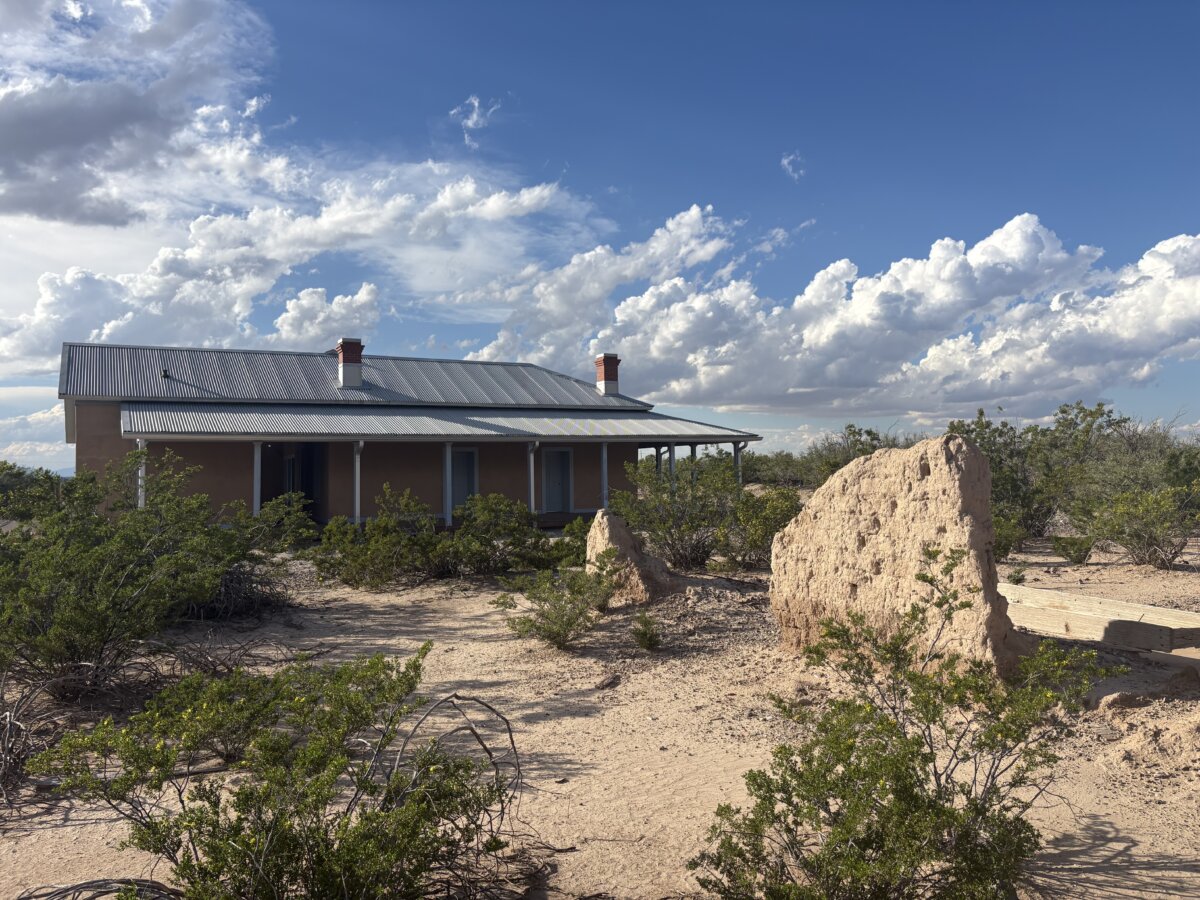
Approximately 20 miles from the town of Alamogordo, New Mexico and another four miles to the end of a dry, colorless desert road frequented by road runners and tarantulas is beautiful rocky Dog Canyon. It is in sight of steep cliffs—on the flat Tularosa Basin once lush with prairie grass—that Oliver Lee decided to raise cattle and a family in 1893. The same year, he began building a sprawling adobe-brick ranch house with traditional vigas roof logs. Today, the house is open to the public for people to glimpse what Lee’s life was like in that harsh landscape.
Oliver Lee Memorial State Park was established in 1980 to honor the man who built a life in the canyon. The park is visited by an estimated 25,500 people annually who hike, camp, and learn. While he isn’t well-known outside of New Mexico or Texas, where he grew up, Lee embodies the spirit of America’s original western ranchers due to his doggedness and business acumen.
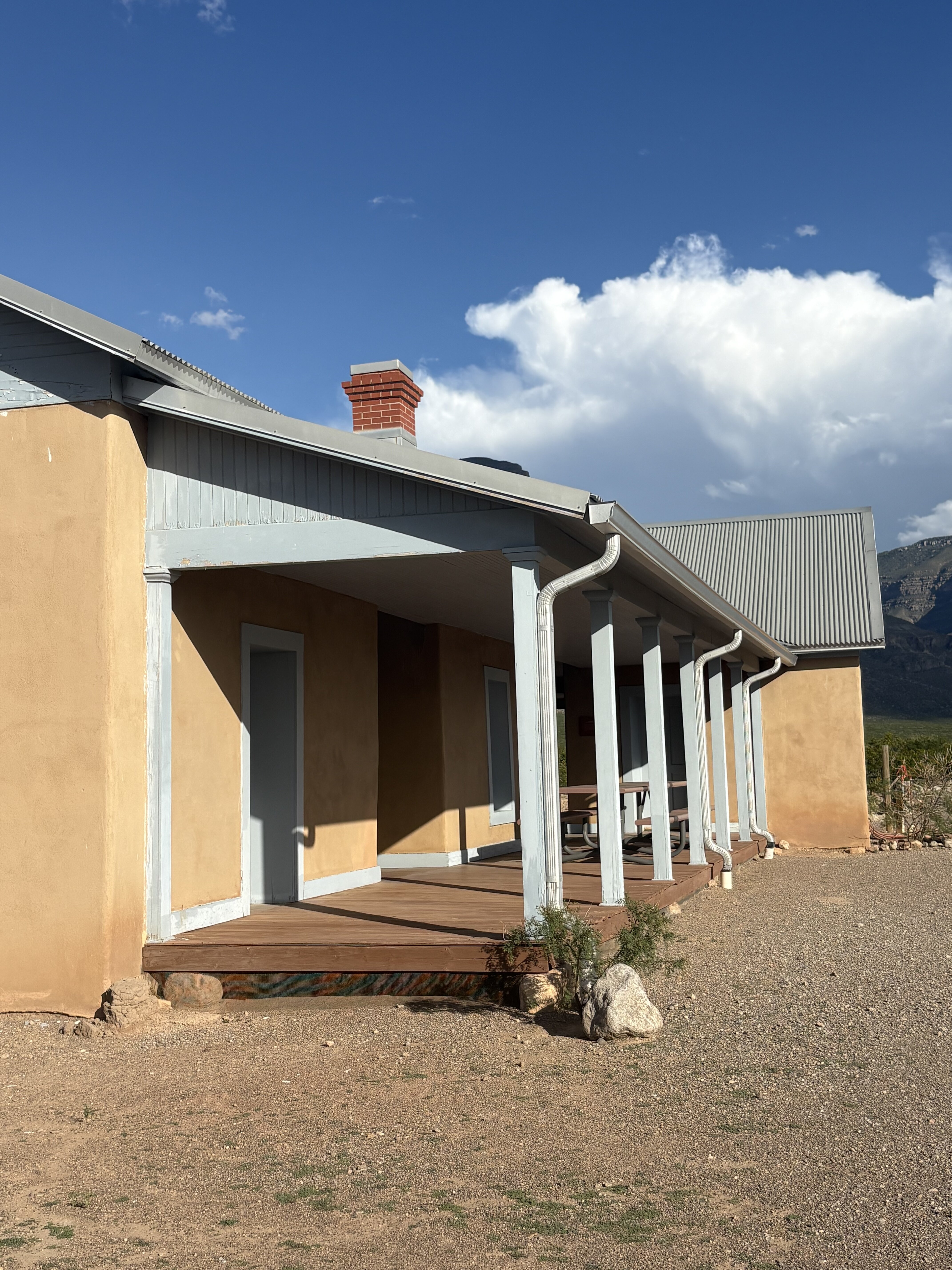 The back porch of the home once faced a fruit orchard. (Deena Bouknight)
“I don’t know why a movie hasn’t been made about him,” Dan Finnerty, a park volunteer, said.
“He left his home in Texas to immigrate to what was then the New Mexico Territory, before it became a state in 1912. He eventually owned around a million acres of ranch land, organized and oversaw a large cattle company, became the president of a bank, and served two terms in both the New Mexico state house and senate.”
Determination and Grit
Finnerty gives tours of Lee’s ranch house on Saturdays. With adobe walls plastered over to give it a more finished, sophisticated appearance, the ranch house’s 10 rooms accommodated Lee’s mother, Mary; wife, Winnie Pocahontas; and six of their nine children. The front door leading to the parlor faces the looming Dog Canyon mountain range; the back door once faced a fruit orchard. The home had a kitchen, bedrooms, a school room, and foreman quarters. Remnants of a huge adobe barn, a chicken house, well house, and slaughter house surround the house.
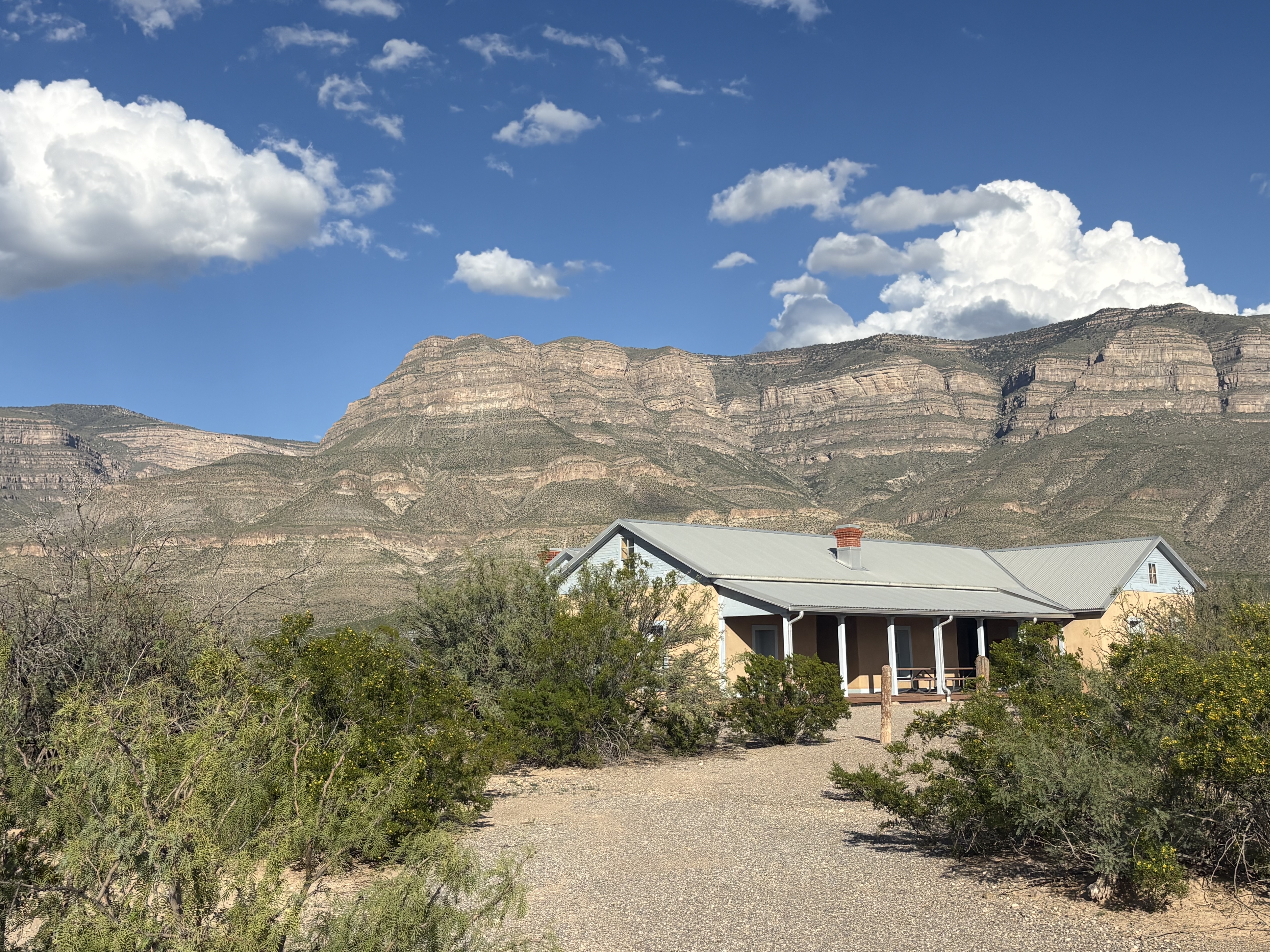 The path to the home cuts through the scrub and brush of the New Mexico valley. (Deena Bouknight)
Despite the remoteness and wildness of the place, where rattlesnakes, scorpions, and tarantula hawk wasps delivered painful to life-threatening bites or stings, the Lee children all grew to adulthood and were well educated and mannered. A photograph taken of eight of the nine Lee children shows them well dressed in late 19th-century fashions.
Also remarkable is the fact that Lee and his family survived the Wild West violence of the era. In his 1980 book, “Tularosa: Last of the Frontier West,” professor and historian C.L. Sonnichsen described the region this way : “The Tularosa country is a parched desert where everything, from cactus to cowman, carries a weapon of some sort, and the only creatures who sleep with both eyes closed are dead.”
The fact that Lee’s his ranch house had nine exit doors and an escape tunnel hidden under the master bedroom fireplace attests to just how uncertain life could get in the New Mexico Territory.
In his lifetime, Lee shot the man who killed his best friend. For two years in the late 1800s, Lee was also tracked down by Sheriff Pat Garrett—legendary killer of Billy the Kid—for supposedly murdering an attorney, representing a competing ranching interest, and his 8-year-old son. Lawyer Albert Fall, later notorious for the Teapot Dome Scandal, was also a rancher and served as Lee’s attorney. Lee was acquitted in 1899.
In 1907, Lee moved his existing family to a larger home and ranch called Circle Cross. Surrounded by lusher grazing lands at a higher elevation in the Sacramento Mountains, Lee’s ranching business grew, as did his family. Three more children were born there.
The Dog Canyon home was rented by different tenants for a few years, until it was neglected and fell into disrepair. In 1940, the National Park Service purchased the land and the house, with the intention of using its water source for nearby White Sands National Monument (now a national park). The house stood empty until Disney made a movie there, “Scandalous John,” in 1971.
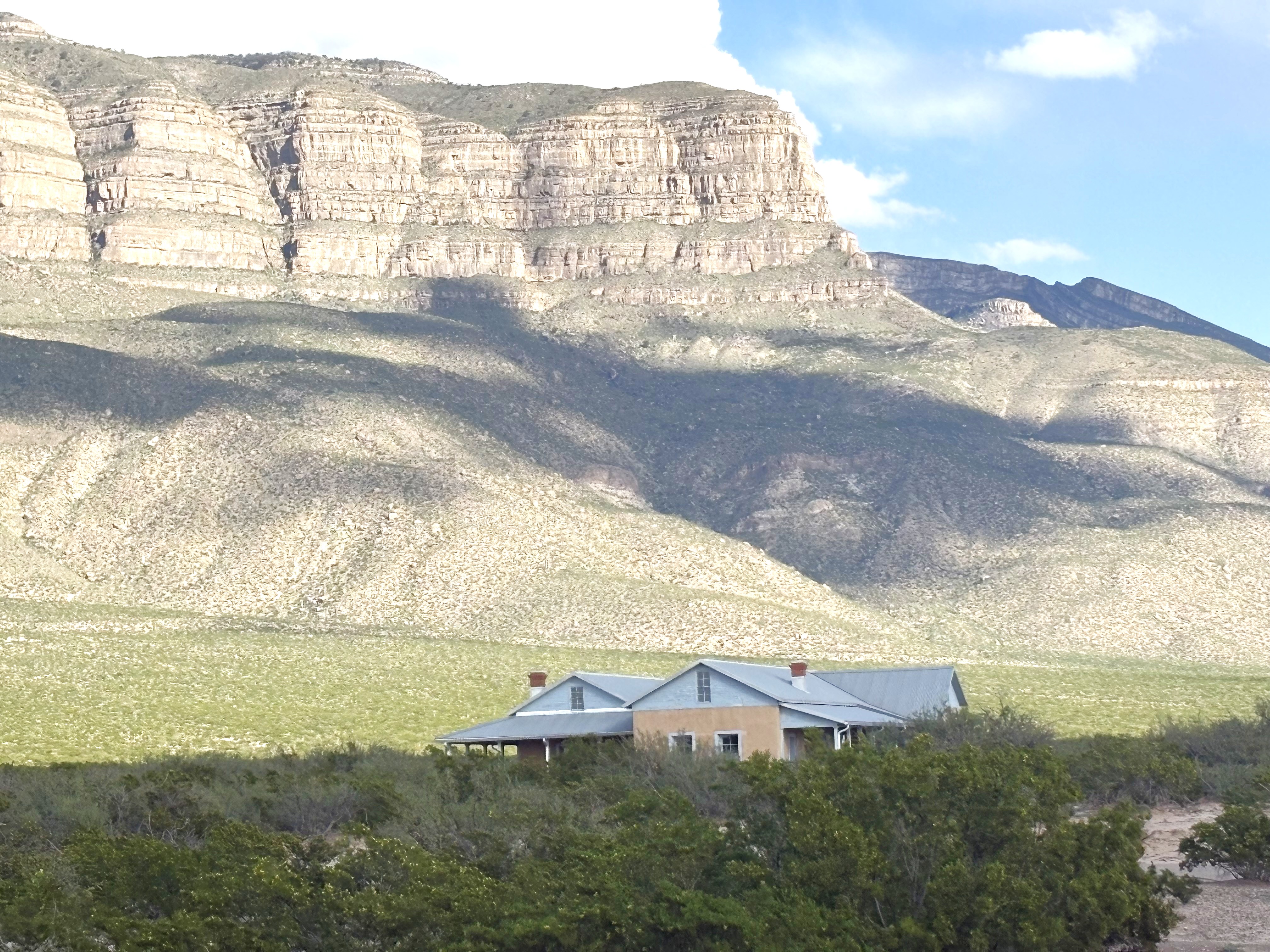 Surrounded by the Sacramento Mountains, the Lee Ranch House was a perfect setting for a Western-themed movie. (Deena Bouknight)
Realizing the historic ranch house might deteriorate to the point of ruin, New Mexico State Parks assumed management of the property. In 1983, the organization began its complete restoration. It was filled with original Lee family furnishings as well as antiques representing the 14 years of the Lees living there. The house was finally listed on the National Register of Historic Places in 2015.
Today, the state park’s visitor center exhibits items Lee used while alive, including his hand-tooled leather saddle, donated by one of his grandsons. Lee supposedly rode in the saddle until his death in 1941 at age 76. His wife’s intricately made quilts are also on display inside Oliver Lee Memorial State Park visitor center.
While the ranch house is the only tangible evidence of Lee’s life in Dog Canyon, aspects of his legacy are exhibited in a local museum. The nearby Charlie Lee Memorial Highway is named for one of his grandsons. Plus, several of Lee’s descendants followed in his footsteps by becoming prominent New Mexico ranchers.
What arts and culture topics would you like us to cover? Please email ideas or feedback to features@epochtimes.nyc.
