My grandfather, now approaching his 95th birthday, is working on his memoirs. “I have almost 100 years of experience to share with people,” he told me. In writing down his experiences, he has two objectives: first, to inspire gratitude for the modern conveniences that he sorely lacked growing up on a South Dakota farm without running water or electricity; second, to make readers, in his words, “reflect on their relationships with their creator.” These memoirs will, no doubt, transmit a great deal of wisdom from the prior generation to future generations.
There is another way to transmit such wisdom that is perhaps even more powerful: through the living presence of elders in their communities. Multigenerational living has lost popularity in the United States over the last century. The elderly are often sequestered in assisted living communities if they remain somewhat independent. Or, as a result of people living much longer than they did in the 20th century, they may live in more intensive long-term care facilities where their medical needs can be well-tended to.
Despite its upsides, this generational segregation has costs for society. We may risk losing the embodied wisdom and cultural identity that the elderly provide. As philosopher John Cuddeback wrote on his blog Life-Craft:
“In examining the all-important virtue of practical wisdom, or prudence, Aristotle points to a key feature of how it is formed. The young need to attend to the sayings and opinions of older people. In Aristotle’s mind this is not a recommendation, a suggested trick for getting ahead. This is simply the way it works, the natural design for the growth and perfection of human persons.”
The Lessons of a Long Life
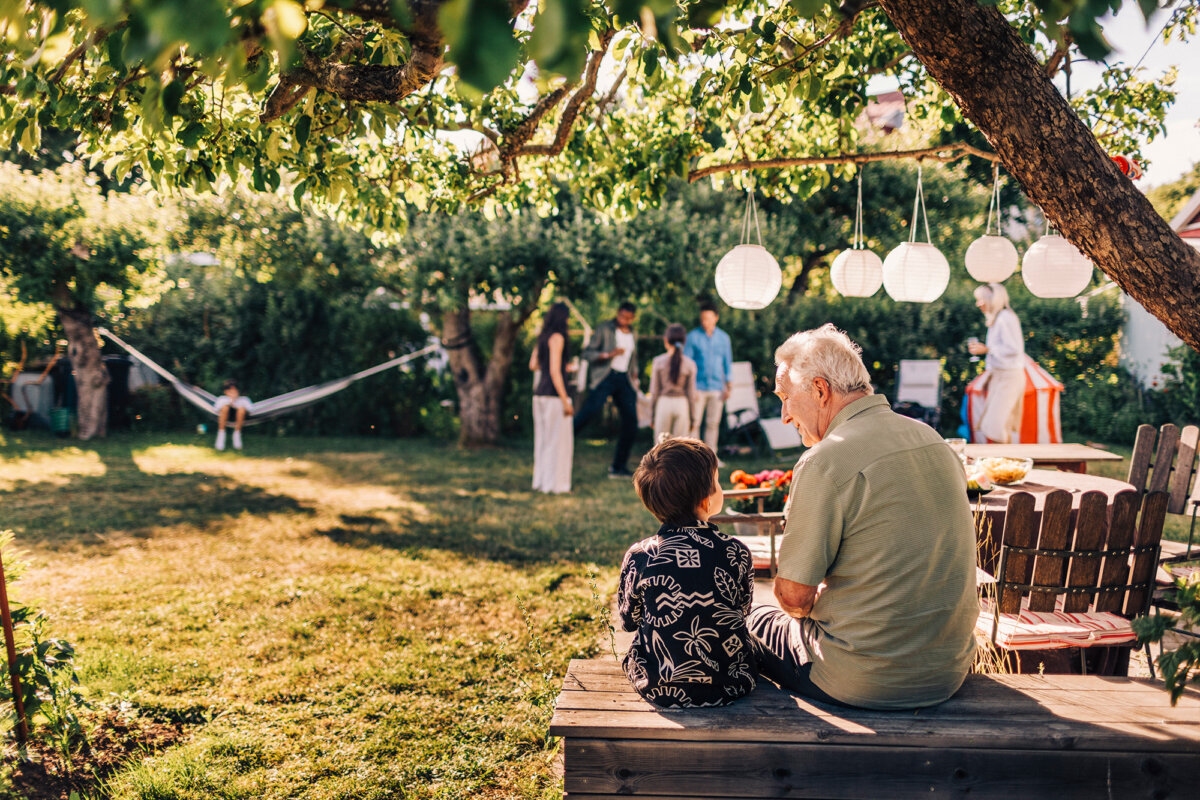
These truths were brought home to me during a family visit to my grandfather. I was struck by the sight of my 4-year-old daughter perched on the couch beside her 94-year-old great-grandfather, her golden curls and fresh face contrasting with his gray hair and weathered, timeworn face, like a cliff eroded by wind and rain. He was telling her stories.
Now, if we believe that storytelling is not an important contribution to society on the part of the elderly then we have, quite literally, lost the plot. In a very real sense, we are made of stories. The stories we tell about ourselves, our families, and our nation largely determine the direction of our lives, and individuals who remain ignorant of the stories that preceded their own lack crucial context for understanding themselves and the world around them.
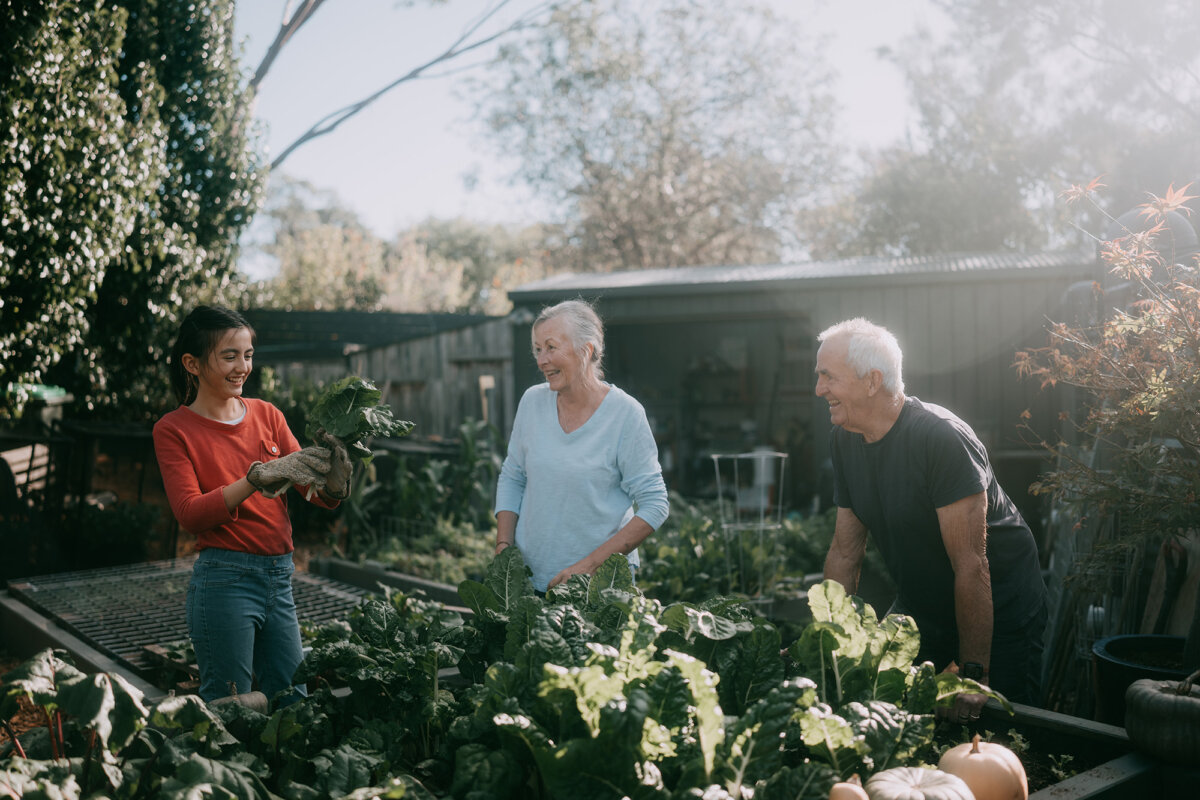
One of the great advantages of the multigenerational living environment—or at least of social structures where grandparents frequently interact with younger generations—is that it makes such amnesia almost impossible, for there was Grandpa or Grandma always before the family, reminding children and adults alike of where they came from, the strengths and weaknesses of the family, the hardships of life, as well as the possibility of weathering them. When Grandpa or Grandma bounces a grandchild on the knee, regaling the child with little anecdotes from long ago, he or she is engaged in crucial cultural and familiar transmission.
The elderly preserve memory and experience in a living way that expands the perspective of the young to encompass more than their own narrow interests, weaving and integrating the threads of different stories and different decades so that the life of a person might be something of whole cloth, and not a ragged fragment, torn from any connecting fabric of meaning, memory, and belonging.
This is not to say that the next generation should become little clones of their parents or grandparents. Each generation defines itself in contrast to the previous cohort, learning from its successes and mistakes. But such learning itself becomes impossible when familiar and societal memory has been eroded by the absence of the elderly from familial and societal awareness. Moreover, there is a difference between generational change in a family tree of an organic sort—a little pruning here, a little sprouting there—versus a wholesale rejection of (or indifference toward) what came before, which is more like chopping off the tree at the roots.
Repeated enough times across enough families, and this kind of severing results in a society identity crisis, such as the one that America is experiencing now. Are we socialist, democratic, republican, imperial, or something else entirely? Are we a nation of immigrants, and if so, what kind? We’re “the land of freedom,” but freedom for whom, exactly, and within what constraints? What does it mean to be American?
The fact that we ask—and rage and roil over—these questions tells us how much we have lost touch with our understanding of our own tradition, the transmission of which occurs first and foremost in the family. It starts when Grandpa tells stories by the fire on a winter’s night.
It would be simplistic to say all our grandparents shared the same values or worldview, though it was more cohesive. But what remains true is that the voices of the older generation—if heeded— help provide societal stability. Grandparents fulfill an important function within the family unit as storytellers, child entertainers, keepers of memory, depositories of wisdom, and signs of hope that the ups and downs of life and history are endurable, that man or woman might pass through the purifying fires of experience to become a living witness to the permanence of the human spirit.