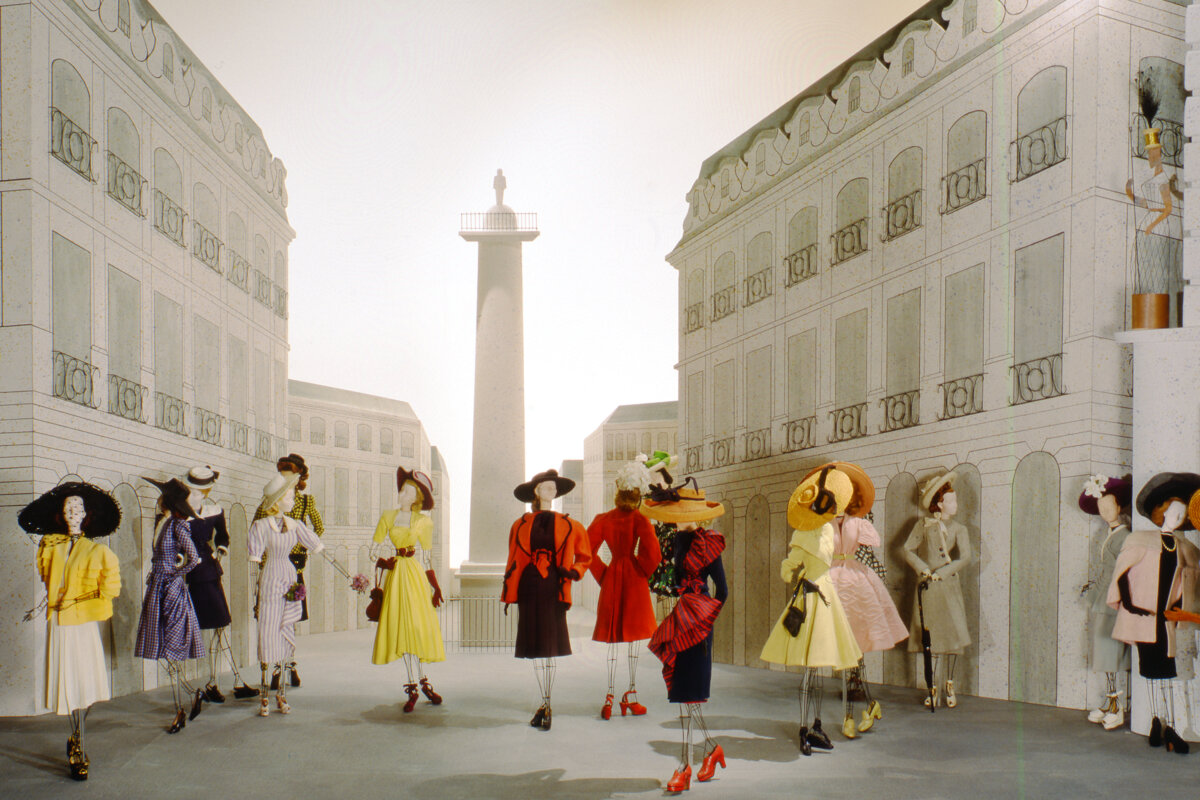
In the aftermath of World War II, the fashion industry faced an uncertain future, with jobs and materials still scarce. Haute couture, French for “high sewing” and the inspiration for much of women’s fashion, was struggling. Its revival came, in part, from an unlikely source: a traveling exhibition of miniature mannequins. Today, the Théâtre de la Mode is on view at the Maryhill Museum of Art in Washington state, offering a glimpse of postwar France, when fashion became more than style. It became a symbol of survival and ingenuity.
Fashion Finds a Way After the War
Wartime hardship transformed industries worldwide, and fashion was no exception. Luxury gave way to rationing and practical utility, and materials needed for the war effort were diverted from civilian use. Wool went into uniforms and silk into parachutes, leaving most civilians to make do with rayon and other synthetic or semi-synthetic fabrics. In Paris, the center of haute couture, the stakes were even higher. Material shortages and the pressures of Nazi occupation threatened the livelihoods of thousands of workers.
French designers were determined to keep Paris at the heart of international couture. As the war drew to a close, they launched an ambitious exhibition to showcase French fashion while raising money for those affected by the war. Robert Ricci, son of designer Nina Ricci, came up with the idea for the Théâtre de la Mode, or Theatre of Fashion. Rather than produce full-size garments that would consume precious fabric, he proposed dressing small-scale wire mannequins in scaled-down versions of current couture. The concept was as practical as it was charming.
The exhibition brought together leading names in French fashion, including Cristóbal Balenciaga, Nina Ricci, Alex Maguy, and Pierre Balmain. Milliners, shoemakers, embroiderers, and jewelers also contributed their skills, transforming the tiny figures into remarkably detailed representations of 1940s style.
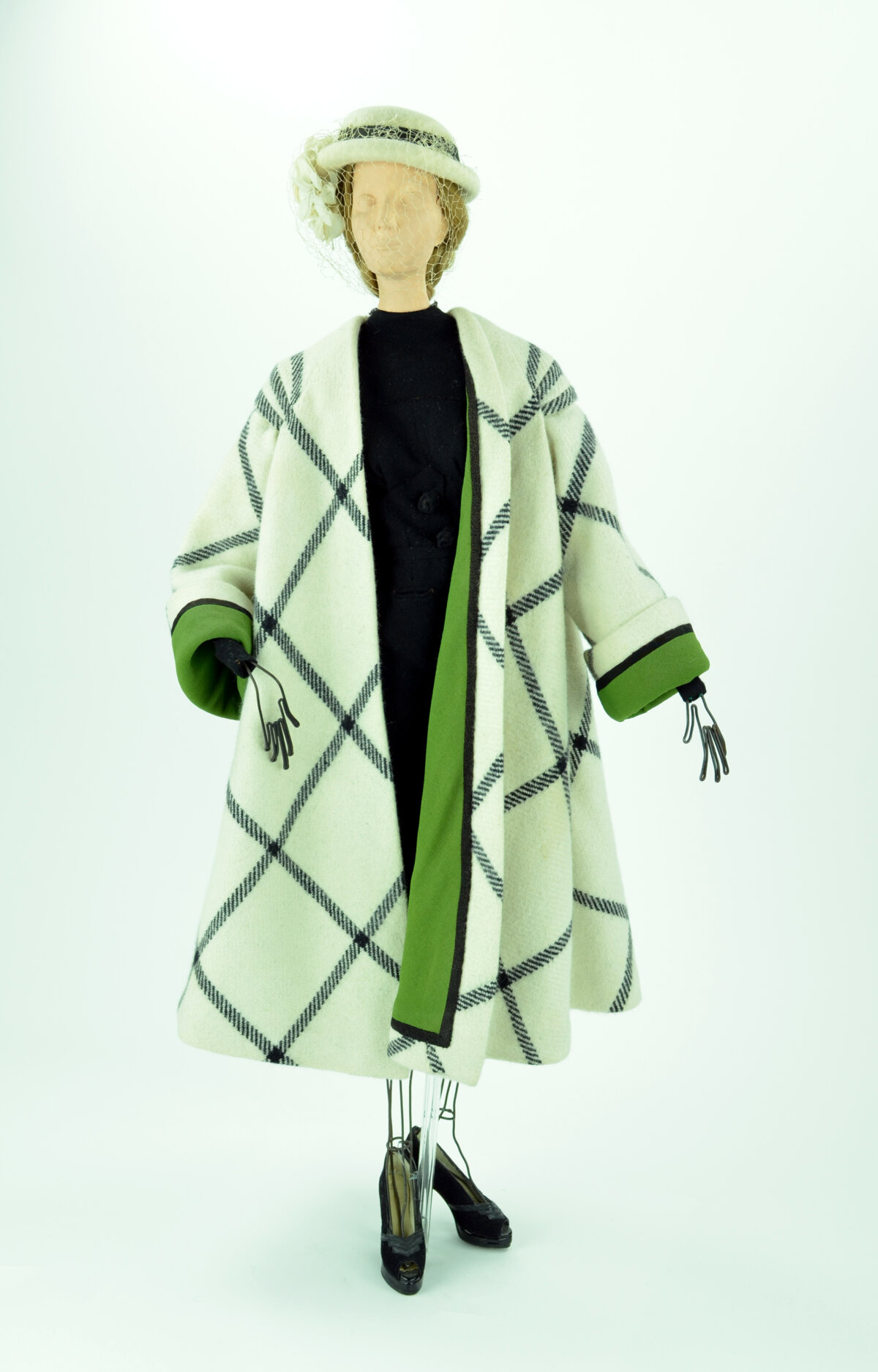
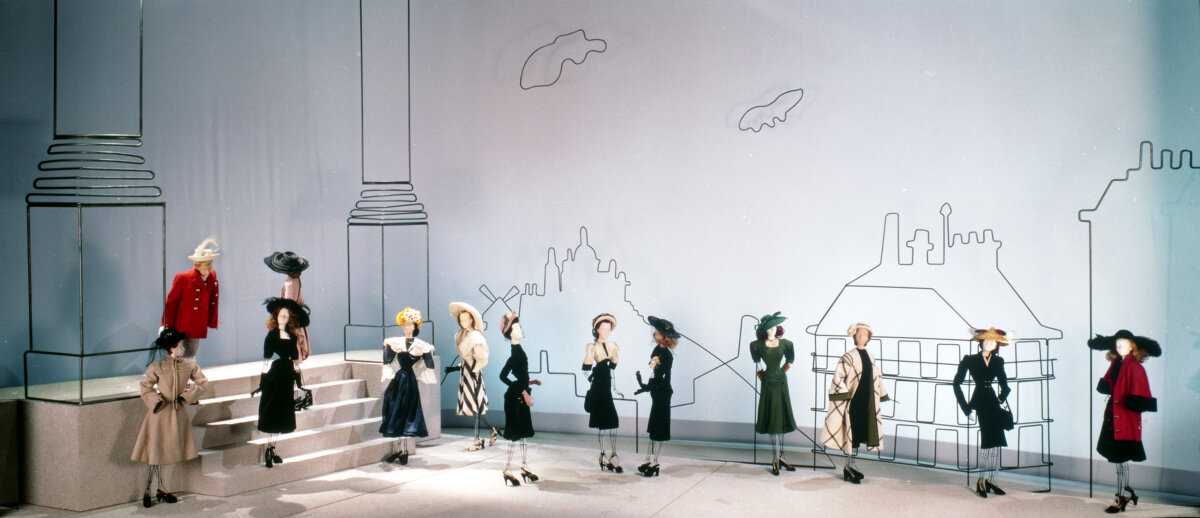
Standing a little over two feet tall, the mannequins wore garments with carefully executed tailoring, intricate embroidery, delicate buttons, and elaborate embellishments. The figures were presented in imaginative sets designed by artists and decorators that evoked recognizable Parisian locations and turned the exhibition into a theatrical experience.
The Théâtre de la Mode opened at the Louvre’s Museum of Decorative Arts on March 28, 1945. The response was overwhelming: More than 100,000 visitors came to see the exhibition, which raised nearly 1 million francs (approximately $795,000) for war relief. The mannequins subsequently traveled to cities across Europe, including London, Copenhagen, Stockholm, Vienna, and Barcelona, before crossing the Atlantic to New York and San Francisco in 1946.
Saved From Obscurity
After the American tour, the mannequins were stored in the basement of San Francisco’s City of Paris department store. Alma de Bretteville Spreckels, a prominent philanthropist and art collector, helped secure their transfer to the Maryhill Museum of Art in 1952, saving them from obscurity. Spreckels, a close friend of the museum’s founder Sam Hill, helped fulfill his vision after his death. She completed the museum, oversaw its public opening in 1940, and donated significant works from her personal collection. The museum was a fitting haven, known for an eclectic collection that spans Rodin sculptures, Indigenous art, and European and American paintings.
In 1988, Paris’s Musée de la Mode et du Textile restored the mannequins and recreated their lost settings, and Maryhill now preserves nine of these reconstructed sets. To protect the delicate historic textiles, the museum exhibits three of the nine ensembles each year. Each set offers a different take on the relationship between fashion and design, revealing how the mannequins were conceived not simply as clothing displays but as characters inhabiting carefully imagined scenes. This rotation allows visitors to enjoy the garments while helping safeguard them for future generations.
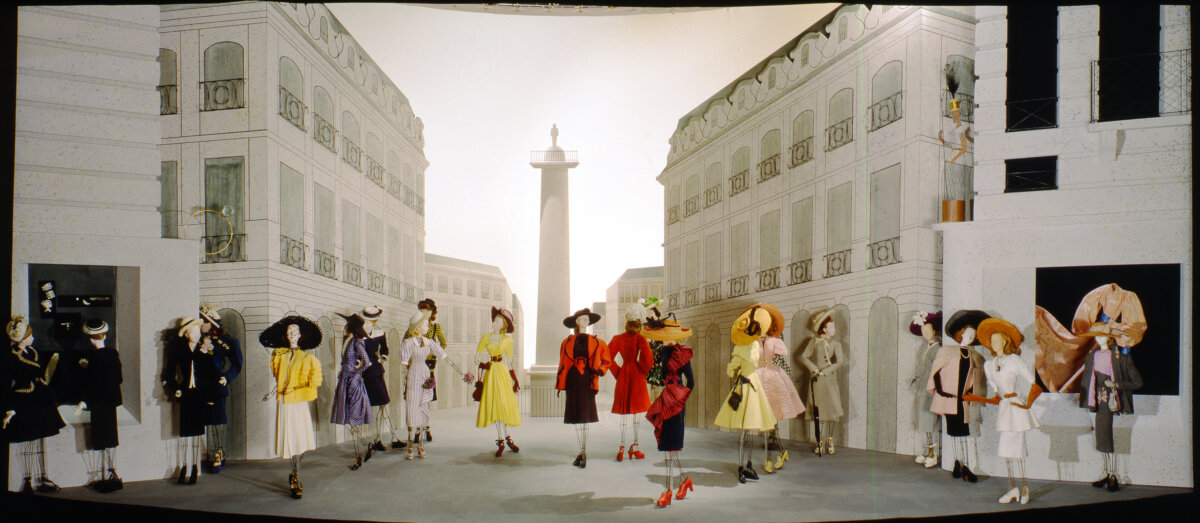
The Théâtre de la Mode’s influence outlasted its original tour. Later fashion exhibitions, doll designers, and contemporary artists have all borrowed from its mix of miniature couture and stagecraft. In 2020, Dior’s Maria Grazia Chiuri showed a haute couture collection on miniature mannequins in a display modeled on the 1945 exhibition.
Up close, it’s the details that stay with you: a tiny embroidered sleeve, a carefully shaped hat. Step back, and a larger meaning comes into view: Even in a time of profound upheaval, creativity can help a culture find its way forward.
What arts and culture topics would you like us to cover? Please email ideas or feedback to features@epochtimes.nyc.