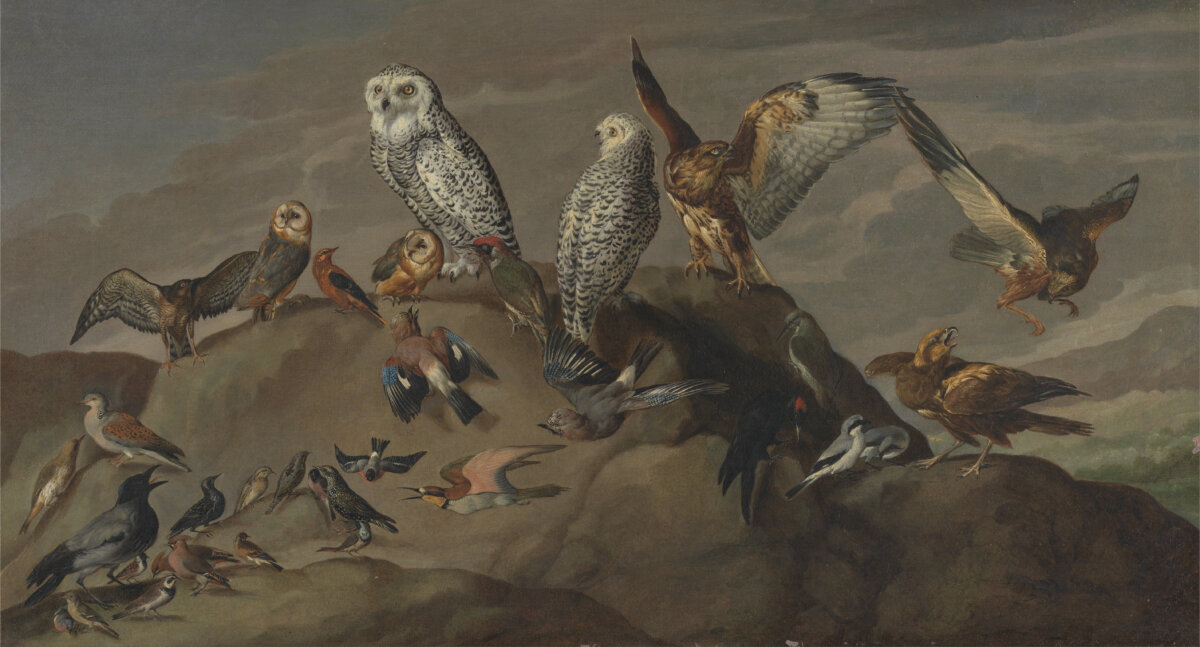
In Aesop’s fable “The Owl and the Birds,” the owl warns the other birds of a danger they cannot yet see. They ignore her, suffer the consequences, and only later realize how wise she was. The story captures an association that has followed the owl for centuries: the bird that perceives what others miss.
Other birds have carried equally powerful meanings: The falcon has symbolized royalty, the dove love and peace, and the crane long life. Across cultures, people have seen birds as more than feathers and flight, and that is why they remain such compelling symbols.
The Falcon: A Crown in the Sky
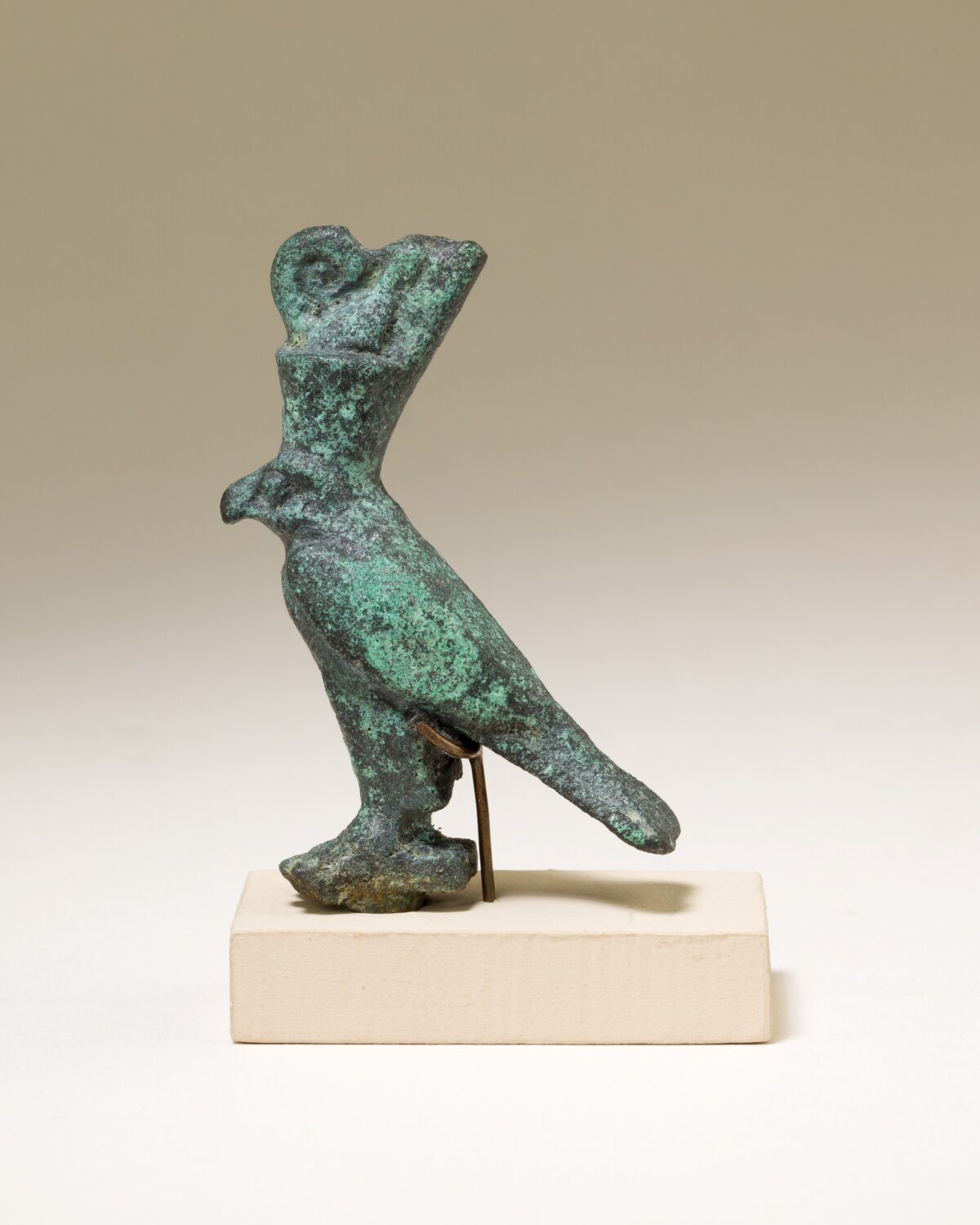
In ancient Egypt, the falcon was sacred to Horus, god of the sky and protector of kings. Rulers were believed to share a special bond with him, so a falcon image could signal that a king reigned with Horus’s blessing. The falcon’s significance is evident in the statuette “Horus Falcon in Double Crown” (between 664–30 B.C.), whose double crown, symbolizing the unification of Upper and Lower Egypt, links the god to the strength of the entire kingdom.
The falcon’s link to power did not end with Egypt. From the Far East to the medieval West, it has also stood for royalty and spiritual significance. In the Rigveda, one of the oldest collections of Hindu hymns, the falcon, known as the Syena, flies to heaven and brings back Soma, a sacred drink believed to restore energy and renew life. By carrying this gift from the gods to humankind, the falcon becomes a bridge between heaven and earth.
Islamic cultures admired the falcon’s speed, strength, and hunting skill, qualities that mirrored the courage, discipline, and command expected of a ruler. In mystical poetry, the bird often represented the human soul striving to return to God. The poet Rumi, for instance, frequently used the falcon as an image of the spirit returning to its divine source and at times declared the spirit a falcon outright.
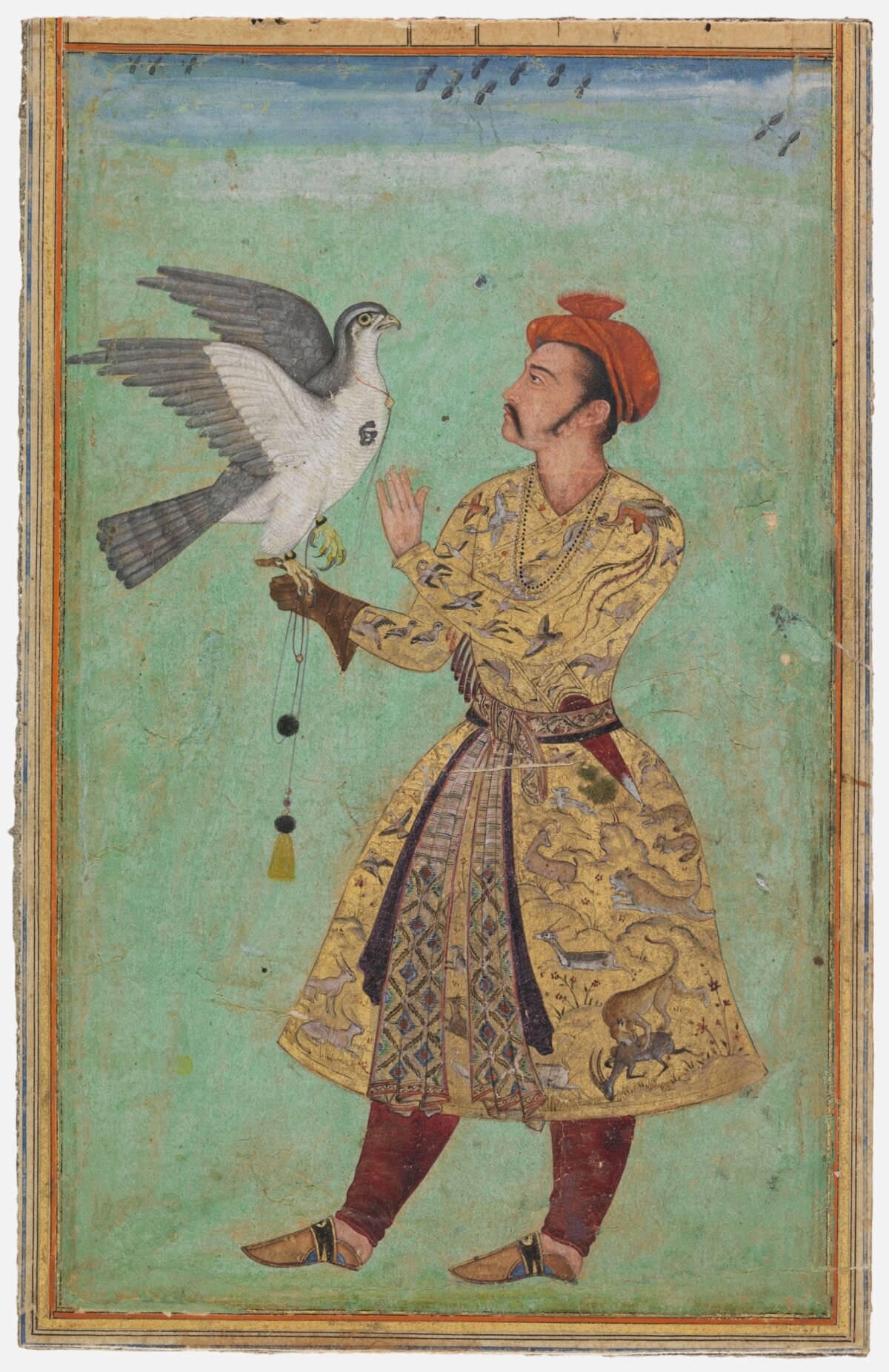
In medieval and early modern Europe, falcons were also closely associated with rulers. Soaring high above the land and circling overhead, these birds of prey seemed to watch over everything below. For this reason, an image of a falcon patrolling a kingdom could easily symbolize the monarch who ruled it.
The Owl: Between Wisdom and Mystery
Owls hunt in the dark and see what others cannot. Perhaps for that reason, many cultures have long considered them messengers of knowledge. The idea of the wise owl is often traced to Athena, the Greek goddess of wisdom.
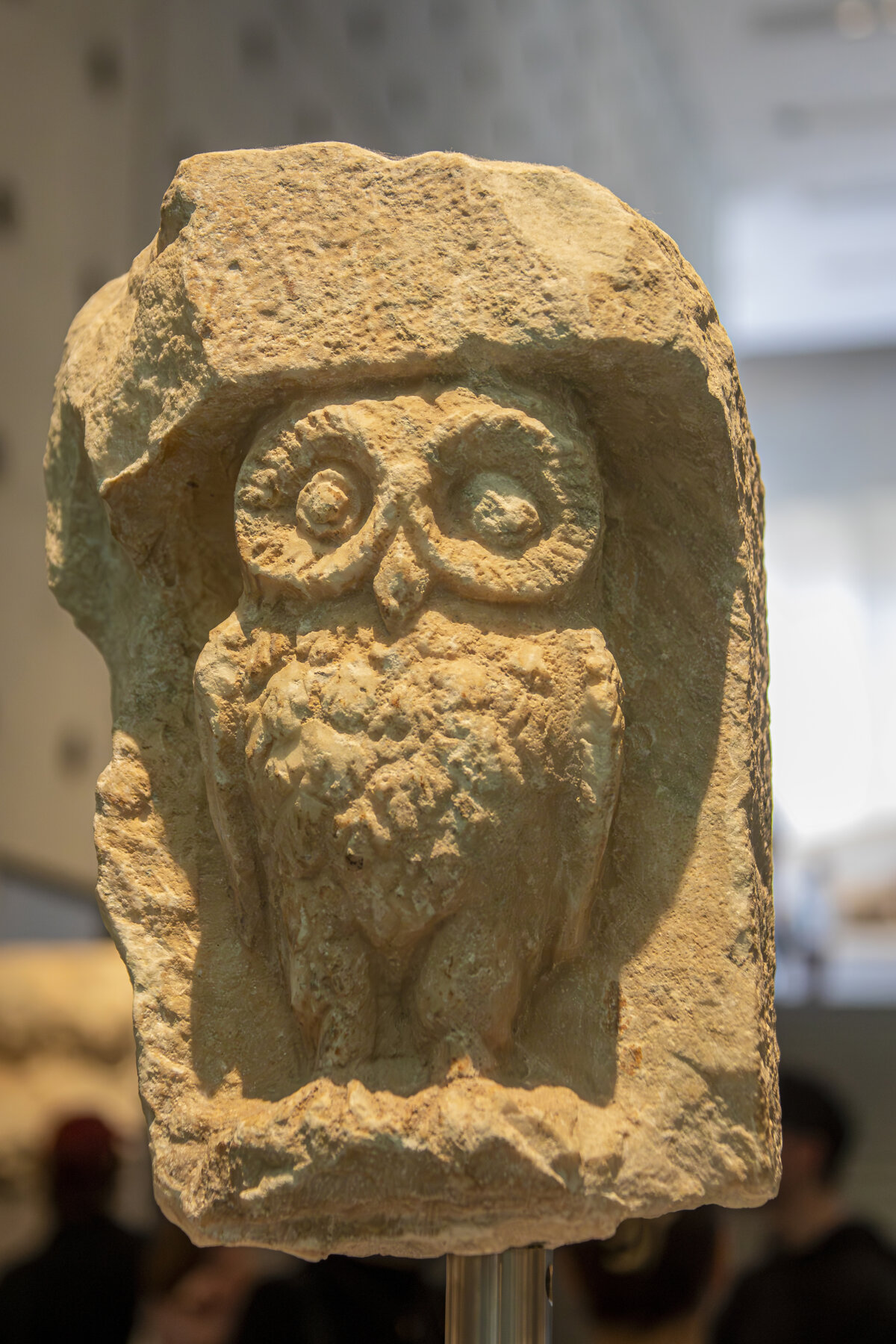
The Acropolis Museum identifies a 5th-century B.C. owl figurine as Athena’s sacred bird, a symbol of wisdom and prudence. Coins made the owl the badge of Athens. The city’s silver coins bore an owl on the reverse, and the coins were so familiar that people simply called them “owls.” Merchants from Egypt to Persia counted them out for centuries, and all of them knew whose bird was stamped on the coin.
In some cultures, the same bird once seen as a keeper of wisdom also became a watcher over new life. The Bunun, an Indigenous people of Taiwan, regard owls as guardian spirits, calling them “baby protectors” and “birth-giving birds.”
The belief is not theirs alone. Among the Amis, Thao, and Puyuma, an owl lingering near a house is read as a sign that a woman there will soon be pregnant, and it is said to fly away once the baby is safely delivered. Welsh folklore holds a related belief: If a pregnant woman hears an owl, her child is said to be blessed.
The Dove: Love, Spirit, and Peace
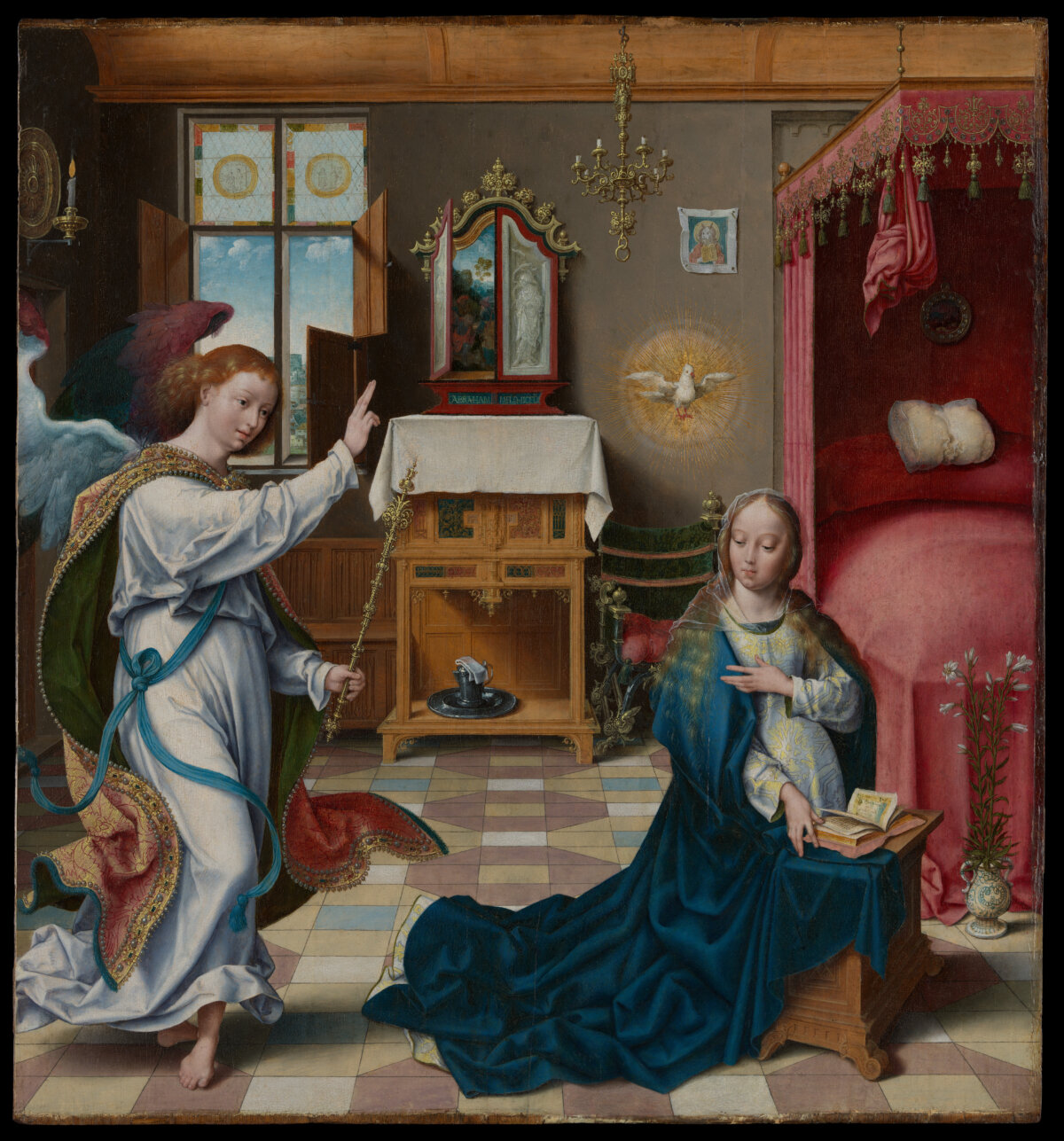
Perhaps no bird carries more hopeful symbolism than the dove. Its gentle nature, soft coo, and lifelong mating have made it an emblem of love, divinity, peace, and renewal. The association with love likely entered Greek myth through Aphrodite, and doves often accompany her in pottery and sculpture. Reliefs of doves carrying knotted ribbons in their beaks decorated the Temple of Aphrodite Pandemos on the Athenian Acropolis. Worshippers left small white marble dove figurines as offerings at Aphrodite’s sanctuary at Daphni, near Athens.
In Christian art, the dove’s meaning shifts between hope and peace, depending on the scene depicted. At the baptism of Jesus, the Holy Spirit descends as a dove. Artists also put doves in scenes of Pentecost and the Assumption of Mary. The best-known dove, though, comes from Noah’s Ark. After the flood, Noah sends out a dove, and it returns with a freshly plucked olive leaf, a sign that the waters are receding and life is starting again.
In the Western Hemisphere, Indigenous peoples such as the Aztecs and other groups in Mexico viewed the dove as an emblem of love. It was tied to the goddess Xochiquetzal and frequently appeared on wedding ornaments. Among some Native American nations, the bird carried other meanings as well. The Blackfoot saw the dove as a guardian in battle, and war leaders kept its feathers as talismans, trusting it to bring their warriors home safely.
The Crane: Vigilance and Longevity
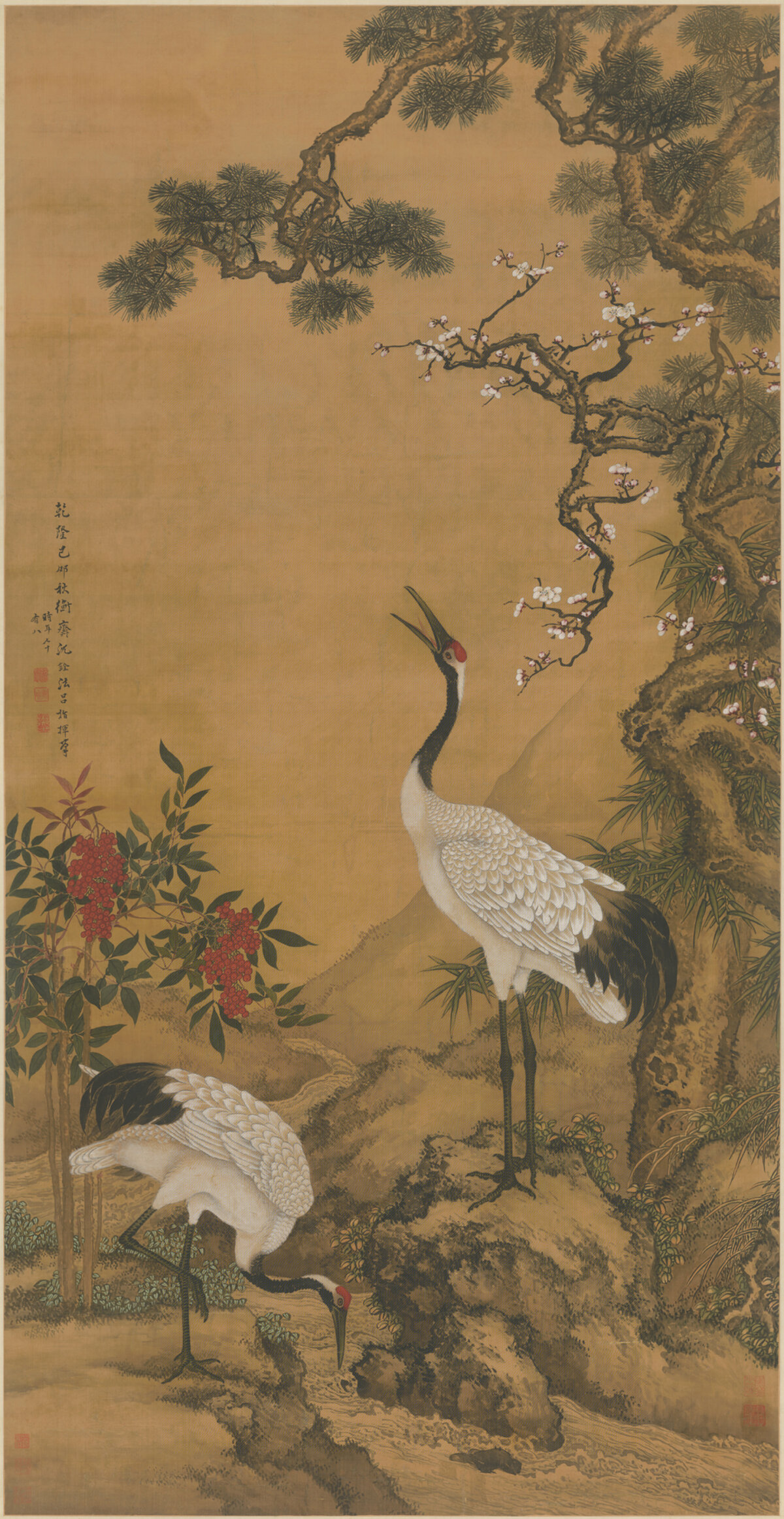
The phrase “a bird’s-eye view” may help explain why birds have so often symbolized vigilance. Cranes are among the tallest flying birds, and their long necks and towering stature give them a commanding view over tall reeds and marshlands, letting them spot predators from far off. They also range across five continents, and many species migrate thousands of miles each year between breeding grounds and wintering sites, so they spend much of their lives scanning unfamiliar terrain. It is little wonder that people came to see them as watchful.
The Greeks and Romans associated the crane with vigilance and justice. In the tale of Ibycus, the poet is set upon by robbers and calls out to a flock of cranes passing overhead, asking them to bear witness. Later, the same men spot cranes above a crowded theater, and one of them blurts out that the avengers of Ibycus have arrived, unwittingly betraying himself and his companions. The cranes help expose the culprits, showing that wrongdoing rarely stays hidden and that even nature can speak for the truth.
In China, the crane, which can live up to 40 years in the wild, is linked with long life and sometimes immortality. A crane among rocks and pines may celebrate longevity, while in scenes of immortals it can suggest a realm beyond daily existence. On historical court dress, a crane motif could mark official rank and express a wish for the wearer’s long life and perhaps transcendence.
Whether in the wild or in art, birds have long captured the human imagination. Their ability to move between earth and sky has inspired wonder, inviting us to contemplate the natural world and the mysteries beyond it.
What arts and culture topics would you like us to cover? Please email ideas or feedback to features@epochtimes.nyc.