R | 2h 7m | War, Action, Sports | 2026
Director Peter Berg has built his reputation on tales of valor and courage against all odds, using two particular subjects: football (“Friday Night Lights”) and war (“Lone Survivor“). Berg’s latest film fuses these two topics into one.
Based on Buzz Bissinger’s book of the same name, “The Mosquito Bowl” follows four all-American college football players who enlist in the Marines after the Pearl Harbor attack. However, make no mistake—it’s not a football story. It’s a particularly brutal story that holds nothing back in terms of the horrors and gruesome realities of war.
Putting Country Before Touchdowns
There are four standout college gridiron stars. There’s “Touchdown” Tony Butkovich, a mile-wide-grinning, record-breaking scorer played by Jack Nicholson’s son Ray, who demonstrates that he’s inherited the paterfamilias’s devilish charm.
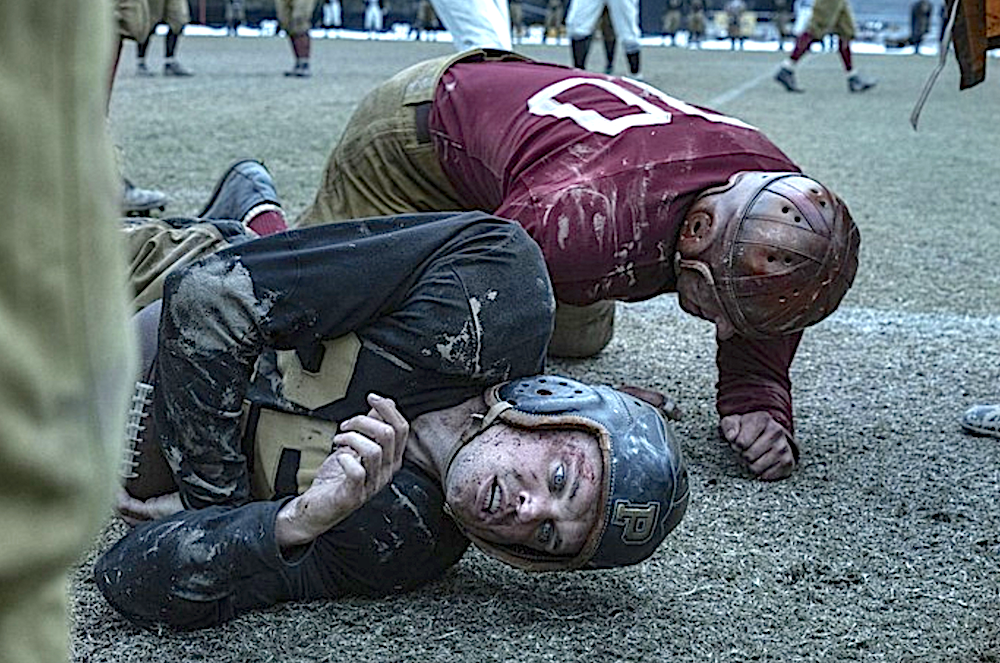
Bob Bauman (Stellan Skarsgard’s son Bill) and Dave Schreiner (Tom Francis) are former Wisconsin teammates. John McLaughry (Nicholas Galitzine) is a soft-spoken Brown University star ballplayer with a girlfriend waiting back home.
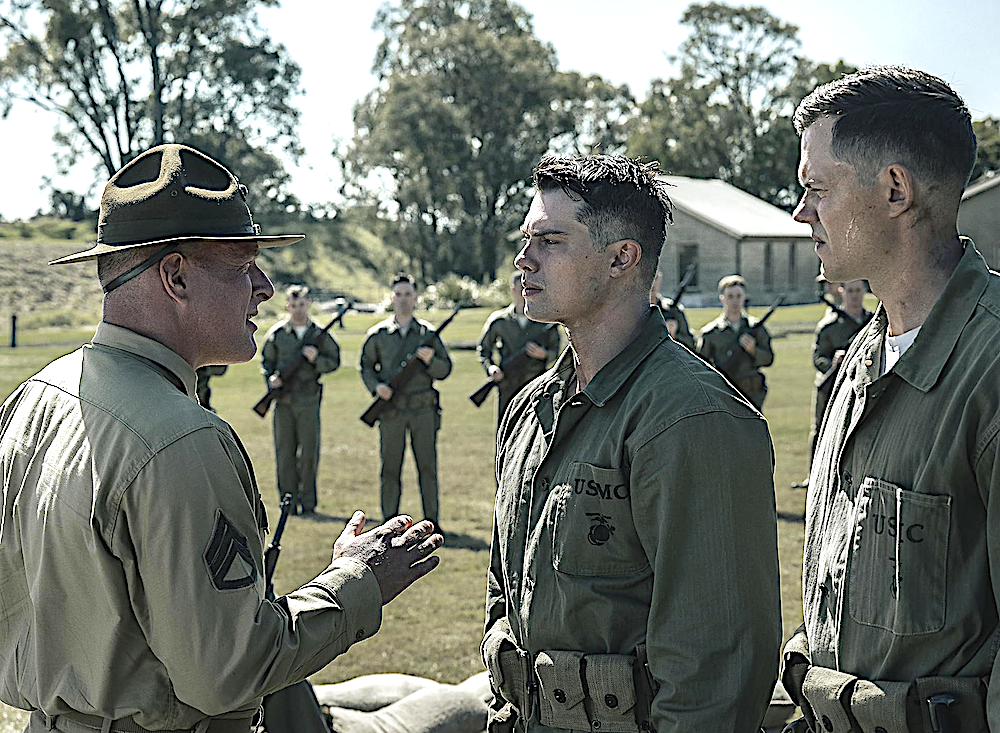
Like actor Jimmy Stewart in the soon-to-be-released “Jimmy,” these borderline-celebrity young athletes put country before fame and fortune, enlist, and head out to the violent, unforgiving battlefields of Japan for which they had little time to prepare. We move from 1941 college ball to Marine boot camp at Parris Island, South Carolina, then straight to the front lines of the Okinawa campaign in the Pacific Theater.
As the men confront a deluge of horrors, the bonds formed through football and military service become central to their survival, and their grip on reality. The brutal effects of war rip the innocence from the faces and replace it with the 1,000-yard stares of war-ravaged souls. We see their humanity, fortitude, heroism, and bonding that renders the inevitable loss of young lives all the more gripping.
The Game
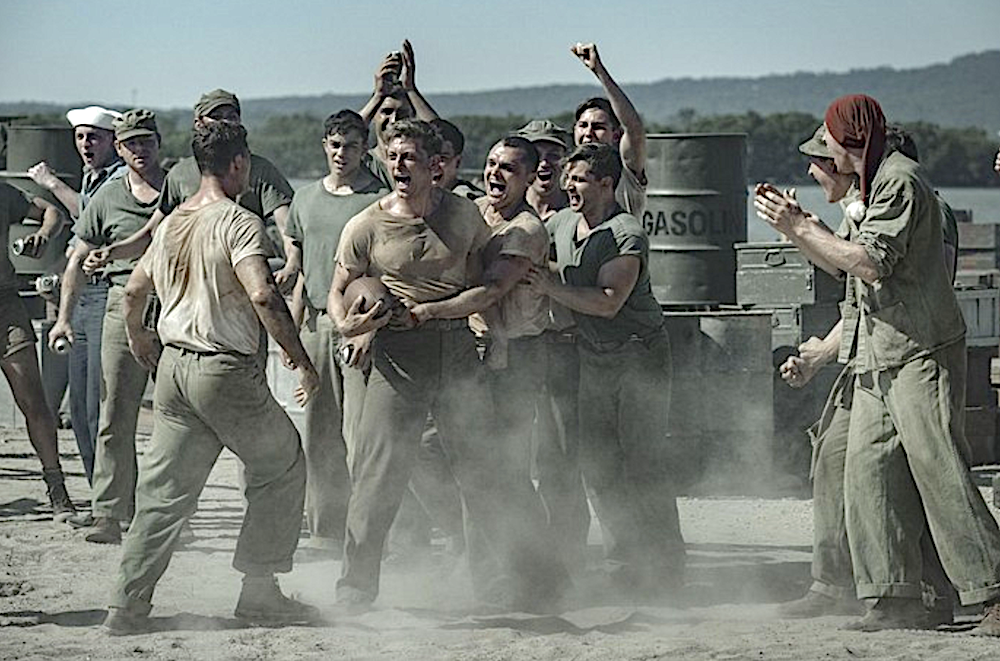
Following many bloody shots of American Marines slapping Japanese mosquitoes, we see the military head-shed realize that the men are in dire need of a morale-booster. On the island of Guadalcanal on Christmas Eve of 1944, 64 college players are pulled from the ranks to create a brief respite from the horror, with the titular Mosquito Bowl. “Touch football only!” the senior officers declare.
Yeah, right. One thing leads to another, and, boys being boys, and men being men, and football players being football players—the make-shift gridiron quickly morphs into the joyous church of the tooth-rattling, muddy body-slam.
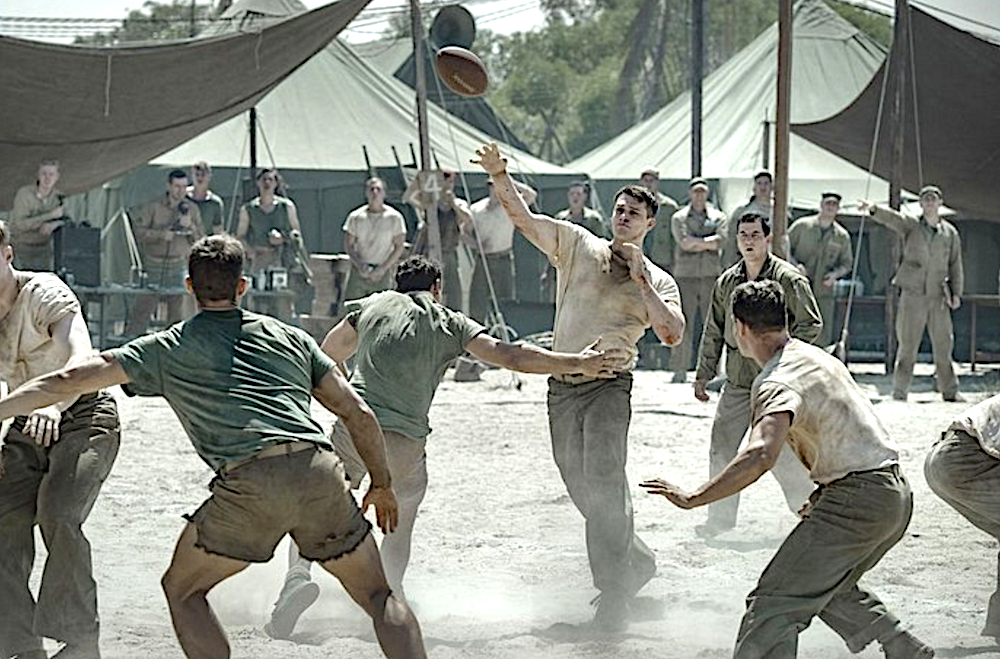
Soon, though, Okinawa Island takes us back to sad reality. Approximately 14 of the young men playing that day would die on Okinawa, including three of the four Marines we’ve gotten to know.
Overview

In many ways, “The Mosquito Bowl” is similar to “Lone Survivor” in that it follows a small group of war fighters facing overwhelming odds they didn’t expect. We experience the Americans’ jaw-dropped shock when confronted with the Japanese military’s Samurai heritage for the first time.
The Japanese, with their mindset of never surrendering under any circumstances, are a whole different type of war-fighting animal. The Americans witness mind-blowing instances of Japanese soldiers howling apologies to the ancestors while carving their own guts out via seppuku in an attempt to restore honor, right there on the battlefield.
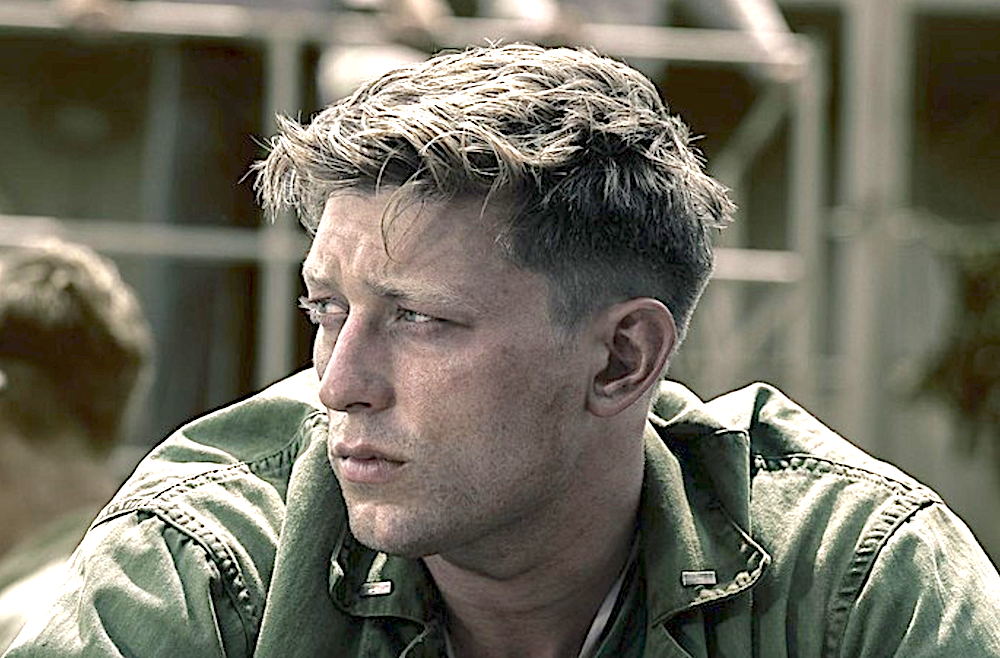
The four main stars are entirely believable as football stars that suddenly become U.S. Marines and ship out immediately, knowing it might be a one-way ticket. The problems are that none of the four characters gets a proper arc, so the movie’s attempts to make us care are shallow and abrupt.
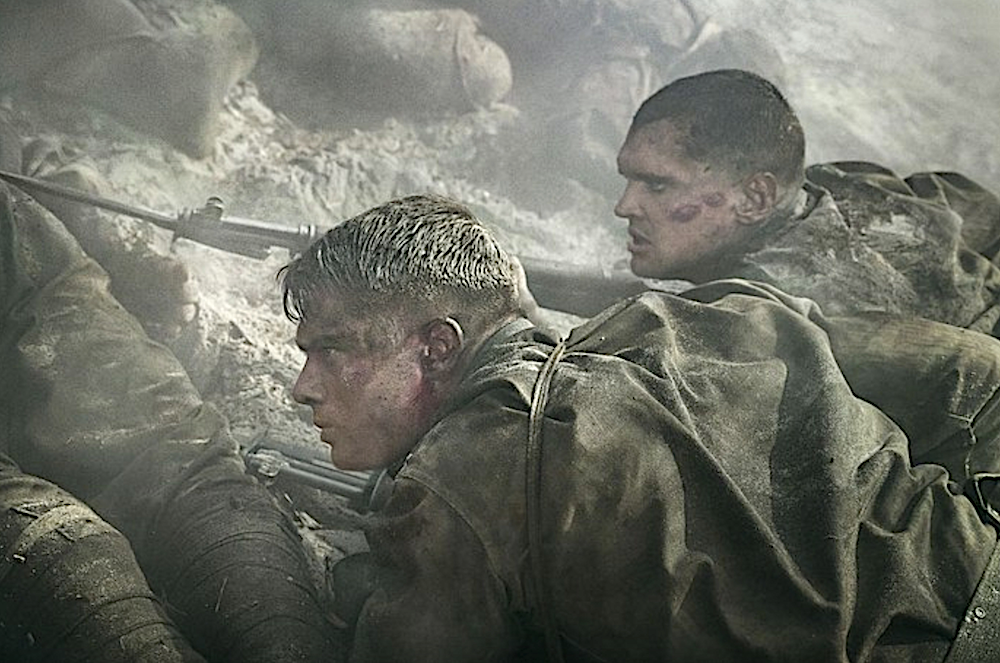
Second, the violence is turned up to 11 throughout, which results in a numbing effect. Third, the entire affair is cloaked in monochrome cinematography: dark grey, browns, blues, and olive greens. All of the above results in a very bleak film and the lingering sensation that your head just took a hit from Lawrence Taylor in his prime.
I do appreciate the messages underlying “The Mosquito Bowl”: American football is a violent sport that causes serious pain and injuries, but it’s still infinitely better than any type of war. Beyond that, the story is formulaic, and it doesn’t bring anything new or vital to what we already know about WWII in the way that the hugely superior “Pressure” did.
What’s commendable is that Berg opens the film with U.S. President Herbert Hoover’s well-known statement in a speech at the 1944 Republican National Convention:
“Older men declare war. But it is the youth that must fight and die.”
Berg clearly intended the film’s hyper-violence to be a reminder of that fact.
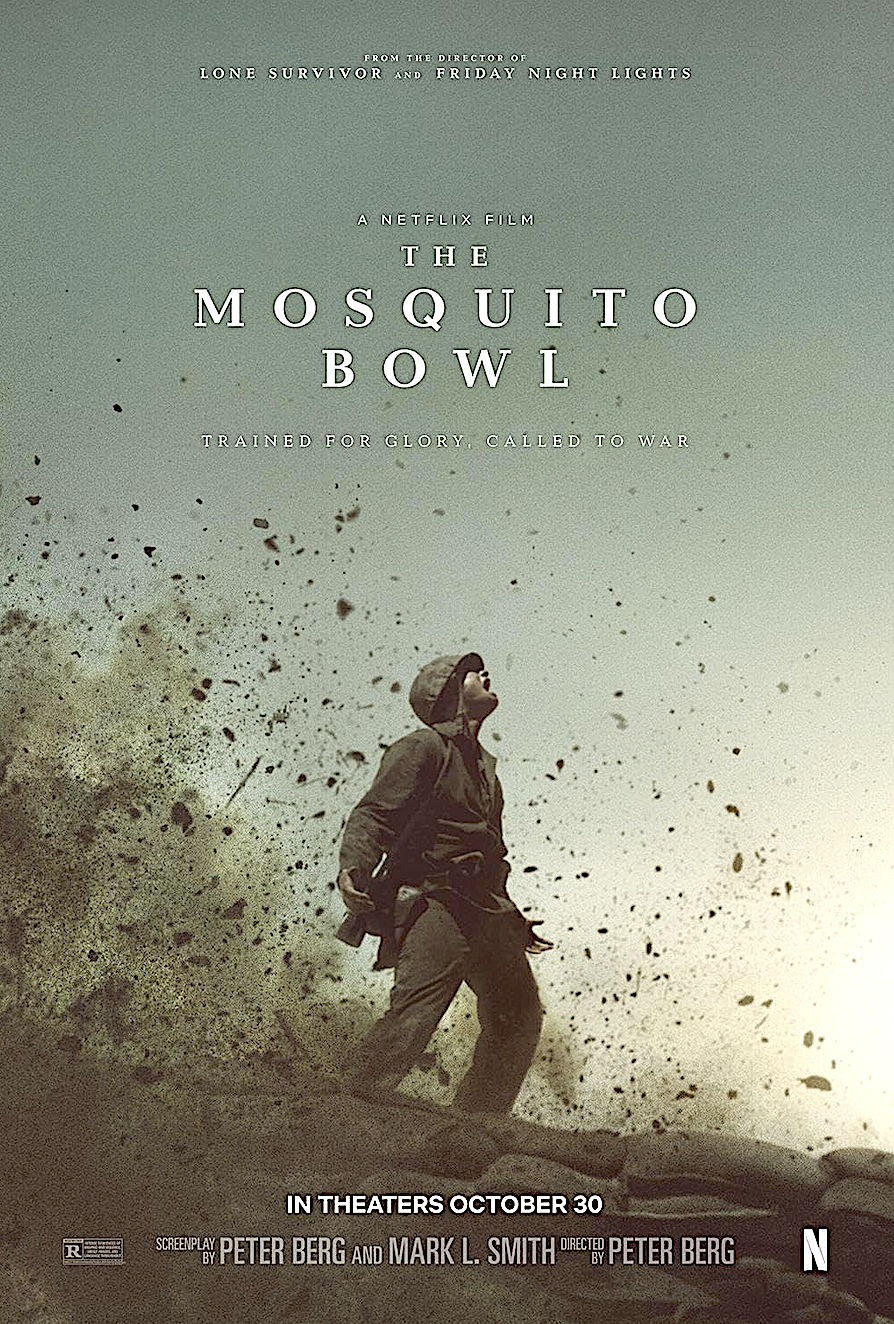
‘The Mosquito Bowl’
Director: Peter Berg
Starring: Ray Nicholson, Bill Skarsgård, Tom Francis, Nicholas Galitzine
MPAA Rating: R
Running Time: 2 hours, 7 minutes
Release Date: Oct. 30, 2026
Rating: 3 stars out of 5
Would you like to see other kinds of arts and culture articles? Please email us your story ideas or feedback at features@epochtimes.nyc