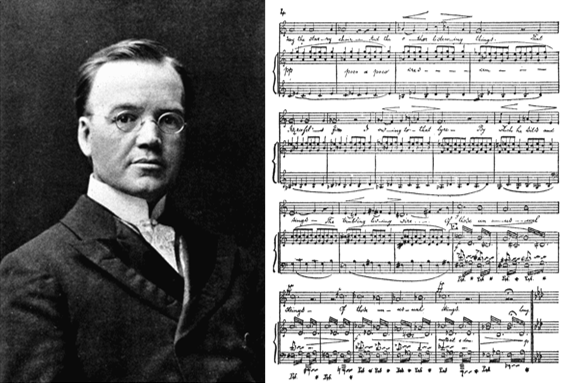
A group of composers known as the Boston Six shaped America’s musical scene in the late 19th century and early 20th century. They guided America in finding its own distinct voice in classical music. Other composers of a similar time and place have been considered honorary members of the Boston Six. One was a composer born and raised, not in New England, but in the Midwest: Edgar Stillman Kelley (1857–1944).
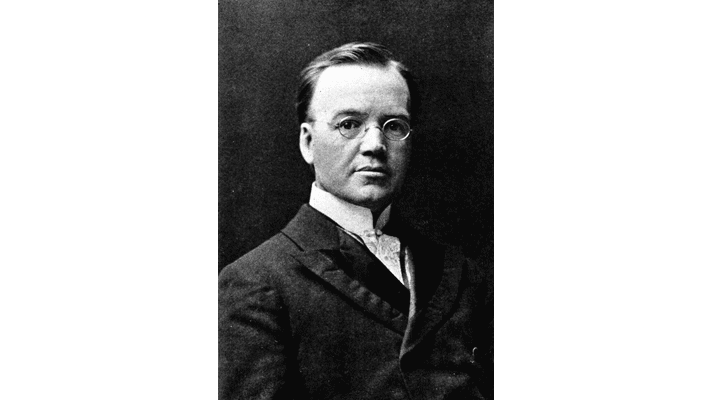
A Midwestern Childhood
Edgar Stillman Kelley was born on April 14, 1857, in Sparta, Wisconsin. Kelley had deep New England roots, however, since his parents were of colonist stock dating back to the early 17th century. Pioneers from New England came to Sparta, bringing their culture with them.
Kelley came from a musical and cultured family. His father, Hiram, was a newspaper editor and publisher who housed the town’s library in his office.
His mother, Mary, was a writer and musician who kept the church library in their home’s attic. She came from a musical family herself and had studied piano with American composer Asahel Abbott. She was her son’s first music teacher when he was 8.
The boy loved reading history books, the works of William Shakespeare, and John Bunyan’s “A Pilgrim’s Progress.” Although he had the soul of a poet, music won young Edgar’s heart because of its “superior potential for dramatic expression.”
Kelley once heard a local musician perform Franz Liszt’s piano transcription of Felix Mendelssohn’s “A Midsummer Night’s Dream.” This magical music perfectly matched his own inclinations to capture fables in sound. He filled notebooks with musical themes based on his favorite stories and referred to these youthful ideas throughout his life.
The Road to Germany
At 13, Kelley studied with Farwell W. Merriam, a young music tutor just returned from Leipzig. Merriam filled him with the enthusiasm for German opera composer Richard Wagner, whose influence shaped his dramatic musical style.
He went to Chicago when he was 17 to continue his musical studies. There, Kelley boarded with a German family to learn the language in preparation for going abroad. For two years, he studied with Clarence Eddy, an influential organist and composer who had studied in Berlin, and Napoleon Ledochowski, a Polish pianist and pupil of Frederic Chopin.
In 1876, Kelley went to Stuttgart for four years. He studied piano at the Stuttgart Conservatory with Max Seifriz, who was the school’s professor of music history and harmony as well as the director of the Stuttgart Royal Opera.
Seifriz, an important violinist, conductor, and composer, encouraged Kelley to perform, compose, and have his works published. Kelley also studied organ with Frederich Finck and piano with Wilhelm Krüger and Wilhelm Speidel, one of the school’s founders.
His student compositions were well received by his teachers. During this time, he often wrote under the pseudonym Hans von Brechnowski.
Kelley graduated in 1880 and performed around Europe with prestigious orchestras before returning to the United States. Instead of returning to the Midwest, he sailed to San Francisco that same year.
Emerging Composer
There, he became a church organist, while beginning to make a name for himself by conducting his own orchestral compositions at society weddings. He also continued to compose.
Two pieces he’d composed in Stuttgart, his “Polonaise” and “Confluentia,” had their American debuts in San Francisco. The public and critics alike were impressed.
In 1885, he composed incidental music for a performance of Shakespeare’s “Macbeth,” which earned him the nickname “the Wagner of American music.”
In San Francisco’s Chinatown, Kelley was influenced by the music of the Far East. That exotic influence was infused into “Aladdin,” a four-movement orchestral suite performed by the San Francisco Symphony Orchestra under his baton in 1884.
‘Ben Hur’
In 1886, he moved to New York City to compose for the stage and to conduct at light opera companies. While there, in 1899, he was hired to write incidental music for the Broadway production of “Ben-Hur,” an elaborate hippodrama based on Lew Wallace’s 1880 novel “Ben-Hur: A Tale of the Christ.” This beloved story of gladiators and early Christians inspired several blockbuster films, including the 1959 Charlton Heston classic.

After resisting the idea of having his work adapted for the stage for years, Wallace agreed to let theatrical producers Marc Klaw and A.L. Erlanger bring it to life. In addition to the unbelievable special effects and sheer scope of the cast, sets, horses, and chariots in the production, a huge part of its success was the dramatic music Kelley provided.
He drew on ancient Greek modes in creating music for mixed chorus and orchestra to be used across the six-act, 13-scene work. The production was performed thousands of times around the world in the next 20 years; this incidental music became Kelley’s most performed composition. By the 1930s, it had been performed 5,000 times in English-speaking countries.
Western College
In 1891, he married Jessie Gregg, a pianist he’d met in San Francisco. Kelley got his first important teaching job when he substituted as professor of music theory at Yale University in 1901–1902 for Horatio Parker, a member of the Boston Six who was on sabbatical.
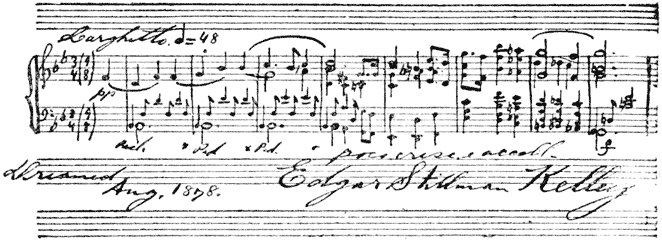
After this, the Kelleys traveled to Europe, touring briefly before settling in Berlin for eight years. In 1910, the Kelleys returned to the United States with one express purpose—to find a way for Edgar to devote more time to composition. He said that many of his best melodies came to him in dreams.
However, he found that teaching and lecturing occupied more time than he would like. Fortunately, they found the perfect situation in Oxford, Ohio.
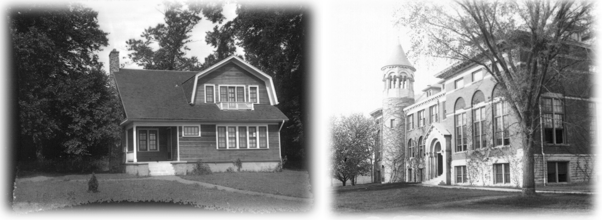
In 1910, Jessie accepted a position as a music teacher at the Western College for Women in Oxford, while Edgar was offered a fellowship, which provided him with housing, a study, and above all, time to focus on his writing.
This made him the first artist-in-residence at an American college. With this newfound freedom, Kelley composed prolifically and wrote books about music and composers.
Both the Kelleys also taught at the nearby Cincinnati Conservatory of Music; Edgar eventually became dean of the Department of Composition and Orchestration. Both Kelleys became beloved members of the community, and the class of 1916 built them a charming cottage with a studio.
He and Jessie were very active during the 24 years they were associated with the college. Kelley frequently traveled to conduct performances of his compositions around the country.
After they officially retired in 1934, they kept very busy for the last 10 years of Edgar’s life. They continued traveling to California, New York, and Germany to promote the importance of classical music with their teaching and performing. But they always called Oxford home.
Kelley left an impressive, vibrant legacy in his classical music compositions.
What arts and culture topics would you like us to cover? Please email ideas or feedback to features@epochtimes.nyc.