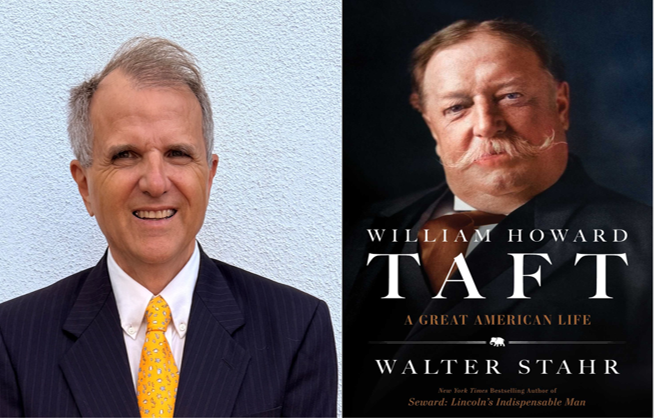
William Howard Taft rarely generates enthusiasm from presidential historians. Even Taft dismissed his single term in the White House (1909–1913) as “humdrum.”
Walter Stahr’s new biography would beg to differ. “William Howard Taft: A Great American Life” presents the 27th president as a remarkable public servant deserving of more respect and attention.
Stahr notes his book is the first full biography focused primarily on Taft since Henry Pringle’s two-volume work published in 1939. But Stahr adds that Pringle was a New Deal Democrat who disliked Taft’s conservative Republicanism, which cast Taft in a negative light.
Stahr points out that other history books relating to Taft’s career contained falsehoods about his character and behavior. He also refutes the often-repeated urban legend that the XL-sized Taft (who ballooned to 340 pounds during his presidency) got stuck in the White House bathtub.
For this work, the nonpartisan Stahr accessed previously unpublished private letters from Taft to friends and family, which offer greater insight into his genial and sincere personality.
A Fast Rising Star
Taft was born in Cincinnati in 1857. His father, Alphonso Taft, was a judge who served as secretary of war and attorney general under President Ulysses S. Grant. He later headed diplomatic missions to Austria-Hungary and Russia under President Chester A. Arthur.
A graduate of Yale and Cincinnati Law School, Taft followed his father into Ohio’s Republican political environment. Stahr expertly charts Taft’s rise from 1880 to 1894 through a series of state and federal appointments, culminating with his becoming a judge on the U.S. Court of Appeals for the Sixth Circuit.
Taft abhorred cronyism and corruption. In his work as collector of Internal Revenue for Ohio’s First District, he eschewed tradition by hiring workers based on merit instead of political patronage. During a period when he returned to private law practice, he advocated against the two-tiered justice system where wealthy people escaped prosecution.
In 1900, President William McKinley asked him to become the civilian governor-general in the Philippines. Taft arrived in Manila two years after an American military occupation force replaced Spanish colonial rule, much to the chagrin of independence-minded Filipinos.
Stahr recalls how Taft worked diligently to set the foundation for Filipino self-rule by creating local courts and provincial government agencies.
Roosevelt Takes Notice
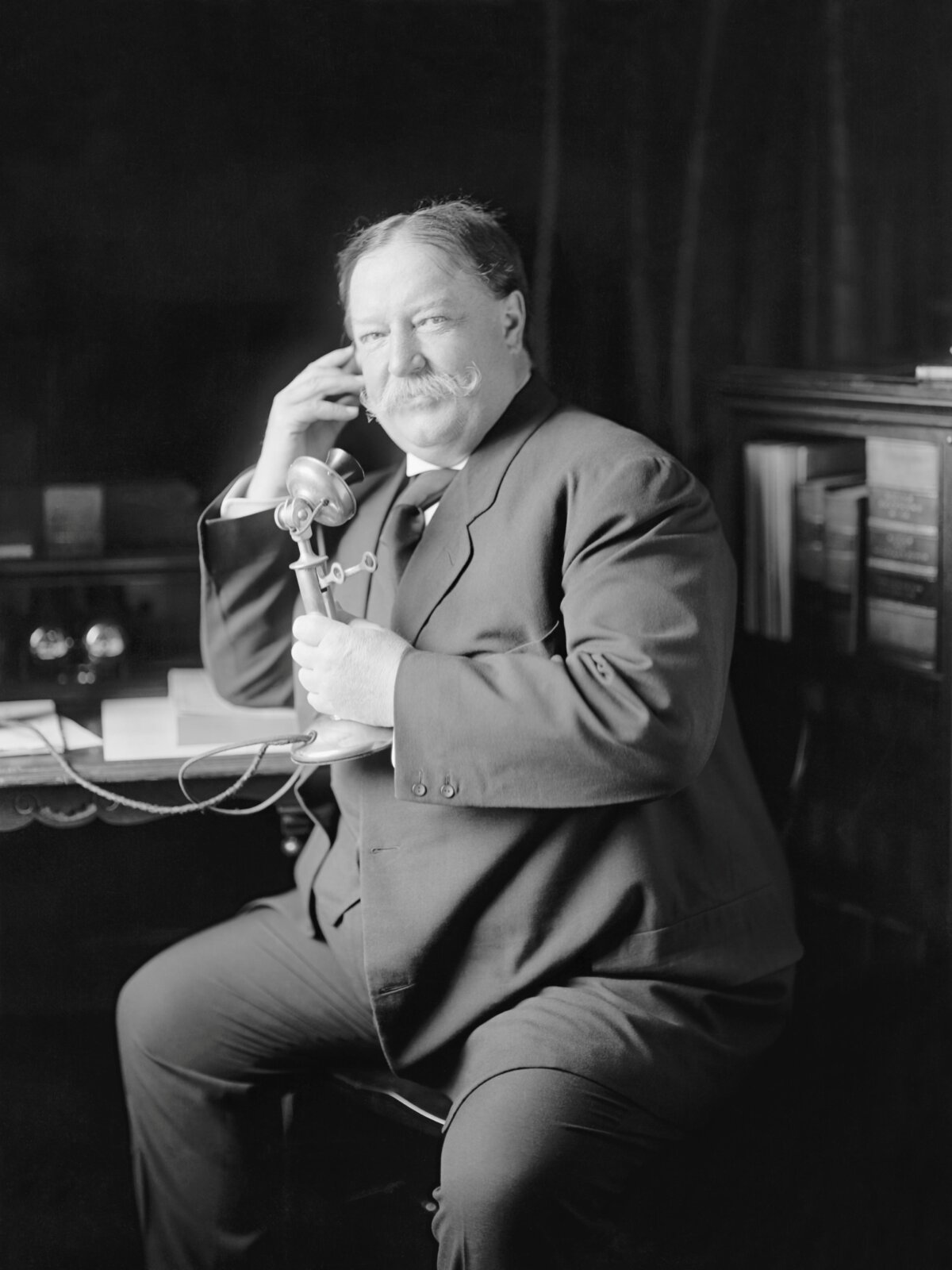
Vice President Theodore Roosevelt took over the presidency following McKinley’s assassination in 1901. He wanted Taft to be his Supreme Court nominee in 1902, but Taft declined by citing his unfinished work in the Philippines.
In January 1904, he accepted the role as Roosevelt’s secretary of war. His lack of a military background was no hindrance, with most of his duties focused on constructing the Panama Canal and strengthening the American presence in the Pacific Rim.
As Roosevelt’s second term was winding down, he backed Taft to become the Republican nominee in the 1908 election. Taft conducted a vigorous campaign with multiple speeches across the country, including in heavily Democratic Southern states which party leaders viewed as impossible to win.
Stahr uncovers the long-forgotten role of religion in this election. As a Unitarian, Taft faced opposition from evangelical voters, who were uncomfortable with his faith. However, he outpolled his Democratic opponent, William Jennings Bryan, in most major cities, which Stahr credits to overwhelming support from Catholic and Jewish voters who were actively courted by Taft.
Enter President Taft
During his presidency, Taft focused on several issues that still resonate today, most notably tariffs, U.S.-Canadian trade, and transparency in campaign donations. He pushed for statehood for Arizona and New Mexico, overcoming Republican congressmen’s objections that the new states would elect Democratic lawmakers.
Taft deplored Jim Crow policies in the South but was criticized by civil rights leaders for not appointing more black people to federal civil service roles. He opposed a constitutional amendment granting women the right to vote, insisting that the matter should be decided on a state-by-state basis.
Life in the White House also came with its challenges. Taft’s considerable weight and chronic sleep apnea impacted his health. First Lady Nellie Taft suffered a stroke shortly after her husband took office, and during her recovery, the president personally conducted the therapy that helped her regain her speech.
Stahr highlights how Taft was initially skeptical about re-election, owing to Roosevelt’s decision to push him aside and regain the presidency. When Taft barely won his party’s nomination for a second term in 1912, Roosevelt bolted and created his own Progressive Party. The resulting split enabled Woodrow Wilson to become the first Democrat elected president in 30 years, with Taft only carrying the electoral votes of two states.
His Second Act
Taft was never bitter in defeat. In a letter to his wife, he stated, “I have held the office of President once, and that is more than most men have, so I am content to retire from it with a consciousness that I have the best I could do.”
Indeed, there was no time for bitterness in his post-presidential career. After leaving the White House, he became a professor at Yale, chaired the Lincoln Memorial Commission, and served a one-year term as president of the American Bar Association.
In 1921, he made history when President Warren Harding named him as chief justice of the Supreme Court, making him the only person to serve as both U.S. president and chief justice. His nine years on the bench saw him successfully push for docket reforms while dealing with hot-button cases involving labor, civil rights, and antitrust issues.
Taft passed away in 1930 and was buried at Arlington National Cemetery. President Herbert Hoover praised him for a distinguished public career “marked by a purity of patriotism.”
Stahr’s vigorously researched and expertly crafted biography is a wonderful tribute to a leader whose achievements need to be remembered. Anyone with a love of American history will cherish this wonderful book.
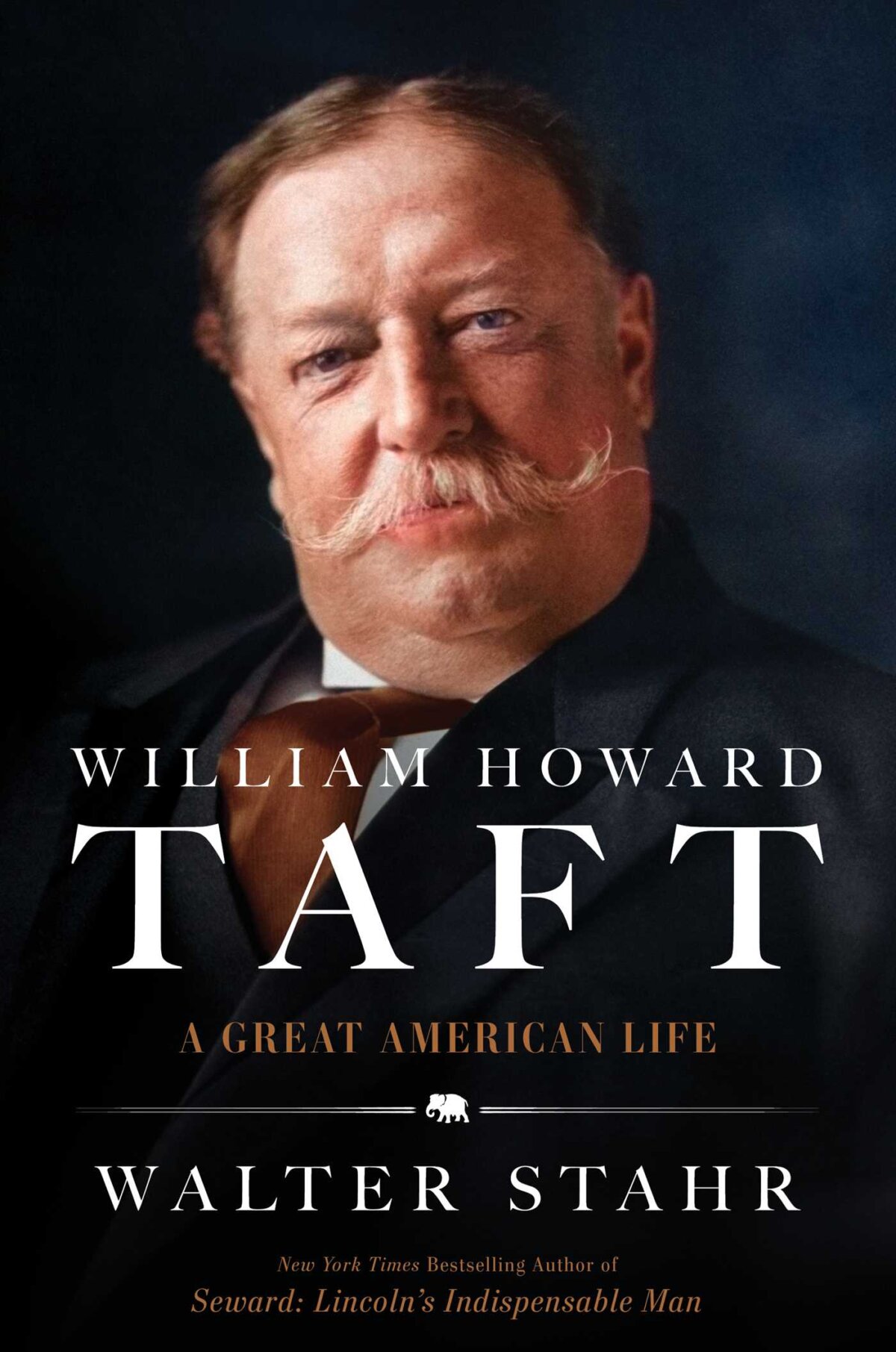
‘William Howard Taft: A Great American Life’
By Walter Stahr
Simon & Schuster: Nov. 10, 2026
Hardcover, 688 pages
What arts and culture topics would you like us to cover? Please email ideas or feedback to features@epochtimes.nyc