



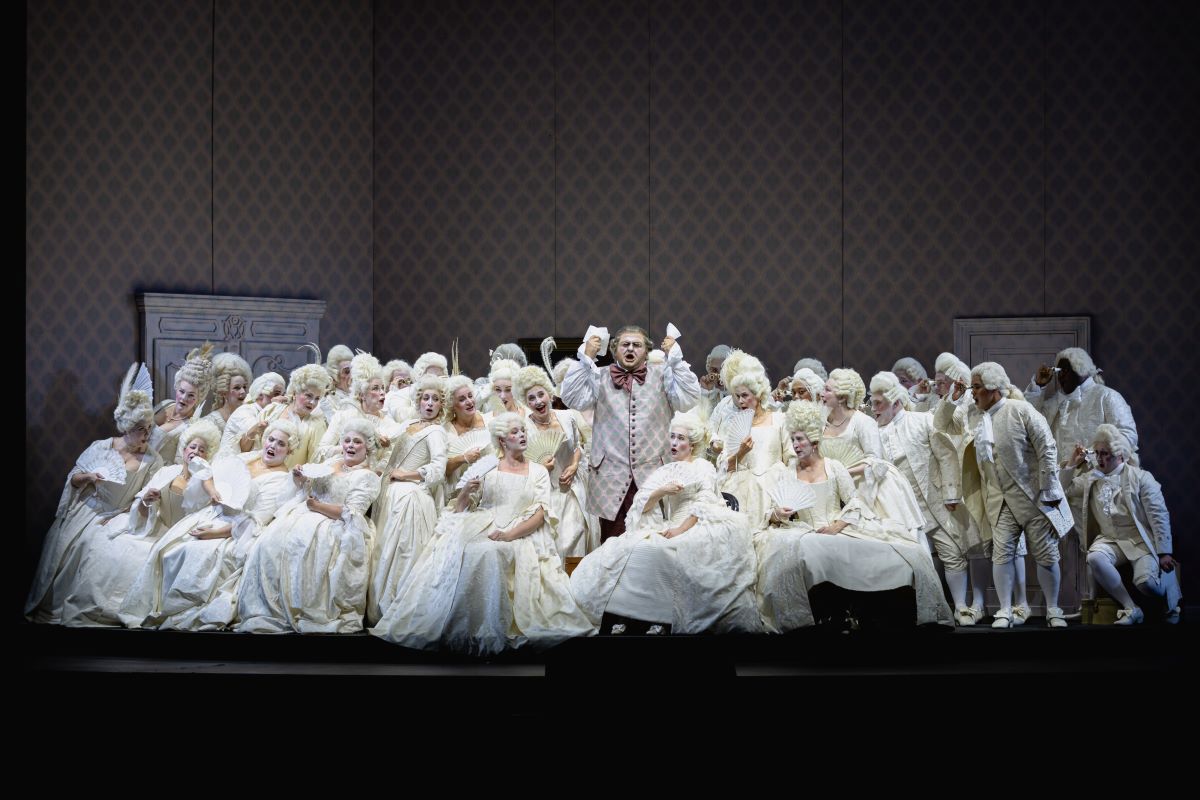
CHICAGO—It’s easy to understand why, after seeing Lyric Opera of Chicago’s exhilarating production of “Don Pasquale,” viewers of remarked that the opera reminds them of a television sitcom.
Sitcoms thrive on a small lie spiraling out of control, and in “Don Pasquale,” a simple prank turns an entire household upside down. The big difference, however, is that while sitcoms rely on dialogue and comic reactions, opera has the comedy come from how the characters color and emphasize the lyrics instead of one-liners.
Composed by Gaetano Donizetti with a libretto by Giovanni Ruffini, the opera premiered in 1843 at Théâtre-Italien in Paris. Although Donizetti composed some blood-soaked tragedies like “Lucia di Lammermoor” and “Anna Bolena,” he also wrote wonderful comedies such as “The Elixir of Love” and “The Daughter of the Regiment.” But, unlike the physical comedy found in those earlier works, “Don Pasquale” draws out an audience’s sympathy and even a melancholy feeling.
Many music historians consider “Don Pasquale” to be the last great work of opera buffa, a tradition popularized by Mozart and Rossini. By the 1830s, Verdi introduced dramatic realism to Italian opera that left “Don Pasquale” as the grand finale of the earlier style.
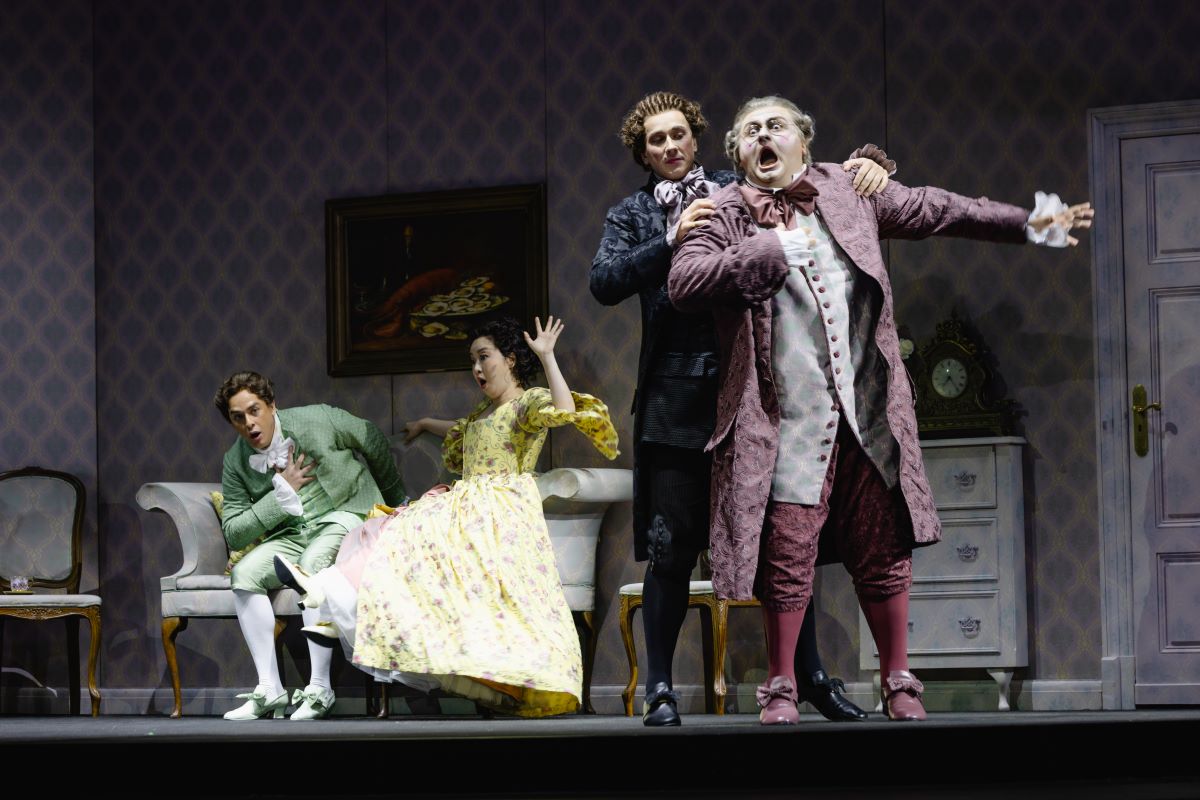
The story of “Don Pasquale” centers on the folly of an old man trying to marry a young woman out of spite and vanity. Modeled after the Italian tradition of Commedia dell’arte, a form of improv theater, the story is a farce of a wealthy, elderly man who is convinced that he can buy the love of a submissive young woman.
Like sitcom characters with obvious flaws, the elderly Don Pasquale has an exaggerated persona. He’s an out-of-touch man whose fake-marriage scheme ends up teaching him a lesson. Indeed, almost every character hides behind a disguise. Pasquale creates the illusion of youthful vigor, Dr. Malatesta acts as a loyal matchmaker while plotting against his friend, Norina pretends to be an innocent, pious girl, and Ernesto has to lie about his love.
But unlike earlier comedies that humiliate a foolish man, Donizetti injected emotional depth in Pasquale and his circumstances. When Norina slaps him, the music suddenly shifts from a lively scene to a tender one, allowing the young woman to see Pasquale in a new light: as a lonely human being with real feelings, not a cardboard, mustache-twirling villain.
The Production
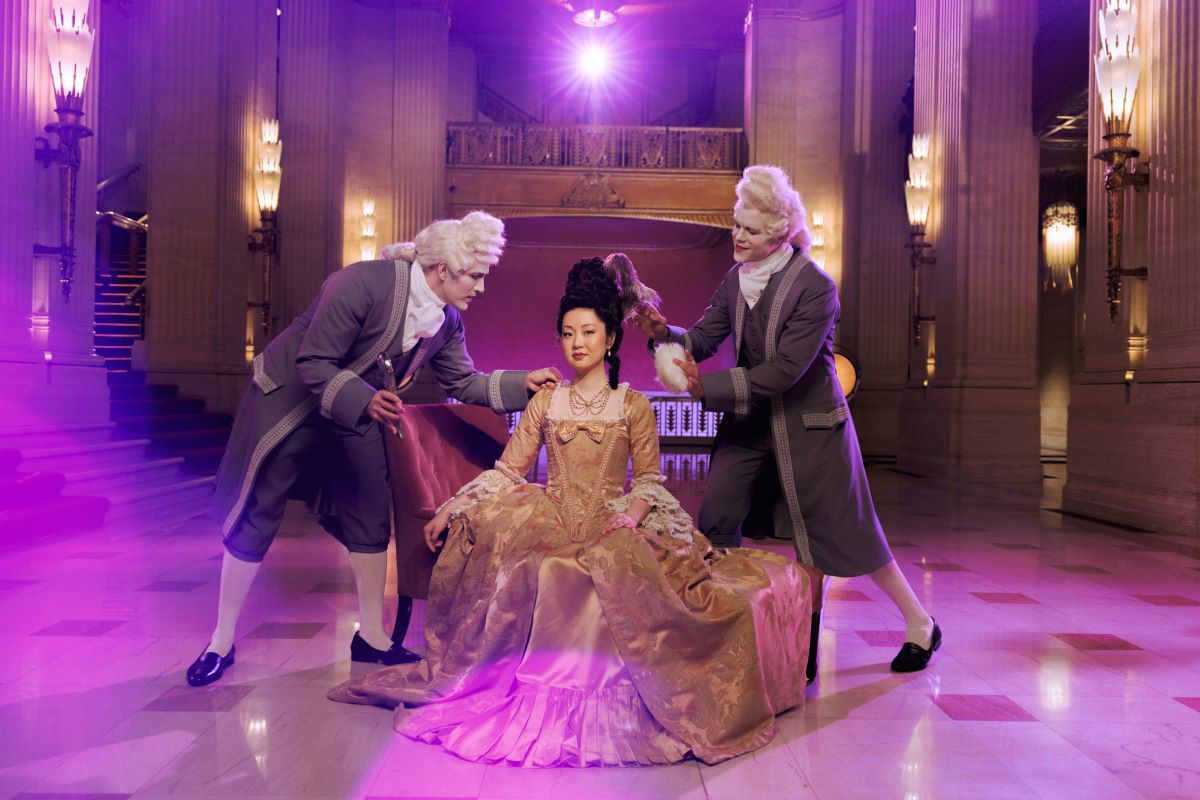
Director Mariame Clément rejected a modern-day update of the opera in favor of a stylized 19th-century world. To that end, set and costume designer Julia Hansen created a large, multiroom revolving structure that moves in time with the opera’s rapid pacing. The costumes are ornate with characters wearing high-piled powdered wigs, full-skirted period gowns, and knee breeches.
The set features a classic 19th-century staircase and interiors bathed in soft pastels by lighting designer Bernd Purkrabek. The lighting also stands out in the opening moments of the production in which Dr. Malatesta is sprawled out on a chair while the other characters sleep in rooms around him, creating a split-screen effect on stage.
Music director Enrique Mazzola masterfully conducts the Lyric orchestra with deep sensitivity to the shifts between comedy and tenderness.
While all the cast deliver strong portrayals, it is always the singing that counts in opera, and they really excel here. As Don Pasquale, baritone Misha Kiria turns fantastic physical comedy and tongue-twisting patter into hilarity. As Dr. Malatesta, baritone Ian Rucker comes through with a showstopping velvety-rich rendition of “Aspetta, aspetta, cara sposina,” sung in a hilarious duet with Kiria.
As Norina, soprano Ying Fang shifts easily from modestly shy to vicious fury, exemplified in “Tre in tutto!” As Ernesto, Pasquale’s lovestruck nephew, tenor Alberto Robert turns in a sweet serenade with “Com’è gentil.”
At the end of the opera, the characters step forward to sing the moral of “Don Pasquale” directly to the audience in “Ben é scemo di cervello.” (“Those who marry in old age have completely lost their marbles.”)
While it is a comedy filled with disguises and pranks, “Don Pasquale” delivers a surprisingly warm message about aging and empathy, and a gentle reminder to let go of things we cannot control. A laugh-filled, engaging show, it presents a joyous prelude to the holiday season.
‘Don Pasquale’
The Lyric Opera of Chicago
20 N. Wacker Dr., Chicago
Tickets: 312-827-5600 or LyricOpera.org
Runs: 2 hours, 40 minutes (one intermission)
Closes: Nov. 27, 2026
What arts and culture topics would you like us to cover? Please email ideas or feedback to features@epochtimes.nyc.
