Buck Meiley was a new face in Philadelphia’s criminal underworld. He was a safecracker looking for work. A cigar stub rested on his whiskered lips, his eyes were shadowed by his cap, and his clothes smelled of grime. After a week of meandering through the city, he finally found a crew worth working with and presented his plan. As the job unfolded, Meiley’s plan was foiled. The police had arrived. Someone had squealed.
The squealer was in fact Meiley, and Meiley was in fact a young newspaper reporter by the name of Richard Harding Davis. It was the late 1880s, and the talented and courageous writer soon became the era’s most famous journalist by taking on some of the most harrowing assignments.
The Charismatic Writer
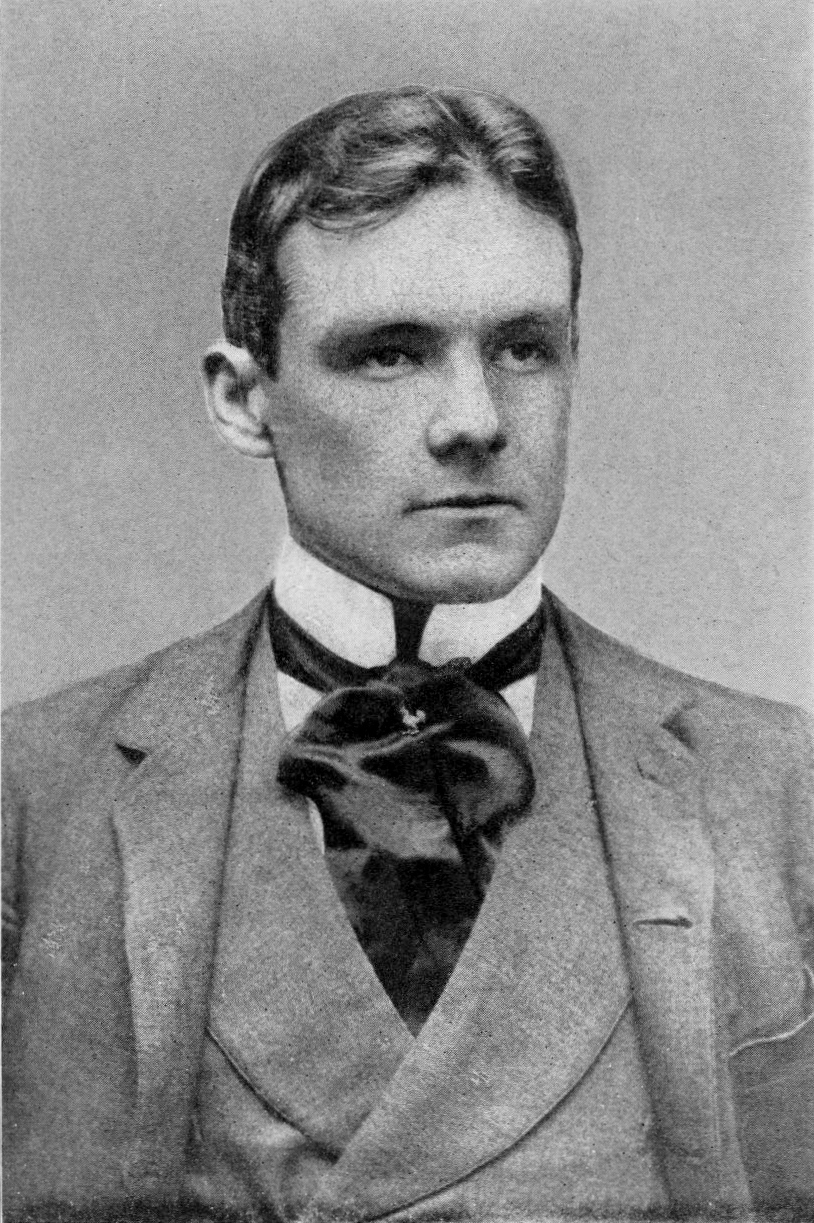
Richard Harding Davis (1864–1916) was born in Philadelphia to Lemuel Clarke Davis, a newspaper editor, and Rebecca Harding Davis, a successful novelist. If his parents were any indication, writing was in his blood. Though he had a knack for writing, he did not have a knack for school.
He made his way through Philadelphia Episcopal Academy and Swarthmore College Preparatory School where his grades suffered primarily because he was always busy writing fictional romance stories. His time in college at both Lehigh and Johns Hopkins—1882 to 1886—further demonstrated that being behind a desk was not a suitable job for him. His combined years spent at the colleges never produced a degree.
Known for dressing nattily, often sporting a cane and a pair of gloves, Davis had grown into a handsome and charismatic young man—attributes that helped him fit into almost any social situation. Instead of completing college, he took a job at the Philadelphia Record, which lasted only a few months. He then accepted a position with the Philadelphia Press where he broke into the Philadelphia underworld, resulting in the arrest of the serial yeggman (thief) and the publication of an entertaining story for the paper.
Davis was a reporter on assignment, and, as his stint among the criminals indicated, he preferred going where the action was. In 1886, he was sent to Cuba briefly to cover the conflict between the Cubans and the Spanish. He returned in the following decade at the start of the Spanish-American War.
Cementing His Reputation
He spent three years with the Philadelphia Press, and, in his final year with the paper, he covered one of the worst disasters in American history: the Johnstown Flood of 1889. Davis was not initially sent to cover the disaster because he had taken the day off—a rarity for the young reporter.
When word reached him about what had taken place, he rushed to the newspaper office and begged to be placed on assignment. His editor declined. As Davis remained in the office, reading the telegrams that were coming in, he continued pleading his case. His editor finally relented.
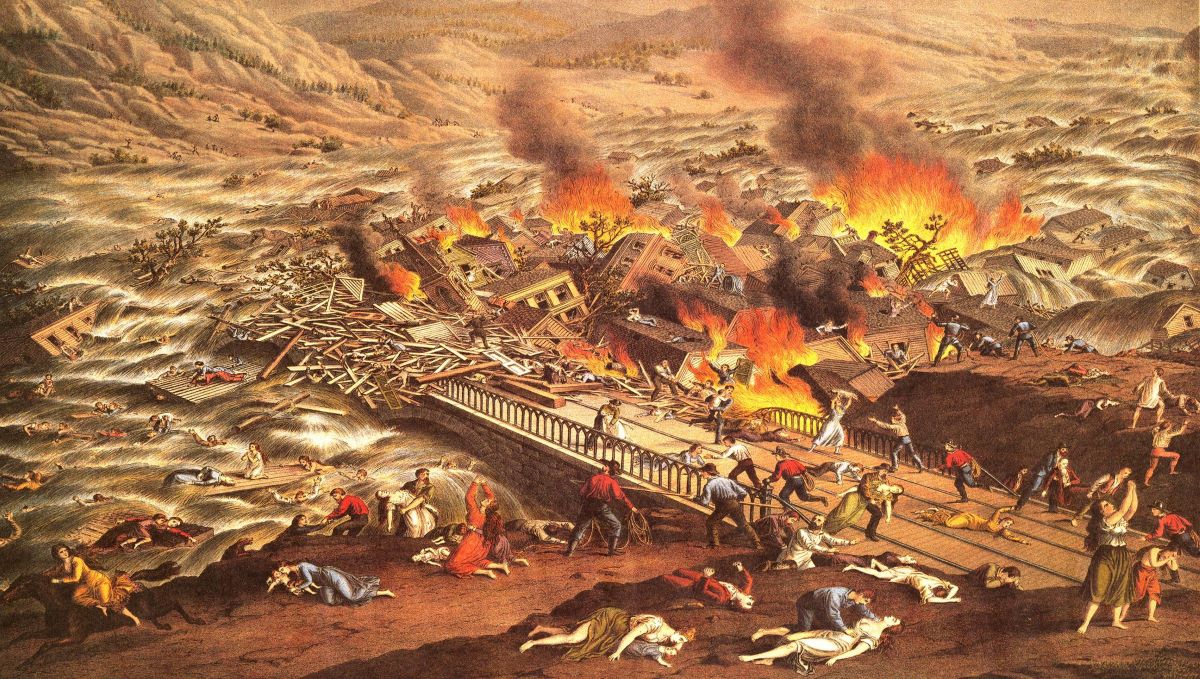
Davis joined about 100 other reporters who were covering the disaster. The opportunity cemented his reputation as a bona fide reporter and writer. Later that year, he asked to be sent to England to cover the cricket games between the Americans and the British but was denied. He went anyway, but for a rival paper. When he returned, he decided to move on from Philadelphia and move to the mecca of American journalism, New York City.
The Traveling Reporter
Before 1889 ended, he was working for the New York Evening Sun. Davis added something to his regular reporting. He created fictional characters for features, which were serialized as short stories. His most famous characters were Gallegher and Courtlandt Van Bibber. The Van Bibber stories were later published as a collection of short stories. His time with the Evening Sun would not last very long, as Harper’s Weekly came calling in 1890, offering him the position of managing editor.
Davis accepted, but only after the publication agreed to give him six months’ leave each year to travel and write. Harper’s Weekly actually improved upon the reporter’s demand by agreeing to publish his travel articles.
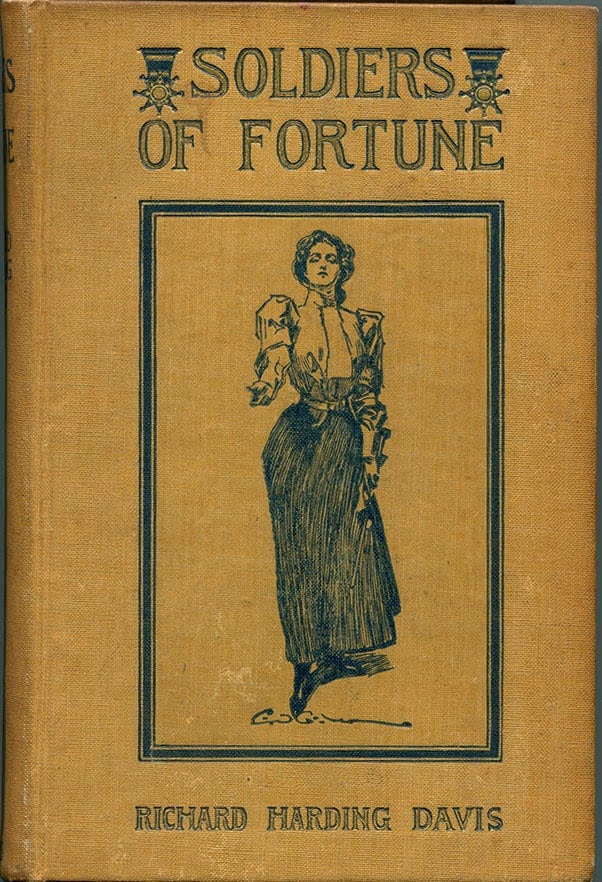
His travels were extensive, cutting across America, cajoling with Texas Rangers, venturing into Mexico, exploring countries in South America, steaming across the Atlantic, and even walking the streets of London in hopes of capturing Jack the Ripper. From these experiences, he wrote short stories and travel books. He also used his South American experience as the setting for his most successful novel, “Soldiers of Fortune,” published in 1897.
Handsome and Honest
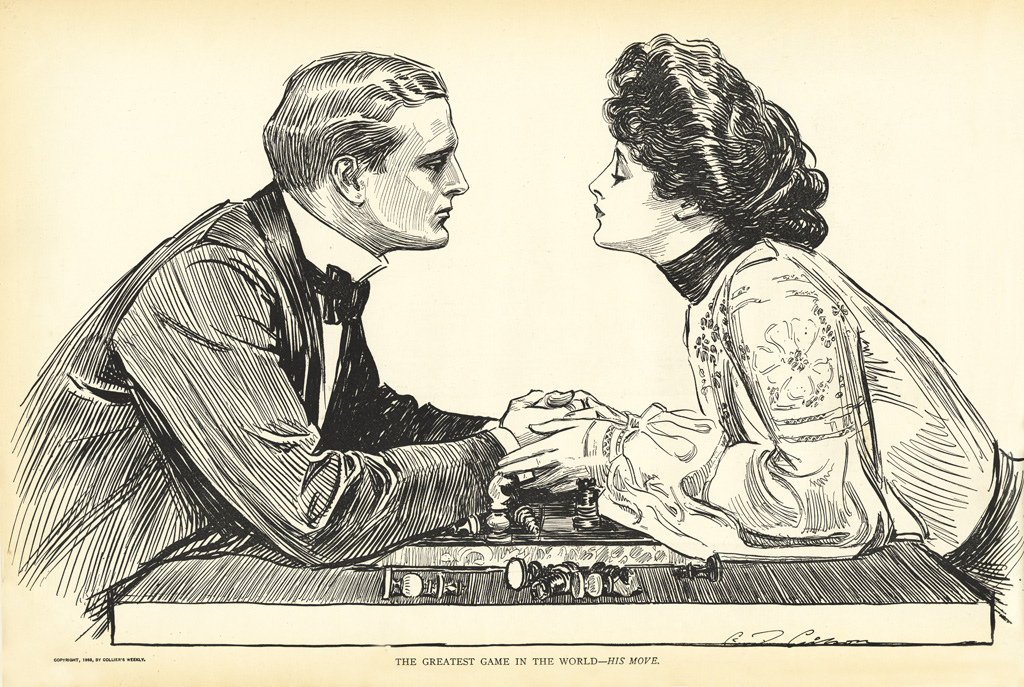
It was not just his words and his name that had become famous, but his face too. Charles Dana Gibson, an illustrator for some of the era’s leading publications, illustrated many of Davis’s pieces, and typically used the reporter’s clean-cut and handsome face as a model for his male illustrations. Gibson was famous for his creation of the Gibson Girl—illustrations of the quintessential woman of the age—and now, based on Davis, he had created the Gibson Man.
A year before the publication of “Soldiers of Fortune,” he, along with artist Frederic Remington, were hired by William Randolph Hearst, owner of the New York Journal, to report on the atrocities taking place in Cuba. Much to Hearst’s chagrin, there were no atrocities to report.
When Davis and Remington were returning aboard a ship, the vessel was stopped by Spanish officials and searched, specifically three Cuban women were searched and questioned as spies. When Hearst heard of the incident, he blasted it with an inflammatory front page image and the front page headline “Does Our Flag Protect Women?”
Hearst’s claim that the women were harassed by the officials was a fabrication. Davis, demonstrating his chivalric and honest demeanor, refuted the Journal’s reporting. Hearst’s primary competitor, Joseph Pulitzer, published Davis’s refutation on the front page of his New York World.
The War Correspondent
In 1897, he found himself in Europe, covering the brief Greco-Turkish War. The following year, Davis returned to the United States after hearing that the U.S.S. Maine exploded off the coast of Cuba. On April 25, 1898, America declared war on the Spanish, and Davis returned to the island.
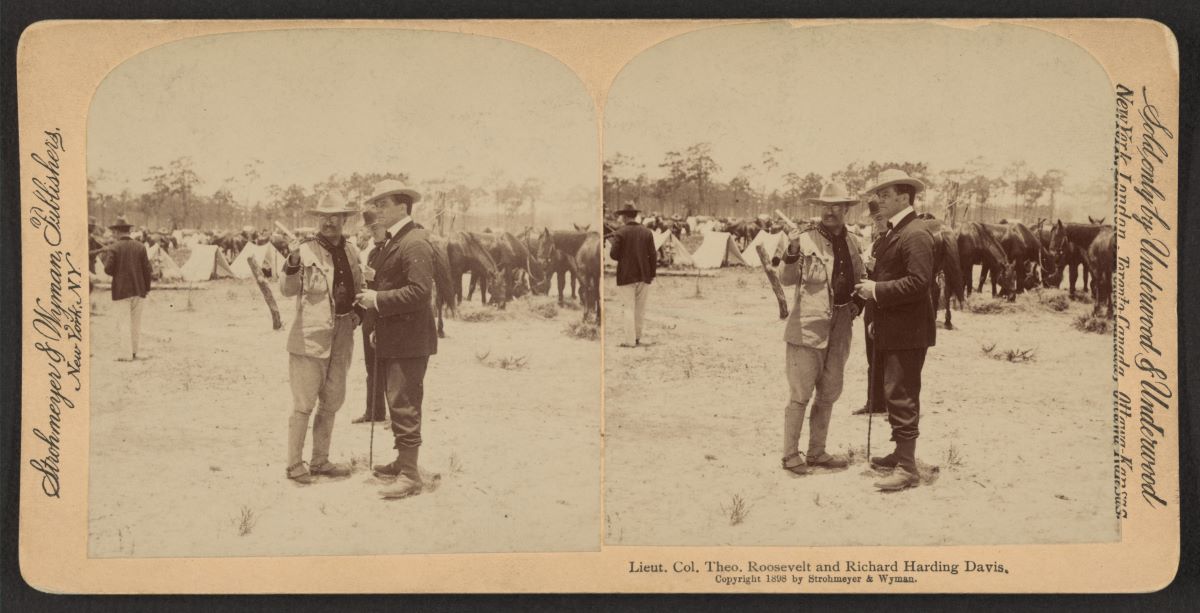
While in Cuba for his third time, he made a lifelong friend, Theodore Roosevelt. Roosevelt, rising in politics at the time, was made famous by Davis’s reporting on the actions of the Rough Riders. In fact, Davis found himself doing more than reporting; he helped carry wounded men and even returned fire during a fight against the Spanish. After the war, Davis’s and Roosevelt’s stars rose considerably.
Roosevelt went on to become vice president and then president just a few years later. Davis became the era’s most prominent war correspondent. After the Spanish-American War, he followed up with the Second Boer War in 1900, the Russo-Japanese in 1904, and, shortly after the start of World War I, he reported on the Germans marching through Brussels— reporting that narrowly had him executed by the Germans on suspicion of being a spy.
‘As Good an American as Ever Lived’
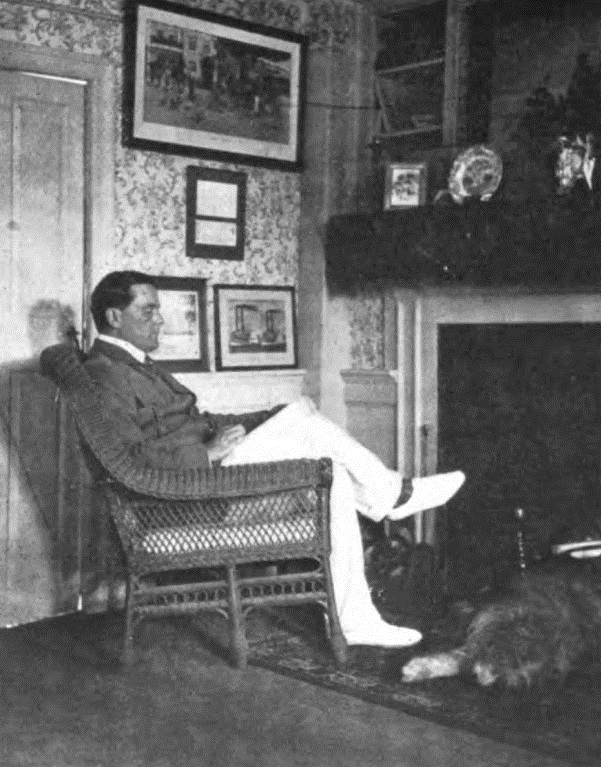
Davis was a memorable character on the battlefield. He not only brought with him fine clothes to change into during the evenings, regardless of where he was, but he also brought a portable tub, which was certainly in keeping with his Gibson Man persona. Sadly, he did not get to cover the entire war in Europe, as he died of a heart attack in 1916.
His writing, however, lived on. His method as a war correspondent set the standard for future writers by describing the action in a way that made the reader feel as though they were there. Along with his war correspondences, Davis wrote extensively in fiction, including short stories, novels, and plays.
At his height, he was producing six short stories and one book per year. During one period, he had five of his plays running simultaneously, three of them on Broadway. Dead at 51, Davis nonetheless seemed to have lived multiple lives.
The novelist Booth Tarkington once noted of Davis, “He bade [young men] see that pain is negligible, that fear is a joke, and that the world is poignantly interesting, joyously lovable.”
Davis’s friend, Theodore Roosevelt, proclaimed, “He was as good an American as ever lived.”
What arts and culture topics would you like us to cover? Please email ideas or feedback to features@epochtimes.nyc.