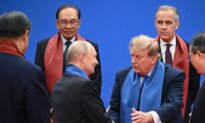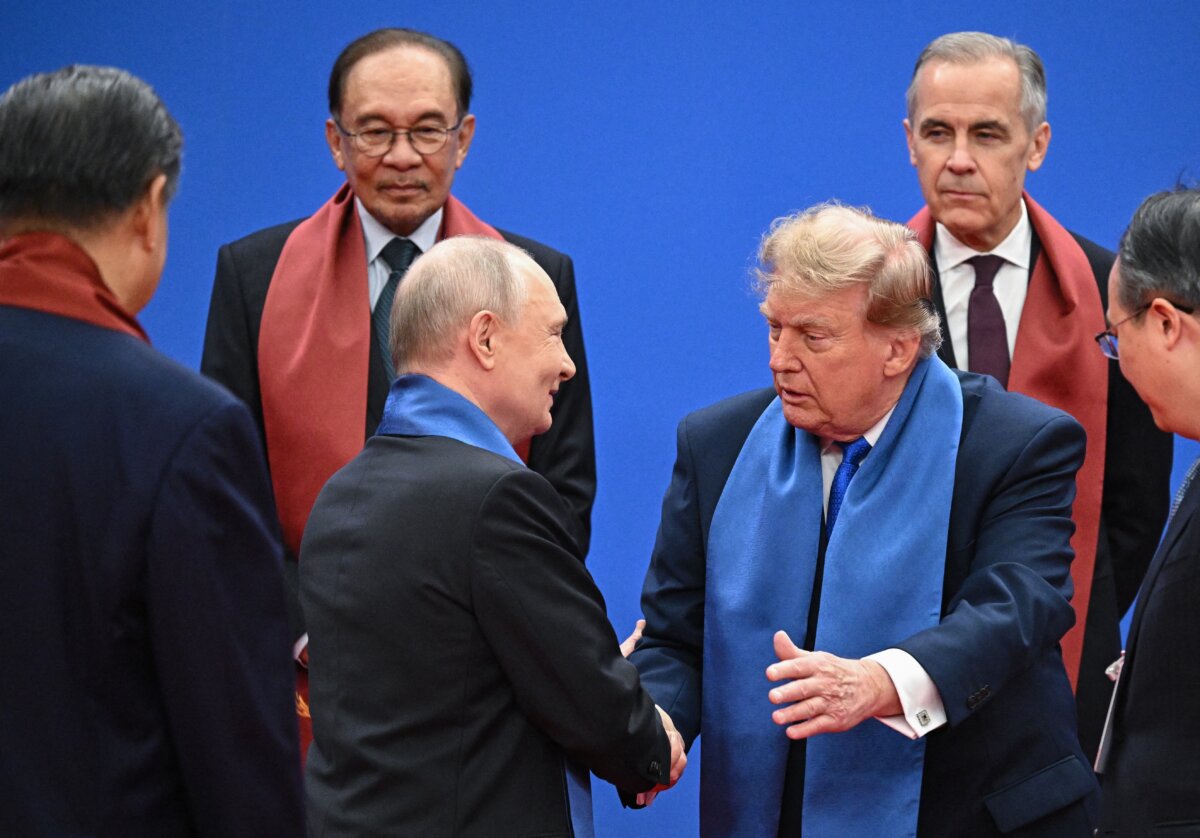

President Donald Trump has begun a meeting with Russian President Vladimir Putin on Nov. 19, their first sit-down in 15 months, as Washington presses ahead with efforts to end the war in Ukraine.
The meeting, initially not on Trump’s schedule, came just hours before a separate trilateral summit including the two leaders and Chinese leader Xi Jinping on the sidelines of the Asia-Pacific Economic Cooperation (APEC) summit in Shenzhen.
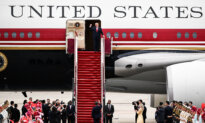
The White House confirmed the meeting on Nov. 18, shortly after Trump landed in China, but didn’t disclose the agenda.
Kremlin spokesman Dmitry Peskov said earlier on Nov. 18 that Putin and Trump could discuss issues such as the Iran and Russia–Ukraine wars during their brief talks, Russia’s state-run Tass news service reported.
A potential visit by Putin to attend the Group of 20 summit in Miami in December could also be discussed, according to Peskov.
Putin’s foreign policy adviser, Yuri Ushakov, said the two leaders would have a “full-fledged conversation” on the sidelines of the APEC gathering, rather than a formal bilateral summit, according to Russian news agency Interfax.
Trump and Putin last met in Alaska in August 2025 to discuss a peace deal between Russia and Ukraine. But the summit ended without an immediate breakthrough.
The United States has ramped up mediation efforts to end the war in Ukraine, which is headed for its five-year mark in February. Following the direct peace talks brokered by Washington in Abu Dhabi, United Arab Emirates, earlier this month, Ukrainian and Russian officials agreed in principle to a prisoner exchange.
On Nov. 18, Putin and Xi had a bilateral meeting ahead of Trump’s arrival.
In his opening remarks, Xi said that it was their third meeting so far this year and their 50th encounter—either in person or by video conference—since 2013, according to the English translation of the remarks released by the Kremlin. He called the milestone “highly symbolic.”
Addressing Xi as his “dear friend,” Putin touted the bond between the two countries. Bilateral trade, he said, had topped $200 billion for several years. Tourist flows had increased “by as much as 43 percent” since the introduction of the visa-free regime at Xi’s initiative, he added.
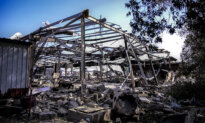
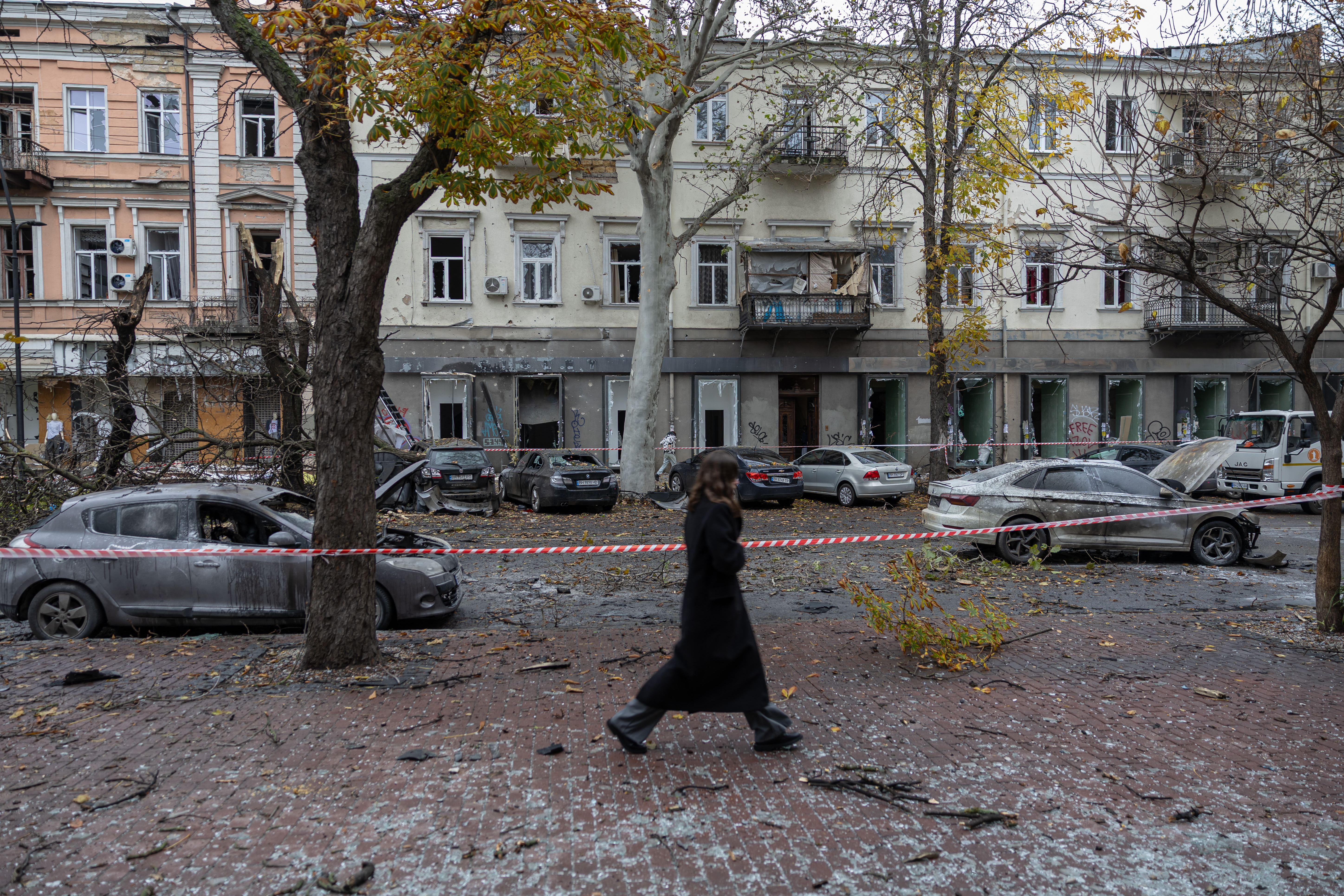 A woman walks past damaged cars and residential buildings following Russian drone attacks in Odesa on Nov. 18, 2026. (Oleksandr Gimanov/AFP via Getty Images)
Officially, the Chinese regime presents itself as a neutral party in the Ukraine conflict. Yet as a top buyer of Russian energy, Beijing has emerged as a key lifeline for Russia’s wartime economy.
The United States and its allies have long accused Beijing of supplying machine tools, chips, and other materials that have dual civilian and military use to help rebuild Moscow’s defense sector. The European Union has also publicly criticized the regime for training Russian soldiers to fight in the Ukraine war.
Trump is set to meet with Putin and Xi on Nov. 19, with denuclearization and the wars in Ukraine and Iran on the agenda.
According to the Kremlin, the three leaders may agree on a joint statement—but added that nothing would be certain until the last moment.
 Friends Read Free
Copy
Facebook
Tweet