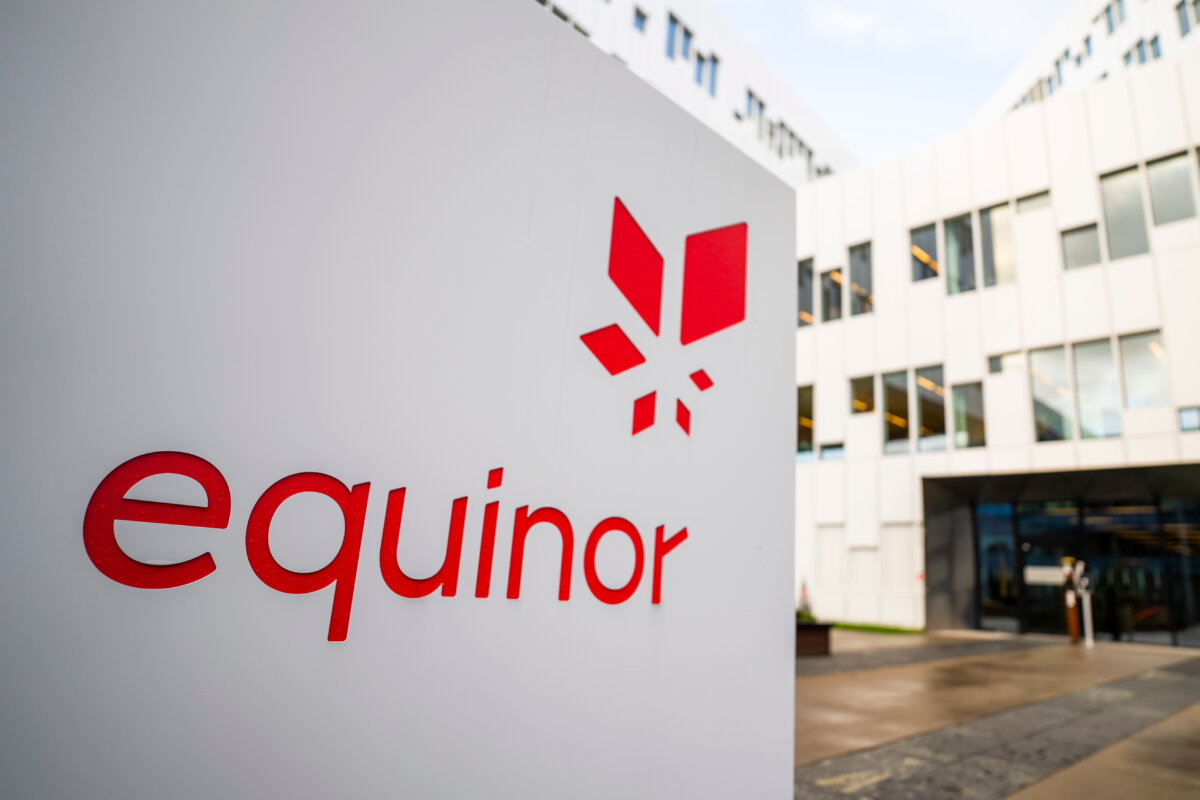

Equinor, Europe’s largest supplier of pipeline gas, is working to contain a cyberattack targeting its internal IT systems.
Equinor first reported that it had been the victim of a cyberattack in a Nov. 17 statement.
“There are no indications that data has been stolen. The attack has not affected Equinor’s operations and production,” it said.
It said that “relevant resources have been mobilised to neutralise the attack and regain full integrity.”
It is not yet known when the attack began, what type of attack it was, or who was behind it.
However, in a Nov. 18 update, Equinor said that it had “gained a clearer understanding” of how the attack was carried out and which systems have been affected.
“As this is not a virus attack, there is no risk of the attack spreading. At present, there is no indication that the attack has consequences for employees, partners or suppliers. Production remains unaffected,” it said.
The Norwegian National Security Authority (NSM) said it was aware of the incident.
“We are providing assistance as needed,” an agency spokesperson said.
Last month, NSM raised its cyberattack risk assessment to high for the first time, saying businesses should “immediately” prepare for the consequences of potential cyberattacks.
“NSM has not publicly issued this type of assessment before,” it said on Oct. 27.
“Over the past six months, we have seen a tripling of successful cyber operations against Norwegian businesses. Several of these have had serious consequences and still pose a potential for damage to national security,” said NSM Director Arne Christian Haugstøyl.
“AI analyzes large amounts of data and finds vulnerabilities faster than humans have been able to. These open up new opportunities for cyberattacks at a more frequent pace and in greater volume. This means that the risk increases, and the pace of implementing security measures must increase.”
Norwegian state-controlled Equinor is Europe’s largest supplier of pipeline gas.
According to Equinor, around 70 percent of all gas produced on the Norwegian continental shelf is marketed and sold by the company.
Its largest European markets include Germany, the UK, France, Belgium, the Netherlands and Poland.
Postdoctoral Fellow/Assistant Professor in Energy Geopolitics at the University of Oslo, Francesco Sassi mulled the potential consequences of a disruption as Norway’s gas export chain is “tightly interconnected.”
In an X thread published on Nov. 18, he said that a “prolonged digital outage at a shared hub could constrain multiple fields simultaneously.”
“During peak winter demand, any interruption—or even a temporary loss of confidence—in Norwegian flows would intensify global LNG competition and amplify European price volatility,” he said.
Separately, Google’s Threat Intelligence Group said on Nov. 16 that it had identified hackers using AI frameworks capable of discovering and exploiting software vulnerabilities without human intervention.
Google also reported that Chinese state-linked cyber-espionage actors were using artificial intelligence (AI) tools to scan networks, research targets across global industries, and weaponize exploits.
The report did not establish any connection between these AI-enabled attacks and recent outages.
Websites for some of the world’s most prominent brands, including banks and media companies, were compromised to steal cryptocurrency and infect iPhones, a security researcher said Monday.
Malicious JavaScript was served to visitors of websites belonging to 178 organizations through Optimizely, an AI-powered website optimization platform, according to researcher Scott Helme.
CNN, Zoom, Ikea, HSBC, and Salesforce were among the companies whose websites were affected, he said.
Helme said the malware attempted to replace cryptocurrency payment addresses with the cyberattacker’s digital wallet, capture credit card details as users entered them, and deploy exploit code targeting Apple’s iOS devices.
Chris Summers and Reuters contributed to this report.
 Friends Read Free
Copy
Facebook
Tweet