Commentary
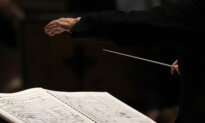
Having completed the full cycle of Ludwig van Beethoven’s symphonies, I decided to turn to a piece about which I’ve heard plenty but to which I had never actually listened. It is the Missa Solemnis. Nothing could have prepared me for its grandeur, majesty, length, and sheer scale. It’s as if he was seeking to communicate beyond time and directly with the heavens.
I don’t think of Beethoven as a particularly religious man but there is something about the text of the composed parts of the Mass that inspired him to achieve something beyond human imagination.
Suddenly it struck me. This text is the single most composed text in Western history. Literally thousands upon thousands of composers of note have taken it on. Some have composed many settings. Back in the 16th century, the Mass text was the most composed music of the time, far beyond any secular or other religious text.
As I think about this, the same is true of Heinrich Biber (1644–1704), who wrote some wonderful work for violin but became a composer of a different sort entirely when he wrote his Mass.
Antonio Lucio Vivaldi (1678-1741) can come across as fun and often formulaic until it comes to his spiritual works, especially his most famous Gloria from his Mass setting.
Johann Sebastian Bach (1685–1750) wrote hundreds of cantatas and chamber works, but somehow reserved his highest achievement for his B Minor Mass which stayed in his desk and was never performed in his lifetime. Even the little Masses he wrote with just the opening texts are achievements.
Wolfgang Mozart (1756–1791) wrote symphonies, operas, and chamber music like a machine but went to new heights of brilliance when it came to his Mass compositions.
The same can be said of Joseph Haydn (1732–1809), Franz Schubert (1797–1828), Giuseppe Verdi (1813–1901), Igor Stravinsky (1882–1971), Paul Hindemith (1895–1963), and even Leonard Bernstein (1918–1990).
Stepping back to the Renaissance, my favorites are Josquin des Prez (1450–1521), Giovanni Pierluigi da Palestrina (1525–1594, Orlando di Lassus (1532–1594), Tomás Luis de Victoria (1548–1611), Thomas Tallis (1505–1585), William Byrd (1539–1623), Cristóbal de Morales (1500–1553), Francisco Guerrero (1528–1599), Jacobus Clemens non Papa (1510–1556), and John Taverner (1490–1545) among so many others.
I’ve left out thousands of composers here of course.
By way of background, the texts were largely stable by the 7th and 8th century, with the addition of the Credo in the 11th century. The entire Mass consists of readings, Psalms, and other texts related to the spiritual purpose of the gathering. The parts that were typically composed, initially in chant and later in ever more elaborate forms, were the Kyrie, Gloria, Credo, Sanctus, and Agnus Dei.
These five parts constitute what is called the Mass ordinary. It is a five-act emotional machine: penitence, praise, doctrine, adoration, and petition. It lends itself to story telling in song.
The other text subject to composition is the Requiem Mass which has a different structure and includes the ever-famous Dies Irae, with its terrifying reminders of the mortal end of us all.
One of the weirdest moments in my life was stumbling into a Manhattan parish and hearing some of the spookiest, creative, and most thrilling polyphonic music I’ve ever heard coming from the balcony. I could not figure out if it was old or new.
As it turns out, I was hearing the first-ever full Mass setting composed for multiple parts for voice. The composer is Guillaume de Machaut. It was “Messe de Nostre Dame” from 1360. Later I found the manuscript and spent a day trying to figure it out. I never did.
One piece that truly fascinates me is the German Requiem by Johannes Brahms (1833–1897). How in the world would a composer of such wild creativity manage within this rather strict framework? Well, he changed the words while retaining the import, all written in mourning for his deceased mother. As for the art, the whole piece is indescribably thrilling. I somehow avoided it my whole life until this weekend. I could not believe what I was hearing.
We can detect a pattern here, one that dates back a thousand years or longer. The best artists give their best to this one text, consistently over and over. You might push back on me by reference to Bernstein’s Mass. Granted it skates on the edge of impiety and even goes over to the point of offense. But even here, one can detect something extremely special with moments of great profundity. His best work? Hard to say but maybe.
The question is: why?
The text imposes discipline and makes cliche impossible. You cannot be lazy. You have to stick with the sensibility and a strict framework. This imposes and demands creativity but within limits. You cannot merely fall back to formulas you have used in other work.
It does not help that the text is not rhythmic or very accessible due to the Latin. You have to look to find the music in the theological assertions. And there are the repetitions (Kyrie, Agnus, Sanctus) and the long didactic statements of belief (Credo). No sonata, concerto, or cantata form fits it. It is a thing unto itself.
The composer becomes aware that in deciding to compose a Mass, he is entering into the longest single musical tradition that exists, and this adds weighty responsibility to give it one’s best. One wants whatever is composed to be remembered for the ages. This is very clear in listening. None of this was written for a single event but rather to last an eternity.
Also, there is no getting around the intended target audience, which is God himself. This imposes a transcendent purpose, even if the composer is not quite a believer. Many of them were not. Think of Verdi, for example, a thoroughly secular guy. But when it came time for his Requiem, he suddenly found faith and put his talents in service of it.
Because of this, the composer by instinct feels that he must enter into the middle realm between time and eternity and become the very voice that connects Man and God, as in the famous Michelangelo painting of the gentle finger touch between Adam and God the Father.
Which leads to my conclusion: the Mass text alone is an artistic gift to mankind. It has forced our best artists to be better than themselves and give to humanity the best that humanity can create, all as a humble supplication to God, who breathed life into man so that we could and would breathe it back in honor to Him. It’s remarkable how many artists through the ages have done exactly this.
A quiet and unassuming assembly of words has called forth the best that mankind has to offer eternity, consistently for many centuries for the darkest times after the fall of Rome to the Enlightenment and all the way to the digital age. That’s notable. And remarkable.
Views expressed in this article are the opinions of the author and do not necessarily reflect the views of The Epoch Times.
 Friends Read Free
Copy
Facebook
Tweet