
Commentary
The plot of the iconic 1979 movie “And Justice for All” involves an idealistic criminal lawyer, played by Al Pacino, who comes to believe that the American justice system cannot deliver on its promise of justice. He determines that the rich and powerful can manipulate the system to their advantage by engaging expensive legal counsel trained in the art of helping them dodge the consequences of their actions.
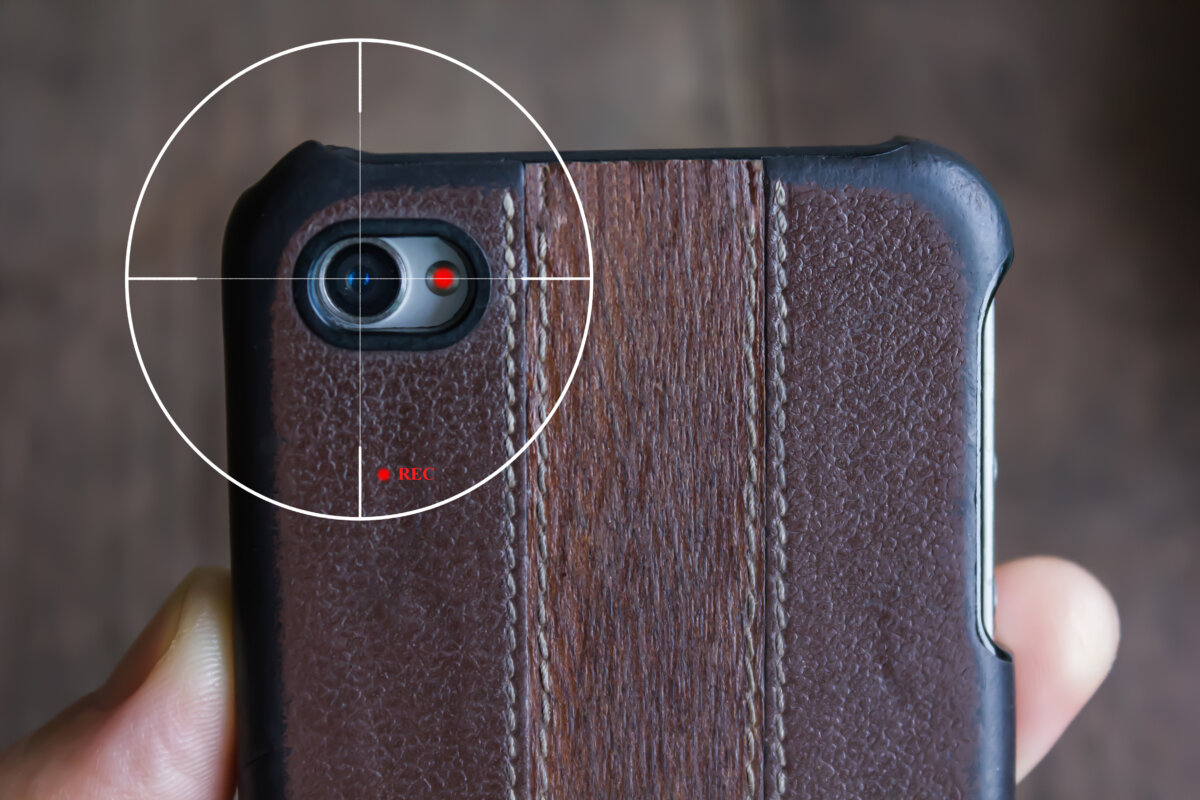
For many who believe the justice system to be so tainted—whether American or Canadian—the smartphone presents as an evidence-gathering tool that can help level the playing field. It can be used to inexpensively capture evidence, often surreptitiously, to demonstrate the truth later in court.
What are the rules that govern the use of secretly recorded audio or video files in Canada? And how has the emergence of AI-generated deepfakes impacted those rules?
A recent Ontario Court of Appeal decision sent a clear message to anyone facing criminal prosecution that a secret audio recording made by a private citizen without police involvement or a search warrant can be used as evidence against you. It is not excluded by the Charter of Rights and Freedoms if the state was not involved and if the person who made the recording participated in the recorded conversation. The case, cited as R. v. T. (L.), involved a 16-year-old girl who had broken up with her 18-year-old boyfriend and who had privately recorded his admissions of sexual assault and choking.
But these rules apply in a criminal prosecution and not to civil litigation. In civil litigation, while a smartphone recording may be accepted as evidence of the truth, it may also be sometimes frowned upon as a weapon of bad faith. Context is all-important.
In Ontario family law cases, judges view secret recordings by spouses with a jaundiced eye. Concerned by the increasing use of secret recordings in matrimonial litigation, the judge in Van Ruyven v. Van Ruyven, a 2021 decision, applied earlier precedent to exclude such evidence. The reason for excluding the evidence was to avoid encouraging a toxic family environment state where every household argument is recorded for future strategic advantage. Only on rare occasions is such evidence admissible in a family law dispute, such as when it discloses severe child abuse.
It is tempting for employees suffering at the hands of an unfair employer to secretly record the boss or a colleague to substantiate a wrongful dismissal or harassment claim. Whether such evidence will be accepted by a Canadian court is, again, context driven.
The British Columbia Court of Appeal confirmed a trial judge’s decision to reject such evidence, which had been accumulated over several years, because the recording activity was underhanded and would be regarded by most employers as misconduct undermining the trust relationship between employer and employee. It also violated the privacy interests of persons who were recorded, as well as those who were discussed in the recordings.
In short, the private recording of conversations in the workplace might actually be grounds for dismissal.
But not always.
In some cases, such recordings have been accepted, particularly where the termination meeting has been secretly recorded or where the inequality in power between employer and employee is a significant factor.
Context is always important, and there is a distinction between a long history of surreptitious recordings at the workplace as opposed to the recording of a meeting on an exceptional basis.
There is another cautionary note to consider the next time you are tempted to secretly tap that record button on your phone. Almost 15 years ago, the Ontario Court of Appeal rendered its decision in the case of Jones v. Tsige and created the tort of intrusion upon seclusion. Thanks to this precedent, damages can now be awarded against you if your recording intentionally invades someone’s privacy without lawful justification, and a reasonable person would find it “highly offensive.”
If that is not enough to make you think twice about secretly recording evidence for a legal claim you may want to advance, the cost of using such evidence has increased thanks to the proliferation of AI-generated deepfakes.
Authenticating an audio recording used to be easy. A witness simply had to testify that the recording accurately reflected the conversation they remembered.
Times have changed. Under Canadian evidence law, the party introducing a recording bears the onus of proving its authenticity on a balance of probabilities. Because digital manipulation is so accessible, dishonest litigants are now falsely claiming that legitimate, incriminating recordings of them are actually “AI deepfakes.”
Canadian courts have acknowledged and are grappling with this issue, sometimes dismissing deepfake defences as “entirely speculative” when no structural anomalies exist in an audio file but increasingly wary of the potential for deception.
However, to overcome a deepfake challenge today, civil litigants may sometimes have to rely on metadata verification to audit file creation dates, demonstrating digital trails to a cell tower, and expert audio and video engineer testimony. That could amplify the costs of litigation and the length of trials.
Smartphone justice for all? Maybe not.
Views expressed in this article are the opinions of the author and do not necessarily reflect the views of The Epoch Times.
 Friends Read Free
Copy
Facebook
Tweet