Commentary
The much-acclaimed “America First” agenda does not mesh with the Oct. 19 $8 billion Harvest Fuel Relief Program announced by President Donald Trump and Secretary of Agriculture Brooke Rollins. It might be a bailout for Big Ag, but it certainly is not consistent with a truthful agriculture policy.
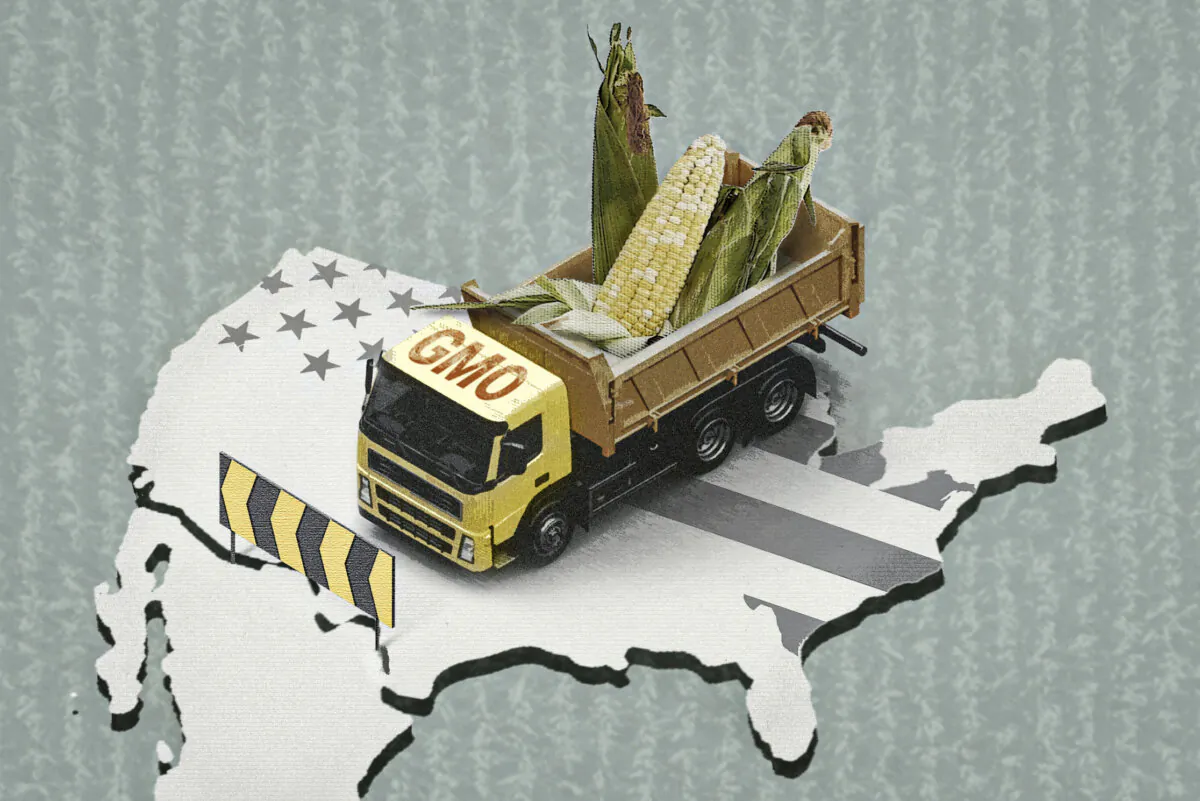
The one-time payment program will go almost exclusively to corn and soybean farmers, most of whom are growing genetically modified (GM) crops. The fuel subsidy is a knee-jerk reaction to a questionable problem.
According to agriculture economists at the University of Illinois, quoted in ACRES USA magazine, diesel fuel costs average 3.33 cents per bushel of corn but the 2026 crop is selling for 49 cents per bushel higher than it did in 2025. That price increase is worth 15 times the diesel fuel increase.
In other words, the prices farmers are receiving for the 2026 crop are way higher than any increase in diesel fuel. So what’s the problem?
In fact, when adjusted for inflation, in 2008 diesel was $7.78 per gallon versus a measly $6.30 per gallon in 2026. Why did farmers navigate those diesel prices without taxpayer-funded help but today the prices represent, supposedly, a crisis? The numbers don’t add up.
The diesel price issue is the latest distraction to make people look away from the real problems in agriculture. According to agriculture economist Charles Benbrook, since roughly 2000 “the cost of a bag of GMO corn seed has increased almost four-fold.” But it gets worse: “Corn growers in the U.S. are paying almost 70 percent more for corn seed than farmers in Brazil, about 120 percent more for herbicides and fungicides, and just under 90 percent more for insecticides.” Other dramatic increases include chemical fertilizer, pharmaceuticals, equipment, land, and labor.
Most Americans are now aware that four companies control 85 percent of America’s meat supply. Sen. Bernie Sanders (I-Vt.) rightly rails against “the oligarchy.” This consolidation, concentration, and centralization did not happen due to free markets. It happened through crony capitalism as large players wining and dining regulators and legislators carved concessionary plums for themselves to thwart competition in the marketplace.
The extent of this is almost unimaginable. According to agriculture watchdog Farm Action, here are the beef brands owned by Tyson Foods:
AdvancePierre Foods, Aidells, Ball Park, Barber Foods, Big Az, Bascos, Bryan, Chairman’s Reserve, Fast Fixin’, Galler, Hillshire Farm, IBP, Jimmy Dean, Lady Aster, Landshire, Like Mom’s, Mexican Original, Open Prairie, Original Phiffy, Pierre, Reuben, Russer, Savoro, Sara Lee, Star Ranch Angus, State Fair, Steak EZE, Wright Brand, and Wunderbar/
Now you can take a breath. All of these brands are coming out of the same packaging line: “Change the label to blue; now change it to green; now change it to red,” you can almost hear the line manager scream. Consumer choice is not what it seems. All these brands come out of the same spigot. The same is true on the farmer end.
With few places to sell and few places to buy, the chemical-dependent industrial mono-crop farmer has far fewer options than grandpa. It makes you want to scream, “It’s not the diesel, stupid; it’s the system.” Every bailout prevents farmers from seeking alternatives.
Speaking at a recent conference in Iowa, I spoke with a woman who implored, “How can I get my husband and farm family out of the current chemical-commodity-subsidy system?” She was desperate for an escape plan and couldn’t imagine life outside of it.
I asked her point blank: “Have you ever heard of ACRES USA?” She returned a blank stare. No, she’d never heard of it. It reminded me of the stares I received 40 years ago when I asked local school officials if they’d ever heard of Raymond and Dorothy Moore, whose blockbuster book “Homegrown Kids” launched the homeschool movement. Living in mental and spiritual silos, these credentialed educators had no idea that an alternative existed. But they sure knew institutionalized public schools were the best and only model.
Currently, the two leading trade journals that support a non-chemical, non-subsidy-dependent agriculture are ACRES USA and Stockman Grass Farmer. An entire universe exists outside the mainstream, with answers to every question and solutions to every problem presented by the system.
The roughly $55 billion in agriculture subsidies this year do not represent freedom; they represent a trap to keep farmers captured by an exploitative system and to fleece American taxpayers in the process. The Big Ag lobby groups like the American Farm Bureau Federation, National Corn Growers Association, National Association of Wheat Growers, and National Sorghum Producers, who applaud this fuel subsidy, are not friendly to alternative thinking, whether it’s fertility from compost or growing something different.
That the average conventional farmer under their tutelage has never heard of leading alternative trade magazines speaks to the siloing of thought on both ends of the spectrum. Mainstream thinking doesn’t like ideas that wean farmers from Big Ag’s clutches, and their farmer constituency finds ignorance more convenient than innovation.
Speaking of innovation, David Stelzer, founder and CEO of Azure Standard, arguably the nation’s largest unconventional distributor of non-chemical food, said his company needs a semi-trailer load of blueberries a week. He needs about that many raspberries. He can never find enough blackberries. As a result, he imports from Chile and Turkey.
“There’s a huge demand for frozen fruits and vegetables that are fully organic and regenerative,” Stelzer explained during a recent interview with regenerative agriculture consultant and bio-fertilizer expert John Kempf. “Beans is another thing that’s really hard to find. It feels like the price of lentils has almost doubled in the last few years, and a lot of them are being imported now.”
And cows. Converting mono-crops to perennial prairies has never been more doable and needed to feed domestic America. With half of soybeans exported, nearly half of corn going into ethanol fuel, and nearly half of irrigated alfalfa exported to Japan and Saudi Arabia to feed horses, the ugly truth is that these taxpayer subsidies are not helping American food security, prices, or resource stewardship. They are direct crutches for exports and largesse to the handful of fertilizer, chemical, and processing entities that purchase and process commodities.
The fuel bogeyman keeps people from seeing the overall economic pressure on America’s farmers, much of it asked for and accepted by them. Conventional chemical-industrial farmers are complicit in their own capture by the input suppliers and output brokers whose stockholders apparently disregard ecological, emotional, and economic food and farming issues. How else can you explain the suffering farmer pleading for help to grow things the world doesn’t need?
Unless and until farmers embrace their first-responder status as stewards of their earthworms, soil, clean water, and nutrition, they will continue to be the primary source of profit for their suppliers and buyers who apparently care little about America’s resource wealth.
First, Americans, defund bad farming.
Views expressed in this article are the opinions of the author and do not necessarily reflect the views of The Epoch Times.
 Friends Read Free
Copy
Facebook
Tweet