
Commentary
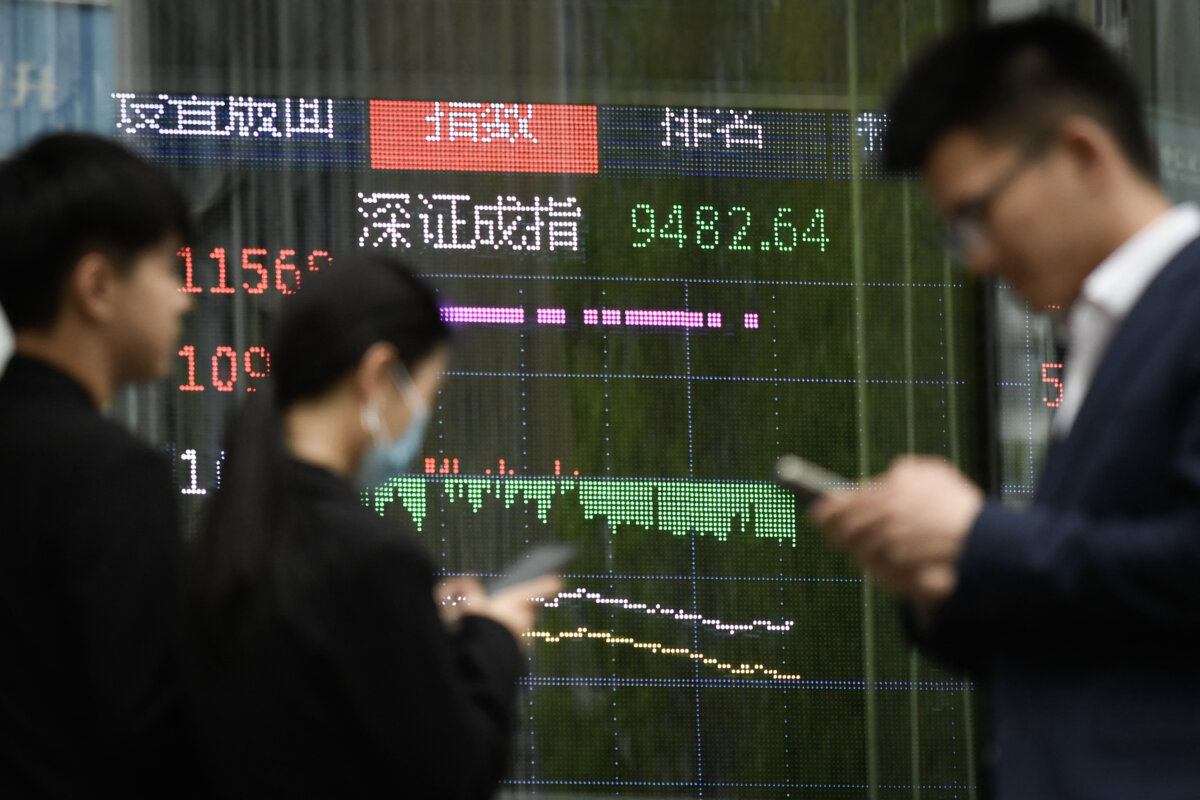
The numbers surrounding China’s artificial intelligence (AI) stock market bubble burst are stark.
China’s STAR50 index of AI and semiconductor leaders fell 40 percent in less than four months, erasing about $480 billion in market value. That is only part of the damage. Mainland stocks as a whole have lost roughly $2.4 trillion since May, and the broader CSI 300 has entered a bear market, down more than 20 percent from its June peak.
The ones eating the losses are not the officials who cheered it on, but the small investors who believed them.
AI’s Unsustainable Market Value Concentration
The concentration of AI in market valuation is unhealthy, to say the least. Goldman Sachs estimates that AI stocks make up 42 percent of China’s market value and 57 percent of trading volume.
The retail favorites were hit hardest. GPU makers MetaX and Moore Threads have dropped roughly 50 percent since July. Robot maker Unitree drew retail orders for 8,000 times the shares on offer when it listed in August, and it has since lost almost half its value.
In a market dominated by small investors, few escaped.
Valuations Remain Stretched
At its peak, the STAR50 traded near 250 times earnings. But even after a 40 percent collapse, it still sits around 100 times earnings, against roughly 30 for the Nasdaq 100. In other words, China’s AI sector remains more than three times as expensive as its American counterpart.
Thus, even the current depleted values don’t reflect reality and have further to fall.
Morgan Stanley expects offshore Chinese stocks to fall another 10 to 15 percent before they bottom. Mainland stocks were on a record losing streak of 12 straight weekly declines for the week ending Oct. 30.
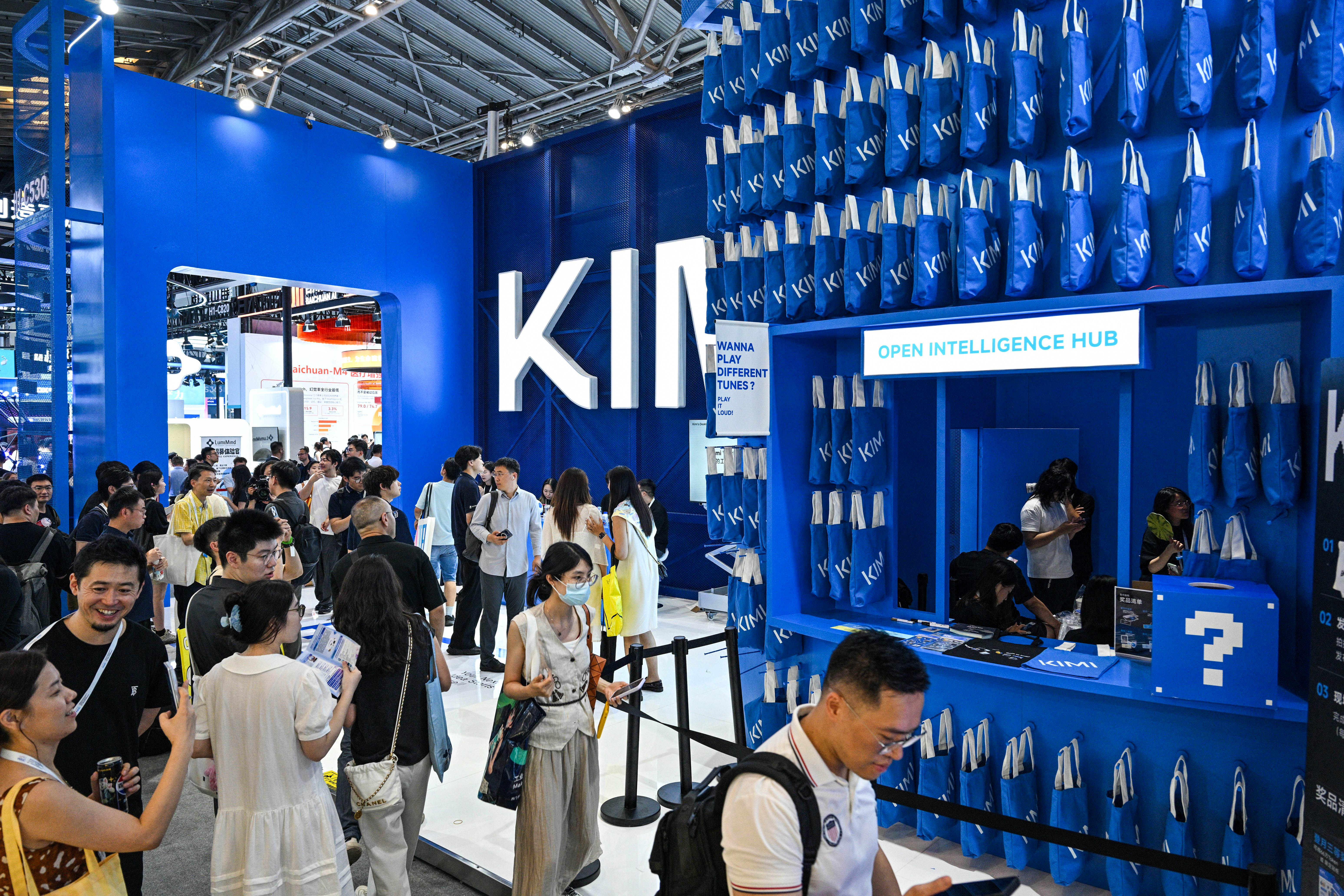 People visit the Moonshot AI stand, featuring the Kimi K3 model, during the World Artificial Intelligence Conference (WAIC) in Shanghai on July 18, 2026. (Hector Retamal/AFP via Getty Images)
Why the AI Bubble Burst
Reuters points to worries about AI demand, curbs on Chinese exports, tax bills, and the threat of foreign bans on Chinese data-center equipment as reasons the AI bubble burst. But those factors are merely window dressing for the most likely one.
The root cause is old-fashioned: prices ran far ahead of profits.
One analyst told CNBC the selloff began as a valuation correction and profit-taking before investors started asking whether earnings could justify the hype.
Adding fuel to the decline were cheap Chinese models from rivals such as DeepSeek and Moonshot AI that rattled chip stocks, and a stagnant consumer economy offered no domestic earnings to catch the fall.
A Pump-and-Dump Scheme by the CCP?
With any market crash, the question is always, “Who were the sellers and how did they know?”
Granted, there’s no public proof that Chinese Communist Party (CCP) members orchestrated such a scheme, but similar market events have happened before. The circumstantial pattern certainly deserves scrutiny.
For instance, in June, China’s securities regulator publicly warned against hyping tech themes, manipulation, and insider trading. That same month, Chinese state media reported that executives and major shareholders at mainland chipmakers were rapidly selling shares into the rally.
One analysis noted that such insider selling suggests some leadership teams considered their own stock overvalued, while observing that regulators have historically been better at announcing crackdowns than sustaining them.
Meanwhile, the retail frenzy was extraordinary. Biren’s Hong Kong debut saw its retail tranche oversubscribed 2,300 times. At the same time, Beijing was openly encouraging savers to move their money into stocks to fund the AI buildout.
That’s the problem. In China’s system, the state, state-linked funds, company insiders, and regulators all overlap. That’s why who sold, when, and to whom are fair questions.
Curiously, the only governing body able to investigate is the same Party apparatus that stoked the boom.
That’s a heck of a coincidence.
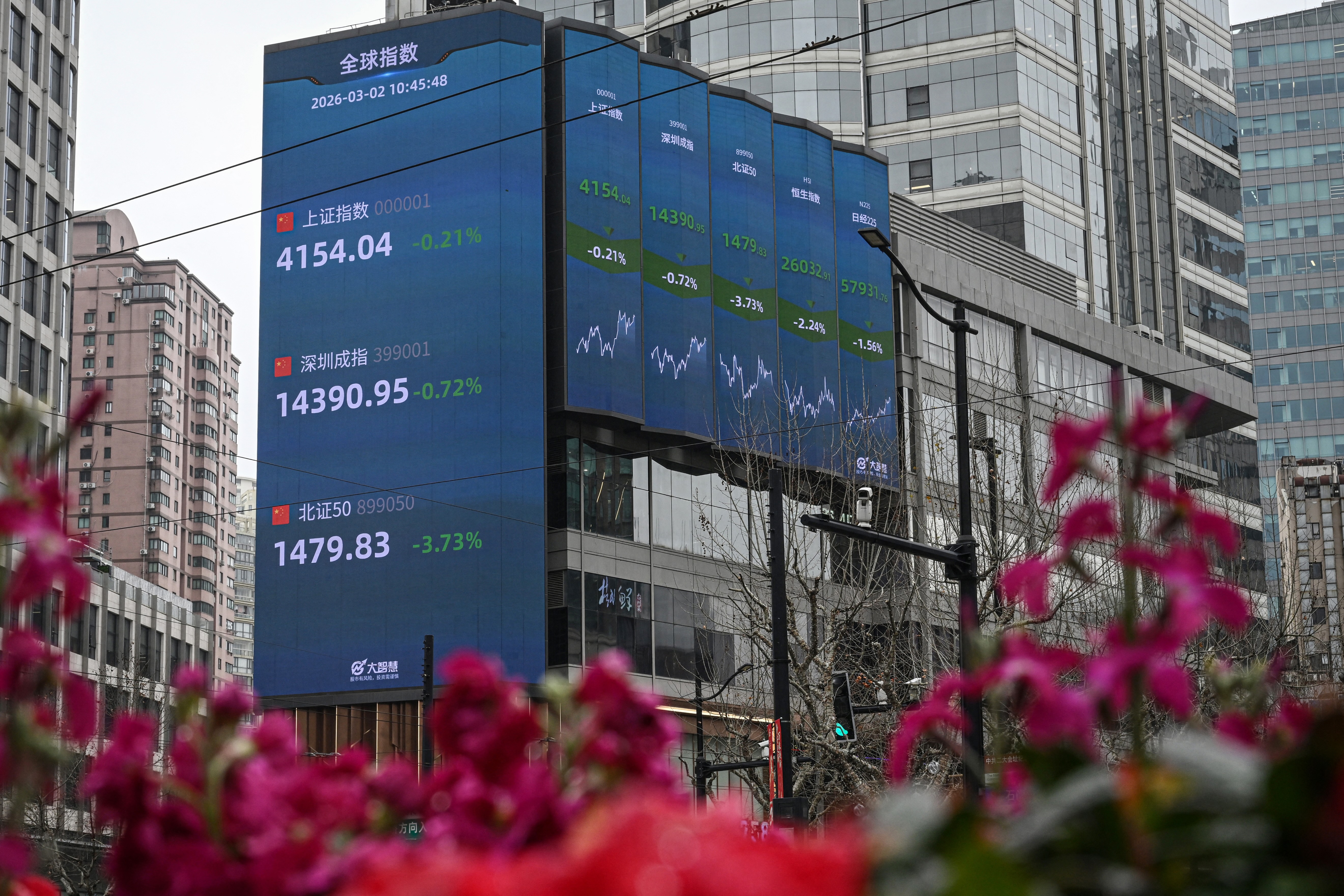 A screen showing the Shanghai Composite Index (top), Shenzhen Component Index (C), and Beijing Stock Exchange 50 Index (bottom) is seen in Shanghai’s Jing’an District on March 2, 2026. (Jade Gao/AFP via Getty Images)
The Economy and Consumer Sentiment
This latest market crash hurts an already fragile household sector.
China’s five-year property slump has eroded family wealth, and stocks were supposed to offer a way back. ING’s Lynn Song warns that equity losses could fuel a negative wealth effect that further erodes already low household confidence. Capital controls and tighter limits on offshore trading leave mainland investors with few places to go.
On the flip side, the national economy is looking better.
Third-quarter GDP grew 4.5 percent, supported largely by exports of chips and electronics tied to the global AI boom. Even so, the International Monetary Fund trimmed its 2026 forecast to 4.5 percent, and its 2027 outlook to 4 percent, citing weak domestic demand.
Where China Goes From Here
Will the CCP find a way to help hurting consumers rebuild their wealth?
Not likely.
Yes, Beijing has deployed state-directed ETF purchases to cushion the fall, but that only masks the problem; it doesn’t solve it. Strong national economic growth figures also give leaders an excuse to withhold broad stimulus, and investors have largely priced out new support.
Vanguard describes an increasingly K-shaped economy, with exports holding up while consumption, property, and investment drag. It warns that resilient exports are becoming insufficient to offset weak domestic demand, and that trade barriers and a possible slowdown in global AI investment add risk.
In reality, the areas where consumers look to grow wealth—such as real estate and the stock market—keep collapsing, with CCP elites on the winning side.
Views expressed in this article are the opinions of the author and do not necessarily reflect the views of The Epoch Times.
 Friends Read Free
Copy
Facebook
Tweet