
Commentary
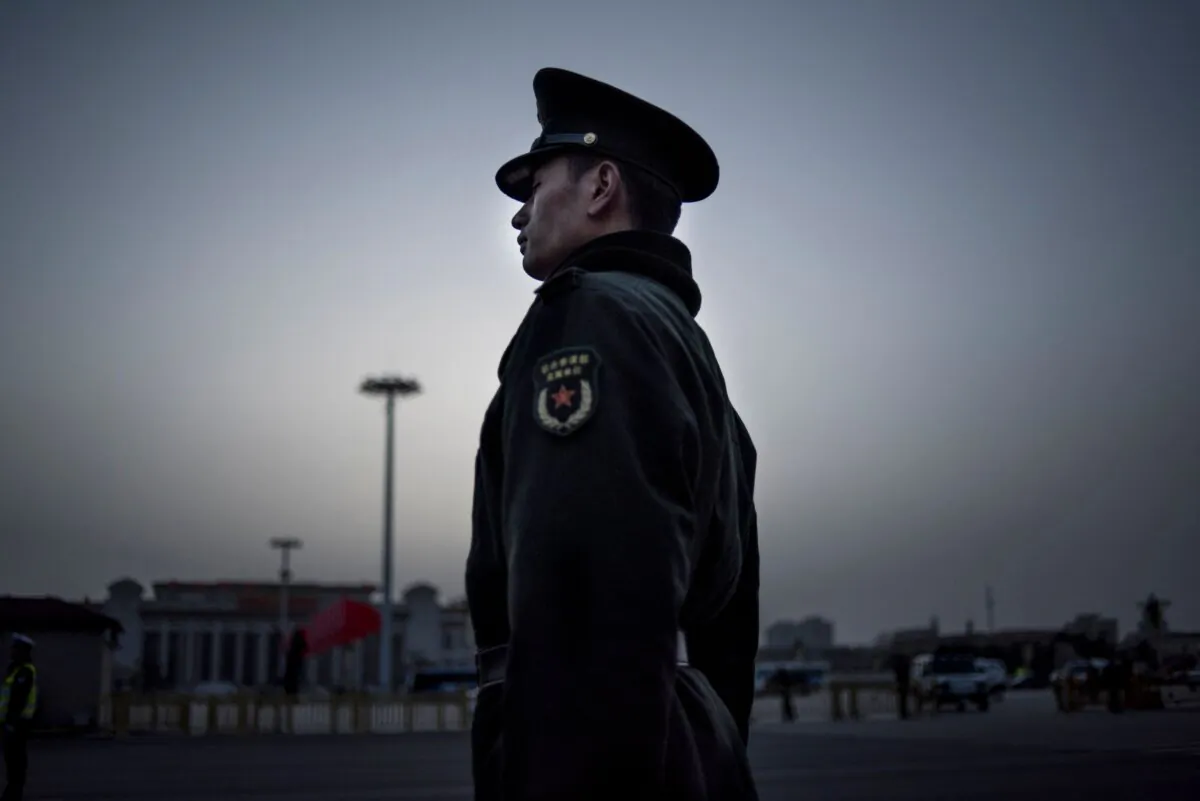
The Chinese Communist Party’s Central Committee opened a four-day plenum in Beijing on Oct. 26, focused on one theme: tightening the Party’s grip on its own ranks.
State media Xinhua’s curtain-raiser, republished by Chinese Communist Party (CCP) mouthpiece People’s Daily, frames the meeting as the next chapter in Chinese leader Xi Jinping’s 14-year drive for full and rigorous self-governance, complete with anti-corruption statistics and a tribute to his 2012 “eight-point rules.”
What the state-run media leave out matters more than what they say. About 300 members meet in secret; almost nothing is released until a closing communique written in opaque Party language, and the leadership will not acknowledge any disagreement.
Let us dissect the pronouncements and separate the truth from the bluster.
What ‘Full and Rigorous Self-Governance’ Actually Means
The English rendering is a translation choice that borrows the vocabulary of democratic self-rule. The Chinese original, quanmian congyan zhidang, reads more literally as “governing the Party strictly in every respect,” and state media’s own bilingual glossary offers “full and strict governance over the Party.”
The governor is the Party center. The governed are the Party’s roughly 100 million members and, increasingly, everyone else who holds public office.
Here is an accurate definition, drawn from the CCP’s own texts: full and rigorous self-governance is the system by which the Party leadership, ultimately the general secretary, enforces discipline, ideological conformity, and personal loyalty throughout the Party-state, using investigators who answer only to the Party.
Xi describes the goal as a “total-coverage” oversight system operating under the Party’s unified leadership. He casts it as “self-revolution,” the Party’s answer to China’s historic cycle of dynastic rise and collapse, substituting internal purification for external accountability.
The South China Morning Post’s summary is more blunt. In Beijing’s usage, the phrase means fighting corruption, tightening discipline, and shoring up political loyalty.
Why does this matter so much to Xi? Because for a party that has never faced a contested national election, control is its legitimacy. Xi has warned that unchecked corruption could finish off both the CCP and the state, and his defining lesson is the Soviet collapse. In a leaked 2012 internal speech, he blamed an ideologically hollowed-out party and a military loyal to the country rather than the Party and lamented that no Soviet communist stood up to defend it.
Lacking a ballot box mandate, the CCP rests its claim to rule on economic growth, national pride, and a reputation for clean government. Discipline is, therefore, not one priority among many. Preserving the Party’s monopoly over government, the military, and society is the No. 1 job for Xi and every cadre beneath him.
That People’s Daily piece itself concedes the reach. It notes that the National Commission of Supervision was created to cover all public officials, Party members or not. In a one-party state, the Party policing itself means the Party policing the state while no one polices the Party. The ultimate conflict of interest!
Corruption: Real Problem, Convenient Instrument
Corruption in communist China is genuine. The question is what the campaign against it is for.
People’s Daily boasts that 115 ministerial-level officials were investigated in 2025 and 627,000 people were disciplined. The machinery behind those numbers is liuzhi, or “retention in custody,” run by the Party’s discipline commission entirely outside the criminal justice system. Detainees are held at undisclosed sites, usually in solitary confinement, with no right to a lawyer.
Using the commission’s own annual reports, rights group Safeguard Defenders counts more than 200,000 liuzhi cases since 2018, with use up by 24 percent in 2025, and reports that the maximum hold can now stretch to 16 months.
Analysts cited by The Associated Press say the campaign doubles as a tool for removing potential rivals and enforcing absolute loyalty.
A Singapore-based scholar has argued that it converted the Party’s collective dictatorship into a personalist one.
That Beijing times anti-corruption crescendos to deflect blame for policy failures is a plausible deduction. What is clear is structural: The corruption narrative locates every failure in individual cadres, never in the policies or design of the Party itself.
Measured by its own goal, the anti-corruption campaign underwhelms. After 14 years, Xi conceded in January that corruption still arises easily, and the People’s Daily admits that unwritten “hidden rules” prevail in some localities. On its Corruption Perceptions Index, Transparency International scored China 43 of 100 in 2025, unchanged from the prior year.
2 Rulebooks
The eight-point rules ban lavish banquets, red carpets, entourages, and needless meetings. As etiquette, they are unobjectionable. As governance, they are rules of conduct for a ruling class, written by that class and enforced by it in secret. They regulate how power looks, not whether power answers to anyone.
Open societies start from the opposite premise. Karl Popper argued that the essential question is not who should rule, but how bad rulers can be removed without bloodshed. Western Democracies answer with rules that bind the rulers from outside.
First, the accused have rights that the state cannot suspend. The U.S. Bill of Rights guarantees due process, a speedy and public trial, and the assistance of counsel. Liuzhi negates every one of those protections.
Second, oversight sits outside the chain of command. U.S. inspectors general are operationally independent of the agencies they audit, report to Congress, and carry statutory protections against arbitrary removal. China’s discipline inspectors report upward to the very leadership whose rivals they investigate.
Third, a free press, opposition parties, independent courts, and civil society expose wrongdoing without waiting for permission. In 2013, the Party’s Document No. 9 named Western constitutional democracy, universal human rights, independent journalism, and civil society as threats to be rooted out. The institutions that catch corruption in open societies are precisely the ones the Party has outlawed.
Concluding Thoughts
CCP regime defenders argue that the corruption campaign has punished officials who were genuinely corrupt, curbed the conspicuous extravagance that once enraged ordinary Chinese, and appears to have public support. They also note that open societies have their own scandals, lobbying excesses, and recurring fights over the independence of inspectors general.
This is true, but in an open society, exposing wrongdoing does not depend on the ruler’s consent, and the accused keep their rights even when the accuser is the government. In China, the Party is prosecutor, judge, and jailer of its own members, and the only check on the general secretary is the general secretary.
That is the accurate definition of Xi’s “full and rigorous self-governance”: not a people governing themselves, but a Party governing its members for the benefit of its leader. This most recent plenum will not change that. It was designed to perfect it.
Views expressed in this article are the opinions of the author and do not necessarily reflect the views of The Epoch Times.
 Friends Read Free
Copy
Facebook
Tweet