
Commentary
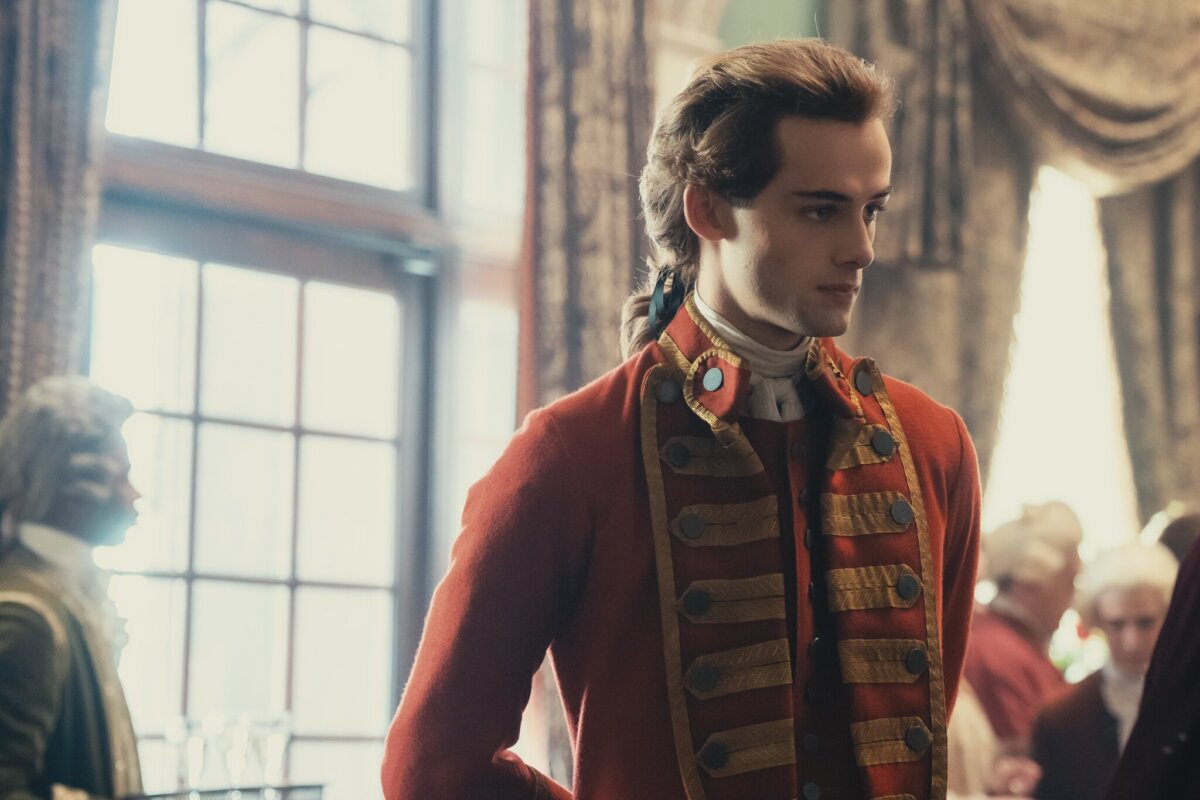
The movie “Young Washington” does a spectacular job of focusing on one incredible episode in George Washington’s life and bringing out its true complexity, adventure, and heroic glory.
Released earlier this year by Angel Studios, the movie is awkward in many ways. The dialogue is heavy-handed and sometimes anachronistic; the artificial intelligence special effects are sometimes too noticeable; and, even without her glasses, my daughter could spot the wig on young Sally Fairfax.
Despite all that, I couldn’t imagine a better film that, in an ideal world, should be awarded the honor of Best Picture of the year.
Choosing a great story is part of what makes a great movie, and filmmaker Jon Erwin has done just that.
The film follows Washington’s early years during the French and Indian War when he wants nothing more than to be a loyal subject of the king and become a British officer. The palpable reality is that the concept of America as an independent nation was utterly non-existent at the time; what was most beautiful and good in society seemed to come from the British Empire. Due to the death of his father and his inability to go to Britain for an education, young Washington is left just on the outskirts of the British ruling class, pining for advancement.
In this, we see the mediocre majesty of Washington and the reality of what he faced and accomplished. Without the naive dreams floating in Washington’s head, there would be no United States. Without the inept ambitions of a young man and the divine intervention that seemed to follow him, there would have been no victory in the Revolutionary War and nothing to celebrate on July 4.
There is a heroic model in this for everyone today to follow. This illustrates why Washington remains the GOAT—the greatest of all time among U.S. presidents.
Yet there are those who would deny Washington’s rightful legacy—many, in fact. C-Span’s latest ranking based on a survey of presidential historians puts Abraham Lincoln first and Washington second. The Siena Research Institute’s poll of presidential scholars puts Franklin D. Roosevelt first, Lincoln second, and Washington third. YouGov.com’s poll of ordinary people puts John F. Kennedy first, Roosevelt second, and Washington third.
Only PragerU’s survey of scholars in relevant disciplines puts Washington first, with Lincoln second and Ronald Reagan third.
These polls use fancy-sounding metrics, but a quick review of the names shows that the defining characteristic of those in the top spots is leading America through a major, nation-threatening military conflict. Washington led us through the Revolutionary War, Lincoln through the Civil War, Roosevelt through World War II, and Kennedy and Reagan through the Cold War (though not exactly a single military conflict).
Still, which of these presidents literally led soldiers on the field, felt bullets whizzing by, and saw his fellow soldiers dying in front of his eyes when there was no well-oiled governmental superstructure with levers he could pull and no promise of a comfortable future for himself, his family, or his men?
There is really no question about it: Washington is the greatest U.S. president. The real question is, how could people even pretend otherwise?
The underlying issue is that Washington owned more than 120 slaves on his Virginia plantation. This has sullied his reputation and even led to his statue being torn down in the George Floyd riots in Portland, Oregon, in June 2020.
The effort to re-evaluate slaveholders in American history has reached an absurd and hypocritical level.
A glaring example of this is the National Park Service’s page on Francis Scott Key, the writer of “The Star-Spangled Banner.” The actual, fascinating history of the national anthem combines the War of 1812 with beautiful poetry and with Key’s personal experiences. Yet half of the page is dominated by text highlighting, analyzing, and tacitly condemning Key’s connections to slavery.
This slavery mania egregiously rewrites history to suit present political posturing. It does not take into consideration the basic historical fact that slavery was an ordinary part of life throughout the world before the mid-19th century, including in Africa, where the slaves came from, and that slavery brought huge economic benefits to the United States, which helped make it into the country it is today.
Modern consumers also benefit from forced labor in global supply chains—even if indirectly. According to The Heritage Foundation, about 80 percent of solar components are manufactured using slave labor in China.
Also, the rechargeable batteries found in the witch hunters’ phones, computers, and trendy electric cars are most likely using cobalt mined in slave-like conditions in Congo, according to NPR.
I’m not saying that we should get rid of our phones or solar panels, just shining a light on how the world has always been, and still is. Assuming that it was done legally, slave ownership is no reason to denigrate people throughout history.
The general reluctance to acknowledge Washington’s obvious eminent status rests on weak grounds, out of touch with history and present reality. The Americans perpetuating this intellectual rot are doing their nation a disservice.
I look forward to the sequel to “Young Washington,” which was a box-office success. Instead of a $20 million budget, put in $200 million and make it the movie of the year it was meant to be. Just watch the historians follow along.
Views expressed in this article are the opinions of the author and do not necessarily reflect the views of The Epoch Times.
 Friends Read Free
Copy
Facebook
Tweet